
Synchronous drilling technology
Technical Specifications – Synchronous Drilling Technology
These parameters describe the control system capabilities integrated into our ZJ‑series AC‑VFD rigs. Rig mechanical specifications (hook load, depth capacity) are available in our product datasheets.
| Technology Parameter | Specification / Capability |
|---|---|
| Control Network Type | Redundant dual‑ring industrial Ethernet (copper or fiber optic) |
| Network Protocol | EtherNet/IP (CIP Sync), Profinet, or Modbus TCP (customer selectable) |
| Control Cycle Time | ≤50 ms deterministic |
| Network Failover Time | <200 ms (automatic) |
| Master‑Follower Load Imbalance | < ±5% (steady state) |
| Torque Reference Update Rate | 10 ms |
| Driller Stations | 2 (primary + secondary), seamless failover |
| Failover Detection Time | 1 second max (heartbeat loss) |
| Soft Pump Ramp Time | 0–60 seconds, programmable S‑curve |
| Skidding Synchronization Accuracy | ±2 mm over 20 m travel (optional) |
| Skidding Cylinder Position Sensor | ±0.5 mm resolution, magnetostrictive or wire‑draw |
| Safety Interlocks | 9 independent (hardware + software) |
| Control Modes | Single driller / Dual co‑pilot / Remote / Local manual |
| Data Logging | Historian with export (Modbus TCP / OPC‑UA) |
| Remote Access | Optional via secure VPN or dedicated fiber |
| Operating Temperature (electronics) | -20°C to +55°C (cold‑hardened option to -40°C) |
| API Compliance | 4F, 7K, 8C, Q1, RP500 |
| GOST Compliance (optional) | 12.2.141‑99, 16293‑89 |
Product Types Incorporating Synchronous Drilling Technology
We do not limit this technology to one rig model. You will find our synchronous control architecture in:
-
AC‑VFD Land Drilling Rigs (ZJ40–ZJ90) – Full synchronous control as standard.
-
Dual‑Driller Workover Rigs (XJ650–XJ1200) – Lightweight but fully synchronized for intervention work.
-
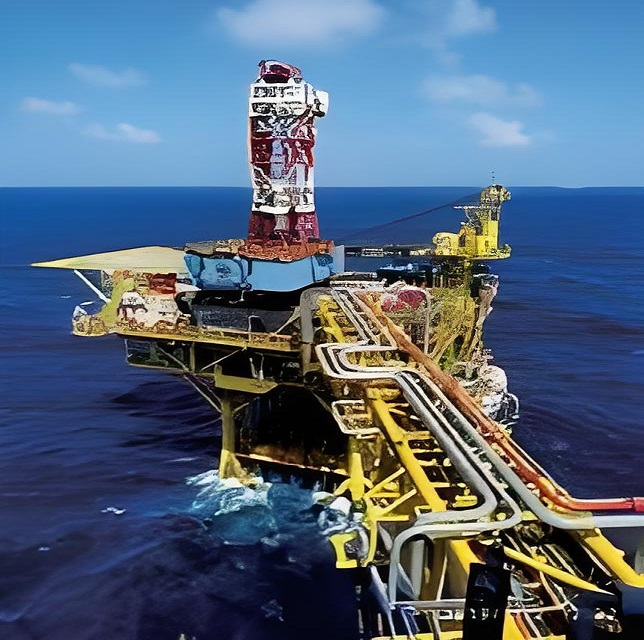
Offshore Drilling Rigs (Platform and Jack‑up) – Marine‑rated enclosures with redundant network and remote operation capability.
-
Coiled Tubing Units – Synchronized injector speed, reel tension, and pump pressure for precision live‑well intervention.
-
Automated Pipe Handling Systems – Integrated into the same control backbone as the drawworks and top drive.
-
Synchronized Solids Control Packages – Shaker and centrifuge speed automatically adjusted based on mud pump output and return flow data.
Application Fields for Synchronous Drilling Technology
🌊 Offshore and Deepwater Drilling
Offshore rigs have high daily operating costs. Synchronous technology reduces connection times, minimizes unplanned downtime from coordination errors, and provides remote monitoring from onshore support centers. Our offshore‑rated systems include marine-grade enclosures and redundant network pathways through riser and platform cabling.
🏗️ Multi‑Well Pad Developments (Unconventional Resources)
Shale, tight gas, and coalbed methane operators drilling dozens of wells from a single pad benefit from two features: fast connections (reducing time per well) and synchronized skidding (reducing time between wells). The combination can cut total pad drilling time by 10–15% based on field feedback.
⛽ Extended‑Reach and ERD Wells
Long horizontal sections require precise weight and torque management. Synchronized control keeps the drill string moving smoothly through the curve and lateral, reducing the stick‑slip and bit bounce that often limit ERD reach.
🧪 Automated and Remote Drilling Campaigns
If you are operating in a remote or harsh environment (desert, Arctic, jungle), you may want to reduce on‑site personnel or run operations from a distant control center. Our synchronous technology provides the deterministic data feed and remote control interface required for safe, reliable distance operation.
🔧 High‑Volume Workover and Intervention
For operators running workover campaigns across multiple wells, our dual‑station workover rigs allow one crew to move quickly from well to well. The same synchronous control that speeds up drilling connections also accelerates tubing handling and BOP testing during workover operations.
Why Choose SJ Petro for Synchronous Drilling Technology?
🏭 We Are the OEM – Not a System Integrator
Many companies buy drives and PLCs from Siemens, ABB, or Rockwell and then "integrate” them. We do that too — but we also design and manufacture the mechanical rig (drawworks, mast, substructure, pumps). That means our control engineers work directly with our mechanical engineers. The result is a synchronous system that is tuned to the specific inertia, resonance, and response characteristics of our own equipment, not generic parameters.
✅ Field‑Proven Across Three Continents
Our synchronous rigs are currently operating in South America, West Africa, the Middle East, and Asia‑Pacific. The XJ650 dual‑station workover rig has become a reference product for its combination of mobility and synchronized control. We have delivered more than 50 AC‑VFD rigs with this control architecture since 2015.
🔧 Full Lifecycle Support – From Commissioning to Spares
We do not walk away after delivery. Our service package includes:
-
On‑site network commissioning and drive tuning
-
Training for drillers on single, co‑pilot, and remote modes
-
Spare parts inventory for PLC modules, drives, sensors, and HMI panels
-
24/7 remote troubleshooting (secure VPN access available)
-
Regular software updates and parameter optimization
📋 Open to Third‑Party Inspection and Witnessing
We operate an open shop. Your engineers or your chosen third party (DNV, ABS, BV, etc.) can witness:
-
Factory acceptance testing (FAT) of the control network
-
Load sharing verification on dual‑motor drives
-
Skidding synchronization accuracy measurement
-
Failover time testing for network and driller stations
Frequently Asked Questions (FAQ)
Q1: What is the difference between "synchronous drilling technology” and conventional automation?
A: Conventional automation centralizes control but still executes commands sequentially — "stop pump, then move pipe, then restart pump.” Synchronous technology executes commands with time‑coordinated overlapping. The pump starts ramping down while the pipe handler is already moving. The drawworks adjusts speed in anticipation of the next top drive movement. This requires a deterministic network and master‑follower algorithms, not just a touchscreen.
Q2: What network protocol do you use? Can I integrate with my existing SCADA?
A: We default to EtherNet/IP (CIP Sync) because of its strong timing features, but we can also provide Profinet or Modbus TCP on request. Our data historian exports via Modbus TCP or OPC‑UA, which most SCADA systems (Wonderware, iFIX, Ignition, etc.) can read. We have done integrations with customer‑supplied remote monitoring systems.
Q3: How fast is the failover if a driller station or network link fails?
A: Network failover is <200 milliseconds — fast enough that the drives do not even see a communication loss. Driller station failover takes ≤1 second from heartbeat loss to secondary assuming full control. In practice, the driller may notice a brief screen flicker, but no control function is lost.
Q4: Can your synchronous technology work on a rig that is not AC‑VFD?
A: The core technology (deterministic network, master‑follower algorithms, soft pump control) is most effective on AC‑VFD or DC‑SCR rigs with independently controlled drives. We have retrofitted synchronous control to DC rigs with good results, but AC‑VFD offers finer torque control. Contact us with your existing rig specifications for a retrofit assessment.
Q5: What maintenance does the synchronous control system require?
A: Very little. The control system is solid‑state. We recommend:
-
Annual inspection of network cables and connectors
-
Calibration check of skidding cylinder position sensors (if equipped)
-
Backup of PLC and HMI programs every 6 months
-
Firmware updates as needed (we notify customers of critical updates)
Spare PLC modules, drives, and HMI panels are stocked in our international spares inventory.
Q6: Do I need an additional automation engineer to operate a synchronous rig?
A: No. The system is designed for conventional drillers. The driller uses familiar joysticks and buttons; the synchronization happens in the background. Training typically takes 2–3 days to cover co‑pilot mode, failover procedures, and remote operation if used. Your existing drilling crew can handle it.
Q7: Is the skidding synchronization system available for all rig sizes?
A: Yes. We offer electro‑hydraulic proportional skidding synchronization as an option on ZJ40 through ZJ90 rigs, as well as on workover rigs (XJ series). The system scales — larger rigs use larger cylinders and proportional valves, but the control algorithm remains the same. Positioning accuracy of ±2 mm over 20 m is achievable on all sizes.
Q8: What is your typical delivery schedule for a synchronous drilling rig?
A: Standard lead time for a complete AC‑VFD drilling rig with synchronous control is 8–10 months from order confirmation to FOB port shipment. Customizations (e.g., specific network protocols, remote operation center integration) may add 1–2 months. We recommend ordering 12 months ahead of your planned spud date to allow for sea freight and site commissioning.







