Technical Specifications
The table below covers our standard SJ‑DRC series ratings. Custom control logic and explosion‑proof enclosures are available for offshore or specialty rigs.
|
Parameter
|
SJ‑DRC‑8 (Basic)
|
SJ‑DRC‑16 (Advanced)
|
SJ‑DRC‑Master
|
Offshore Grade
|
|
Control Channels
|
8 configurable
|
16 configurable
|
32 configurable
|
24 configurable
|
|
Joysticks
|
1× two‑axis
|
2× two‑axis / 1× four‑axis
|
2× four‑axis + 1× thumbwheel
|
2× four‑axis + analog sliders
|
|
Display
|
4 LEDs
|
2.4″ monochrome LCD
|
7″ sunlight‑readable touch (1000 nits)
|
5.7″ anti‑glare LCD
|
|
Wireless Frequency
|
2.4 GHz + 433 MHz (auto‑switch)
|
Same
|
Same + 868 MHz (EU)
|
Same + UHF 400‑470 MHz
|
|
Range (line‑of‑sight)
|
300 m (984 ft)
|
500 m (1,640 ft)
|
800 m (2,625 ft)
|
1,000 m (3,280 ft)
|
|
Operating Temp
|
-20°C to +70°C
|
-40°C to +85°C
|
-40°C to +85°C
|
-40°C to +85°C
|
|
Enclosure Rating
|
IP65
|
IP67
|
IP67
|
IP68 (submersible)
|
|
Drop Survival
|
3 ft (1 m)
|
6 ft (2 m)
|
6 ft (2 m)
|
10 ft (3 m)
|
|
Battery Life
|
20 hrs continuous
|
12 hrs (2× hot‑swap)
|
8 hrs (hot‑swap)
|
12 hrs (hot‑swap)
|
|
Safety Certification
|
ATEX Zone 2
|
ATEX Zone 1/2, IECEx
|
Same + MSHA
|
DNV‑GL + ABS
|
|
Receiver Outputs
|
8 relay (3A/250V)
|
16 relay + 4 analog (4‑20 mA)
|
32 relay + 8 analog + Modbus TCP
|
24 relay + Profibus DP
|
|
Weight (remote unit)
|
1.2 kg
|
1.8 kg
|
2.5 kg
|
2.2 kg
|
Applications
Where does oil drilling remote control equipment deliver the most value? We’ve seen it deployed across:
1. Land Drilling Rigs (Conventional & AC)
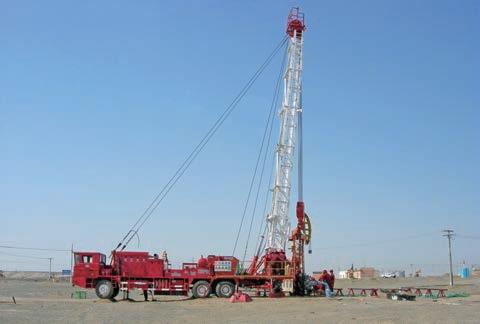
Floor hands use the remote to jog the top drive into position while standing at the mousehole, or to spin out stands from the setback. No more running back to the driller’s console between every single connection. One operator reported saving 45 minutes per trip on a 3,000 m well.
2. Offshore Jack‑Up & Semisubmersible Rigs
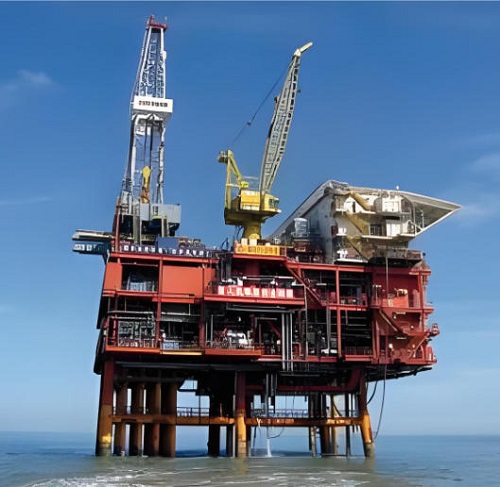
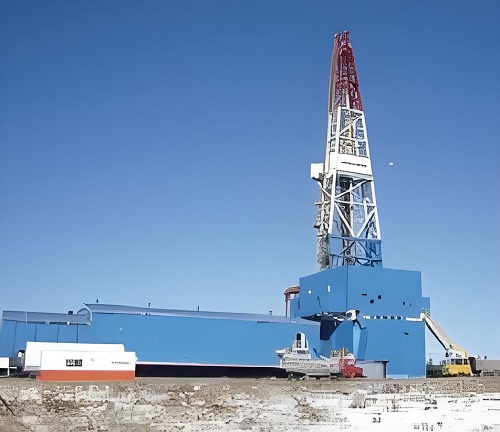
On crowded offshore decks, hardwired control stations are often located far from the point of work. Our wireless remotes let operators stand exactly where they need to be—next to the BOP stack, the diverter, or the riser tensioner ring. The explosion‑proof rating and marine coating stand up to salt spray.
3. Workover & Snubbing Units
Snubbing jacks often require simultaneous control of hydraulic jacks, slip bowls, and BOP rams. Our Master remote with touchscreen profiles lets one operator manage the entire sequence from behind a blast barrier, removing crew from the red zone.
4. Well Testing & Coiled Tubing Operations
During well testing, the crew needs to actuate choke valves, chemical injection pumps, and data acquisition units. The SJ‑DRC‑16 with analog outputs can drive 4‑20 mA positioners wirelessly, eliminating long control hoses that trip up deck workers.
5. Remote & Automated Drilling
For pad drilling or robotic rigs, our remote control equipment integrates with your existing PLC (Modbus, Profibus, Ethernet/IP). The driller can override automated sequences from anywhere on location—useful when dealing with unexpected downhole conditions.
6. Emergency Response
Every receiver includes dedicated "E‑stop” inputs that bypass the wireless link. Even if the remote battery dies, the driller can hit a local emergency stop button on the receiver panel. That’s a non‑negotiable safety requirement for any rig.
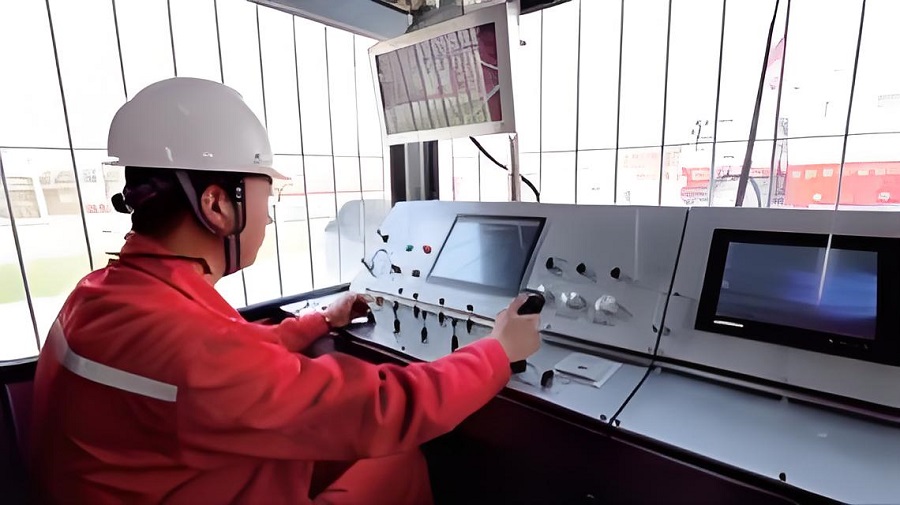
[Insert Product Image Here – Driller Using DRC on Offshore Rig – Insert actual photo of product]
Product Types & Models
We offer four main product families, each optimized for different rig sizes and control needs.
|
Model
|
Best For
|
Key Differentiator
|
|
SJ‑DRC‑P8
|
Small workover rigs, well servicing units
|
Low cost, simple 8‑button layout, basic safety
|
|
SJ‑DRC‑P16
|
Most land drilling rigs (1,500–4,000 hp)
|
Sweet spot: 16 channels, full ATEX, hot‑swap battery
|
|
SJ‑DRC‑M1
|
Offshore, large land rigs, snubbing units
|
Touchscreen, data logging, custom macros
|
|
SJ‑DRC‑EX
|
Zone 1 hazardous areas, oil & gas processing
|
Highest explosion protection (Ex ib IIC T4)
|
Custom options include:
-
Non‑standard radio frequencies (e.g., 900 MHz for North America)
-
Extended range up to 2 km with repeater stations
-
Integration with your existing OEM remote systems (NOV, MHWirth, Weatherford)
-
OEM/private labeling – we’ll put your brand and part number on the product.
Why Choose SJ Petroleum Machinery?
You have options when it comes to oil drilling remote control equipment. Here’s why drilling contractors keep coming back to us:
Built by a Sinopec Subsidiary – Not a Trading Company
SJ Petroleum is a direct, wholly owned manufacturing arm of Sinopec – one of the world’s largest energy companies. That means our remote control systems are designed, built, and tested in the same facilities that supply Sinopec’s own 500+ drilling rigs. You’re not buying from a middleman; you’re buying from the source.
80+ Years of Drilling Equipment Expertise
We started building drilling machinery in 1941. Over eight decades, we’ve learned what breaks, what frustrates crews, and what keeps a rig turning right. Every feature in the SJ‑DRC came from field feedback – not a marketing wishlist.
Hazardous Area Certifications You Can Trust
Many wireless remotes claim "intrinsically safe” but only carry basic IECEx. Our SJ‑DRC‑EX series is fully ATEX Zone 1 / IECEx Ex ib IIC T4 Gb certified, plus MSHA for mines and DNV‑GL for offshore. Your HSE manager will thank you.
Drop‑In Replacement for Other Brands
We make interfacing easy. Our receiver outputs relay contacts, analog 4‑20 mA, and Modbus/Ethernet IP – so you can replace an aging Nautilus, Hetronic, or Cavotec remote without rewiring half the rig. Just swap the receiver box and pair the new remote.
Fast Spare Parts & Global Service
We stock mainboards, joysticks, battery packs, and enclosures in regional warehouses (Houston, Dubai, Singapore, Aberdeen, and Jingzhou). Most spares ship within 24 hours. Remote technical support is available 24/7 via video call – we can often diagnose a dead remote over WhatsApp.
Full Documentation & Traceability
Every SJ‑DRC system ships with:
-
Certificate of Conformity (ATEX/IECEx/UL)
-
Receiver wiring diagram
-
Function mapping table (as programmed)
-
Radio frequency test report
-
18‑month warranty (extendable to 36 months)
Frequently Asked Questions (FAQ)
Q1: What’s the difference between "remote control” and "remote monitoring” for drilling rigs?
Remote control means you actively send commands to rig equipment (hoist, rotate, pump). Remote monitoring only receives data (pressure, load, depth). Our SJ‑DRC does both – it controls outputs and also displays feedback on the remote’s screen (load, depth, etc.). That’s the difference between a transmitter and a true control system.
Q2: Can your remote control system work with any brand of drawworks or top drive?
Almost always. The SJ‑DRC receiver outputs standard electrical signals: dry relay contacts (start/stop, up/down) and 4‑20 mA analog (for speed/pressure). As long as your existing driller’s console uses these signals (which 99% do), our system can be wired in parallel. For complex OEM controls (e.g., CANbus only), we can add a gateway module. Send us your rig’s schematic, and we’ll confirm compatibility.
Q3: How do you prevent accidental activation by another nearby rig?
Each SJ‑DRC system uses a unique pairing between one remote and one receiver, with 64‑bit rolling code encryption. Even if two identical systems are on adjacent rigs (or the same rig floor), they will not cross‑trigger. The operator also has to press a specific "start” sequence before any motion command is accepted.
Q4: What happens if the remote runs out of battery in the middle of a lift?
First, the remote gives low‑battery warnings starting at 20% remaining (flashing LED + beep). If the battery dies completely, the receiver detects loss of heartbeat signal and automatically commands a safe stop (all outputs go to neutral/brake applied) within 0.5 seconds. No uncontrolled movement. You then swap in the spare battery (hot‑swap) or plug in the charging cable (remote can run while charging).
Q5: How many remotes can work with one receiver?
Standard configuration is one‑to‑one. For safety reasons (preventing conflicting commands), we generally do not allow two remotes to control the same receiver simultaneously. However, we can set up a "lead‑follow” mode where a second supervisor remote can override the primary remote – used on offshore rigs with a toolpusher override.
Q6: Can you customize the button labels and function mapping?
Absolutely. Tell us what each button should do, and we pre‑program the logic in our factory. We can also send you a programming cable and software so you can remap functions later. For large fleets, we offer a standard template that matches your company’s driller training manual.
Q7: What’s your lead time for an SJ‑DRC system?
Standard models (SJ‑DRC‑P8, P16) ship within 30 days after order confirmation. The SJ‑DRC‑M1 and explosion‑proof EX models take 45–60 days. Expedited (15‑day) delivery is available for emergency replacements – we keep a small buffer stock.
Q8: Do you offer a trial or rental program?
Yes. We can supply 2–5 units on a rental basis for you to test on a rig for up to 90 days. The rental fee is fully credited toward purchase if you decide to keep them. This is popular with drilling contractors who want to prove the system on a single rig before rolling out to their entire fleet.
Q9: How do I get a quote?
Email us at sales@sjpetro.com with:
-
Rig type (land/offshore, power rating)
-
Number of functions you need to control (hoist, rotate, pumps, etc.)
-
Hazardous area classification (Zone 1, Zone 2, or none)
-
Any existing remote system you want to replace
We’ll reply within 24 hours with a detailed quotation, including certification documents and a wiring compatibility check.
Tag: Downhole tool maintenance | Series rig configuration | Mobile modular rigs | Vertical lifting technology | Vertical lifting solutions | Automated rig specifications | Automated iron roughneck | Drill string handling system