Advantages of synchronous drilling
Technical Features Behind the Advantages
The advantages above do not happen by accident. They come from specific engineering choices we have made in our synchronous drilling systems:
| Feature | What It Does | The Advantage You Get |
|---|---|---|
| Dual-motor master-follower vector control | One drive runs as speed master, the second follows in torque mode, continuously load-balancing | Even gearbox and motor wear; no single-motor overload |
| Industrial redundant network (fiber/EtherNet/IP) | All subsystems share real-time data on a failover-ready backbone | No communication lag; system stays live even if one link fails |
| Soft pump control | Mud pump stroke rate ramps up/down gradually, synchronized with drill string movement | No pressure surges; reduced washout risk |
| Nine independent safety interlocks | Hardware and software interlocks prevent unsafe component interactions | Accidents prevented before they happen |
| Dual driller stations with seamless failover | Two identical control stations; if one fails, the other takes over instantly | Zero downtime from control station failure |
| Electro-hydraulic proportional skidding control | Displacement sensors on each cylinder; PLC balances flow to maintain ±2 mm position accuracy | No binding; no re-alignment between wells |
| Three control modes (single/double/remote) | Driller can work alone, with a partner, or from a remote control van | Flexibility for any crew size or operation type |
Technical Specifications – Synchronous Drilling Control System
These parameters apply to our ZJ-series AC-VFD drilling rigs equipped with full synchronous control. Custom tuning is available for specific operational profiles.
| Parameter | ZJ40 | ZJ50 | ZJ70 | ZJ90 |
|---|---|---|---|---|
| Nominal Depth (4‑½″ DP) | 2,500–4,000 m | 3,500–5,000 m | 4,500–7,000 m | 6,000–9,000 m |
| Max Hook Load | 2,250 kN (506k lbf) | 3,150 kN (708k lbf) | 4,500 kN (1,012k lbf) | 6,750 kN (1,517k lbf) |
| Drawworks Configuration | Dual AC motor, master-follower | Dual AC motor, master-follower | Dual AC motor, master-follower | Dual AC motor, master-follower |
| Drawworks Power | 735 kW (1,000 HP) | 1,100 kW (1,500 HP) | 1,470 kW (2,000 HP) | 2,210 kW (3,000 HP) |
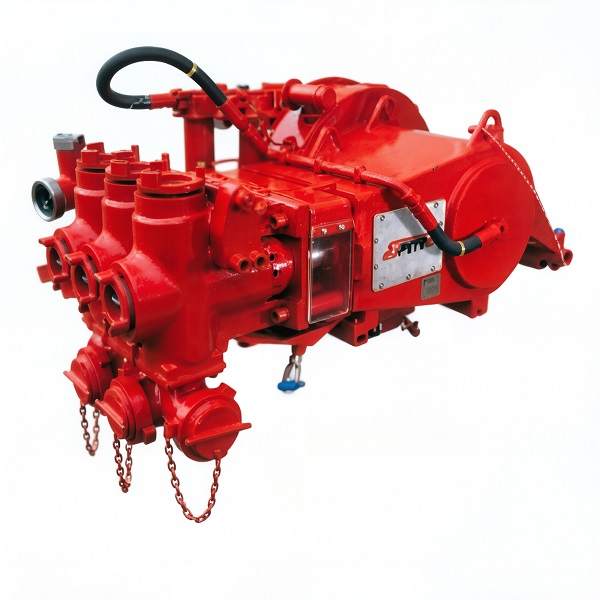
| Mud Pump Config | 2× F‑1300 HP | 2× F‑1600 HP | 2–3× F‑1600 HP | 3× F‑1600 HP |
| Soft Pump Control | Standard | Standard | Standard | Standard |
| Driller Stations | 2 (integrated) | 2 (integrated) | 2 (integrated) | 2 (integrated) |
| Control Network | Redundant fiber/EtherNet/IP | Redundant fiber/EtherNet/IP | Redundant fiber/EtherNet/IP | Redundant fiber/EtherNet/IP |
| Safety Interlocks | 9 independent | 9 independent | 9 independent | 9 independent |
| Control Modes | Single / Dual / Remote / Manual | Single / Dual / Remote / Manual | Single / Dual / Remote / Manual | Single / Dual / Remote / Manual |
| Skidding Sync Accuracy (optional) | ±2 mm over 20 m | ±2 mm over 20 m | ±2 mm over 20 m | ±2 mm over 20 m |
| API Monograms | 4F, 7K, 8C, Q1 | 4F, 7K, 8C, Q1 | 4F, 7K, 8C, Q1 | 4F, 7K, 8C, Q1 |
Product Types Featuring Synchronous Drilling Advantages
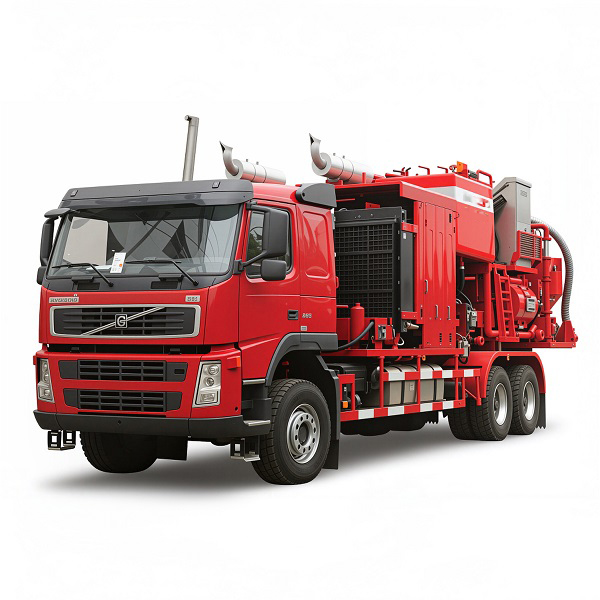
We have integrated synchronous control across multiple equipment lines, not just top-drive land rigs:
-
AC-VFD Land Drilling Rigs (ZJ40–ZJ90) – Full synchronous control as standard equipment.
-
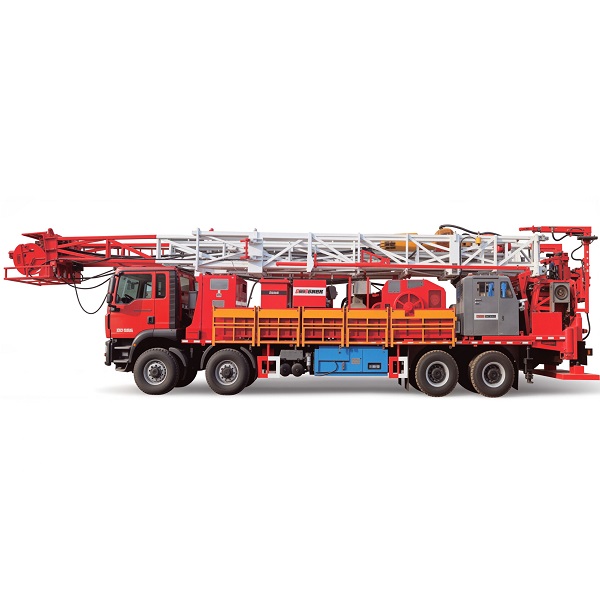
Dual Driller Workover Rigs (XJ Series) – XJ650, XJ750, XJ1000, XJ1200 with dual-station integration.
-
Coiled Tubing Units with Synchronous Pump Control – Real-time coordination between injector speed, reel tension, and pumping pressure.
-
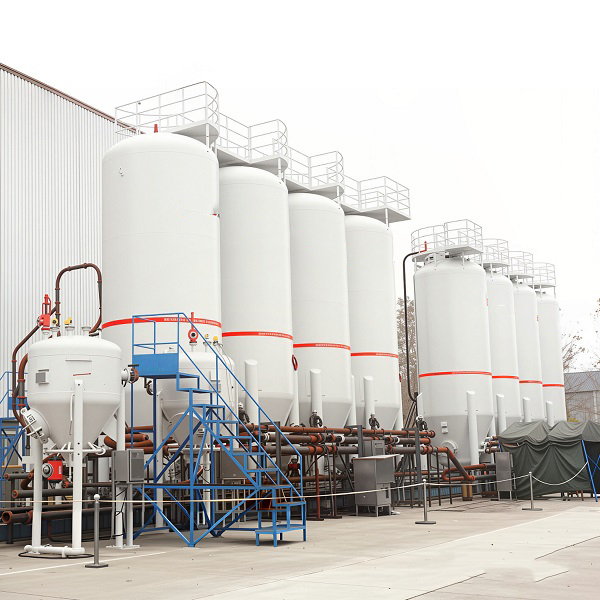
Synchronized Solids Control Systems – Automated shaker and centrifuge speed adjustment based on pump output and return flow.
-
Electro-Hydraulic Synchronized Skidding Systems – Available on modular and wheel-rail rigs for precision pad movement.
Application Fields Where Synchronous Drilling Advantages Matter Most
🛢️ High-Cost Offshore and Remote Land Drilling
When your daily rig rate is high, every minute of non-productive time hurts. Synchronous drilling delivers the fastest connection times and the lowest mechanical downtime — exactly what you need when the spread rate is six figures per day.
🏗️ Multi-Well Pad Development (Shale, Tight Gas, Coalbed Methane)
For operators drilling dozens of wells from a single pad, the combination of fast connections and precision skidding compounds into major time savings over the program. The synchronized skidding system alone can shave days off a multi-well campaign.
⛽ Deep and Extended-Reach Drilling
Longer wells mean more connections and more tripping. Smooth, coordinated control reduces fatigue on the drill string and minimizes the vibration and shock loads that cause twist-offs and connection failures.
🧪 Automated and Reduced-Crew Operations
If you are moving toward remote or automated drilling, synchronous control provides the foundation. The same data backbone that coordinates the rig’s subsystems can feed real-time data to a remote operations center or an automated decision engine.
🔧 Complex Well Interventions (Workover)
Our dual-station workover rigs allow one operator to manage hoisting and rotation while the second handles pipe handling and BOP functions — or one operator to handle everything with the second station serving as a backup. The result is safer, faster intervention work.
Why Choose SJ Petro for Synchronous Drilling Equipment?
🏭 We Build the Rigs – We Do Not Just Assemble Them
We are the actual manufacturing base for Sinopec Oilfield Equipment Corporation, producing over 200 product models across 12 series. When you specify synchronous drilling from SJ Petro, you are getting a system designed and built by the team that wrote China’s technical standards for rig control systems — not a collection of third-party components bolted together.
✅ Field-Proven Across Continents
Our synchronous rigs are not prototypes. They are operating today in South America, West Africa, the Middle East, and Asia-Pacific. Our XJ650 dual-station workover rig has become a best-seller for its combination of power, mobility, and synchronized control.
🔧 True Integrated Service
We handle everything: pre-sale engineering, installation supervision, crew training on both single and dual-driller modes, long-term spare parts support (including control system components), and 24/7 technical support with overseas offices.
📋 Full Certification – API and GOST
We provide API monogram certification (4F, 7K, 8C, Q1, RP500) as standard. For Russian and Eurasian markets, we can supply GOST compliance packages (12.2.141-99, 16293-89). Third-party inspection and customer witnessing are welcome at any stage.
Frequently Asked Questions (FAQ)
Q1: What is the single biggest advantage of synchronous drilling over conventional control?
A: Reduced non-productive time. By coordinating drawworks, top drive, and mud pumps in real time, connection times drop significantly — often from 3-5 minutes per stand to under 2 minutes. Over a 3,000-meter well, that is hours saved. For a multi-well program, that is days or weeks.
Q2: Does synchronous drilling require two drillers to operate?
A: No. The dual-station design gives you flexibility. A single driller can operate everything from the primary station while the second station serves as backup or training position. For complex or high-speed operations, two drillers can split responsibilities. You also have remote operation capability from a control van.
Q3: Can you add synchronous control to an existing rig I already own?
A: Possibly. We have successfully retrofitted synchronous control to third-party rigs where the existing drives and control hardware are compatible. The retrofit typically involves adding a PLC coordination layer, upgrading the communication network, and installing additional sensors. Contact our engineering team with your rig specifications for a feasibility assessment.
Q4: How accurate is your synchronized skidding system?
A: Our electro-hydraulic proportional system maintains ±2 mm positioning accuracy over 20 meters of travel. The PLC continuously monitors displacement sensors on each cylinder and automatically adjusts flow to lagging cylinders to prevent binding. Manual override is available for emergency or non-standard moves.
Q5: What kind of maintenance does the synchronous control system require?
A: Very little. The system is solid-state with no moving parts in the control logic itself. We recommend annual checks of communication network connections, sensor calibration, and software version updates. Spare PLC modules, drives, and HMI panels are available from our international spare parts inventory.
Q6: Will synchronous drilling help with stuck pipe prevention?
A: Indirectly, yes. The smooth, continuous control reduces the sudden torque and weight fluctuations that can lead to differential sticking and packing-off. The ability to maintain consistent circulation and rotation while making connections also helps keep cuttings moving up the annulus.
Q7: Are your synchronous drilling systems API certified?
A: Yes. All our AC-VFD rigs — including the synchronous control systems integrated within them — meet API 4F, 7K, 8C, Q1, and RP500 requirements. We are authorized to apply the API monogram and welcome third-party witness of our testing.
Q8: What is your lead time for a synchronous drilling rig?
A: Standard lead time is 8–10 months from order to FOB port shipment, depending on rig size and customization. We maintain a dedicated supply chain for control system components to avoid delays. Expedited schedules may be possible for standard configurations.