-
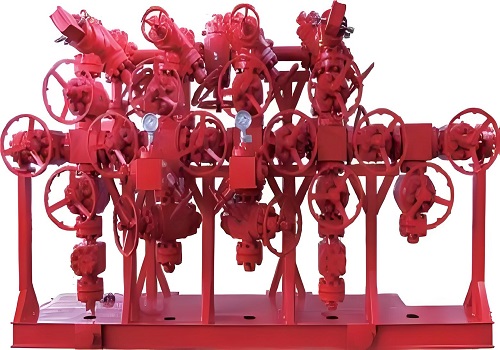
Abrasion‑Optimized Flow Path:All bends are sweeping radius (5× pipe diameter) instead of tight 90° elbows. This reduces sand impingement velocity by 50% and extends component life 3×. Where tight bends are unavoidable, we use replaceable hardened liners (HRC 60) or induction‑hardened bores.
-
Heavy‑Wall Seamless Pipe (Schedule 160 to XXS):No seamed pipe. Wall thickness: 10–20 mm depending on pressure and diameter. Burst rating 4× working pressure (API 6A design factor). For 15,000 psi service, our 3″ pipe has 12 mm wall – it will not balloon or split.
Products
Fracturing Manifold
Product Types
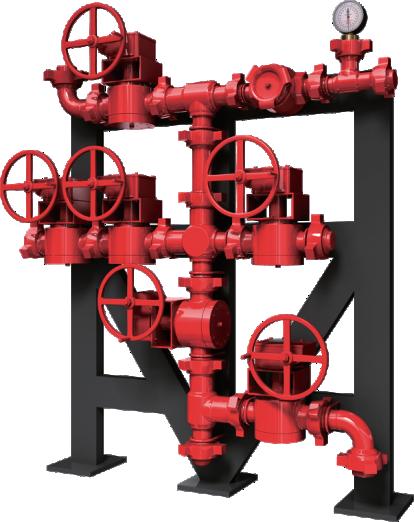
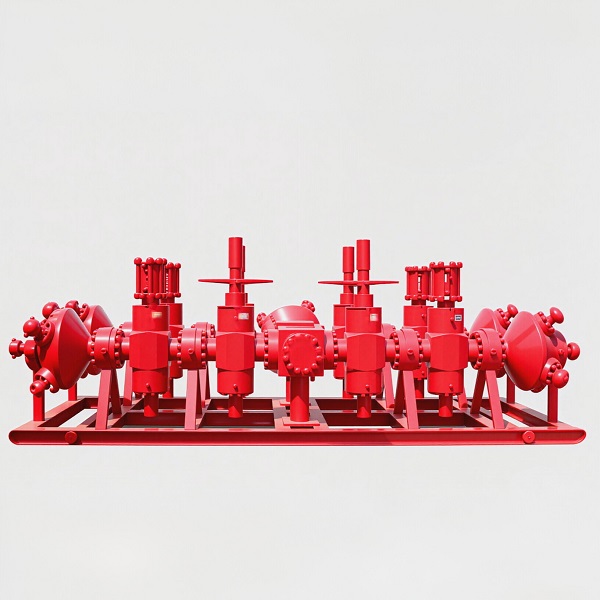
We offer three configurations of fracturing manifolds, depending on your operation scale and mobility needs.
| Product Type | Configuration | Pressure Rating | Best For |
|---|---|---|---|
| Stick Manifold (Component‑Based) | Individual straight pipes, elbows, tees, valves – assembled on site with hammer unions | 10k – 20k psi | Small fleets, one‑off jobs, or when well spacing varies |
| Modular Skid Manifold | Pre‑assembled on steel skid (20–40 ft), includes header, valves, outlets | 10k – 20k psi | Multi‑well pads (zipper frac), repeatable layouts, fast rig‑up |
| Extended Reach Manifold | Same as modular skid but with longer jumpers (15–30 m) to reach widely spaced wells | 10k – 20k psi | Large pads with 100 m+ well spacing (e.g., conventional wells on 200 m centers) |
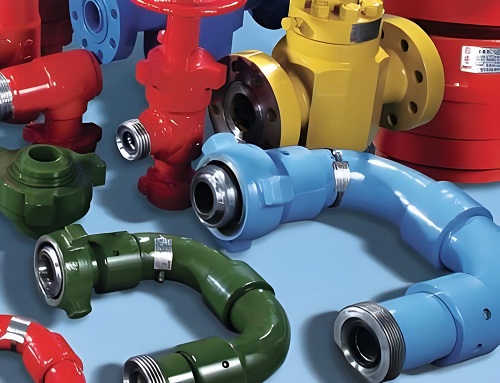
We also supply frac valve packages (plug valves, check valves, and swivel elbows) separately for operators who build their own manifolds in the field.
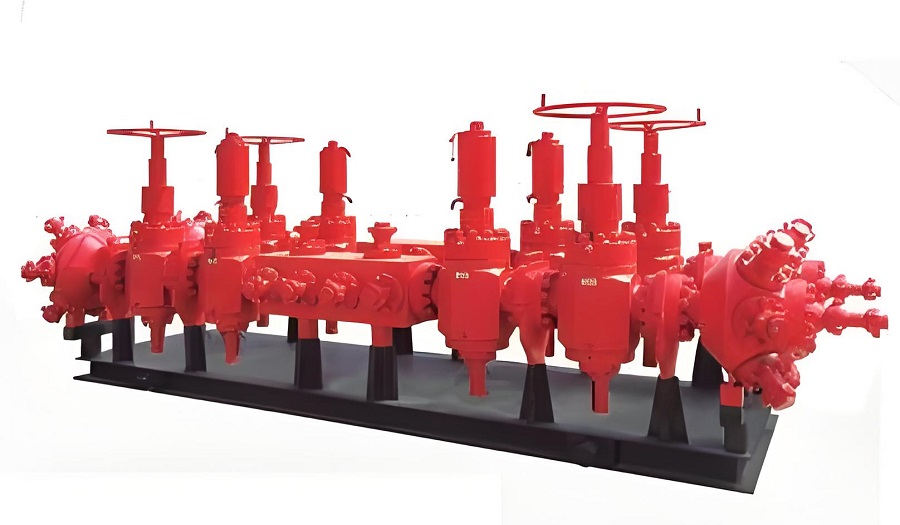
Technical Specifications (Modular Skid Manifold – 15,000 psi, 3‑well zipper configuration)
Below is a typical specification for a 3‑well zipper frac skid. Contact us for 2‑well, 4‑well, or 6‑well configurations.
| Parameter | Specification |
|---|---|
| Pressure Rating | 15,000 psi (103.5 MPa) – optional 20,000 psi |
| Number of Well Outlets | 3 (zipper frac) – expandable to 6 |
| Main Header Pipe Size | 4″ OD (101.6 mm), 20 mm wall, seamless 4130 |
| Outlet Pipe Size | 3″ OD (88.9 mm) or 2″ OD (60.3 mm) |
| Material | Forged AISI 4130, NACE MR0175, normalized & tempered |
| End Connections | Fig 2002 (3″) or Fig 1502 (2″) hammer‑union |
| Valves per Outlet | 2× plug valves (1 upstream isolation, 1 downstream) + 1× check valve |
| Valve Type | SJ‑VPG series – stellite plug, grease‑injected |
| Swivel Elbows per Outlet | 2× 90° Fig 2002 swivel elbows (for alignment) |
| Straight Pipe Sections | 1.5 m, 3 m, 6 m – hammer‑union ends |
| Skid Dimensions (L×W×H) | 9 m × 2.5 m × 1.5 m (30 ft × 8 ft × 5 ft) |
| Skid Weight (empty) | 8 tonnes (17,600 lbs) |
| Operating Temperature | –29°C to +121°C |
| Erosion Protection | Standard: smooth bored ID (Ra ≤ 1.6 μm). Optional: induction‑hardened bore (HRC 55‑60) on elbows and downstream of valves |
| Pressure Test (Shop) | Hydrostatic: 1.5× rated pressure (22,500 psi / 155 MPa) |
| Weld Inspection | 100% radiography + ultrasonic on all pressure welds |
| Valve Cycle Life (Tested) | 5,000 operations at 15,000 psi |
| Certifications | API 6A, API 16C, API Q1, NACE MR0175 |
| Rig‑up Time (4 crew, skid) | 4 hours (including hammer‑up jumpers to wells) |
Application Fields
Frac manifolds are essential for hydraulic fracturing in unconventional and conventional reservoirs.
-
Multi‑Well Pad Zipper Fracturing
The most demanding application. Our modular skid manifold allows simultaneous fracturing of one well while the next well is being prepared. The skid remains in place; only the hammer‑union jumpers are moved between wells. Typical cycle: frac well #1 (4 hours), switch to well #2 (30 minutes), frac well #2 – continuous. -
[Image Placeholder: Zipper frac operation with manifold skid between two wellheads]
Single‑Well High‑Volume Fracturing
For a single well requiring high flow rates (100+ bpm), multiple pumps are manifolded together. Our stick manifold (with 4″ header) collects flow from 6–8 pumps and discharges through two 3″ lines to the wellhead. -
Slickwater Frac in Shale Gas
Slickwater has low viscosity but carries high sand concentrations (up to 5 lb/gal). Erosion is severe. Our induction‑hardened bore elbows and straight pipe sections have proven life of 1,000+ stages in Sichuan Basin shale gas wells. -
Coiled Tubing Fracturing (CT Frac)
When fracturing through coiled tubing, the manifold is smaller (2″ Fig 1502). We supply lightweight, portable manifold skids for CT frac units. -
Well Testing & Flowback
Temporary manifolds for well testing use the same components but lower pressure ratings (5,000 or 10,000 psi). Components are interchangeable with frac manifolds – you can repurpose old frac pipe for testing.
Why Choose SJ Petroleum Machinery for Fracturing Manifolds?
1. Built for Abrasion, Not Just Pressure
Most manifold failures are not burst – they are erosion. Sand cuts through standard pipe elbows in 50 stages. Our induction‑hardened bores, sweeping radius bends, and replaceable liners keep you pumping longer. Many customers report 3–5× component life compared to generic manifolds.
2. Modular Skids Slash Rig‑Up Time
On a 20‑well pad, a stick‑built manifold takes 2 days per well move. Our skid manifold moves from well to well in 4 hours. Over a pad campaign, that saves weeks of non‑productive time. We have the time‑lapse videos to prove it.
3. Field‑Proven Valves That Do Not Leak
Our plug valves use a patented grease injection system that maintains seal even after sand erosion. The stellite plug is field‑replaceable – no need to scrap the entire valve. In side‑by‑side tests with three major brands, our valves held pressure 2× longer before requiring rebuild.
4. Complete Traceability – Every Weld, Every Heat
We provide a comprehensive data book for every manifold: material test reports for each pipe and forging, weld maps showing X‑ray locations, PWHT charts, hydro test curves, and valve test reports. For critical jobs, we can have third‑party inspector (DNV, ABS) on site.
5. Global Service + Local Spares
We stock manifold components (plug valves, swivel elbows, straight pipe, seal kits) in Houston, Dubai, and Jingzhou. Emergency replacement parts ship within 24 hours. We also offer on‑site manifold inspection and rebuild services with mobile crews.
6. Engineered for Your Pad Layout
We do not sell "one size fits all.” Send us your well spacing, pump layout, and frac schedule. We design the manifold – component lengths, valve placement, erosion protection levels – to match your exact operation. No field cutting and welding required.
Frequently Asked Questions (FAQ)
Q1: How many stages can your manifold components last?
Depends on sand concentration and fluid velocity. In typical shale frac (4 lb/gal sand, 100 bpm, 15,000 psi):
– Standard steel elbows: 50–80 stages
– Induction‑hardened elbows: 300–500 stages
– Hardened liner elbows (replaceable): 800+ stages (you replace only the liner)
We provide a life expectancy table with each proposal.
Q2: What is the difference between a stick manifold and a skid manifold?
Stick manifold: you receive individual pipe spools, elbows, tees, valves – each with hammer unions. Your crew assembles everything on site. Flexible but slow. Skid manifold: everything is pre‑bolted to a steel frame and pressure‑tested at our shop. You set the skid in place and connect jumpers to the wells. Much faster but less adjustable if well spacing changes.
Q3: Can I use your manifold for both fracturing and flowback?
Yes, but you must clean it thoroughly after frac (sand and residual gel). For flowback service (lower pressure, 5,000–10,000 psi), you can reuse the same components. However, heavily eroded frac pipe should not be used for high‑pressure testing – we recommend color‑coding pipe (e.g., red for frac, yellow for flowback).
Q4: How do I know when an elbow or tee needs replacement?
Best method: ultrasonic thickness (UT) measurement at high‑wear locations (outside radius of bends, downstream side of tees). We mark these inspection points on each component. Replace when wall thickness reaches 80% of original. Alternatively, use our optional erosion monitoring probes for real‑time data.
Q5: Do you provide remote actuation for manifold valves?
Yes – pneumatic or hydraulic actuators with a remote control panel. The panel includes individual valve position indicators (open/closed) and emergency shutdown (ESD) buttons. We can also integrate with your existing frac control system via Modbus or CAN bus.
Q6: What is the maximum number of wells your skid manifold can serve?
Our standard skid has 3 outlets. We have custom designs for 4, 5, and 6 outlets – but beyond 3 outlets, the manifold becomes very long (15 m+) and may require multiple skids. For pads with many wells, we recommend using one skid per 2–3 wells and switching jumpers.
Q7: Can you supply a manifold rated for 20,000 psi (20k)?
Yes. The design is similar to 15k but with heavier wall pipe (e.g., 3″ pipe with 15 mm wall) and 20k‑rated valves and fittings. All components are API 6A 20k certified. Lead time is longer (12–14 weeks) due to specialized forging and testing.
Q8: How do I maintain the plug valves between stages?
After each stage, inject grease (NLGI #2 high‑pressure grease) into the valve via the zerk fitting while the valve is in the open position. This flushes sand out of the seal area and replenishes the grease. For full maintenance instructions, see our valve manual.
Q9: What is the typical lead time for a custom modular skid manifold?
Once we have your well spacing and layout: 10–12 weeks from drawing approval to delivery. This includes design, pipe cutting and bending, welding, X‑ray, PWHT, hydrotest, assembly, and painting. Stick manifolds (components only) ship in 6–8 weeks.
Q10: Do you offer operator training for manifold rig‑up and valve maintenance?
Yes – included with every manifold purchase. We send a field service engineer to your location for 3 days: day 1 – rig‑up training (safely assembling hammer‑union connections, torque procedures), day 2 – valve maintenance (greasing, seat replacement), day 3 – inspection and troubleshooting. We also provide laminated quick‑reference cards.
Tag:
Previous:
High-Pressure Straight Pipe
Next:
Drilling Fluid Manifold
Send Inquiry