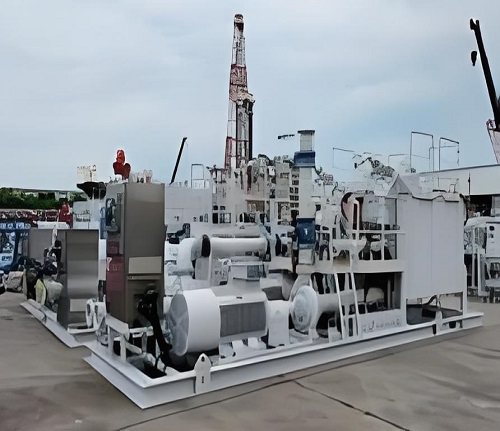
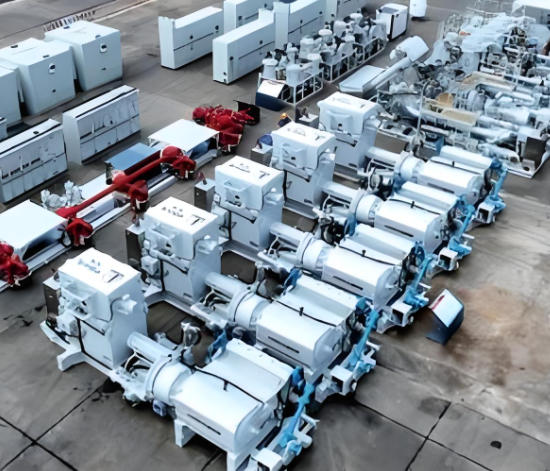
Technical Specifications (SJ‑OCS‑2200 Offshore Cementing Skid)
|
Parameter
|
Specification
|
|
Pump Type
|
Triplex, SJ‑CP‑2200, 2,200 HP continuous
|
|
Maximum Pressure
|
15,000 psi (104 MPa) – derated to 12,000 psi at max flow
|
|
Maximum Flow Rate
|
2.5 m³/min (660 GPM)
|
|
Plunger Size
|
4.5″ (114 mm), 5″ (127 mm) – optional 6″
|
|
Fluid End Material
|
4130 with 13Cr lining (standard) / 22Cr duplex (seawater)
|
|
Mixing System
|
Automatic recirculating mixer (ACM) with Coriolis density meter
|
|
Density Range
|
10 – 22 ppg (1.2 – 2.6 sg)
|
|
Density Accuracy
|
±0.1 ppg
|
|
Batch Mix Tank
|
15 bbl (2.4 m³) – optional 30 bbl
|
|
Water Supply
|
2× centrifugal booster pumps, 300 GPM each
|
|
Liquid Additive Pumps
|
3× metering pumps, 0–50 L/min, automatic control
|
|
Dry Cement Feed
|
Rotary valve with variable speed, 0–500 kg/min
|
|
Control System
|
PLC with touchscreen HMI, local + remote operation
|
|
Data Recording
|
USB export, PDF reports, real‑time graph display
|
|
Skid Dimensions (L×W×H)
|
8.5 m × 2.5 m × 2.8 m (28 ft × 8 ft × 9 ft)
|
|
Dry Weight
|
14 tonnes (31,000 lbs)
|
|
Power Requirement
|
Diesel or electric: 2,200 HP (1,640 kW) for pump + auxiliaries
|
|
Corrosion Protection
|
3‑layer epoxy + stainless steel fasteners
|
|
Certifications
|
API 10A (cement), ABS (class), DNV (optional)
|
|
Operating Temperature
|
–20°C to +50°C (winterization available)
|
Application Fields
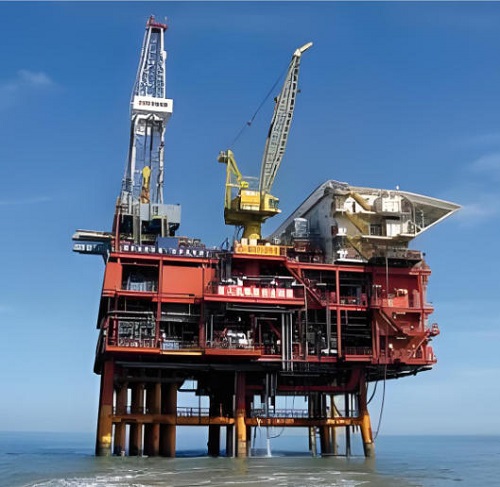
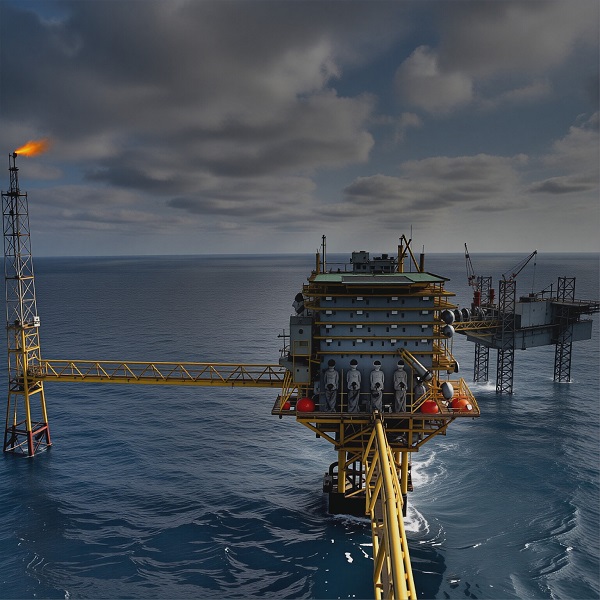
Offshore cementing equipment is used across all marine well construction and intervention activities.
-
Surface Casing & Conductor Cementing
Large‑volume, low‑pressure jobs (2,000–3,000 psi). Our twin pump skid provides high flow rate (2.5 m³/min) to fill large annulus quickly. Automatic density control ensures consistent 14–16 ppg slurry.
-
[Image Placeholder: Cementing skid pumping through high‑pressure hoses to a platform wellhead]
Intermediate & Production Casing
Higher pressure (5,000–10,000 psi), precise density control, and often with retarders for deep, hot wells. Our 2,200 HP pump provides the pressure needed for deep setting depths (5,000–7,000 m).
-
Squeeze Cementing
For repairing casing leaks or shutting off perforations. Small volumes, high pressure, precise shut‑off. Our control system allows very low pump rates (0.1 m³/min) with pressure up to 15,000 psi – ideal for squeeze jobs.
-
Plug & Abandonment (P&A)
Offshore P&A requires multiple cement plugs over several trips. Our cementing unit can batch mix and pump balanced plugs with density control, even on motion‑compensated vessels.
-
Remedial Cementing (Workover)
On existing platform wells, workover operations often need small cement squeeze or plug placement. Our compact 1,600 HP skid fits on platforms with tight deck space.
-
Deepwater Cementing (Drillships)
For subsea wells, cement is pumped through risers and subsea BOPs. Our cementing unit with heave compensation and high‑pressure capability (15,000 psi) is used on drillships in the Gulf of Mexico and Brazil.
Why Choose SJ Petroleum Machinery for Offshore Cementing Equipment?
1. Designed for Marine Environment, Not Adapted Land Units
We start with corrosion‑resistant materials, compact layouts, and motion tolerance – not a land skid with extra paint. Our equipment meets ABS and DNV offshore rules, not just API.
2. Redundant Pumps for Critical Offshore Jobs
A failed cement job on a platform can ruin a well. Our twin pump skid (2× 2,200 HP) gives you 100% backup. One pump can complete the job if the other fails – no waiting for a spare from shore.
3. Automatic Density Control – Even with Bulk Transfer Irregularities
Offshore bulk cement systems often have pressure fluctuations. Our control system adapts instantly, maintaining target density within ±0.1 ppg. No hand‑mixing, no guesswork.
4. Remote Operation Keeps Crew Safe
The cementing unit can be operated from the driller’s cabin or a separate control room. During high‑pressure pumping, no one needs to stand near the pump or manifold – reducing exposure to lines failures.
5. Global Spares & Service
We stock cement pump fluid end parts (valves, seats, plungers, packing) and electronic spares in Houston, Aberdeen, Dubai, Singapore, and Jingzhou. Our field service engineers can fly to any offshore location within 72 hours for major repairs.
6. Integration with Third‑Party Systems
We provide Modbus or Profibus interfaces to the rig’s central control system (e.g., NOV, MHWirth, Cameron). The driller’s console can display cement pump pressure, rate, and cumulative volume alongside drilling parameters.
Frequently Asked Questions (FAQ)
Q1: Can your offshore cementing skid be used on a jack‑up rig?
Yes – our compact skid fits within the cantilever area or on the main deck. We also offer a lighter version for jack‑ups with lower deck load capacity. The skid can be split into two pieces if access is restricted.
Q2: What is the maximum cement volume you can mix in one batch?
Continuous mixing: unlimited (as long as bulk cement and water supply last). Batch mixing: we offer 15 bbl (2.4 m³) or 30 bbl (4.8 m³) tanks. For very large jobs (e.g., deep liner), we recommend continuous mixing – our system can hold density accuracy continuously for hours.
Q3: How do you protect the equipment from salt corrosion?
All carbon steel components have 3‑layer epoxy coating (600 μm), stainless steel fasteners, and zinc anodes on submerged parts (if any). Electrical cabinets are IP66 and NEMA 4X. We also offer a full Inconel cladding option for extreme marine environments.
Q4: Can the skid be operated by one person?
Yes – one trained operator can run the entire cement job from the control panel. The system is semi‑automatic: the operator sets target density and pump rate, and the PLC maintains them. For critical jobs, a second person monitors for safety.
Q5: What is the typical lead time for an offshore cementing skid?
Standard skid (SJ‑OCS‑2200): 6–8 months from order. Twin pump (SJ‑OCS‑4400): 9–12 months. This includes design, fabrication, assembly, and factory testing (including simulated offshore motion test if requested).
Q6: Do you provide on‑site commissioning and crew training?
Yes – included. Our engineers will travel to the offshore platform or vessel to supervise installation, connect utilities, and commission the unit. We also provide a 3‑day training course (classroom + hands‑on) for your cementing crew.
Q7: What certifications do your cement pumps have?
API 7K (for drilling pumps), ABS type approval (for offshore use). We can also provide DNV or Lloyd’s certification at additional cost. All pressure vessels comply with ASME Section VIII.
Q8: How do you handle high‑temperature cement (e.g., 120°C wellbore)?
Our mixing system includes a cooler for the mixing water if needed. The pump fluid end uses high‑temperature seals (Viton or AFLAS). We can also supply a batch mixer with heating capability for Arctic operations.
Q9: Can the skid be used for other fluids (e.g., drilling mud, water)?
The pump and control system can be adapted for mud or water pumping, but the mixing tank and additive system are cement‑specific. For dual‑service rigs, we recommend a separate mud pump – mixing cement residues with drilling fluid is not safe.
Q10: Do you offer rental cementing skids for short‑term offshore campaigns?
Yes – we maintain a rental fleet of offshore cementing skids (1,600 HP and 2,200 HP) in Houston, Aberdeen, and Singapore. Minimum rental period 3 months, includes spares package. Contact our rental desk for availability and rates.
Tag: Cementing price | Cementing data acquisition system