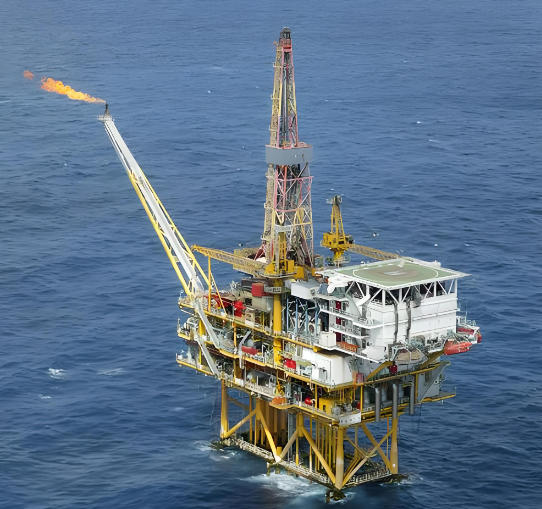
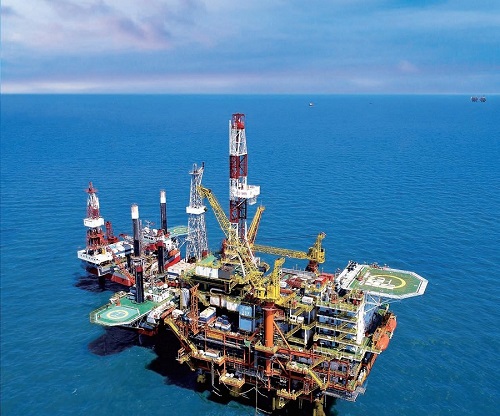
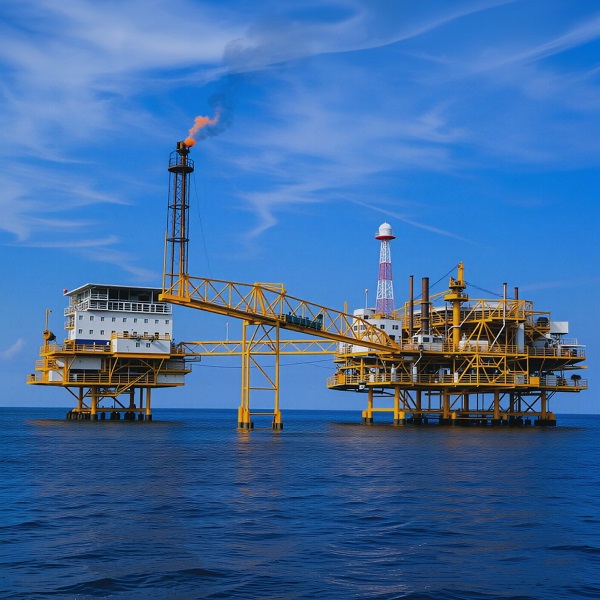
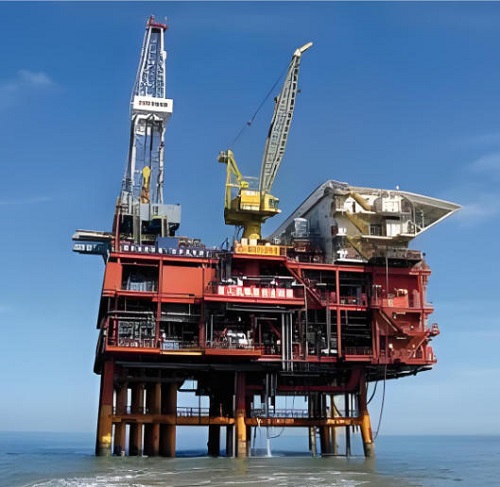
Technical Specifications (Medium Workover Barge – 45 m water depth)
Below is a typical specification for our most popular relocatable workover rig.
|
Parameter
|
Specification
|
|
Max Water Depth (Operating)
|
45 m (150 ft)
|
|
Hull Length × Beam × Depth
|
45 m × 24 m × 3.5 m
|
|
Leg Type
|
4 × truss legs (78 m long, 7 m chord spacing)
|
|
Jacking Speed (Loaded)
|
0.9 m/min
|
|
Air Gap (Hull above water)
|
5 m (adjustable)
|
|
Workover Depth (3‑1/2″ tubing)
|
6,000 m (19,700 ft)
|
|
Hook Load Capacity
|
1,600 kN (360,000 lbs)
|
|
Drawworks Power
|
1,000 HP AC VFD
|
|
Top Drive / Power Swivel
|
500 HP, 0–150 RPM, 15,000 Nm torque
|
|
Cantilever – Longitudinal Extension
|
8 m (from barge edge)
|
|
Cantilever – Lateral Skid
|
± 2 m (total 4 m)
|
|
BOP Stack
|
11″ or 13‑5/8″, 10,000 psi (optional 15,000 psi)
|
|
Mud Pumps
|
1× 1,000 HP triplex (standby) + 1× 500 HP for circulation
|
|
Mud Tank Capacity
|
200 bbl (32 m³)
|
|
Bulk Storage
|
Cement (40 m³), barite (50 m³)
|
|
Accommodations
|
25 persons (single/double cabins, mess, galley)
|
|
Helideck
|
18 m diameter, for EC155 or similar
|
|
Power Generation
|
2× 1,000 kW diesel generators (plus 1× emergency)
|
|
Variable Deck Load
|
450 tonnes (including workover package)
|
|
Transit Speed (Towed)
|
5 knots (calm sea)
|
|
Class
|
ABS or DNV (workover barge)
|
|
Design Life
|
20 years
|
Application Fields
Relocatable workover rigs are used in mature offshore fields where fixed platforms lack their own rigs.
-
Southeast Asia (Indonesia, Malaysia, Thailand, Vietnam)
Hundreds of small wellhead platforms in the Java Sea, Malacca Strait, and Gulf of Thailand. Our light workover barges move from platform to platform performing simple workover (tubing change, pump change) at a fraction of the cost of a full jack‑up.
-
[Image Placeholder: Workover barge positioned next to a small platform in Southeast Asia]
Middle East Gulf (UAE, Qatar, Saudi Arabia)
Mature fields with dozens of platforms require frequent zonal isolation and workover. Our medium workover barges (with snubbing capability) handle live well interventions without killing the well – preserving reservoir pressure.
-
Gulf of Mexico (State waters, shelf)
Small independent operators use our relocatable barges to workover marginal wells that would not justify a large rig. The barge is towed from a base in Louisiana or Texas, does 5–10 wells, then returns.
-
West Africa (Nigeria, Angola, Ghana)
Shallow water fields with soft seabed (clay). Our barges have oversized spud cans (80 m²) to reduce bearing pressure. We also provide preload monitoring to prevent punch‑through.
-
China Bohai Bay
Thousands of platform wells in shallow water (10–30 m). Our relocatable workover rigs are stationed at onshore bases and deployed on demand. Some operate year‑round with ice‑strengthened legs.
-
North Sea (Southern Sector)
For the UK and Dutch sectors (water depth < 50 m), we offer winterized workover barges with enclosed decks, heated accommodations, and ice‑class legs. They operate in significant wave heights up to 4 m.
Why Choose SJ Petroleum Machinery for Relocatable Workover Rigs?
1. Rapid Mobilization – Low Downtime
A conventional jack‑up takes 5–10 days to mobilize and jack up. Our rigs can be towed to location, jacked up, and ready to work in 2 days. For a 5‑well campaign, that saves weeks of non‑productive time.
2. Fit‑For‑Purpose, Not Over‑Engineered
We do not sell you a drilling rig for workover. Our rigs are sized for tubing handling, not heavy casing drilling. That means lower capital cost, smaller crew, and lower day rate. You pay only for what you need.
3. Cantilever Reaches Any Platform Layout
Platforms vary: some have wellbay in the center, some at the edge, some elevated deck. Our cantilever extends 8–10 m longitudinally and skids laterally – reaching almost any wellhead. We provide a 3D compatibility check for your platform before build.
4. Modular & Road‑Transportable (Smaller Units)
For light workover barges, the entire workover package can be disassembled into 10‑tonne modules and moved by truck between coastal bases. You buy one workover package and move it between multiple barges – reduces fleet cost.
5. Snubbing / Live Well Integrated
Many platforms cannot be killed (sensitive reservoir or environmental restrictions). We offer a hydraulic snubbing unit integrated into the workover package – allows tubing change and milling under full well pressure. This is a unique capability among small workover barges.
6. Life‑Cycle Support & Spares
We maintain leg jacking spares (pinions, brakes, seals) and workover components in regional hubs: Houston, Dubai, Singapore, and Jingzhou. We also offer remote jacking system diagnostics via satellite – our technician can guide your crew through repairs from shore.
Frequently Asked Questions (FAQ)
Q1: How does a relocatable workover barge differ from a standard jack‑up drilling rig?
A jack‑up drilling rig is larger, more powerful (higher hook load), and designed for drilling new wells from scratch. It has a higher day rate and slower mobilization. Our workover barge is smaller, cheaper, and optimized for pulling tubing, changing pumps, and other workover tasks. It cannot drill a new well from open seabed (no wellbay).
Q2: Can the barge work on platforms with helidecks and cranes in the way?
Yes – we survey each platform before building the cantilever. The cantilever is designed to clear obstacles. For example, the barge positions itself so that the mast is behind the helideck, and the cantilever reaches around the crane pedestal. We provide a 3D interference check.
Q3: What is the maximum wave height in which the barge can operate?
When jacked up (legs on seabed), the barge can operate in significant wave height up to 3 m (10 ft) – typical for most offshore fields. In survival mode (no work), up to 6 m. We do not operate during cyclones or hurricanes – the barge is towed to a sheltered location or inland waterway.
Q4: How many wells can the barge do per mobilization?
Depends on well complexity and travel distance between platforms. Typical: 5–10 wells per mobilization (e.g., barge arrives, works on Platform A for 7 days, moves 5 km to Platform B for 5 days, etc.). When all scheduled wells are done, the barge returns to base for resupply and maintenance.
Q5: Do you provide the barge hull, or just the workover package?
We provide both – we either build the complete barge (hull + legs + workover package) or, if you already have a suitable barge hull, we can design and install the legs, jacking system, and workover package. This is a popular upgrade path for existing liftboats.
Q6: What is the typical crew size?
Workover crew (driller, floor hands, mechanic) – 6 persons. Barge crew (master, engineers, cook, medic) – 8 persons. Total 14–16 persons. Accommodations on our MWB class handle up to 25 – some operators add extra maintenance personnel.
Q7: How long does it take to jack down and move to the next platform?
After completing a well, the crew retracts the cantilever, jack the hull down to floating draft (2–3 hours), raise legs (1–2 hours), then tug tow (1–12 hours depending on distance). For a typical 5 km move, total time from finishing one well to starting next: 8–12 hours.
Q8: Can the barge work in areas with strong currents (e.g., 2 knots)?
Yes – we size the jacking system to overcome current loads on the legs. For positioning before jacking, we offer a DP system (bow and stern thrusters) as an option. Without DP, you need a tug to hold position while lowering legs – doable but slower.
Q9: What is the typical lead time for a new relocatable workover barge?
18–24 months from contract to delivery. This includes hull fabrication, leg construction, installation of jacking system, integration of workover package, and commissioning. For a workover package only (to be installed on an existing barge), 8–12 months.
Q10: Do you offer lease or rental options?
Yes – we have a fleet of owned workover barges available for short‑term charter (3–12 months). Operating in Southeast Asia and Middle East. Charter includes the barge and workover equipment; you provide crew or we can provide crew on a contract basis. Contact our commercial team for current availability and rates.
Tag: