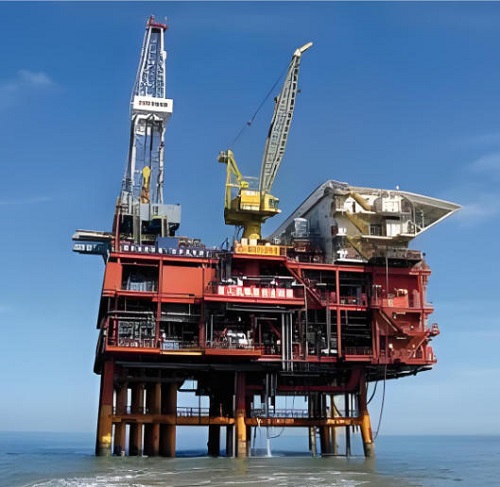
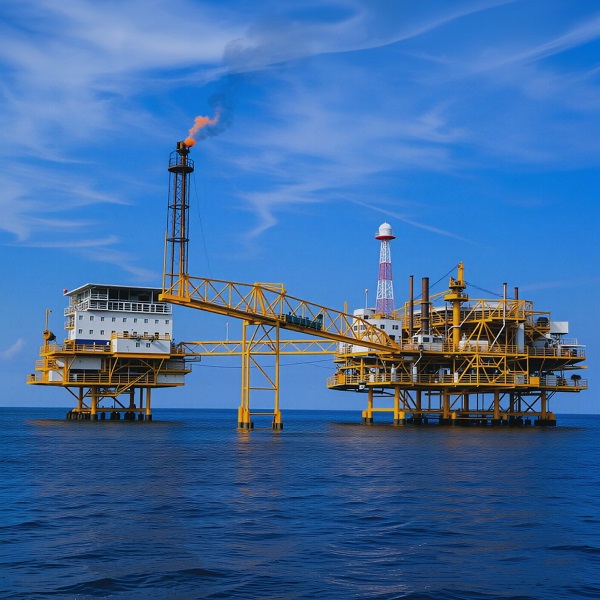
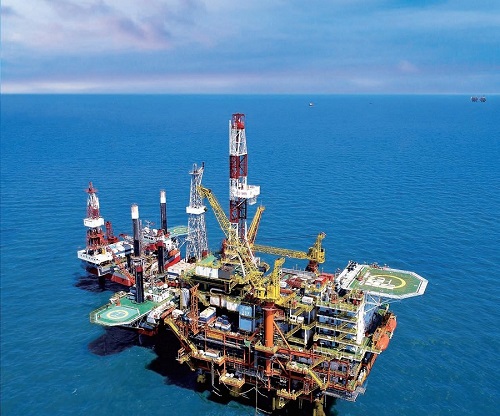
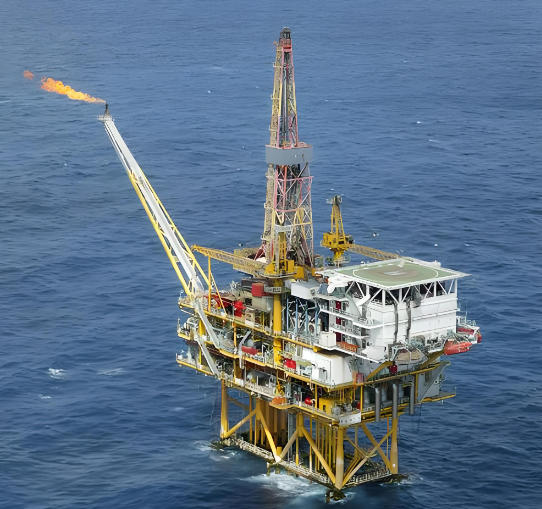
Technical Specifications (Cantilever Platform Rig – 5,000 m drilling, 7,000 m workover)
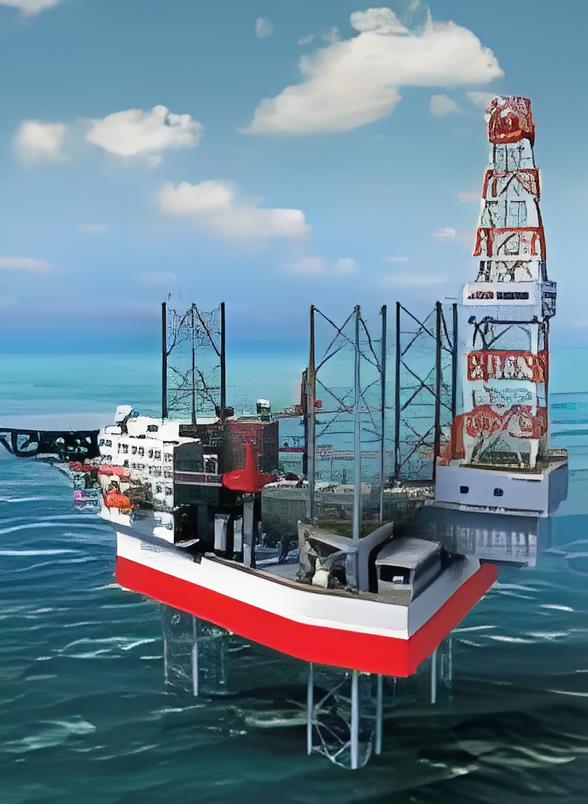
Below is a typical cantilever rig for a medium‑sized production platform.
|
Parameter
|
Specification
|
|
Drilling Depth Capacity (5″ DP)
|
5,000 m (16,400 ft)
|
|
Workover Depth Capacity (3‑1/2″ tubing)
|
7,000 m (23,000 ft)
|
|
Hook Load Capacity
|
3,200 kN (720,000 lbs)
|
|
Drawworks Power
|
2,000 HP (continuous) – AC variable frequency
|
|
Top Drive
|
750 HP, 0–200 RPM, 30,000 Nm torque
|
|
Derrick / Mast
|
38 m (125 ft), 3,500 kN static hook load
|
|
Cantilever Extension
|
6 m (20 ft) from platform edge – covers 4–6 well slots
|
|
Skidding System
|
Hydraulic push‑pull, 500 kN capacity
|
|
Mud Pumps
|
2× 1,600 HP triplex (max pressure 7,500 psi)
|
|
Mud Tank Capacity
|
180 m³ (1,100 bbl) – integrated under rig floor
|
|
Bulk Storage
|
Cement (100 m³), barite (120 m³), bentonite (80 m³)
|
|
BOP Stack
|
13‑5/8″, 10,000 psi, dual ram + annular (hydraulic control)
|
|
Pipe Handling
|
Iron roughneck, manual or automated racking
|
|
Rig Power
|
4× 1,500 kW diesel generators (platform power optional)
|
|
Platform Deck Load (Rig + consumables)
|
< 500 tonnes (depending on layout)
|
|
Corrosion Protection
|
NORSOK M‑501 coating system, 25‑year design life
|
|
Certifications
|
API 4F, API 7K, API 8C, ABS class, DNV optional
|
|
Typical Crew
|
8–12 (drilling mode) / 6–8 (workover mode)
|
Application Fields
Fixed‑platform drilling and workover rigs are installed on production platforms in various offshore settings.
-
Shallow Water Fixed Platforms (5–50 m depth)
Jacket platforms in the South China Sea, Bohai Bay, Middle East (Arabian Gulf), and Southeast Asia. The rig drills development wells from the platform after installation, then stays for workover throughout field life (15–30 years).
-
[Image Placeholder: Cantilever rig at work on a jacket platform in calm seas]
Tension Leg Platform (TLP) & SPARs
Deepwater platforms (200–1,500 m) also need platform rigs for workover. Our rigs are designed for the motion and compact deck space of TLPs and SPARs. The cantilever extends over the moonpool area.
-
Wellhead Platforms (Satellite Platforms)
Unmanned or minimally manned wellhead platforms often have a small skid‑mounted workover rig that is transported by boat and lifted on when needed. Our portable workover rig is ideal for this – can be stored onshore between campaigns.
-
Platform Re‑drilling & Slot Recovery
When a platform’s existing wells are depleted, operators often drill new wells from the same platform using a "slot recovery” technique. Our rig can skid to abandoned slots, mill out the old casing, and drill new sidetracks.
-
Major Workover Campaigns (High Pressure, Sour Gas)
For platforms with HPHT gas wells, our rigs are equipped with 15,000 psi BOPs, choke manifolds, and sour service trim. We have supplied workover rigs for platforms in the North Sea’s HPHT fields and the Middle East’s sour gas fields.
Why Choose SJ Petroleum Machinery for Fixed‑Platform Rigs?
1. Purpose‑Built for Platforms, Not Adapted Land Rigs
We do not just take a land rig and bolt it to a platform. Our rigs are designed from the ground up for the offshore environment: compact footprint, corrosion resistance, and easy maintenance in confined spaces.
2. Cantilever Reach That Covers Your Wellbay
A rig that cannot reach all well slots is useless. We design the cantilever extension based on your platform layout. Standard extension 6 meters – enough for 4–6 slots. For larger wellbays, we can extend to 8 meters (requires heavier substructure).
3. Integrated Safety Systems
All rigs include:
– Automatic driller (anti‑collision, torque management)
– Remote BOP control with ESD
– Fire & gas detection with alarm and deluge interface
– Escape routes and life raft stations integrated into rig design
We work with your platform’s safety case.
4. Fast Skidding for High‑Density Well Slots
On a platform with 40 wells spaced 2.5 m apart, you need to move the rig often. Our hydraulic skidding system moves the rig 2.5 m in 20 minutes – much faster than chain‑jack systems. The operator controls skidding from a pendant.
5. Platform Integration Engineering
We do not just deliver a rig – we help you integrate it. Our team works with your platform structural engineers to verify deck loading, interface with existing utilities (power, water, diesel, flare), and route walkways without interfering with platform operations.
6. Life‑Cycle Support for Decades
When your rig is installed for 25 years, you need spare parts and technical support for the long haul. We provide:
– 10‑year spare parts availability guarantee
– Annual inspection and maintenance service contracts
– Remote diagnostics via satellite link
– Upgrades (e.g., adding snubbing capability, automating pipe handling)
Frequently Asked Questions (FAQ)
Q1: What is the difference between a fixed‑platform rig and a jackup rig?
A jackup rig is a mobile offshore drilling unit (MODU) with legs that stand on the seabed. It moves from well to well. A fixed‑platform rig is permanently installed on a production platform – it cannot move to another platform without major disassembly. Fixed‑platform rigs are lighter and cheaper for long‑term field development where wells are already grouped on a platform.
Q2: Can your rig handle directional drilling and horizontal wells?
Yes – our top drive and drawworks are compatible with mud motors and rotary steerable systems. The rig has a full set of survey tools (MWD) and a doghouse for directional driller. We have installed rigs on platforms that drilled 3,000 m laterals from a jacket.
Q3: How do you protect the rig from typhoons / hurricanes?
The rig is designed for the platform’s environmental criteria (100‑year storm). Before a storm, the cantilever is retracted, the derrick is secured (tie‑downs), and the BOP is locked. The rig can be left unattended during the storm (all critical systems weatherproof). After the storm, we send a crew to inspect and restart.
Q4: Can I use your rig for both drilling new wells and workover on existing wells?
Yes – that is the primary advantage of a platform rig. When drilling new wells, you use the full drilling package (top drive, mud pumps, solids control). For workover, you can remove the top drive and use a smaller workover string. The rig’s design allows switching between modes in 1–2 days.
Q5: What is the typical lead time for a fixed‑platform rig?
18–24 months from contract to delivery. This includes detailed engineering, fabrication, assembly, FAT, and load‑out. For workover‑only rigs (simpler), 12–16 months. We can expedite with overtime but cost increases.
Q6: Do you provide installation and commissioning on the platform?
Yes – we send a team of rig erectors and commissioning engineers to your platform. We work with your platform crane or a floating crane to lift modules onto the deck. Commissioning includes function testing, load testing of drawworks, and crew training. Typically 4–6 weeks on site.
Q7: How much deck space does your cantilever rig require?
For a 5,000 m drilling rig: approximately 25 m × 18 m (including access walkways). The cantilever extends 6 m beyond the platform edge. We will provide a 3D model for your platform integrator to verify fit.
Q8: Can the rig be powered from the platform’s main power system, or does it need its own generators?
Both options are available. Many platforms have spare power capacity (e.g., from gas turbines), so we connect to platform switchgear. Others have limited power, so we include diesel generators on the rig skid. Hybrid systems (shore power when available, generators for peak loads) are also possible.
Q9: What certifications do your rigs carry?
API 4F (drilling structures), API 7K (drilling equipment), API 8C (derricks). ABS class certification (for the rig as a platform installation) is optional. For operating in specific regions, we can also provide DNV, Lloyd’s, or CCS certification.
Q10: Do you offer training for platform crew?
Yes – we provide a 4‑week training program: 1 week classroom (rig systems, safety), 2 weeks simulator (drilling and workover procedures), 1 week on‑site (supervised operation on your platform after commissioning). We also provide refresher training every 3 years.
Tag: Low temp rig manufacturers | Cold resistant rig price | Quick move and install rig | Quick install rig manufacturers | Advantages of quick install rigs | Quick install rig specifications | Fast moving desert rig | Desert rig specifications