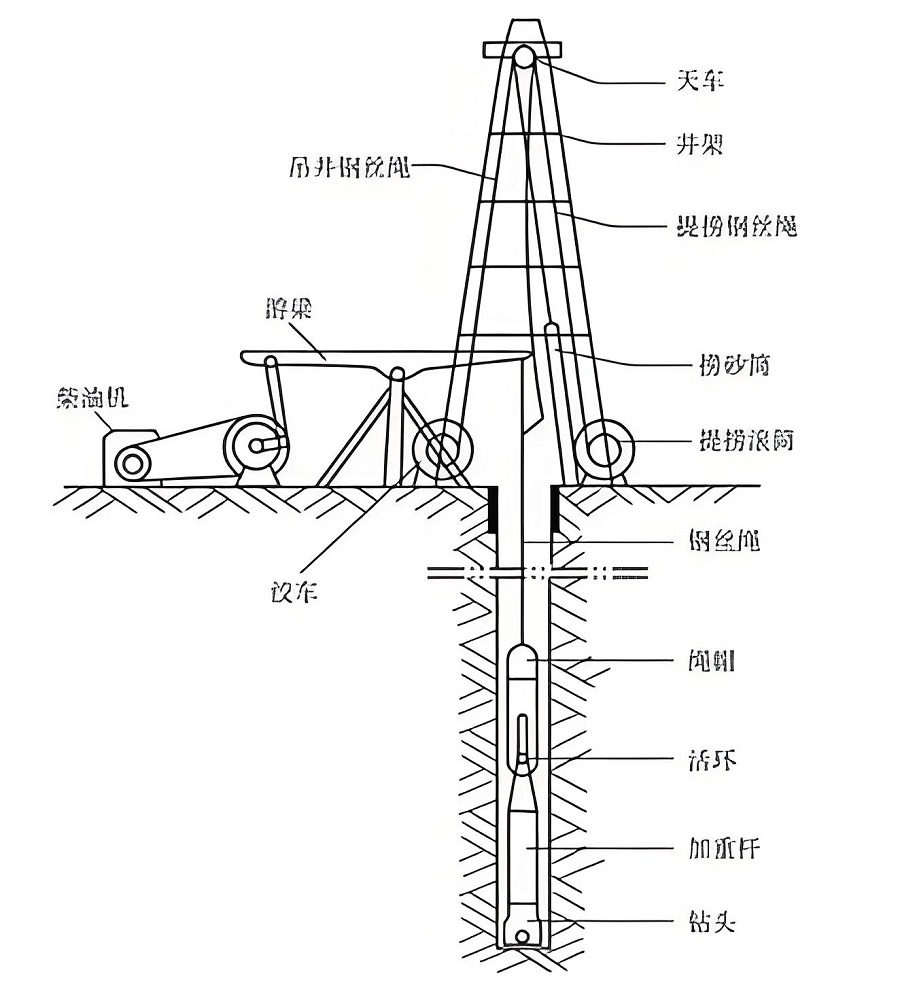
Drilling rig working principle
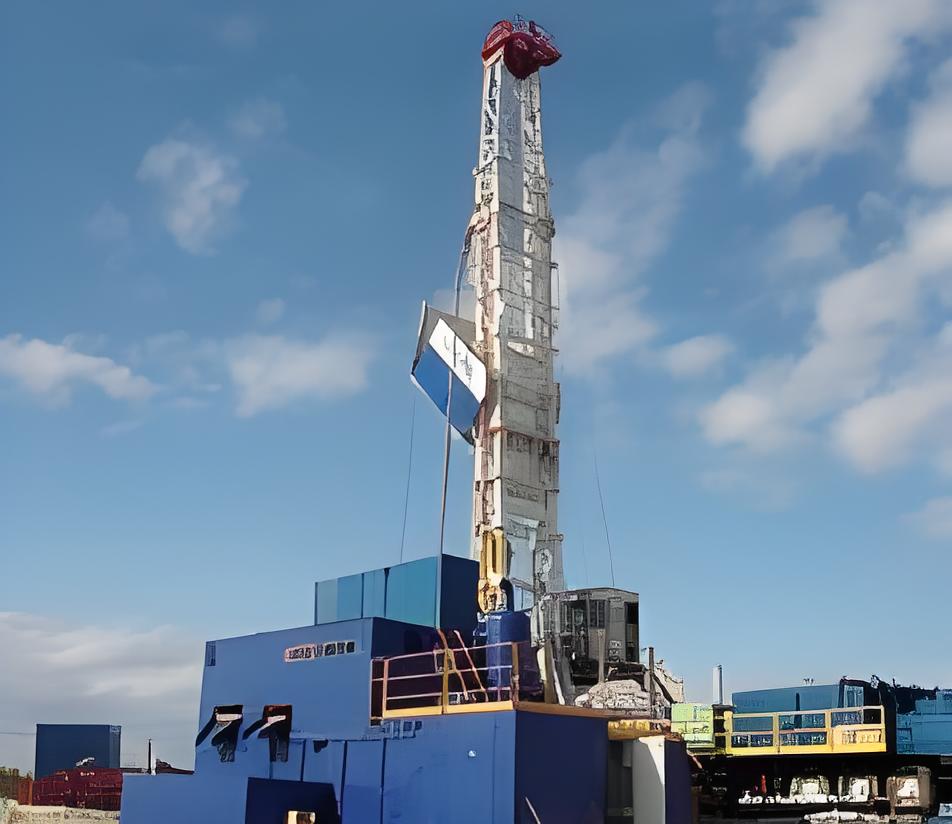
Technical Specifications – SJ Petro Drilling Rigs (Working Principle Parameters)
| Parameter | ZJ50 | ZJ70 | ZJ90 | ZJ120 |
|---|---|---|---|---|
| Max hook load (kN) | 3,150 | 4,500 | 6,750 | 9,000 |
| Drawworks power (HP) | 1,500 | 2,000 | 3,000‑4,000 | 4,000‑6,000 |
| Hoisting lines | 10‑12 | 12 | 14‑16 | 16 |
| Top drive torque (Nm) | 50,000 | 65,000 | 80,000 | 100,000 |
| Mud pump max pressure (MPa) | 35 | 52 | 52‑70 | 52‑70 |
| Mud pump total HP | 3,000 | 4,400 | 6,600 | 6,600 |
| BOP pressure rating (psi) | 5,000‑10,000 | 10,000‑15,000 | 15,000‑20,000 | 15,000‑20,000 |
| Automation level | 1‑3 | 1‑4 | 1‑4 | 1‑4 |
| API compliance | 4F,7K,8C,Q1 | 4F,7K,8C,Q1 | 4F,7K,8C,Q1 | 4F,7K,8C,Q1 |
Application Fields – Matching Working Principles to Well Types
| Well Type | Depth | Key Working Principle Demand | Recommended Rig |
|---|---|---|---|
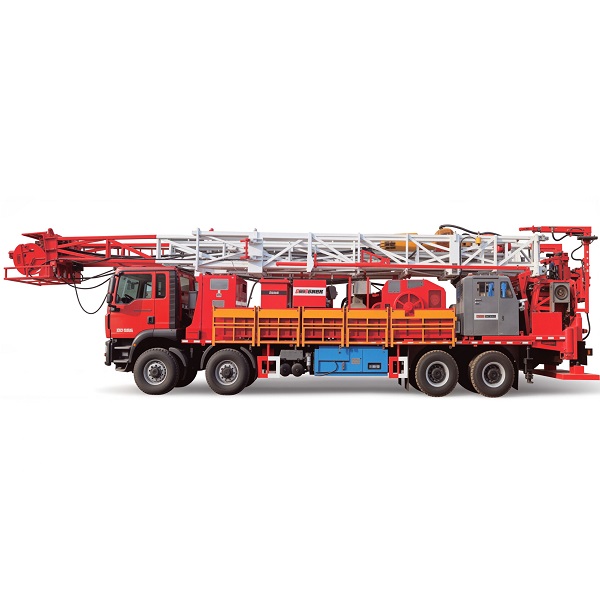
| Shallow oil / water well | 500‑2,000 m | High ROP, low cost | ZJ30 (truck‑mounted) |
| Conventional development | 2,000‑4,000 m | Balanced hoisting + circulation | ZJ40 |
| Deep gas / HPHT | 4,000‑6,500 m | High pressure circulation (52+ MPa), heavy hook load | ZJ70 |
| Ultra‑deep gas / frontier | 7,000‑9,000 m | Extreme hook load, top drive torque | ZJ90 |
| Shale gas pad (10+ wells) | 3,000‑5,000 m | Fast walking, automated pipe handling | ZJ50‑walking |
| Arctic permafrost | 2,500‑5,000 m | Low‑temp hoisting, heated hydraulics | ZJ40‑AR / ZJ50‑AR |
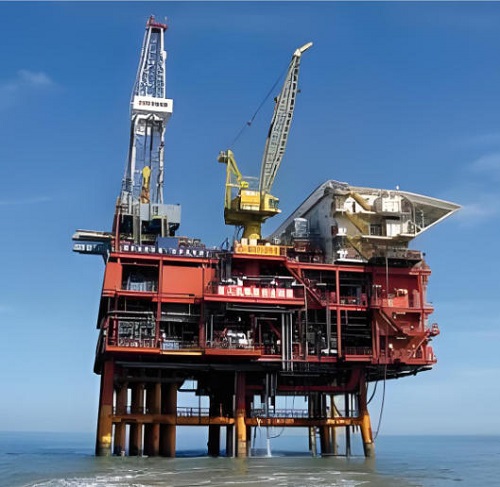
| Offshore platform | 3,000‑7,000 m | Compact footprint, ATEX, marine BOP | ZJ50‑OS / ZJ70‑OS |
Product Types – SJ Petro Drilling Rigs
| Type | Depth | Key Working Principle Advantage |
|---|---|---|
| ZJ30‑M | 3,000m | Mechanical drive – simple, reliable hoisting |
| ZJ40‑BE | 4,000m | Trailer‑mounted, crane‑free, fast rig‑up |
| ZJ50‑VFD | 5,000m | AC VFD hoisting + soft torque rotation |
| ZJ70‑Walking | 7,000m | Hydraulic walking + automated pipe handling |
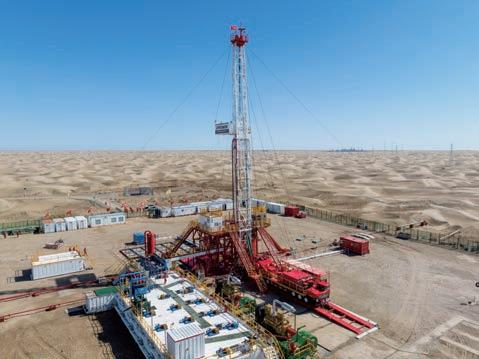
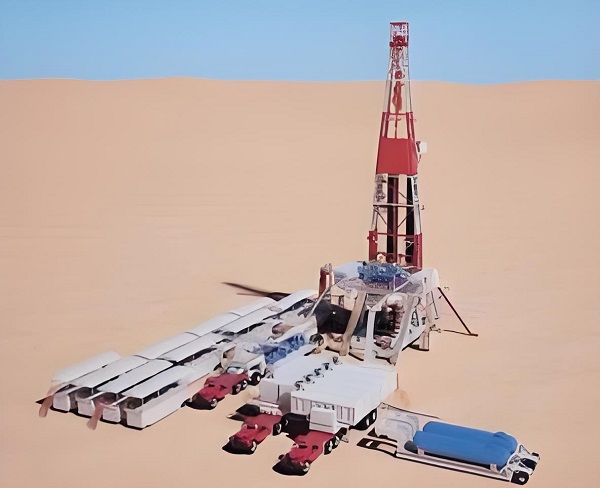
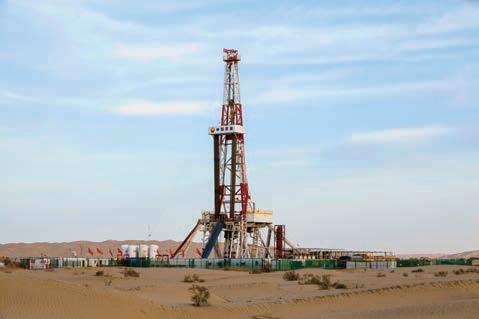
| ZJ90‑DT | 9,000m | Desert climate‑adapted, high pressure mud |
| ZJ120‑HD | 12,000m | 9,000 kN hook load, 6,000 HP drawworks |
| CT‑2500 (containerized) | 2,500m | ISO box modules, heli‑portable |
Why Choose SJ Petro – We Engineer Working Principles, Not Just Parts
1. We Build the Entire System – No Compromises
When you buy a SJ Petro drilling rig, you are not piecing together components from different vendors. We engineer the hoisting, rotating, circulating, and well control systems to work together seamlessly. The AC VFD drive logic is tuned to the drawworks, the top drive torque curve is calibrated to the mud pump pulsation, and the BOP control is integrated with the MPD system.
2. Backed by Sinopec – Operational Experience Informs Design
SJ Petro is a wholly‑owned subsidiary of Sinopec Oilfield Equipment Corporation, part of the Fortune Global 500 Sinopec Group. Sinopec operates thousands of rigs worldwide. Every working principle – hoisting speeds, torque limits, mud flow rates – is refined using real‑world drilling data from Sinopec's own fields. You get the benefit of decades of operational learning.
3. API Certified – Proven to Global Standards
All SJ Petro rigs meet API 4F (masts), 7K (drawworks), 8C (top drives), and Q1 (quality management). Third‑party inspection (ABS, DNV, BV, SGS) is welcome. Full documentation – material certs, weld maps, NDT reports, pressure tests – is provided.
4. Global Support & Training
We don't just sell rigs; we ensure your crew understands the working principles. Training includes:
-
Classroom instruction – Hoisting calculations, torque management, hydraulics.
-
Simulator practice – Virtual drilling with realistic load and pressure responses.
-
On‑site mentorship – First well supervised by SJ Petro engineers.
24/7 remote diagnostics available. Regional parts hubs in Dubai, Houston, Singapore.
5. Flexible Acquisition – Own, Lease, or Rent
| Option | Term | Best For |
|---|---|---|
| Outright purchase | N/A | Long‑term operators |
| Operating lease | 12‑60 months | Contractors, multi‑year campaigns |
| Short‑term rental | 3‑12 months | Single wells, exploration |
FAQ – Drilling Rig Working Principle
Q1: Why does the drawworks need such high power (up to 6,000 HP)?
A. The drill string in a 12,000‑m well can weigh over 800 tons. The drawworks must not only lift that weight but also overcome friction and provide a safety margin for stuck pipe (fishing). 6,000 HP allows rapid hoisting (reducing trip time) and provides reserve power for emergency pulls.
Q2: How does top drive improve over rotary table + kelly?
A. A top drive rotates the drill string directly from the travelling block, so you can add a new joint of pipe without setting the slips and breaking the kelly drive connection. This cuts connection time from 3‑5 minutes to 1‑2 minutes. Top drives also allow circulation while rotating, critical for hole cleaning.
Q3: What is "sticking” and how does soft torque help?
A. Stick‑slip is a torsional vibration where the bit alternately sticks (torque builds) and slips (torque releases violently). It destroys PDC bits and damages downhole tools. Soft torque algorithms modulate top drive speed at millisecond intervals to dampen these oscillations, reducing stick‑slip severity by 80%+.
Q4: Why is mud pressure rating important – what happens if it's too low?
A. At great depth, formation pressure can exceed 100 MPa (15,000 psi). If your mud pump cannot exceed formation pressure, you cannot circulate mud and risk a kick (influx of formation fluids). Our ZJ90 and ZJ120 rigs offer 52‑70 MPa circulating pressure, capable of handling the deepest HPHT wells.
Q5: How does a walking rig maintain hoisting/rotating while moving between wells?
A. A walking rig has hydraulic lift cylinders that raise the entire rig off its foundations, traverse cylinders that move it sideways, and steering turntables for rotation. The mast, drawworks, top drive, and mud pumps remain connected – only the utility lines (power, mud, air) are temporarily disconnected. The rig walks as a single unit, so no need to re‑rig.
Q6: What is regenerative braking – does it save energy?
A. When lowering the drill string, the drawworks motor acts as a generator, converting potential energy into electricity. In a grid‑connected rig, this energy can be fed back to the utility grid. In a diesel‑electric rig, it can be stored in batteries or dissipated as heat through resistors. Regenerative braking reduces fuel consumption by 15‑20% on typical drilling cycles.
Q7: Can I upgrade my existing rig with SJ Petro's working principle enhancements?
A. Yes. We offer retrofit kits for:
-
AC VFD drive (replace SCR or mechanical)
-
Soft torque software (add to existing top drive)
-
Automated pipe handling (catwalk + iron roughneck)
-
MPD integration
Contact our engineering team for a site‑specific assessment.
Q8: How do I get started with SJ Petro for a new rig?
A. Send us your well plan (target depth, casing program, expected formation pressures, environment). Our engineers will recommend a rig model, provide a working principle analysis (hoisting loads, torque requirements, circulating pressure), and deliver a firm budget quote – within 10 working days.