Technical Specifications
| Parameter | Specification |
|---|---|
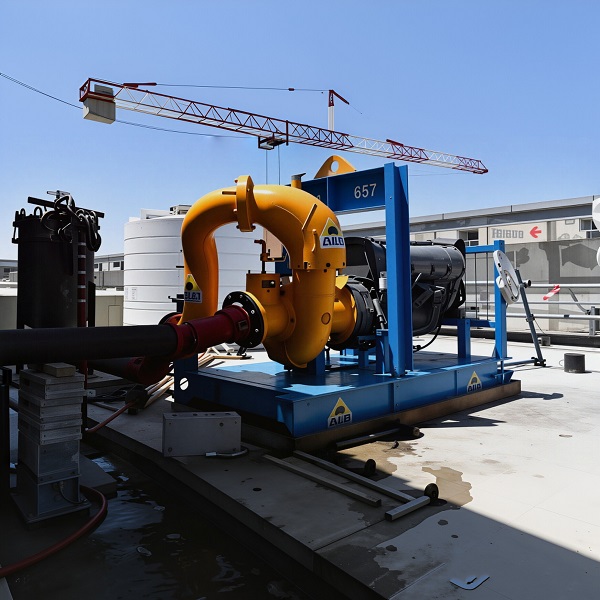
| Pump Type | Horizontal Triplex Single-Acting Plunger Pump |
| Power Range | 100 HP – 600 HP (75 kW – 448 kW) – scaled for water well depths |
| Max Pressure | Up to 3,000 PSI (20.7 MPa) typical; higher optional |
| Max Flow Rate | Up to 500 GPM (1,890 L/min) depending on liner |
| Plunger Sizes | 3.0″, 3.5″, 4.0″, 4.5″ (76–114 mm) |
| Pump Speed Range | 80 – 140 SPM |
| Suction Connection | 8″ flanged (or 6″ threaded optional) |
| Discharge Connection | 3″ flanged, API 7K compliant |
| Skid Frame | Heavy-duty welded steel, epoxy primed + polyurethane topcoat |
| Dry Weight (typical) | 2,500 – 6,000 lbs (1,130 – 2,720 kg) depending on power option |
| Drive Options | Diesel engine (with centrifugal clutch) OR electric motor (NEMA or IEC) |
| Fluid End Material | Hardened ductile iron with replaceable liners |
| Valve Type | Sphere or cone type, interchangeable with major brands |
| Max Fluid Temperature | 180°F (82°C) |
| Certifications | API 7K, API Q1, ISO 9001:2015 |
| Standard Accessories | Suction stabilizer, pressure gauge, pulsation dampener (optional) |
Key Applications
Domestic & Agricultural Water Wells
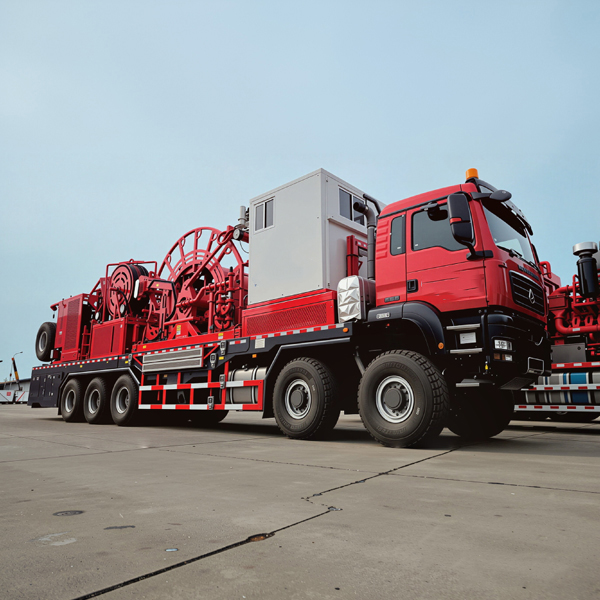
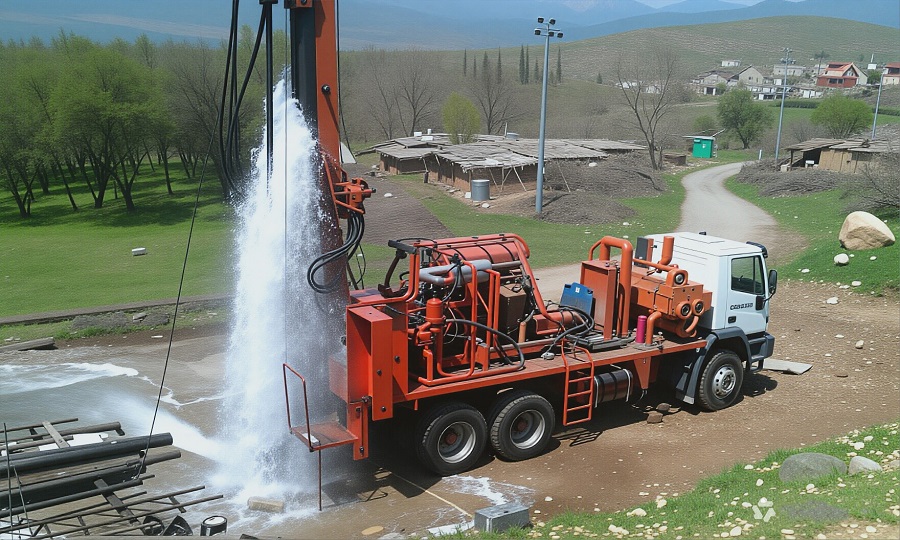
Drilling for household supply, irrigation, or livestock watering demands affordable, reliable equipment. Our smaller mud pumps (100–250 HP) pair perfectly with truck-mounted or trailer-mounted rotary rigs common in this sector. They circulate water-based or polymer fluids efficiently without overtaxing your power source.
Municipal & Industrial Water Supply
For deeper boreholes (300–600 meters) serving towns or factories, you need higher pressure to overcome column friction and lift heavy cuttings. Our 400–600 HP models maintain 1,000–1,500 PSI at 300+ GPM, keeping the hole clean even in hard rock or boulder formations.
Monitoring & Exploration Boreholes
Environmental consultants and hydrogeologists drilling small-diameter monitoring wells appreciate the pump’s precise flow control with VFD. Set flow as low as 20 GPM without stalling—ideal for slow, careful penetration through sensitive aquifers.
Shallow Geothermal Borefields
Closed-loop geothermal installations require dozens of shallow holes (50–150 feet). A single portable skid pump can service multiple drill rigs over a season. The compact footprint lets you park it at the edge of the borefield while rigs move freely.
Emergency & Humanitarian Drilling
When disaster strikes or a remote community needs water fast, airfreight-able equipment saves lives. Our pumps can be broken down into two sub-2000 lb components and reassembled on site in a few hours.
Why Choose SJ Petroleum Machinery?
Backed by a Global Energy Leader
SJ Petroleum Machinery is a wholly-owned subsidiary of Sinopec Oilfield Equipment Corporation—one of the world’s largest oilfield equipment manufacturers. That means we have access to advanced metallurgy, precision machining, and rigorous quality systems typically reserved for the oil and gas industry. But you get it at water well drilling equipment pricing.
Built for Work, Not Just Showrooms
Walk through our factory in Jingzhou, China, and you’ll see castings being X-rayed, welds being ultrasonically tested, and every pump running on a dyno before it ships. We don’t cut corners. Our pumps are ugly where it doesn’t matter (rough-textured skid coating for slip resistance) and beautiful where it does (precision-ground plungers, perfectly lapped valve seats).
Global Parts Compatibility
We know downtime in the middle of a drilling project is expensive. That’s why most wear parts—liners, valves, packing, pistons—are interchangeable with popular brands like Gardner Denver, Wheatley, or NOV. You’re never locked into proprietary parts.
Practical Export Experience
With customers in over 30 countries, we understand shipping to remote destinations. All pumps are crated with desiccant and VCI paper, container-loaded using our standard packing list. We handle export documentation (COO, BL, commercial invoice) and can arrange L/C or T/T payments.
Responsive Technical Support
Our engineers speak English, Spanish, French, and Arabic. Email queries get a reply within 24 business hours. Urgent technical issues get a WhatsApp voice call or video walkthrough. When you need a replacement part, we can air-freight it within 48 hours from our Houston or Dubai hub.
Frequently Asked Questions (FAQ)
Q1: What size pump do I need for a typical water well drilling rig?
For a medium-sized rotary rig drilling 200–400 mm diameter wells to 200 meters depth, a 250 HP pump producing 200–250 GPM at 500–800 PSI is standard. Smaller trailer rigs (150 HP) work fine with a 150 HP pump. Tell us your rig make/model and target borehole, and we'll recommend the exact configuration.
Q2: Can these pumps run on bentonite and polymer drilling fluids?
Absolutely. Bentonite slurries (20–40 lb/bbl) and PHPA polymers are our bread and butter. The low-shear fluid path through the pump (compared to centrifugal pumps) preserves polymer molecular weight. However, avoid pumping cement or chemical grouts through a mud pump—use a dedicated grout pump for that.
Q3: How do I power the pump if my drill rig’s engine doesn’t have a PTO?
Two common solutions: (1) A separate diesel engine mounted on the same skid, controlled independently from the rig. (2) An electric motor powered by a generator you already carry on your support truck. We can supply either. Some customers also use hydraulic-driven pumps, but that’s a separate discussion.
Q4: What’s the typical lifespan of wear parts in water well drilling?
With clean water or light bentonite, liners can last 3,000+ hours. Once you hit sandy formations, expect 1,000–1,500 hours. Valves and seats: roughly 500–800 hours in abrasive sand. Packing: 200–400 hours depending on fluid cleanliness. We recommend keeping a complete set of wear parts on your rig for any multi-week project.
Q5: Is the pump self-priming?
Yes, to a point. The triplex design can lift water up to 15–20 feet (vertical suction lift) if the suction line is full and valves are in good condition. But for reliable operation, we always recommend a flooded suction or a small centrifugal charge pump, especially when pumping from a sump or pit.
Q6: How loud is the diesel-driven unit?
At idle, around 85 dBA at 1 meter. Under full load, 95–100 dBA depending on engine brand. For noise-sensitive sites (near homes or schools), we offer a sound-attenuated canopy that reduces noise by 15–20 dBA. Expect a 10% price premium and slightly larger footprint.
Q7: Do you offer training for my local crew?
Yes—either on-site at your location or via video call with screen sharing. We also provide a full maintenance manual with exploded views, torque specs, and troubleshooting flowcharts. For a nominal fee, we can fly a technician to your site for a 2-day hands-on training.
Q8: What payment and shipping terms do you offer?
Standard: 30% T/T deposit, 70% balance before shipment (after third-party inspection if required). EXW Jingzhou, FOB Shanghai, or CIF to major ports negotiable. For first-time customers, we can accept L/C at sight. Delivery: 45–60 days for standard configuration; 75–90 days for custom builds.