Technical Specifications
| Parameter | Standard Series | Heavy-Duty Series | Precision 5‑Axis Series |
|---|---|---|---|
| Table Diameter | 125 – 800 mm | 1,000 – 3,150 mm | 170 – 630 mm |
| Load Capacity (Horizontal) | 100 – 800 kg | 10,000 – 100,000 kg | 150 – 500 kg |
| Load Capacity (Vertical) | 50 – 400 kg | 5,000 – 50,000 kg | 80 – 250 kg |
| Clamping Torque | 150 – 6,000 N·m | Up to 65,000 N·m | 300 – 4,000 N·m |
| Max Rotation Speed | 30 – 100 rpm | 0.5 – 3 rpm | 40 – 80 rpm |
| Indexing Accuracy | ±20 – ±30 arc‑sec | ±10 – ±20 arc‑sec | ±5 – ±15 arc‑sec |
| Repeatability | ±4 – ±5 arc‑sec | ±2 – ±4 arc‑sec | ±2 – ±4 arc‑sec |
| Through‑Hole Diameter | 45 – 140 mm | N/A (solid platen) | 50 – 100 mm |
| Drive Mechanism | Worm gear / Roller cam | Worm gear / Hydrostatic | Roller cam / Direct drive |
| Table Orientation | Horizontal / Vertical | Horizontal | Tilting (‑30° to +120°) |
| Mounting | Direct to machine table | Floor / Saddle mounted | Direct / Trunnion |
| Certifications | ISO 9001:2015, CE | ISO 9001:2015, CE | ISO 9001:2015, CE |
| Standard Accessories | Tailstock, manual / pneumatic tailstock, rotary joint | Ball screw saddle, linear guideway, hydrostatic guideway | Tailstock, collet chuck, coolant-through adapter |
Key Applications
Vertical Machining Center 4th Axis Upgrade
A standard 3‑axis VMC becomes dramatically more capable with our rotary table. You can machine four sides of a prismatic part in one setup, perform circular interpolation with the rotary axis, and index to compound angles. For job shops and contract manufacturers, this is the fastest way to expand capability without buying a horizontal machining center.
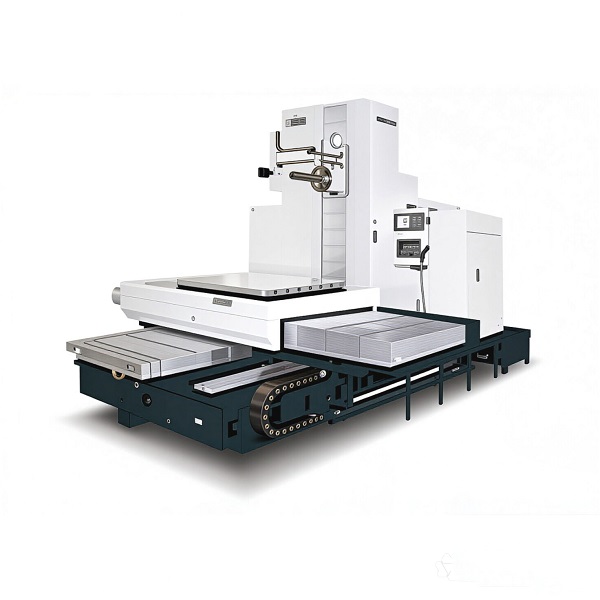
Horizontal Boring Mill B‑Axis
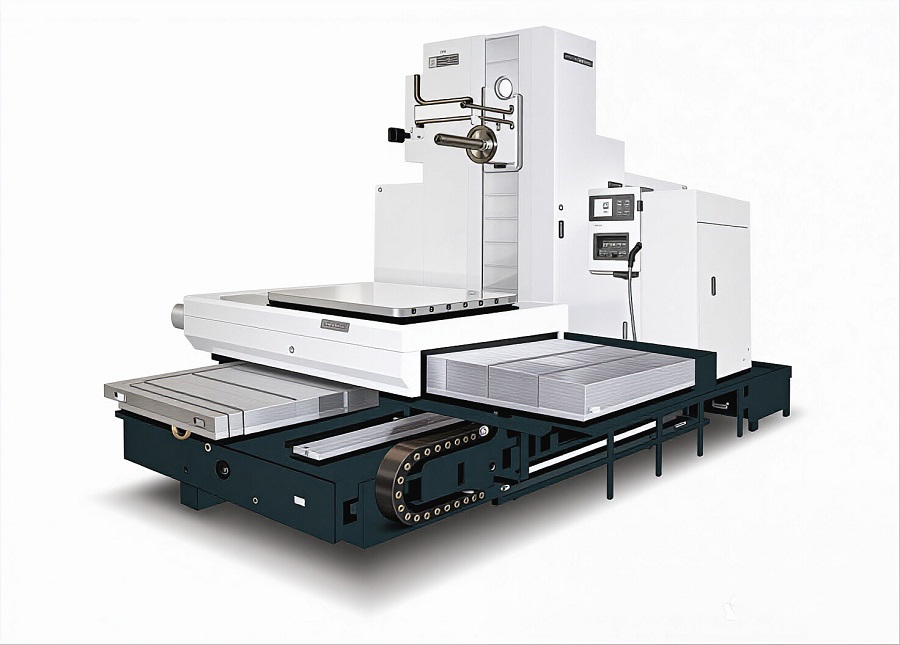
Floor-type and table-type horizontal boring mills rely on a precision rotary table (B‑axis) for multi-face machining of large components. Our heavy-duty models handle workpieces up to 100 tons, with travel up to 5,000 mm. The continuously indexing function can enlarge the machine's working range and implement multistep processes in a single workpiece setup. Our tables for boring mills feature B‑axis guideways with plastic coating for low friction, high shock absorption, and stable accuracy under interrupted cutting.
5‑Axis Trunnion Machining
For full simultaneous 5‑axis machining, our dual-axis tilting rotary tables (A and C axes) mount directly onto your VMC's table. The tilt axis reaches angles from -30° to +120°, allowing access to undercuts and complex contours. Parts like impellers, aerospace structural components, and medical implants become much easier to machine.
Large Part & Heavy Equipment Manufacturing
Power generation (turbine casings), marine (engine blocks), and construction equipment (booms, frames) require machining of oversized components. Our extra-large rotary tables handle platen dimensions up to 6,000 mm × 6,000 mm with load capacities reaching 600 tons. Linear motion travel (saddle) up to 5,000 mm extends machining range even further.
Mold & Die Work
Mold makers need high-speed, high-accuracy rotary positioning for complex core and cavity geometries. Our roller cam drive tables deliver zero backlash and smooth rotation, producing fine surface finishes without visible stepping.
Aerospace Component Machining
Landing gear components, engine mounts, and structural brackets often require 3+2 or full 5-axis machining on difficult materials. Our tables provide the rigidity needed for titanium and Inconel while maintaining the accuracy required for tight aerospace tolerances.
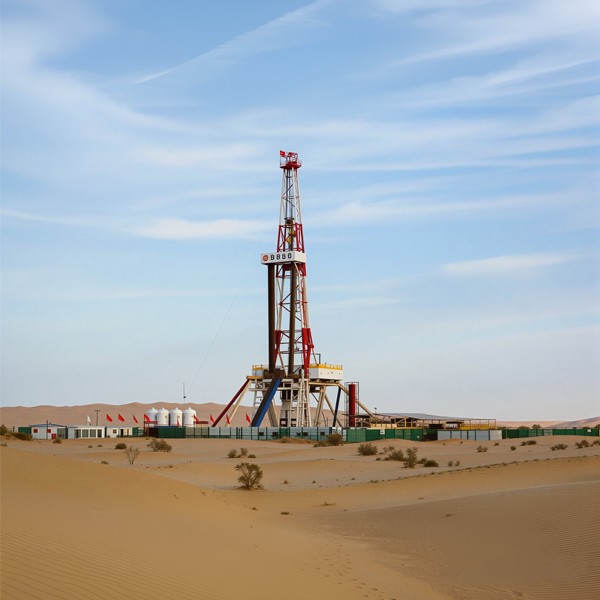
Oil & Gas Equipment Manufacturing
Valve bodies, blowout preventers, and drilling equipment components are large, heavy, and require precise porting across multiple faces. Our heavy-duty worm gear tables deliver the torque and clamping force needed for aggressive metal removal.
Why Choose SJ Petroleum Machinery?
Built by a Global Leader, Priced for Machine Shops
SJ Petroleum Machinery is a wholly‑owned subsidiary of Sinopec Oilfield Equipment Corporation—a company with decades of experience manufacturing heavy‑duty rotating equipment for the world's most demanding industries. That same engineering discipline, quality system, and metallurgical expertise goes into every CNC rotary table we build. But unlike the premium European and Japanese brands, we price our tables competitively because we manufacture in China and sell direct.
True Industrial Grade, Not Hobbyist Quality
We do not build light‑duty tables for benchtop mills. Our smallest table starts at 125 mm diameter and 100 kg load capacity. Our largest handles 100+ tons. Every table is designed for 24/7 production environments, with oversized bearings, hardened worms, and clamping systems that actually hold under high cutting forces.
Full Customization Capability
Standard T‑slot patterns don't always fit your fixtures. Center heights may not match your spindle nose. Special metallurgy might be required for corrosive environments. We offer complete custom design—modified T‑slot arrangements, special mounting interfaces, non‑standard center heights, even complete one‑off designs. Our engineering team works directly with your specifications.
Technical Specifications You Can Trust
Every rotary table leaving our factory undergoes full inspection:
-
Runout checked on a CMM
-
Backlash measured under load
-
Clamping torque verified
-
Accuracy test documented
-
Continuous run‑in for 2+ hours
You receive a test report with serialized data for every unit.
Global Export Experience
We have shipped rotary tables to machine tool builders and end‑users across North America, Europe, Southeast Asia, and the Middle East. Our export packaging exceeds ISPM 15 standards, with VCI paper and desiccant for moisture protection. We handle all documentation—commercial invoice, packing list, bill of lading, certificate of origin—and can arrange third‑party inspections (SGS, BV).
Responsive Technical Support
Our application engineers respond to technical queries within 24 hours. For urgent issues during installation or operation, we offer remote video support via WhatsApp or Teams. Spare parts (worm gears, bearings, seals, motors) are stocked for fast shipment via air freight.
We Speak Your Language—Literally
English, Spanish, Arabic, and Chinese‑speaking sales and support staff are available. No language barriers, no time zone excuses.
Frequently Asked Questions (FAQ)
Q1: Which drive mechanism should I choose for my application?
Here’s a quick guide:
-
Worm gear: Best for heavy‑duty milling and boring on steel, cast iron, and large parts. Highest load capacity and clamping torque.
-
Roller gear cam: Zero backlash, higher indexing speed, longer maintenance intervals. Best for precision finishing, 5‑axis work, and applications requiring sub‑arc‑second accuracy.
-
Direct drive (DD motor): Highest speed, zero mechanical wear. Best for high‑volume production of smaller aluminum or plastic parts.
Need help deciding? Send us your typical workpiece material, size, and cutting parameters. We will recommend a configuration.
Q2: What does "zero backlash” mean, and do I need it?
Backlash is the mechanical gap between the worm and wheel (or cam and rollers). When you reverse direction, the table does not move instantly—that gap must close first. Zero‑backlash designs eliminate this play, ensuring position is maintained regardless of cutting force direction. You need zero backlash for climb milling, contouring, 5‑axis simultaneous machining, and finishing passes where surface finish matters.
Q3: Can I retrofit a rotary table to my existing 3‑axis VMC?
Usually yes, with two conditions: (1) Your CNC control has an available 4th axis drive (or you are willing to add an independent control box). (2) Your machine's table can support the added weight and cutting forces. Most modern VMCs from Haas, DMG MORI, Mazak, Okuma, and Doosan are compatible. Send us your machine model and we will confirm fit.
Q4: What is the difference between an indexer and a full 4th axis rotary table?
An indexer uses a secondary controller and simply positions the part at discrete angles. A full 4th axis rotary table integrates directly with your machine's CNC control, allowing simultaneous motion with X, Y, and Z axes for contour milling and helical interpolation. We offer both types, but most customers prefer full 4th axis for maximum capability.
Q5: How accurate are your tables?
Indexing accuracy ranges from ±5 arc‑seconds on our premium roller cam series up to ±30 arc‑seconds on standard worm gear models. Repeatability is consistently ±2 to ±5 arc‑seconds. For reference: one arc‑second is 1/3,600 of a degree—enough to hold tolerances well under 0.01 mm on a 200 mm radius. Higher accuracy classes are available on request.
Q6: What is the typical lifespan of a rotary table in production use?
A properly maintained worm gear table will deliver 10–15 years of service before major rebuild. Roller cam tables typically last even longer. What wears fastest is the worm/wheel interface (lubrication dependent) and the clamping mechanism (seal dependent). We recommend a full inspection every 5,000 operating hours.
Q7: Do you provide tailstocks and accessories?
Yes. Manual, pneumatic, and hydraulic tailstocks are available for all table sizes. We also supply:
-
Rotary joints (coolant‑through)
-
Mounting adapters for specific machine models
-
Steady rests for long workpieces
-
Spare parts kits (bearings, seals, gaskets, motor cables)
Everything is tested and shipped with your rotary table.
Q8: What is the lead time for a custom rotary table?
Standard models (popular sizes, worm gear drive, Fanuc motor interface): 4–6 weeks EXW Jingzhou. Custom tables (special dimensions, non‑standard materials, unusual motor interfaces): 10–14 weeks depending on engineering requirements. We will provide a firm schedule before order confirmation.
Q9: Do you offer OEM / private label manufacturing?
Yes. We manufacture rotary tables for several global machine tool brands. Your logo, your color scheme, your part numbers—we can produce tables that appear as your own product. Minimum order quantities apply.