
Offset drilling technology
Technical Specifications – Offset Drilling Technology
| Parameter | Electro‑Hydraulic Skidding | Wheel‑Rail System |
|---|---|---|
| Rig weight capacity | 200–1,200 tonnes | 200–800 tonnes (higher with more bogies) |
| Move speed (loaded) | 0.5–1.0 m/min | 3–5 m/min |
| Move speed (unloaded) | 1.5–2.0 m/min | 5–8 m/min |
| Positioning accuracy (relative) | ±2 mm (standard), ±1 mm (laser option) | ±3 mm (encoder), ±1 mm (laser) |
| Number of cylinders/bogies | 2–8 cylinders | 4–12 wheel bogies |
| Synchronization tolerance | ±2 mm between cylinders | N/A (rigid frame) |
| Stroke per cylinder (skidding) | 0.5–3.0 m (longer with multi‑stroke) | Unlimited (rail length) |
| Hydraulic pressure | 210–280 bar (3,000–4,000 psi) | N/A (electric or hydraulic drive) |
| Control modes | Manual, semi‑auto, fully automatic (waypoints) | Manual, automatic (coordinate‑to‑coordinate) |
| Sensor types | Magnetostrictive displacement, pressure transducers | Wheel encoders, laser rangefinder, rail clamps |
| PLC scan cycle | 20 ms | 20 ms |
| Safety interlocks | Pressure imbalance alarm, position deviation alarm, obstruction detection (optional) | Wheel slip detection, rail clamp verification, overspeed protection |
| Operating temp (standard) | -20°C to +45°C | -20°C to +45°C |
| Operating temp (cold option) | -45°C to +45°C | -45°C to +45°C |
| API compliance | 4F (structures), 7K (hoisting), RP500 (electrical) | 4F, RP500 |
| Control integration | Modbus TCP, Profinet, EtherNet/IP to rig HMI | Same |
Product Types – Offset Drilling Technology Configurations
We offer offset drilling technology in three standard configurations, plus custom engineering:
1. Electro‑Hydraulic Skidding Package
-
Cylinders, power unit, PLC, sensors, and HMI software
-
Skid beams designed to match your rig substructure
-
Suitable for any rig size, any well spacing (with sufficient beam length)
-
Best for: 2–15 wells per pad, moderate move frequency
2. Wheel‑Rail Offset Package
-
Rail sections, wheel bogies, drive units, rail clamps, positioning system
-
Requires concrete foundation or compacted base
-
Best for: 15+ wells per pad, frequent moves (daily or weekly), linear or grid patterns
3. Hybrid System (Skidding + Wheel‑Rail)
-
Skidding for short moves (within a cluster) + wheel‑rail for long transfers between clusters
-
Most common on very large pads (30+ wells) with irregular spacing
-
Custom engineered – contact us for a layout review
4. Retrofit Kit (for existing rigs – any brand)
-
We survey your existing substructure, design bolt‑on attachments, and supply the full control system
-
On‑site installation and training included
Application Fields
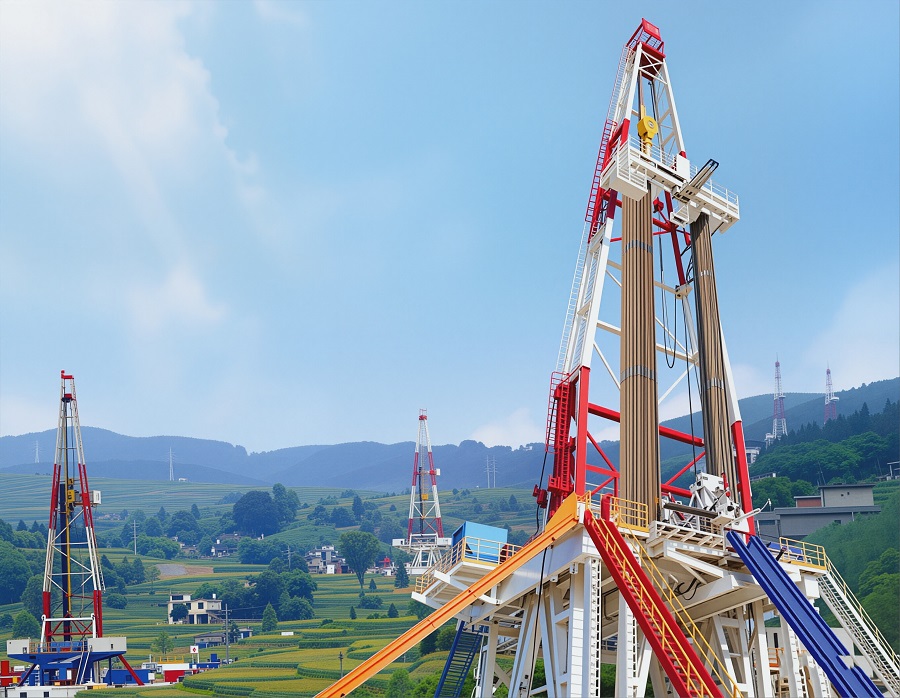
🏗️ Shale and Unconventional Resource Pads (Permian, Vaca Muerta, Sichuan)
High well density (20–40 wells per pad) demands fast, repeatable offset moves. Our wheel‑rail technology is the standard choice for these applications. One operator in the Sichuan Basin drilled 32 wells from a single pad using our wheel‑rail system, with an average move time of 14 minutes between wells.
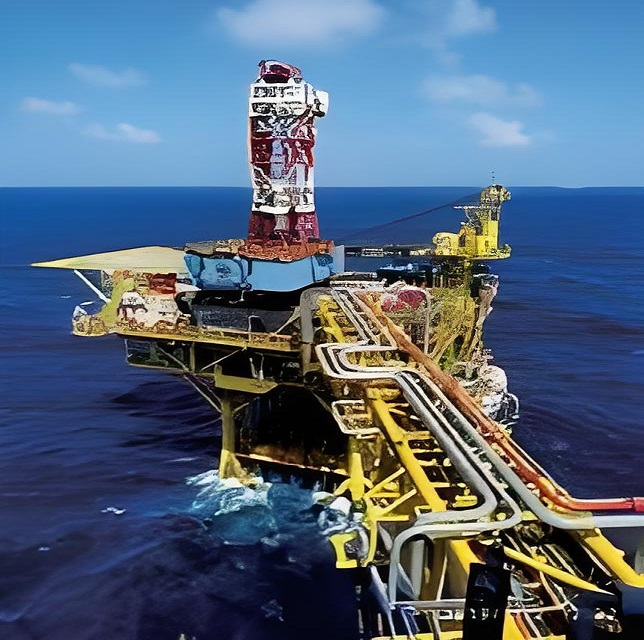
🛢️ Offshore Platform Slot Drilling
Platform space is limited, and wellheads are often only 2–3 meters apart. Our electro‑hydraulic skidding system (marine‑grade, explosion‑proof) moves the rig between slots without reconfiguring the drill floor. Used on jack‑up rigs in the South China Sea and Middle East.
🧊 Arctic Cluster Drilling (Siberia, Northern Canada)
Building multiple pads in permafrost is expensive and environmentally disruptive. One pad with offset drilling technology reduces your surface footprint by 70%. Our cold‑hardened skidding systems operate reliably at -45°C – proven on Rosneft projects in West Siberia.
🏔️ Mountain and Jungle Fields (Andes, Papua New Guinea)
When surface terrain limits pad size, you need to drill directional wells from a compact area. Offset drilling technology allows you to skid the rig a few meters between wellheads, staying within the same cleared area. Our modular skid beams are designed for helicopter transport.
🔧 Workover and Well Servicing Campaigns
A single workover rig can service 10–20 wellheads in a field if mounted on rails. We provide lightweight wheel‑rail systems for XJ workover rigs, including simple "stop‑and‑drill” controls that any workover crew can learn in one morning.
Why Choose SJ Petro for Offset Drilling Technology?
🏭 We Design the Technology, Not Just Sell Components
Many suppliers sell cylinders and valves. We sell an engineered system – including structural analysis, control algorithm tuning, sensor selection, and HMI integration. Our team includes mechanical, hydraulic, and control systems engineers. You get a single point of responsibility.
✅ Proven in Over 500 Moves (Documented Performance)
Our offset drilling technology has been used to complete over 500 successful offset moves across three continents. We track key metrics: move time, positioning accuracy, and unscheduled stops. Our current average: 22 minutes per 5‑meter move, ±1.8 mm accuracy, 98.7% first‑attempt success rate.
🔧 Seamless Integration with Any Rig Control System
We have integrated our offset technology into rig HMIs from Siemens, ABB, Rockwell, and other major PLC brands. If your rig has a Modbus TCP, Profinet, or EtherNet/IP port, we can talk to it. No need to replace your existing control system.
📋 Full Documentation and Training
Every offset drilling system ships with:
-
Engineering drawings (skid beam layout, hydraulic schematics, electrical diagrams)
-
PLC source code (customer owns it – no black boxes)
-
Operator manual (step‑by‑step move procedures, troubleshooting)
-
Maintenance manual (seal replacement, sensor calibration, hose inspection)
-
2‑day on‑site training for drillers and maintenance crews
🌍 Global Support with Local Stock
We maintain spare parts inventory (cylinders, valves, sensors, PLC modules) in China, Dubai, Houston, and Moscow. Remote support is available 24/7. On‑site engineers can be dispatched within 72 hours to most oil‑producing regions.
Frequently Asked Questions (FAQ)
Q1: What is the difference between offset drilling technology and conventional rig skidding?
A: Conventional skidding is manual – you operate each cylinder independently with a lever, eyeball the position, and re‑survey after every move. Offset drilling technology is automated and synchronized: the PLC controls all cylinders together, maintains alignment within ±2 mm, and stops precisely at the target. You push one button instead of manipulating six levers.
Q2: Can your offset drilling technology work on uneven ground?
A: Yes, with our automatic level compensation. The PLC monitors cylinder pressures and extends/retracts individual cylinders to keep the rig level within ±0.5 degrees. For slopes beyond 2 degrees, we recommend foundation leveling before installing skid beams. For extreme unevenness, the wheel‑rail system with adjustable bogie suspension is a better fit.
Q3: How do you prevent the rig from moving during drilling after skidding into position?
A: Our systems include multiple locking mechanisms:
-
Hydraulic skidding: The cylinder control valves are closed (poppet‑type, zero leakage). Additionally, mechanical locking pins (optional) are inserted through the skid beam into the substructure.
-
Wheel‑rail: Rail clamps are hydraulically or mechanically actuated, gripping the rail with 10–20 tonnes of clamping force. The rig cannot move even under high drill string torque.
Q4: What is the maximum offset distance your technology can handle?
A: For a single skidding stroke, up to 3 meters per cylinder (longer with multiple cylinder strokes or repositioning the cylinders). For longer distances, we recommend the wheel‑rail system – rail length can be extended indefinitely by adding sections. We have installed rails over 500 meters long for multi‑field workover rigs.
Q5: Does offset drilling technology work for both land and offshore rigs?
A: Yes. For land rigs, we use standard industrial components (IP54, -20°C to +45°C). For offshore rigs, we offer marine‑grade options: stainless steel cylinders, IP66 enclosures, explosion‑proof sensors (ATEX/IECEx), and marine‑approved hydraulic fluid. Offshore systems also include additional redundancy (dual power units, backup control).
Q6: How accurate is the positioning without the laser total station option?
A: Relative positioning accuracy (based on displacement sensors) is ±2 mm per move. However, over many moves, small errors can accumulate. For pads with 10+ moves, we recommend the laser total station option to maintain absolute accuracy. Without it, you may need to re‑survey every 5–8 moves.
Q7: Can I retrofit offset drilling technology to an older rig that was not designed for skidding?
A: In most cases, yes. We conduct a structural survey to check the substructure’s ability to handle skidding loads. If reinforcement is needed, we design bolt‑on or weld‑on stiffeners. We have retrofitted rigs from 1980s and 1990s vintage. Lead time for a retrofit system: 12–16 weeks.
Q8: What is the typical power requirement for the hydraulic power unit?
A: For a 500‑tonne rig with 4 cylinders, the hydraulic power unit requires 30–45 kW (40–60 HP) electric motor. For smaller rigs (200–300 tonnes), 15–25 kW is sufficient. We can also supply diesel‑driven power units for pads without grid electricity.







