
Offset drilling solutions
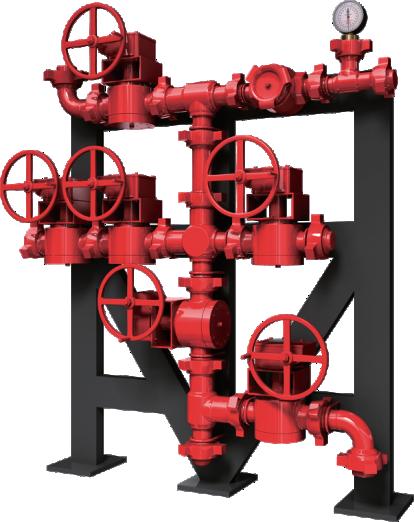
Technical Specifications – Offset Skidding Systems
The following specifications apply to our standard electro‑hydraulic skidding system. Wheel‑rail and modular systems have different parameters – contact us for those data sheets.
| Parameter | Value / Range |
|---|---|
| Rig Weight Capacity (static load) | 200–800 tonnes (custom up to 1,200 tonnes) |
| Skidding Stroke per Cylinder | 0.5–3.0 meters (longer with multiple cylinder strokes) |
| Number of Cylinders | 2–8 depending on rig size and pad layout |
| Cylinder Bore Diameter | 100–250 mm |
| Hydraulic Pressure | 210–280 bar (3,000–4,000 psi) |
| Skidding Speed (loaded) | 0.5–1.0 m/min |
| Skidding Speed (unloaded) | 1.5–2.0 m/min |
| Positioning Accuracy | ±2 mm (standard), ±1 mm (high‑precision option) |
| Control Modes | Manual / Semi‑automatic / Fully automatic (pre‑programmed pad) |
| Synchronization Tolerance | ±2 mm (master‑follower) |
| Alarm Tolerance | 5 mm deviation or 20% pressure imbalance |
| Power Unit | Electric‑driven hydraulic pump, 15–75 kW depending on cylinder count |
| Control Interface | PLC with touchscreen HMI; can integrate into existing driller’s cabin |
| Operating Temperature | -20°C to +45°C (cold‑hardened option to -40°C) |
| API Compliance | API 4F (structures), API RP 500 (electrical) |
| Optional Features | Laser positioning, remote wireless control, data logging of all moves |
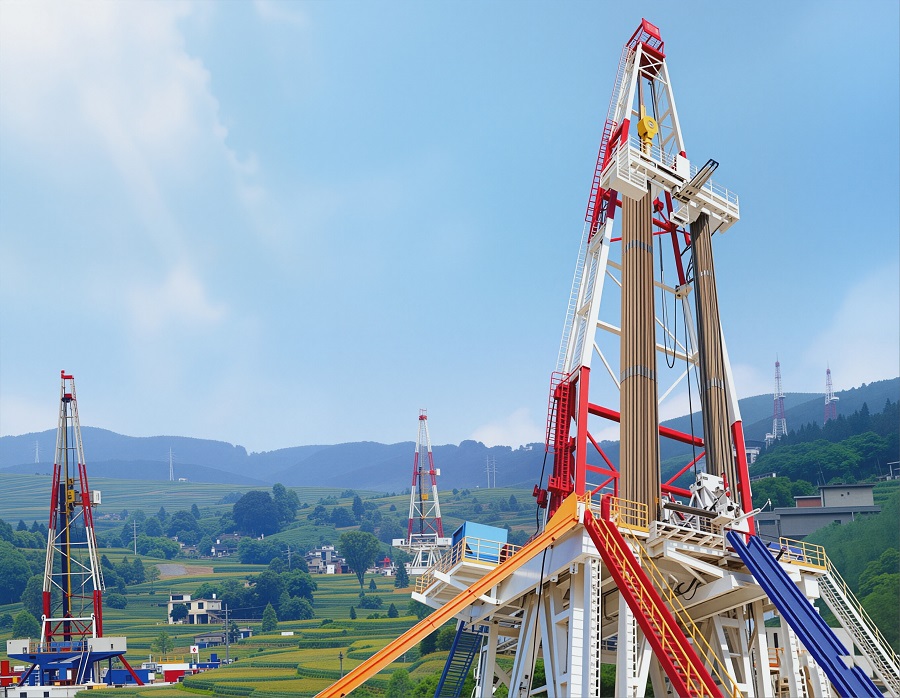
Product Types – Offset Drilling Solutions
We offer four main product families for offset drilling:
1. Electro‑Hydraulic Skidding Systems (Most Common)
-
Bolt‑on or weld‑on skid beams attached to rig substructure
-
Hydraulic cylinders push/pull rig across beams
-
Best for: pads with 2–10 wells, moderate move frequency, existing rig not equipped with rails
2. Wheel‑Rail Offset Rigs (High‑Density Pads)
-
Rig mounted on steel wheels running on embedded rails
-
Electric or hydraulic propulsion drive
-
Rail clamps lock rig during drilling
-
Best for: 10+ wells in linear or grid pattern, frequent moves (daily or weekly)
3. Modular Offset Rig Package (Remote / No‑Road Access)
-
Rig breaks down into modules weighing ≤5 tonnes each
-
Each module includes integrated skidding interface or lift points
-
Transport by helicopter, truck, or barge
-
Best for: jungle, mountain, Arctic tundra, offshore islands without bridges
4. Retrofit Skidding Kit (For Existing SJ Petro or Third‑Party Rigs)
-
We survey your existing rig substructure
-
Design bolt‑on skid beams and cylinder mounting brackets
-
Supply hydraulic power unit, PLC control, and sensors
-
On‑site installation and commissioning included
Application Fields
🏗️ Shale and Tight Gas Multi‑Well Pads
Operators in the Permian Basin, Vaca Muerta, and West Siberian shale plays drill 20–40 wells from a single pad. Our wheel‑rail offset rigs move from well to well in under 30 minutes, eliminating rig‑down/rig‑up cycles. One operator reported saving 3 days per 10‑well pad compared to conventional skidding.
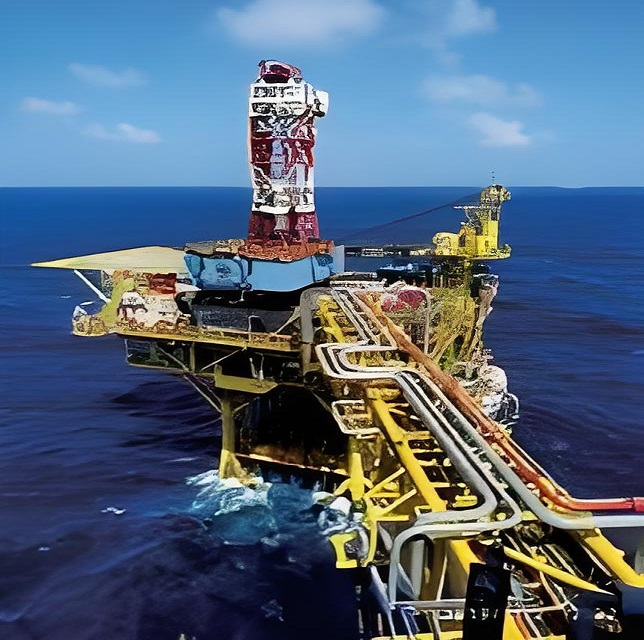
🛢️ Offshore Platform Slot Drilling
Platform rigs often drill multiple wells from different slots on the same platform deck. Our skidding systems are adapted for offshore environments – marine‑grade cylinders, explosion‑proof hydraulics, and remote control from the driller’s cabin. Move between slots in minutes instead of hours.
🏔️ Congested Onshore Fields (Urban or Mountain)
When surface locations are limited (e.g., urban drilling or narrow mountain valleys), you cannot spread out a conventional rig yard. Offset drilling allows you to drill multiple directional wells from a single compact pad, with the rig skidding slightly between wellheads but staying within the same fenced area.
🧊 Arctic and Permafrost Cluster Drilling
In Siberia and Northern Canada, building multiple pads is expensive – you have to clear snow, lay gravel, and install heating. One pad with offset drilling capabilities reduces surface disturbance and lowers environmental compliance costs. Our cold‑hardened skidding systems operate reliably at -40°C.
🔧 Workover and Re‑Entry Campaigns
For operators running workover rigs across multiple wellheads in a field, a wheel‑rail or skidding system allows one rig to service 10–20 wells without trucking. The rig moves down the rail line, stops at each wellhead, performs the intervention, then moves to the next.
Why Choose SJ Petro for Offset Drilling Solutions?
🏭 We Manufacture the Rigs, So We Know the Interface
A skidding system is only as good as its attachment to the rig. Because we build the drilling rigs themselves, we know exactly where to attach cylinders and beams, how to reinforce the substructure, and what loads the rig can tolerate during skidding. No guesswork. No field modifications that void warranties.
✅ Field‑Proven in Major Shale Plays
Our skidding and wheel‑rail systems are operating today in the Sichuan Basin (China), Permian Basin (USA) on customer rigs, and West Siberia (Russia) . One of our wheel‑rail rigs has completed over 200 offset moves in three years without a single positioning error or binding incident.
🔧 Integrated Control – Not a Separate "Black Box”
Our offset skidding control integrates into your existing driller’s HMI. The driller does not learn a new screen. The move commands appear on the same touch panel used for drawworks and pumps. We also provide a wireless remote pendant for external observation during the move.
📋 Full Engineering Package
With every offset drilling solution, we deliver:
-
Civil works drawings (skid beam foundations, rail alignment, hydraulic power unit pad)
-
Structural calculations for substructure reinforcement
-
Hydraulic schematics and parts list
-
PLC program source code (customer can modify or review)
-
Operation and maintenance manuals
-
On‑site commissioning and driller training
🌍 After‑Sales Support
We stock spare cylinders, proportional valves, displacement sensors, and pump components in our regional warehouses. 24/7 remote diagnostic support. Our engineers can be on‑site within 72 hours (major markets) for complex issues.
Frequently Asked Questions (FAQ)
Q1: What is the typical move time between two offset wells using your skidding system?
A: For a 500‑ton rig moving 5 meters, semi‑automatic mode takes 20–30 minutes from release of wellhead clamps to lockdown at the next offset. Fully automatic mode (pre‑programmed coordinates) takes 15–20 minutes. Wheel‑rail systems are faster: 10–15 minutes for a 5‑meter move.
Q2: Can your skidding system move the rig diagonally, not just in a straight line?
A: Yes, with our multi‑cylinder skidding system you can move in any direction. The rig sits on a set of orthogonal skid beams (X and Y axes). You move in the X direction using one set of cylinders, then in Y using another set. We also offer a turntable option that allows the rig to rotate around a fixed point for radial well patterns.
Q3: Do I need to re‑survey the wellhead after each move?
A: No. Our closed‑loop positioning system uses displacement sensors calibrated to the first wellhead. After the first move, the PLC knows exactly where the rig is relative to the original survey point. We can also integrate with a laser total station for absolute positioning if required (adds ±1 mm accuracy).
Q4: Will the skidding system work with my existing rig if it is not an SJ Petro rig?
A: Yes. We have retrofitted skidding systems to rigs from National Oilwell Varco, Honghua, Lanzhou LS, and others. We require a site survey to measure the substructure, calculate reinforcement needs, and design cylinder mounting brackets. Lead time for a retrofit kit is typically 12–16 weeks.
Q5: How do you handle skidding on uneven ground or slight slopes?
A: Our system includes automatic level compensation. The PLC monitors cylinder pressures and extends/retracts individual cylinders to keep the rig level within ±0.5 degrees. For slopes beyond 2 degrees, we recommend additional foundation work or rail embedding. Contact our engineering team with your site topography.
Q6: What happens if a hydraulic hose bursts during a skid move?
A: Each cylinder is equipped with a counterbalance valve (hydraulic lock) that prevents uncontrolled retraction if the supply hose fails. The rig will stop and hold its position. The driller can then switch to manual mode and operate the remaining cylinders individually to complete or reverse the move.
Q7: Is the skidding system safe to use with personnel near the rig?
A: Yes. The system includes:
-
Audio/visual alarm that sounds 10 seconds before the rig moves
-
Emergency stop buttons at each corner of the substructure and on the wireless pendant
-
Obstacle detection sensors (optional) – laser or ultrasonic sensors that stop the move if someone enters the danger zone







