
Dual well drilling rig
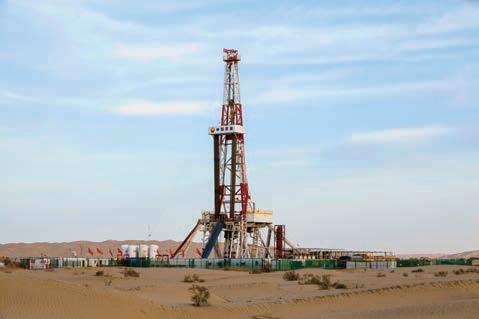
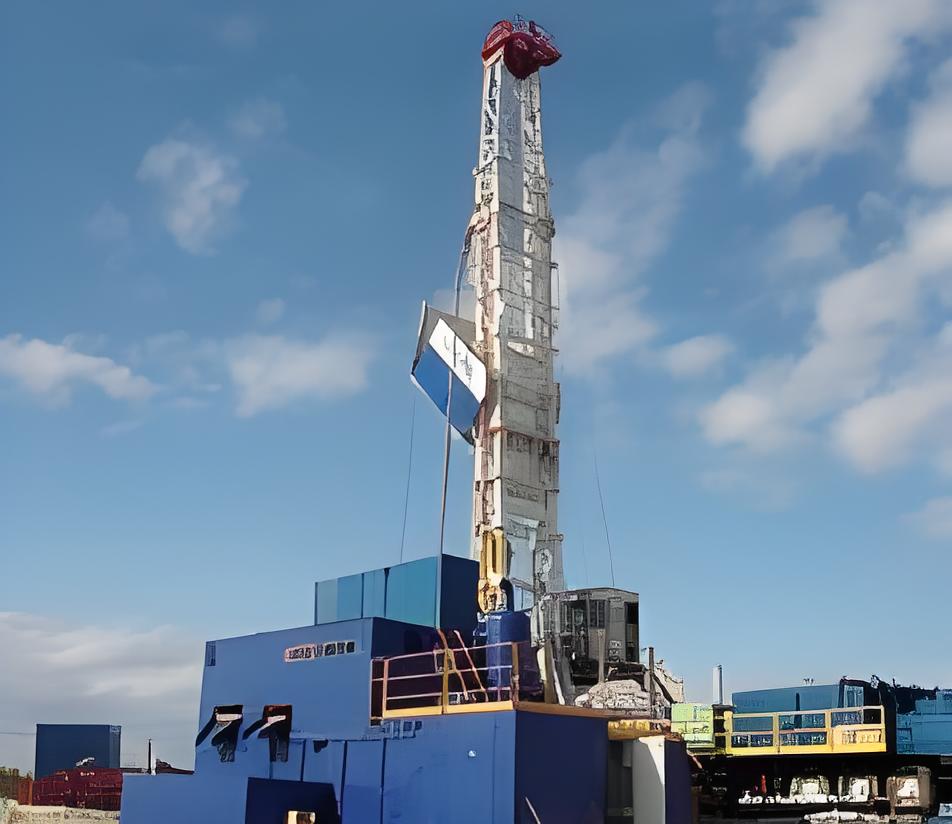
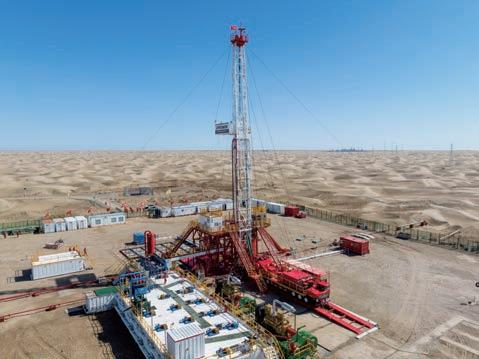
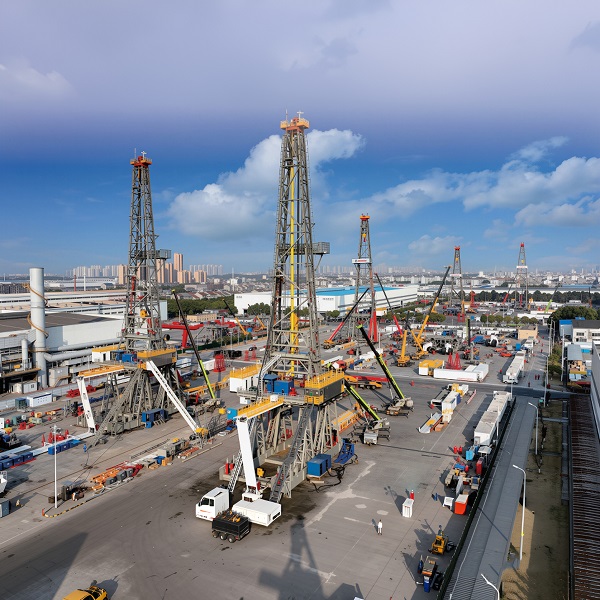
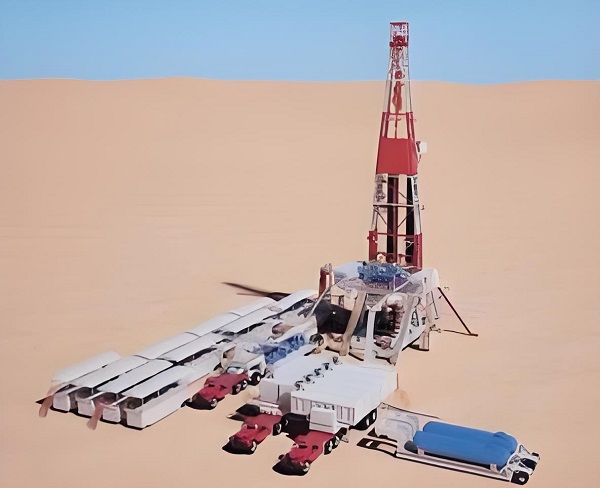
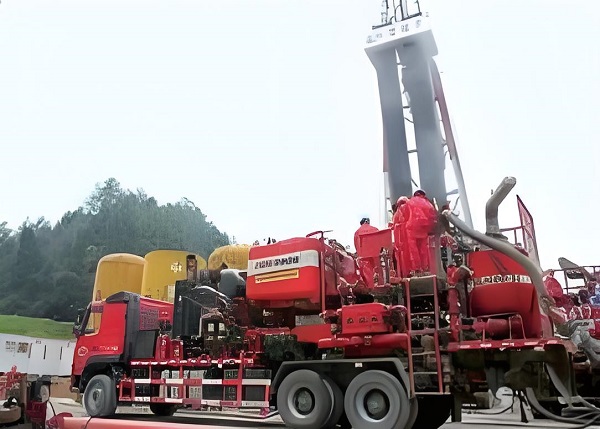
Technical Specifications
Typical Offshore Dual Derrick Drilling Rig
| Parameter | Main Well Center | Auxiliary Well Center |
|---|---|---|
| Derrick capacity | 2 × 2,000,000 lb | 2 × 2,000,000 lb |
| Top drive capacity (tonnes) | 1,000 t | 500 t |
| Drawworks | Independent, dual‑activity | Independent, dual‑activity |
| Well center spacing | 12‑15 m typical (33‑40 ft) |
|
| Water depth capability | Up to 10,000 ft (3,048 m) |
|
| Drilling depth | Up to 35,000 ft (10,668 m) |
|
| Moonpool dimensions | 80 ft × 30 ft (24.4 m × 9.1 m) |
|
| Pipe handling | Semi‑automated, up to 20″ OD tubulars, up to Range III triples/fourbles |
|
| Heave compensation | Active & passive (offshore version) |
|
| Drive type | AC VFD | AC VFD |
| API compliance | 4F, 7K, 8C, Q1 |
|
| Third‑party certification | ABS / DNV / Lloyd's (optional) |
|
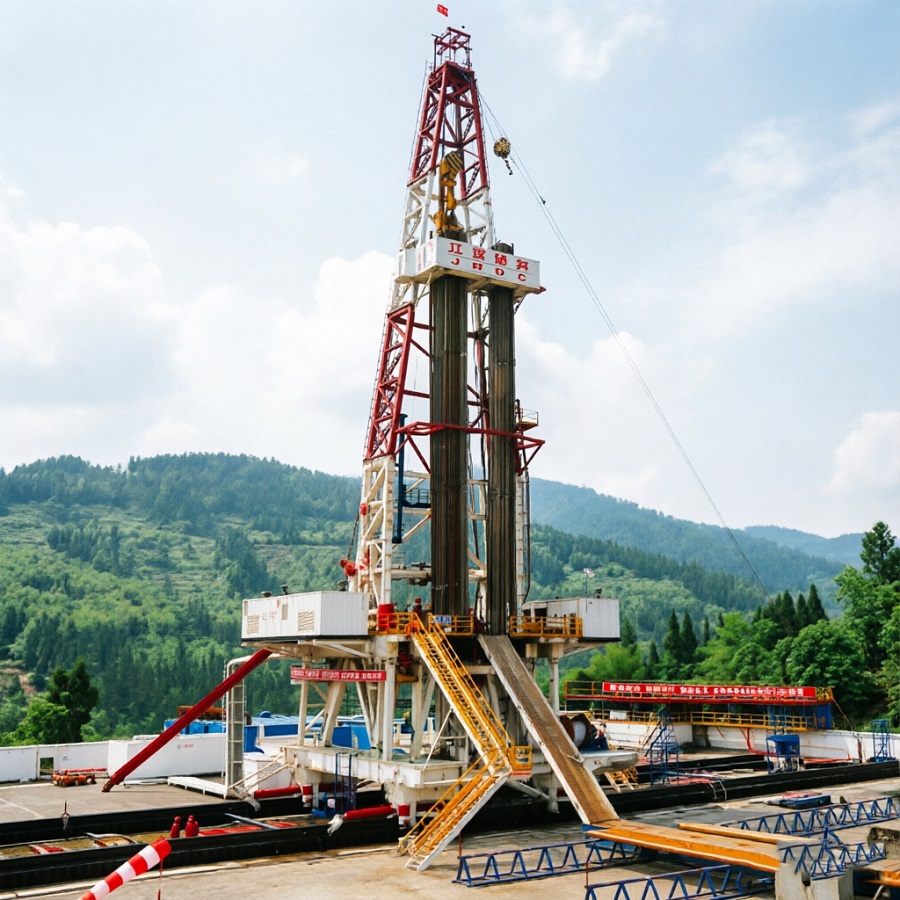
Land Dual Wellhead Drilling Rig (4,000 m Class)
| Parameter | Specification |
|---|---|
| Drilling depth | 4,000 m |
| Number of well centers | 2 (independent) |
| BOP configuration | 2 × stacks, offline transfer capability |
| Number of well slots served | 3 |
| Hook load per well center | 2,250 kN (225 t) |
| Drawworks power per center | 1,000‑1,500 HP AC VFD |
| Mast type | Dual K‑type, API 4F |
| Substructure | Box‑on‑box, pin‑connected |
| Well center offset | Configurable (X‑Y axes) |
| Mobility | Skid / walking / rail‑mounted |
| Operating temp | -40°C to +55°C |
Product Types – Dual Well Drilling Rig Configurations
| Type | Configuration | Depth Capacity | Key Features | Best For |
|---|---|---|---|---|
| Offshore Dual Derrick (Drillship) | Two fully independent derricks, moonpool arrangement | Up to 12,000 m | 1,000 t + 500 t top drives, 80 ft × 30 ft moonpool | Ultra‑deepwater exploration, subsea template campaigns |
| Offshore Dual Derrick (Semi‑submersible) | Two derricks, enhanced motion compensation | Up to 10,000 m | 7500 t variable deck load, winterized for Arctic | Harsh environment, West of Shetland, Arctic drilling |
| Offshore Dual Derrick (Jackup) | Dual derrick on jackup platform, cantilever design | Up to 9,000 m | Skiddable, compact platform footprint | Fixed platform infill, multi‑slot coverage |
| Onshore Dual Wellhead (Walking) | Two well centers, hydraulic walking system | 4,000‑7,000 m | Interchangeable offline BOP testing, walking between wellheads | High‑density cluster pads |
| Onshore Dual Wellhead (Rail‑mounted) | Rail‑guided dual wellheads, fast inter‑well movement | 3,000‑5,000 m | Pre‑laid rails, rapid slot‑to‑slot transition | Extreme cluster density, permanent pads |
Applications – Where Dual Well Drilling Delivers Maximum Value
| Application | Why Dual Well Drilling | Typical Benefit |
|---|---|---|
| Subsea template drilling & completion | Auxiliary rig drills top hole and installs surface casings on next well while main rig operates in BOP/riser mode. BOP moves to next well without returning to surface. | Up to 43% time savings on template campaigns |
| Offshore platform infill drilling | Drill new wells from existing platform while completing previous wells simultaneously. Reduces total project duration. | 30‑40% reduction in platform occupancy time |
| High‑density onshore cluster pads | Drill one well while completing another on same pad. Walking system moves rig between wellheads without disassembly. | 40‑60% reduction in inter‑well move time |
| Deepwater exploration | Run casing and BOP offline while drilling continues. Shorter time to TD reduces exposure to weather windows. | 15‑25% reduction in well duration |
| Multilateral / extended reach drilling | Build BHA assemblies for second lateral while drilling first lateral. Parallel preparation reduces total days. | 20‑30% faster lateral completion |
| Workover & new well concurrent operations (SIMOPS) | On mature pads, perform workover on one wellhead while drilling new well on adjacent slot. | Eliminates need for separate workover rig mobilization |
| Arctic / remote locations with short drilling windows | Maximize footage within limited seasonal operating window. Every hour of parallelism extends effective campaign length. | Drill up to 40% more meters per season |
Why Choose SJ Petro for Your Dual Well Drilling Rig?
1. True Independent Well Centers – Not Just Offline Capability
Many systems marketed as "dual activity” merely offer offline stand building or limited auxiliary functions — they cannot perform two full drilling operations simultaneously. Our dual well drilling rigs feature two fully independent hoisting and rotating systems, each capable of the full range of drilling, tripping, casing, and completion operations.
2. Field‑Validated Performance – Backed by Industry Case Studies
The value proposition of dual well drilling is not marketing — it is documented in real operations. Aker BP saved USD $1.2 million per dual drilling operation. Transocean's Enterprise Class drillships reduced well construction time through true dual‑activity capability. Our designs incorporate the lessons learned from these industry‑leading applications.
3. Backed by Sinopec – The World's Largest Drilling Operator
SJ Petro is a wholly‑owned subsidiary of Sinopec Oilfield Equipment Corporation, part of the Fortune Global 500 Sinopec Group. Sinopec operates drilling rigs across every major oil and gas basin, including dual‑derrick offshore units and high‑density onshore cluster pads. Your dual well drilling rig is engineered based on real operational feedback, not theoretical modeling.
4. API Certified – Accepted Worldwide
All dual well drilling rigs are designed and manufactured to API 4F (masts and substructures), API 7K (drawworks), API 8C (top drives), and API Q1 (quality management). Full documentation — material certificates, weld maps, NDT reports, pressure test records — is provided. Third‑party inspection (ABS, DNV, BV, SGS, Lloyd's) is welcome.
5. Flexible Commercial Models – Own, Lease, or Finance
-
Outright purchase – Standard 30/40/30 payment terms
-
Operating lease – 12‑60 months, maintenance included
-
Short‑term rental – 3‑12 months for specific campaigns
-
Fleet financing – Custom packages for multiple rigs
6. Global Service & Training
-
24/7 remote diagnostics – Engineers can log into the control system (with your permission) to troubleshoot dual well coordination parameters.
-
Regional parts hubs – Dubai, Houston, Singapore stock common dual‑system components.
-
On‑site commissioning & training – Included with every rig.
-
Dual well operation training – Dedicated module covering simultaneous operations, collision avoidance, and emergency procedures.
FAQ – Dual Well Drilling Rig
Q1: What is the difference between a "dual well drilling rig” and a conventional drilling rig?
A: A conventional drilling rig has a single well center, operating sequentially — drill a section, stop, run casing, stop, cement, wait, then continue. A dual well drilling rig has two fully independent well centers operating in parallel on the same substructure. While the main well center drills, the auxiliary well center can run casing, make up BHAs, or spud the next well.
Q2: Can both well centers drill simultaneously without interference?
A: Yes. Our integrated control system provides real‑time collision avoidance, separation factor monitoring, and interlock logic. The system automatically prevents interference between traveling blocks, top drives, and pipe strings. With proper anti‑collision trajectory planning, both well centers can drill simultaneously on 10‑15 meter spacing.
Q3: How much time can dual well drilling really save?
A: Industry case studies document savings of 1.5 days per dual drilling operation in the North Sea, approximately USD $1.2 million saved. In subsea template campaigns, theoretical savings can reach 43% of total well time. Actual savings depend on well spacing, formation drillability, and operational planning.
Q4: Do I need two separate crews to operate a dual well drilling rig?
A: No. Our system is designed for a single crew (typically 8‑12 persons) to operate both well centers. One driller manages both well centers from a unified console. The auxiliary well center's operations are largely automated and supervised, not requiring duplicate personnel.
Q5: Can a dual well drilling rig be used for onshore cluster pad drilling?
A: Yes. We offer onshore dual wellhead configurations with walking or rail‑mounted mobility. The rig can move between wellheads without dismantling, covering an entire pad from a single assembled position.
Q6: Is a dual well drilling rig more expensive than a conventional rig?
A: Yes, capital cost is higher due to dual hoisting and rotating systems. However, the reduction in total well time — documented at 1.5 days per dual operation — typically pays back the incremental investment within the first few wells. For high‑activity pad or offshore campaigns, the ROI is substantial.
Q7: What is the typical lead time for a dual well drilling rig?
A: Offshore dual derrick (drillship / semi‑submersible): 18‑24 months.
Onshore dual wellhead (walking / rail‑mounted): 12‑16 months.
Lead times depend on configuration, customizations (arctic / desert packages), and class society certification requirements. Expedited delivery may be available for certain configurations — contact our sales team.
Q8: Do you provide training for simultaneous operations?
A: Yes. Every dual well rig purchase includes extended training covering:
-
Dual well coordination procedures
-
Collision avoidance and separation factor monitoring
-
Emergency scenarios (one well center failure while other continues)
-
Anti‑collision trajectory planning during drilling
We also provide full simulator‑based training for dual operation certification.
Q9: How does a dual well drilling rig handle emergency well control on one well center?
A: Each well center has its own independent BOP stack and control system. If a well control event occurs on the main well, the auxiliary well center can continue operations or be paused as needed — there is no single point of failure. The control system is hardwired with redundant ESD circuits for each well center.
Q10: How do I get a firm quote for a dual well drilling rig?
A: Contact our dual well engineering team with:
-
Planned application (offshore deepwater, platform infill, onshore cluster)
-
Water depth (offshore) or well spacing (onshore)
-
Target drilling depth
-
Number of wellheads to be covered
-
Environment (arctic, desert, standard)
-
Desired mobility (walking, rail, skid)
We will provide a custom dual well rig proposal including configuration analysis, layout drawing, equipment list, and budget price — within 14 working days.







