
Vertical rig specifications
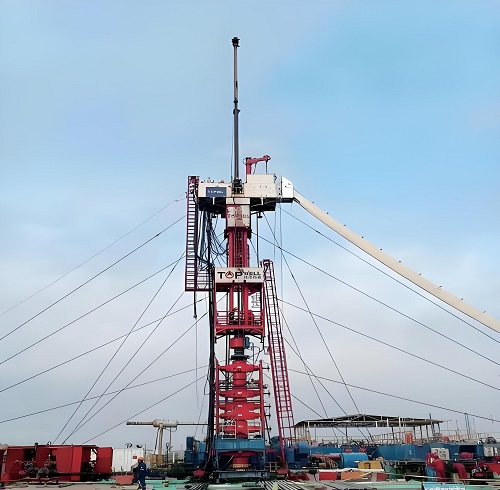
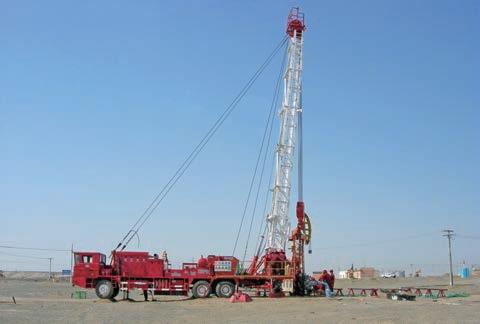
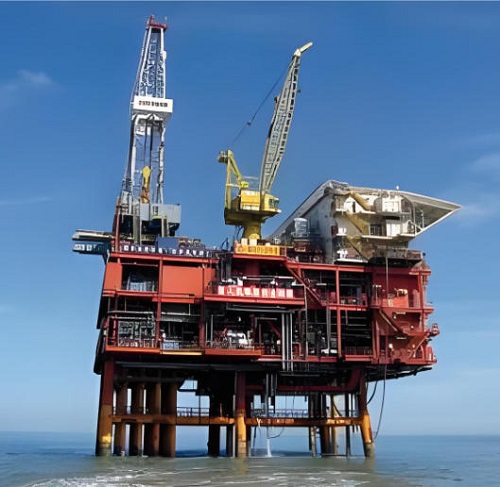
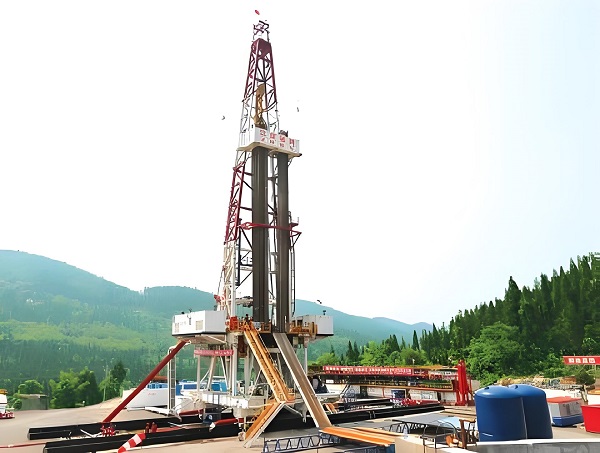
Mast Specifications — Complete Technical Reference
K‑Type Mast — API 4F Standard Configurations
SJ offers K‑type masts in a wide range of load ratings and working heights. All models conform to API 4F and are available with either standard structural steel or low‑temperature steel for arctic operations. The table below provides complete specifications for commonly used mast models:
| Mast Model | Max Static Load (kN) | Working Height (m) | Top Span (m) | Bottom Span (m) | Racking Board Height Options (m) | Racking Capacity (m of 4½″ DP) | Weight (kg) |
|---|---|---|---|---|---|---|---|
| JJ158/36-W | 1,580 | 36 | 1.7×2.0 | 7.5×2.3 | 20.2 / 21.5 / 22.5 | 2,000 | — |
| JJ180/36-W | 1,800 | 36 | 2.0×2.0 | 8.0 | 20.2 / 21.5 / 22.5 | 3,000 | — |
| JJ170/41-K2 | 1,700 | 41 | 2.1×2.05 | 8.0 | 22.2 / 22.8 / 33.4 | 3,000 | — |
| JJ225/43.2-K | 2,250 | 43.2 | 2.2×2.2 | 9.11 | 24.5 / 25.5 / 26.5 | 4,000 | — |
| JJ315/45-K | 3,150 | 45 | 2.3×2.3 | 8.3 | 24.5 / 25.5 / 26.5 | 5,000 | 68,000 |
| JJ450/45-K | 4,500 | 45 | 2.5×2.3 | 10.0 | 24.5 / 25.5 / 26.5 | 7,000 | 76,218 |
| JJ675/48-K | 6,750 | 48 | 2.5×2.3 | — | 24.5 / 25.5 / 26.5 | 9,000 | 98,000 |
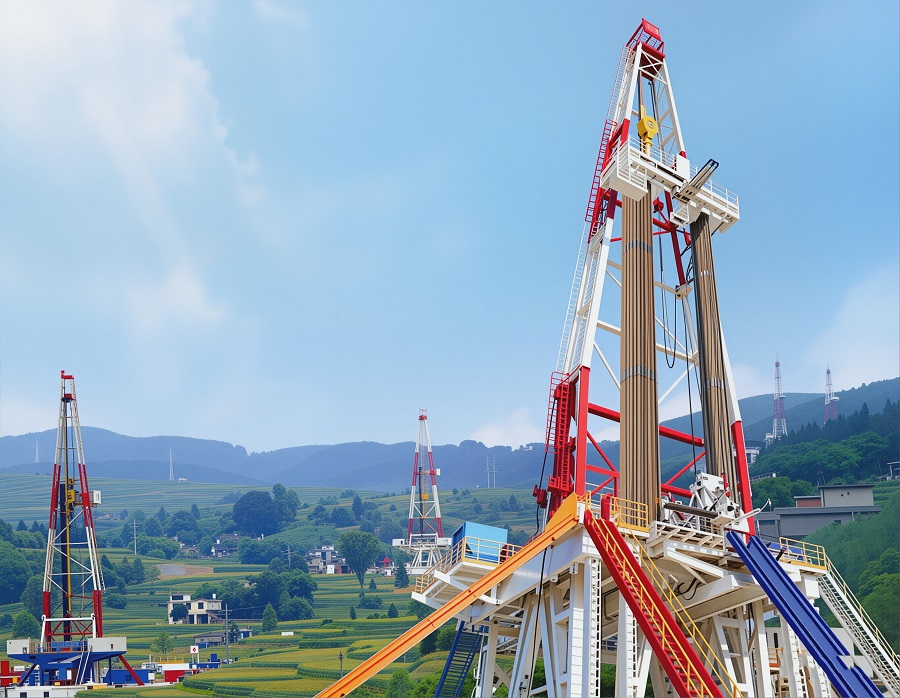
K‑Type Mast — Additional Model Configurations
| Mast Model | Max Static Load (kN) | Effective Height (m) | Top Span (m) | Bottom Span (m) | Racking Board Height Options (m) | Racking Capacity (m) |
|---|---|---|---|---|---|---|
| JJ135/31.5-K | 1,350 | 31.5 | 1.7×1.7 | 6.0 | 17.5 / 16.5 / 24.5 | 2,000 |
| JJ225/42-K | 2,250 | 42 | 1.9×2.0 | 7.0 | 24.5 / 25.5 / 26.5 | 4,000 |
| JJ315/45-K | 3,150 | 45 | 2.1×2.05 | 8.0 | 24.5 / 25.5 / 26.5 | 5,000 |
| JJ315/45-K | 3,150 | 45 | 2.3×2.3 | 8.3 | 24.5 / 25.5 / 26.5 | 5,000 |
| JJ450/45-K | 4,500 | 45 | 2.1×2.05 | 8.0 | 24.5 / 25.5 / 26.5 | 7,000 |
K‑Type Mast — Basic Design Features
| Feature | Specification |
|---|---|
| Cross‑section | "П”‑shaped front‑open space truss structure |
| Section construction | Left and right side pieces welded into sections; back truss system |
| Section connections | Pin connections between mast sections (quick installation and dismantling) |
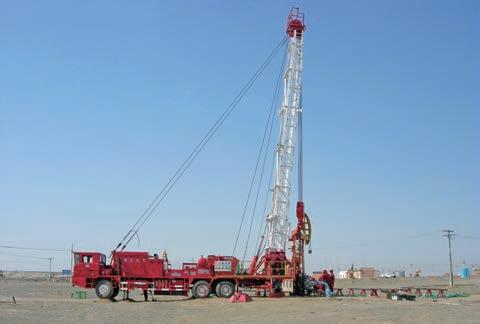
| Installation method | Low‑height installation, raised as a whole using hydraulic cylinder thrust or winch power |
| Raising mechanism | Double‑acting variable‑level raising cylinder(s) mounted on chassis or substructure |
| Telescoping (if fitted) | Two single‑acting long telescopic cylinders with stabilizer mechanism |
| Key advantages | High structural rigidity; front‑open design provides unobstructed driller visibility |
| Applicable rig types | ZJ series drilling rigs, XJ series workover rigs, truck‑mounted rigs |
A‑Type Derrick — Specifications
| Feature | Specification |
|---|---|
| Leg cross‑section | Rectangular or triangular space truss |
| Construction | Sectioned structure with pin connections |
| Installation | Low‑height installation; raised as a whole using winch power via A‑frame |
| Visibility | 井架前后敞开,司钻视野好,被称为"全视野井架” — open front and back, excellent driller visibility |
| Load capacity | Good bearing capacity and overall stability |
| Typical application | Offshore platforms, large land drilling rigs requiring maximum visibility |
Tower Derrick — Offshore Specifications
| Feature | Specification |
|---|---|
| Shape | Four‑edged truncated cone; square cross‑section |
| Construction | Individual steel members with bolted connections |
| Primary application | Offshore drilling platforms — 塔型井架为海洋钻机井架的最主要的一种结构形式 |
| Advantages | Excellent overall stability, very high load‑bearing capacity, good wind resistance |
| Load capacity | Up to 9,000 kN (2,000,000 lb) hook load for ultra‑deep applications |
| Environmental rating | Marine corrosion protection; designed for platform‑mounted operation |
Telescoping Mast — Specifications
| Feature | Specification |
|---|---|
| Structure | Two‑section or three‑section vertical telescoping (套装型井架,沿垂直方向将井架分成若干空间段) |
| Installation method | Vertical telescoping — each section lifted sequentially using winch power or hydraulic power |
| Base section | Serves as guide and support section for upper sections |
| Key advantage | Saves installation land area; low transport height for road and helicopter movement |
| Raising mechanism | Hydraulic telescoping cylinders with stabilizer mechanism |
| Typical application | Mobile workover rigs, truck‑mounted drilling units, helicopter‑hangable units |
4. Substructure Specifications
The substructure is the foundation on which the mast sits. It provides the drill floor height, supports the mast during raising and operation, and houses the wellhead equipment below the floor.
Substructure — Functional Requirements
| Function | Description |
|---|---|
| Drill floor mounting | Provides the working surface for drilling operations |
| Mast support | Distributes mast loads to the ground or platform deck |
| Wellhead access | Creates space beneath the drill floor for BOP stacks and wellhead equipment |
| Setback capacity | Supports the weight of drill pipe standing back in the racking board |
Substructure Configurations — SJ Design Types
| Substructure Type | Raising Method | Key Advantage | Typical Application |
|---|---|---|---|
| Box‑type (箱叠式/箱块式) | Layered box structures stacked with interlocking blocks | Maximum rigidity | Large land drilling rigs |
| Rotary‑raising (旋升式) | Substructure rises with the mast during erection | No crane required | ZJ series land rigs; desert operations |
| Parallelogram folding (双升式) | Folds flat for transport; hydraulically raised at wellsite | Fast rig‑up, low transport height | BigEasy series, mobile rigs |
| Telescoping (伸缩式) | Vertical telescoping sections | Low‑height transport | Special applications |
ZJ Series — Substructure Specifications
For ZJ series land drilling rigs, substructures are designed with the following specifications:
| Model | Drill Floor Height (m) | Substructure Area (m × m) | Substructure Type |
|---|---|---|---|
| ZJ30 class | 6.0 – 7.5 | Platform‑specific | Rotary‑raising or box‑type |
| ZJ40 class | 7.5 | Platform‑specific | Rotary‑raising |
| ZJ50 class | 9.0 | Platform‑specific | Rotary‑raising |
| ZJ70 class | 9.0 – 10.5 | Approx. 13 × 14 | Rotary‑raising |
| ZJ90 class | 12.0 | Platform‑specific | Rotary‑raising |
Substructure dimensions vary by rig configuration. Contact SJ for platform‑specific drawings.
XJ Series — Substructure Specifications
For XJ series self‑propelled workover rigs, the substructure is a foldable design that is transported on the carrier and unfolded at the wellsite.
| Model | Substructure Height (m) | Traveling System | Substructure Type |
|---|---|---|---|
| XJ250 | 2.2 | 3×4 | Foldable |
| XJ350 | 3.7 | 3×4 | Foldable |
| XJ450, XJ550 | 3.7 / 4.5 | 4×5 | Foldable |
| XJ650 | 4.5 | 4×5 | Foldable |
| XJ1000 | 6.0 | 5×6 | Foldable |
| XJ1200 | 6.7 | 5×6 | Foldable |
Technical data source: SJ Petroleum Machinery Series of Self‑propelled Workover Rigs product catalog.
5. Wind Speed Ratings & Environmental Specifications
Wind loading is a critical specification for any vertical rig structure, particularly in offshore and desert environments. SJ masts are rated according to API 4F wind load standards for three operational conditions.
Wind Speed Ratings — API 4F Compliant
| Condition | Description | Wind Speed Rating |
|---|---|---|
| Operating (with drill pipe standing in racking board) | Rig is actively drilling or working over with stands of pipe in the racking board | 36 m/s (130 km/h / 81 mph) |
| Non‑operating (no hook load, no pipe in racking board) | Rig is standing but not actively drilling; mast must withstand storm conditions | 47.8 m/s (172 km/h / 107 mph) |
| Mast raising/lowering operation | Mast is being erected or lowered; personnel on site, reduced wind tolerance | ≤ 8.3 m/s (30 km/h / 18.6 mph) |
Wind rating source: Industry standard for drilling rig mast wind ratings and API 4F specifications.
Environmental Packages — Desert, Arctic & Offshore
SJ vertical rig structures are available with specialised environmental packages for operation in extreme conditions.
Desert package (+55°C):
-
Windbreak and thermal insulation sheathing on substructure and monkey board
-
Sand‑resistant coatings and dust‑tight electrical enclosures (IP55)
-
Enhanced cooling for VFD/MCC rooms
Arctic package (-45°C):
-
Low‑alloy, high‑strength, low‑temperature impact‑resistance material for all structural steel
-
Welded according to low‑temperature welding process
-
Meets requirements of -45 ℃ low‑temperature environment
-
Heated operator access areas and monkey board
Offshore package (marine environment):
-
Corrosion‑resistant materials and marine coatings
-
Designed for platform mounting with ABS works approval
-
Explosion‑proof electrical systems (Exd II BT5/Exd II BT6, IP55)
-
Stainless steel piping and fittings throughout
6. XJ Series Workover Rigs — Mast & Substructure Specifications
SJ's XJ series self‑propelled workover rigs cover maximum static load from 300 kN to 2,250 kN and installed power from 235 HP to 1,300 HP, including models XJ150, XJ250, XJ350, XJ450, XJ550, XJ650, XJ1000 and XJ1200. The following table provides mast clearance heights, racking board heights, floor heights and traveling system configurations for each model:
| Model | Workover Depth 2‑7/8″ DP (m) | Nominal Hook Load (kN) | Max Static Load (kN) | Mast Clearance Height (m) | Racking Board Height (to floor, m) | Floor Height (m) | Traveling System | Wireline Dia. (mm) | Carrier Drive |
|---|---|---|---|---|---|---|---|---|---|
| XJ250 | 2,000 | 400 | 675 | 21.0 | 7.7 | 2.2 | 3×4 | φ22 | 6×6 |
| XJ350 | 3,200 | 600 | 900 | 31.7 | 17.2 | 3.7 | 3×4 | φ26 | 10×8 |
| XJ450 | 4,500 | 800 | 1,125 | 34.0 | 17.2 | 3.7 | 4×5 | φ26 | 10×8 |
| XJ550 | 5,800 | 1,000 | 1,350 | 34.0 | 17.2 | 4.5 | 4×5 | φ26 | 10×8 |
| XJ650 | 7,000 | 1,200 | 1,470 | 35.0 | 17.2 | 4.5 | 4×5 | φ29 | 12×8 |
| XJ1000 | 8,000 | 1,500 | 1,800 | 38.0 | 17.2 | 6.0 | 5×6 | φ29 | 14×8 |
| XJ1200 | 9,000 | 1,800 | 2,250 | 39.3 | 17.2 | 6.7 | 5×6 | φ32 | 14×10 |
Technical data source: SJ Petroleum Machinery Series of Self‑propelled Workover Rigs product catalog.
Note: All XJ series masts feature K‑type front‑open design with two‑stage telescoping. Mast raising is achieved using double‑acting variable‑level raising cylinders. The telescoping function is realised using two single‑acting long telescopic cylinders with stabilizer mechanism to ensure safety and stability.
XJ350 Workover Rig — Detailed Mast Specifications
The XJ350 is SJ's most widely exported workover rig, with hundreds operating in the United States.
| Parameter | Specification |
|---|---|
| Mast height (available options) | 31 m, 29 m or 25 m |
| Racking board height | 16.8 m (55 ft) |
| Racking board capacity | 4,000 m of 2‑7/8″ EUE tubing |
| Max static load | 900 kN (202,330 lbf) |
| Traveling system | 3×4 (Φ26 mm wireline) |
| Hook hoisting speed | 0.25–1.4 m/s (0.82–4.6 ft/s) |
| Total weight | 49,500 kg – 51,000 kg |
| Drill floor (l×w×h) | 4.2×4.2×3.7 m (13.8×13.8×12.1 ft) |
Technical data source: SJ PETRO XJ350 product specification.
XJ250 Workover Rig — Detailed Mast Specifications
| Parameter | Specification |
|---|---|
| Mast clearance height | 21 m (68.90 ft) double section / 18 m (59.06 ft) single section |
| Chassis drive | 6×6 full‑drive chassis with good cross‑country capability |
| Drawworks | Double drum, band brake |
| Rotary driving system | Optional (can be equipped for medium‑depth drilling) |
| Application | Shallow well workover, oil testing, fishing, pump check operations |
Technical data source: XJ250 workover rig product specification.
7. ZJ Series Land Drilling Rigs — Mast Specifications
SJ's ZJ series land drilling rigs are designed for depths from 1,000 m to 9,000 m (4½″ drill pipe). These rigs feature K‑type front‑open masts with clearance heights ranging from 32 m to 49 m, fully compliant with API 4F.
| Model | Nominal Drilling Depth (4½″ DP, m) | Max Hook Load (kN) | Drawworks Power (kW/hp) | Mast Clearance Height (m) | Mast Type | Substructure Height (m) | Racking Board Height (m) |
|---|---|---|---|---|---|---|---|
| ZJ30 | 3,000 | 1,700 | 600 / 800 | 33 – 41 | K‑type front‑open | 6 – 7.5 | 17.2 |
| ZJ40 | 4,000 | 2,250 | 800 / 1,100 | 43 | K‑type front‑open | 7.5 | 17.2 / 24 m |
| ZJ50 | 5,000 | 3,150 | 1,100 / 1,470 | 44.5 – 45 | K‑type front‑open | 9 | 17.2 / 24 m |
| ZJ70 | 7,000 | 4,500 | 1,470 / 2,000 | 44.5 – 48 | K‑type front‑open | 9 – 10.5 | 24.5 / 25.5 / 26.5 |
| ZJ90 | 9,000 | 5,850 | 2,200 / 3,000 | 49 | K‑type front‑open | 12 | 24.5 / 25.5 / 26.5 |
Technical data source: SJ Petroleum Machinery ZJ series drilling rig product specifications and industry references.
ZJ70/4500D — Mast Specifications
The ZJ70/4500D uses a K‑type front‑open mast, raised and lowered by the drawworks:
| Parameter | Specification |
|---|---|
| Mast model and height | K‑type, 44.5 m |
| Traveling system | 6×7 |
| Drill floor height | 9 m |
| Wireline diameter | φ35 mm (1‑3/8″) |
| Crown block rating | TC‑450 (4,500 kN), 6 sheaves |
| Rotary table opening | 952.5 mm (37.5″) |
| Drawworks configuration | 2 × DC motors |
| Mud pumps | F‑1600×2 (electric drive) |
| Electric drive mode | AC‑SCR‑DC |
*Technical data source: ZJ70/4500D land drilling rig product specification.*
ZJ50 — Mast Specifications
| Parameter | Specification |
|---|---|
| Effective mast height | 45 m, K‑type |
| Max hook load | 3,150 kN |
| Drill floor height | 9 m |
| Electric drive mode | AC‑SCR‑DC |
| Mud pumps | F‑1600×2 |
Technical data source: Land Rig ZJ50 equipment listing.
8. Traveling System Specifications
The traveling system defines the number of support lines running from the crown block to the traveling block and hook. SJ's workover rigs use the following traveling system configurations:
| Rig Model | Traveling System | Wireline Diameter (mm) | Application |
|---|---|---|---|
| XJ250 | 3×4 | φ22 | Light‑duty workover, shallow wells |
| XJ350 | 3×4 | φ26 | Medium‑duty workover |
| XJ450, XJ550 | 4×5 | φ26 | Heavy‑duty workover, medium wells |
| XJ650 | 4×5 | φ29 | Heavy‑duty workover, deep wells |
| XJ1000, XJ1200 | 5×6 | φ29 – φ32 | Ultra‑deep well workover |
For ZJ series land drilling rigs:
| Rig Model | Traveling System | Wireline Diameter (mm) | Application |
|---|---|---|---|
| ZJ40 | 6×5 or 6×7 | φ35 | 4,000 m depth |
| ZJ50 | 6×7 | φ35 | 5,000 m depth |
| ZJ70 | 6×7 or 7×8 | φ35 – φ38 | 7,000 m depth |
| ZJ90 | 7×8 or 8×9 | φ38 – φ45 | 9,000 m depth |
Traveling System Nomenclature
The traveling system is expressed as "number of lines in the fast sheave × number of lines in the traveling block.” For example, a 6×7 system has 6 lines of wireline in the fast sheave and 7 lines of wireline in the traveling block, providing a 12‑line total mechanical advantage.
[Product images: SJ's crown block and traveling block arrangement on a K‑type vertical mast — API 8C certified hoisting equipment]
9. Materials, Compliance & Quality Specifications
API Specifications
All SJ vertical rig structures are designed and manufactured in compliance with API Spec 4F (Specification for Drilling and Well Servicing Structures). This specification covers the design, manufacture and use of steel derricks, portable masts, crown block assemblies and substructures suitable for drilling and well‑servicing operations in the petroleum industry. It includes requirements for marking, inspection, a uniform method of rating the structures, and design loading for the equipment. The specification provides two Product Specification Levels (PSLs) that define two levels of technical and quality requirements.
SJ also complies with:
-
API Spec 8C: Hoisting equipment (traveling blocks, swivels, hooks, elevators)
-
API Spec 7K: Drilling and well‑servicing equipment
-
API Spec 6A: Wellhead equipment
-
API Spec 16C: Choke and kill manifolds
Manufacturing Standards
| Standard | Scope |
|---|---|
| GB/T 23505 | Petroleum Drilling and Workover Rigs |
| SY/T 5609 | Types and basic parameters for oil drilling rigs |
| SY/T 5170 | Petroleum and natural gas industries — specification for wire rope |
| SY/T 5025 | Specification for drilling and well servicing structures |
| API Spec 8A/8C | Specification for drilling and production hoisting equipment |
Material Specifications for Low Temperature
For arctic and cold‑climate operations, SJ offers low‑temperature masts using low‑alloy, high‑strength, low‑temperature impact‑resistance material, welded according to low‑temperature welding process, certified for operation down to -45 ℃.
Inspection & Testing
SJ follows SY/T 6680‑2021 — China's petroleum industry standard for drilling rig and workover rig factory acceptance testing—covering structural integrity, material quality, performance parameters and safety verification before any equipment leaves the factory.
All masts are verified using ANSYS finite element analysis (FEA) to check load distribution, stress concentrations and structural performance under rated hook load conditions. The entire mast assembly undergoes full load testing at SJ’s 50,000 m² assembly yard before shipment, with customer‑witnessed testing available.
Hoisting Equipment (API 8C Compliant)
SJ manufactures the complete vertical rig hoisting equipment:
-
Crown block assemblies: Available in ratings from TC‑450 (4,500 kN) up to TC‑675 (6,750 kN). Crown block sheave diameters range from 1,120 mm (44″) to 1,524 mm (60″) depending on model.
-
Traveling blocks: Matched to crown block rating with same number of sheaves
-
Hooks and elevators: API 8C certified, full load range coverage
-
Rotary tables: Openings from 520.7 mm (20 1/2″) to 952.5 mm (37 1/2″)
In‑house manufacturing ensures proper integration between the mast, traveling system and hoisting components — one supplier, one warranty, one team that knows the entire load path from crown block to substructure.
[Product images: SJ's 50,000 m² assembly yard with multiple drilling rigs under final commissioning — where API 4F certified masts are load‑tested before shipment]
10. Mast Height Selection Guide
Choosing the correct mast height is essential for your drilling depth and stand handling requirements.
| Rig Class (Nominal Drilling Depth) | Recommended Mast Clearance Height (Erected) | Typical Racking Board Height | Stand Capacity |
|---|---|---|---|
| 1,000–3,000 m | 33–38 m | ~17 m | 3,000–5,000 m of 4½″ DP |
| 3,000–5,000 m | 38–43 m | ~17 m (optional 24 m) | 5,000–7,000 m of 4½″ DP |
| 5,000–7,000 m | 43–45 m | 24–26 m | 7,000–10,000 m of 4½″ DP |
| 7,000–9,000 m | 45–49 m | 24–26 m | 10,000+ m of 4½″ DP |
General Rule of Thumb
-
Short masts (21–31 m): Suitable for workover rigs and shallow wells (<2,000 m)
-
Medium masts (33–38 m): Suitable for standard land drilling (3,000–5,000 m)
-
Tall masts (43–49 m): Required for deep to ultra‑deep wells (5,000–9,000 m) where longer stands of drill pipe reduce connection time
11. Why Choose SJ for Your Vertical Rig Specifications?
1. API 4F Certified — Global Certification for Drilling Structures
All SJ vertical rig structures are designed and manufactured in compliance with API Spec 4F (latest edition, PSL 1 or PSL 2 as required). We hold API monograms for Spec 4F, 7K, 8C, 6A and 16C. Manufacturing processes can be supervised by customers and inspected by any third‑party certification agency.
2. 70+ Years of Manufacturing Heritage
SJ was founded in Lanzhou, Gansu in 1941 and moved to Jingzhou, Hubei in 1969, manufacturing petroleum drilling and production equipment since the end of the 1970s. Our Technical Center employs 314 engineers across three research institutes, and we are authorised to operate a post‑doctoral research station.
3. Vertically Integrated Manufacturing — Complete Quality Control
SJ has more than 2,100 sets of precision manufacturing equipment across seven production lines (drawworks, gear boxes, cylinders, masts, high‑pressure manifolds, plunger pumps and post‑treatment) and three assembly lines (drilling rigs, workover rigs and cementing/fracturing equipment). Full vertical integration means complete traceability for every API‑certified component.
4. 50,000 m² Assembly Yard with Full Factory Acceptance Testing
We possess a rig assembly yard covering 50,000 m² with 24 rigging‑up positions and two offshore rig commissioning sites (four rig positions), where 750‑ton load tests can be performed and 12 drilling or workover rigs can be assembled and commissioned simultaneously.
5. ANSYS Finite Element Analysis — Verified, Not Guessed
Every SJ mast and substructure design is analysed using ANSYS FEA to verify load distribution, stress concentrations and structural performance before prototype or production. Verified load ratings you can trust.
6. Comprehensive Environmental Ratings — Desert, Arctic and Offshore
SJ vertical rigs are available with specialised environmental packages: desert package (+55°C rating, multi‑stage cyclonic air filtration), arctic package (-45°C low‑temperature steel with specialised welding processes) and offshore package (corrosion‑resistant materials, marine coatings, ABS/DNV classification options).
7. Global After‑Sales Support
SJ maintains regional support infrastructure across the Middle East, Russia, Southeast Asia and other key markets. Our 24/7 remote support desk and field service teams are available for commissioning, operator training, preventive maintenance and emergency service.
8. Field‑Proven Offshore Expertise
SJ has been developing offshore vertical rig structures since 1993. We produced China’s first skid‑mounted offshore workover and cementing equipment. In 1998, we developed 158‑ton offshore drilling and workover rigs for different petroleum platforms in Bohai Bay — awarded the Ninth‑Five National Technology Innovation Excellent Achievement.
9. Complete One‑Stop Supplier for All Vertical Rig Components
SJ manufactures the full vertical rig system — masts, derricks, substructures, crown blocks, traveling blocks, swivels, hooks and high‑pressure fluid control products — under one roof. One supplier, one warranty, one team that knows the entire load path from crown block to substructure.
10. Competitive Pricing — The Chinese Manufacturing Advantage
SJ vertical rig structures are typically priced 30–50% below comparable Western brands for equivalent API‑certified specifications, due to our vertically integrated manufacturing and efficient production systems. Lower price does not mean lower quality — we build to Sinopec‑grade standards and API certifications, with full traceability documentation for every certified component.
12. Frequently Asked Questions (FAQ)
Q1: What types of vertical rig structures does SJ manufacture?
SJ manufactures all four major types: K‑type front‑open masts, A‑type (full‑visibility) derricks, tower derricks (quadrilateral) and telescoping masts. K‑type masts are the most common for land drilling and workover rigs, offering high rigidity and unobstructed driller visibility. A‑type derricks are used on offshore platforms where maximum visibility is required. Tower derricks are the primary structure for offshore platform drilling. Telescoping masts are used on mobile workover rigs for reduced transport height.
Q2: What is API 4F certification, and why does it matter for vertical rig structures?
API Spec 4F (Specification for Drilling and Well Servicing Structures) is the industry standard covering the design, manufacture and use of steel derricks, portable masts, crown block assemblies and substructures suitable for drilling and well‑servicing operations in the petroleum industry. It includes requirements for marking, inspection, a uniform method of rating the structures, and design loading for the equipment. The specification provides two Product Specification Levels (PSLs) that define two levels of technical and quality requirements. API 4F certification is essential for international operations, regulatory compliance and ensuring structural integrity under rated hook load conditions.
Q3: What mast clearance heights are available for SJ vertical rigs?
SJ offers mast clearance heights from 21 m (XJ250) up to 49 m (ZJ90), with intermediate models providing 31.7 m, 34 m, 35 m, 38 m, 39.3 m, 43 m, 45 m and 45.5 m heights. Taller masts provide greater stand capacity and are preferred for deep well operations where longer stands of drill pipe (triples) are required to reduce connection time. For reference, an 8 1/2″ mast rated at 750,000 lbs hook load with 142 ft (43.3 m) clear height is typical for deep drilling applications.
Q4: What is the difference between a K‑type mast and an A‑type derrick?
A K‑type mast is a front‑opening structure with a "П”‑shaped cross‑section, assembled in sections at ground level and raised as a complete unit using hydraulic cylinders or winch power. It is portable and transports easily between well locations — best for land workover rigs and mobile drilling rigs. An A‑type derrick has two lattice or tubular legs forming an "A” shape, with open front and back sections. It is typically assembled piece‑by‑piece from the ground up and is more commonly used on offshore platforms or very large land rigs that stay in place for extended periods. A‑type derricks are known as "full‑visibility derricks” because the open design gives the driller an unobstructed view of the wellhead.
Q5: What wind speed ratings do SJ masts have?
SJ masts are rated according to API 4F standards for three conditions: operating with drill pipe — 36 m/s (130 km/h / 81 mph); non‑operating (no hook load, no pipe) — 47.8 m/s (172 km/h / 107 mph); mast raising/lowering operation — ≤ 8.3 m/s (30 km/h / 18.6 mph). These ratings ensure safe operation in most global environments, including offshore and desert regions subject to high winds.
Q6: Does SJ supply low‑temperature masts for arctic operations?
Yes. SJ offers low‑temperature masts using low‑alloy, high‑strength, low‑temperature impact‑resistance material, welded according to low‑temperature welding process, certified for operation down to -45 ℃. This includes low‑temperature steel certification for all structural components, specialised welding processes for cold‑climate integrity and heated operator access areas and monkey board options.
Q7: What is the typical lead time for a SJ mast or substructure?
Lead times vary based on mast type, height, load rating and certification requirements. For standard K‑type two‑section telescoping masts for XJ or ZJ series rigs, typical lead time is 6–9 months from order confirmation to factory acceptance testing (FAT). Custom configurations (offshore packages, arctic steel, special racking heights) may require 8–12 months.
Q8: How does SJ verify the load capacity of its masts?
Every SJ mast and substructure design is analysed using ANSYS finite element analysis (FEA) to verify load distribution, stress concentrations and structural performance under rated hook load conditions. The complete mast assembly also undergoes full load testing at our 50,000 m² assembly yard before shipment, with customer‑witnessed testing available.
Q9: Does SJ supply offshore masts with marine classification certification?
Yes. SJ offers offshore vertical rig structures (tower derricks, A‑type derricks and telescoping offshore masts) with ABS works approval, DNV certification, CE marking or CU‑TR (GOST) as required. Our offshore product range includes series offshore drilling rigs, offshore workover rigs, drilling and workover packages and related high‑pressure fluid control products — all designed for marine environments with corrosion‑resistant materials.
Q10: What traveling system configurations are used on SJ vertical rigs?
Travelling system configuration defines the number of lines between the crown block and traveling block. SJ uses 3×4 for lighter workover rigs (XJ250, XJ350), 4×5 for medium workover rigs (XJ450‑XJ650) and 5×6 for heavy‑duty workover and drilling rigs (XJ1000‑XJ1200, ZJ series). For larger ZJ drilling rigs, 6×7 and 7×8 systems are used.
Q11: Does SJ manufacture its own crown blocks, traveling blocks and swivels?
Yes. SJ manufactures the complete vertical rig hoisting equipment — crown block assemblies, traveling blocks, swivels, hooks and elevators — all API Spec 8C certified. In‑house manufacturing ensures proper integration between the mast, traveling system and hoisting components.







