
Smart rig specifications
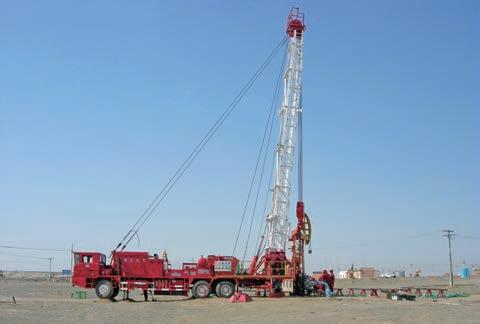
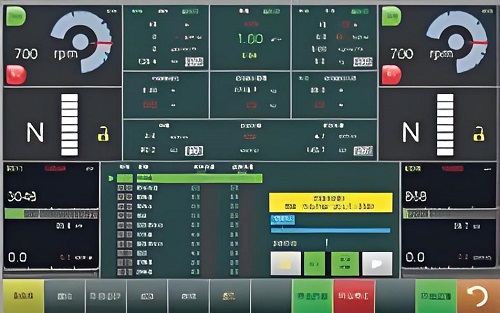
Digital Driller's Control Cabin
The driller’s control cabin is the operational centre of the smart rig:
| Feature | Specification |
|---|---|
| Control mode | Centralised – control in VFD/MCC room, plus spot‑control |
| HMI | Touch‑screen with real‑time drilling parameter display |
| Auto‑driller | PLC‑based automatic bit‑feed, programmable weight‑on‑bit (WOB) and ROP |
| Monitoring | Real‑time display of hook load, rotary torque, pump pressure, pump rate, standpipe pressure, etc. |
| Data logging | Storage, printing and remote transmission of drilling parameters |
| Protection functions | Centralised long‑distance air control with multiple protection functions |
| Cabin rating | Positive‑pressure, air‑conditioned, explosion‑proof, dust‑tight |
The system performs real‑time monitoring of run‑in and pull‑out of hole and drilling conditions, and can be equipped with an optional digital controlled auto‑driller system. Drillers can optimise drilling parameters through the touch‑screen. The DC electric transmission system (where fitted) uses digital bus control with strong anti‑jamming capacity, automatic trouble‑shooting and mature protection functions.
Master‑Slave Synchronous Motor Control
For rigs equipped with dual‑motor drawworks or multi‑motor mud pumps, SJ uses master‑slave control to ensure perfect load sharing between motors. In a typical two‑motor drawworks configuration:
-
Master motor: operates in speed control mode (closed‑loop vector control), setting the reference speed for the system
-
Slave motor: operates in torque control mode, following the master's torque reference to ensure balanced load sharing, preventing one motor from overpowering the other and eliminating mechanical "nodding” and "shaking”
In master‑slave power‑balancing mode, two or more motors work in cooperation to drive the load, achieving speed consistency and torque distribution. This is particularly important for deep well drilling where drawworks loads can exceed 4,000 kN.
3. Automated Pipe Handling System — Technical Specifications
Manual pipe handling is the most dangerous and time‑consuming part of conventional drilling. SJ’s automated pipe handling system covers the entire workflow from pipe rack to well centre, reducing the drill floor crew from five to two operators and cutting connection time by up to 50 %.
Automatic Catwalk
| Parameter | Specification |
|---|---|
| Function | Transports tubulars (drill pipe, drill collars, casing, subs) from pipe rack to drill floor |
| Operation | Automatic lifting and lowering of drill string |
| Power source | Air winch (dual‑action) or hydraulic cylinders |
| Capacity | Multiple drill strings per cycle |
| Integration | Works with iron roughneck and pipe handler for fully automated connection cycles |
| Design note | Optimised angle of pipe entry onto the drill floor for smoother handling |
Key technical features: The Auto Catwalk is used for transportation of tubulars from the pipe rack area to the drill floor. It has the function of automatic lifting and lowering of the drill string. It works in concert with the iron roughneck and pipe racking systems for fully automated drilling operations.
Iron Roughneck (ZMT120 Series)
The iron roughneck is the automated wrench system that makes up and breaks down drill pipe connections.
| Parameter | Specification |
|---|---|
| Pipe range | 3½″ – 10″ (89 mm – 254 mm) |
| Max make‑up torque | 120,000 ft·lbs (162,000 N·m) |
| Max break‑out torque | 120,000 ft·lbs (162,000 N·m) |
| Make‑up torque (5″ DP) | 3,000 ft·lbs (4,000 N·m) |
| Spinner vertical stroke | 600 mm (23.6 in) |
| Control modes | Wireless remote (operator portable) / wired operation box / manual emergency |
| Hydraulic system pressure | 21 MPa (3,000 psi) |
| Clamp mechanism | 360° multi‑point radial contact with drill pipe (reduces slip, tool‑joint wear and pipe distortion) |
| Connection time per pipe | ≤ 37 seconds (make/break cycle in automated sequence) |
| Weight | 5.3 metric tons (11,700 lb) |
| Compatible rigs | 5,000 m – 9,000 m drilling rigs |
Key performance claims: The roughneck handles pipe sizes from 2‑7/8″ DP to 9‑3/4″ DC, making it suitable for common drilling tubulars used on onshore rigs, offshore platforms, workover rigs, deep wells and ultra‑deep well operations. A fully automated solution completes the task in just 25 seconds per pipe on average.
Pipe Handler (Monkey Board Automation)
| Parameter | Specification |
|---|---|
| Function | Automatically transports, racks and stores drill strings from the well centre to the finger beams |
| Type options | Clamping type or supporting type |
| Stand handling | Three‑pipe stand capable |
| Integration | Works together with auto catwalk and iron roughneck for fully automated drilling operations |
| Connection | Operates without manual intervention from the monkey board |
The system handles all vertical pipe handling operations on the drill floor, including racking stands, building stands in the mousehole, picking up singles from the catwalk, laying out singles to the catwalk, and tripping in‑and‑out of the fingerboard.
4. Data Acquisition, Remote Transmission & Intelligent Monitoring
A smart rig is only as smart as its data. SJ incorporates a low‑cost automation (LCA) architecture with high‑frequency data collection and hardware/software fault diagnostic functions, fully adaptable to field safety and efficiency requirements.
| Feature | Specification |
|---|---|
| Data acquisition rate | Up to 10 points per second |
| Parameters collected | Hook load, block position, rotary torque, rotary speed, pump pressure, pump rate, mud temperature, tank volume, etc. |
| Fault diagnostics | Real‑time monitoring of VFD, motor, sensor and communication faults |
| Remote transmission | Available for off‑site real‑time monitoring, data logging and performance optimisation |
| Reporting | Automatic generation of drilling reports and IADC daily drilling reports |
| Integration readiness | Designed to accommodate future AI/ML‑based drilling optimisation systems (adaptable to Level 3 conditional autonomy) |
Key design note: The rig can be equipped with optional digital controlled auto‑driller system and driven by AC VF motors, allowing the driller to optimise drilling parameters to conduct operation through touch‑screen. The drilling rig is realised as an intelligent driller control system as well as data storage, printing and remote transmission.
5. Integrated Moving Systems for Multi‑Well Pad Automation
On multi‑well pads, non‑productive time (NPT) between well slots is a major cost driver. SJ offers two integrated moving solutions that work with the rig's automation platform:
Wheel‑Rail Walking System (Hydraulic Stepping Type)
-
Moves fully assembled rig between wellheads on steel rails
-
Hydraulic stepping motion: lift, push (600–1 000 mm/cycle), lower
-
Typical move time between wellheads: 3–6 hours
-
Single‑person operation from driller’s cabin
Modular Fast‑Moving System (ZJ Series)
-
Designed for road transport without special permits
-
Integrated modular structure for rapid disassembly/reassembly
-
Rig‑up time: 2–4 days (depending on depth rating)
-
No crane required for installation on BigEasy series
The rig can be equipped with a monolithic movement device to meet the moving requirement between wells by cluster drilling.
6. Product Types — Smart Rig Configurations
SJ offers smart automated rigs in multiple configurations:
Type 1: Full AC‑VFD Electric Drive Smart Rig (Most Common)
Standard configuration for unconventional drilling. AC generator sets power VFD‑driven top drive, drawworks, mud pumps and automated pipe handling. Optimised for multi‑well pad drilling with integrated wheel‑rail moving.
-
Best for: Horizontal shale drilling, multi‑well pad development
-
Depth range: 3,000 m – 9,000 m (ZJ40 through ZJ90)
-
Crew reduction: from 5 to 2 operators on drill floor
Type 2: BigEasy Trailer‑Mounted AC‑VFD Synchronous Smart Rig (Crane‑Free)
New conceptual AC VFD drilling rigs jointly developed by SJ and LOADMASTER, featuring special module, trailer‑mounted structure and fast transportation without a crane. The concept of "big and easy” is clearly materialised in SJ Petroleum Machinery Co. Entire rig installs using only six trailers—ideal for remote operations.
-
Models: BE770 (ZJ50D) and BE550 (ZJ40D)
-
Key advantage: No crane required for installation; fast pad‑to‑pad relocation
Type 3: ZJ Series AC‑VFD Synchronous Land Rig
Full‑scale land drilling rigs with AC‑VFD electric drive and master‑slave motor control. PLC‑based control with VFD integration and regenerative braking.
-
Depth range: 3,000 m – 9,000 m drilling depth (ZJ30 through ZJ90)
-
Motor configuration: Single, dual or quad‑motor drawworks
Type 4: Offshore Smart Automated Rig
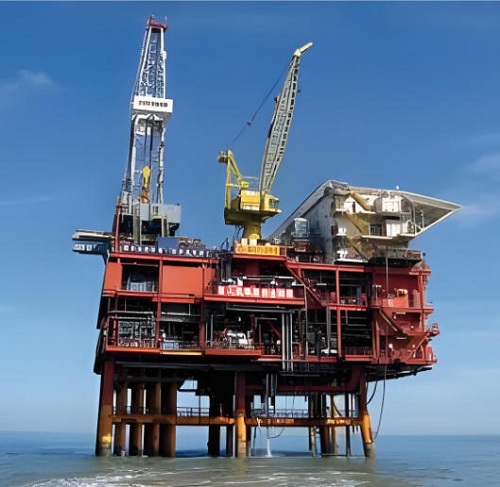
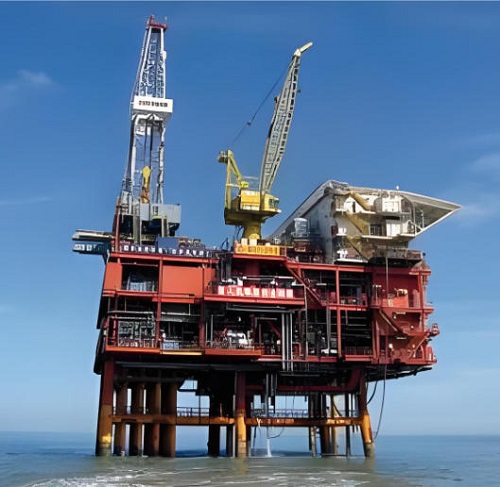
Explosion‑proof electrical systems (Exd II BT5/Exd II BT6 with IP55), corrosion‑resistant materials, high wind load capacity (>55 m/s), and space‑optimised modular design.
-
Certifications: API + ABS works approval + CE marking as required
Type 5: Automation Retrofit Package for Existing Rigs
For operators extending the life of existing SJ drilling or workover rigs (ZJ or XJ series), SJ provides engineering assessment, component supply and on‑site retrofitting. Includes auto catwalk, iron roughneck, pipe handler, VFD control panels and data acquisition systems.
7. Technical Specifications — ZJ & XJ Series Smart Rigs
ZJ Series Land Drilling Rigs — Smart Configurations
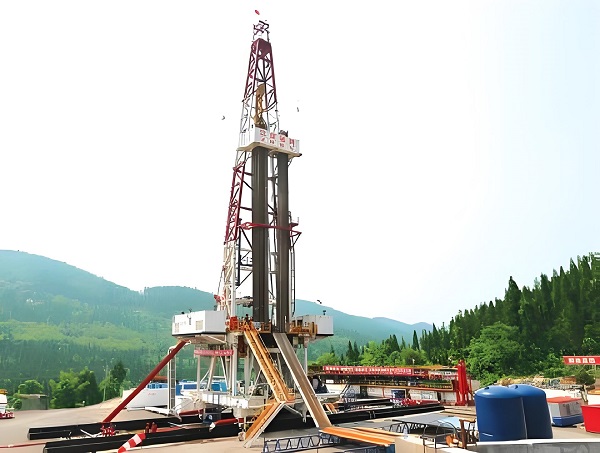
SJ’s ZJ series AC‑VFD drilling rigs cover nominal drilling depths from 3,000 m to 9,000 m (4½″ drill pipe):
| Model | Nominal depth (4½″ DP, m) | Max hook load (kN) | Wireline dia. (mm) | Traveling block sheave OD (mm) | Rotary table opening (mm) | Drawworks power (kW/hp) |
|---|---|---|---|---|---|---|
| ZJ40/2250DB | 2,500–4,000 | 2,250 | 32 (1 1/4″) | 1,120 (44″) | 520.7 (20 1/2″) | 735 (1,000) |
| ZJ50/3150DB | 3,500–5,000 | 3,150 | 35 (1 3/8″) | 1,270 (50″) | 698.5 (27 1/2″) | 1,100 (1,500) |
| ZJ70/4500DB | 4,500–7,000 | 4,500 | 38 (1 1/2″) | 1,524 (60″) | 698.5 (27 1/2″) | 1,470 (2,000) |
| ZJ80/5850DB | 5,000–8,000 | 5,850 | 42 (1 5/8″) | 1,524 (60″) | 952.5 (37 1/2″) | 2,210 (3,000) |
| ZJ90/6750DB | 6,000–9,000 | 6,750 | 45 (1 3/4″) | 1,524 (60″) | 952.5 (37 1/2″) | 2,210 (3,000) |
| ZJ120/9000DB | 12,000 | 9,000 | 48 | 1,828 | 952.5 (37 1/2″) | 2,940 (4,000) |
-
All models feature stepless speed regulation for drawworks, rotary table and mud pumps
-
The lifting way adopts double‑lift or rotating‑lift structure; drill‑floor heights: 7.5 m, 9 m and 10.5 m
-
The drill rig is realised with intelligent driller control as well as data storage, printing and remote transmission by applying PLC automatic bit feed and real‑time monitoring of run‑in, pull‑out and drilling conditions.
XJ Series Self‑Propelled Workover Rigs — Automation‑Ready
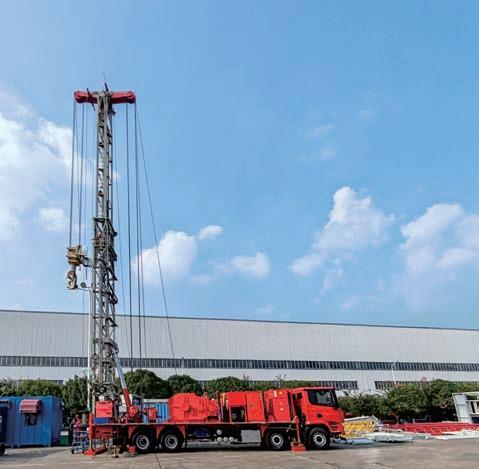
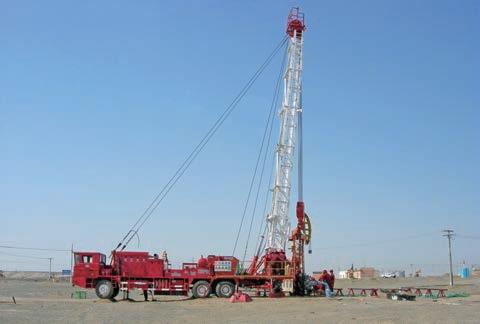
SJ has developed a series of workover rigs with maximum static load ranging from 300 kN to 2,250 kN and installed power from 235 HP to 1,300 HP, including models XJ150, XJ250, XJ350, XJ450, XJ550, XJ650, XJ1000 and XJ1200:
| Model | Workover depth (2-7/8″ DP, m) | Nominal hook load (kN) | Max static load (kN) | Drawworks HP | Clearance height, mast (m) | Floor height (m) | Traveling system |
|---|---|---|---|---|---|---|---|
| XJ250 | 2,000 | 400 | 675 | 250 | 21.0 | 2.2 | 3×4 |
| XJ350 | 3,200 | 600 | 900 | 350 | 31.7 | 3.7 | 3×4 |
| XJ450 | 4,500 | 800 | 1,125 | 450 | 34.0 | 3.7 | 4×5 |
| XJ550 | 5,800 | 1,000 | 1,350 | 550 | 34.0 | 4.5 | 4×5 |
| XJ650 | 7,000 | 1,200 | 1,470 | 650 | 35.0 | 4.5 | 4×5 |
| XJ1000 | 8,000 | 1,500 | 1,800 | 750 | 38.0 | 6.0 | 5×6 |
| XJ1200 | 9,000 | 1,800 | 2,250 | 1,000 | 39.3 | 6.7 | 5×6 |
-
The power system, drawworks system and driving system are all installed on a carrier, making it easy for installation and movement
-
Equipped with rotary table, swivel and drilling tools, these rigs can perform mobile drilling for medium and shallow wells
8. Applications — Where Smart Rig Specifications Matter Most
| Application | Why Smart Rig Specifications Matter | Recommended Configuration |
|---|---|---|
| Unconventional shale gas / tight oil | Long horizontal laterals demand precise steering, consistent WOB and fast cycles. Automation reduces connection time (≤ 37 s per pipe) and maintains optimal parameters | Type 1 — ZJ50 through ZJ90 with wheel‑rail moving |
| Multi‑well pad drilling | Same pad, multiple wells. Rig moves between slots without disassembly. Automated pipe handling maintains efficiency across multiple wells | Type 1 + integrated monolithic movement device |
| Remote basin drilling | Labor availability is limited. Automation reduces crew size (from 5 to 2) and enables remote monitoring via data transmission | Type 2 (BigEasy) or Type 4 for fully autonomous‑ready configuration |
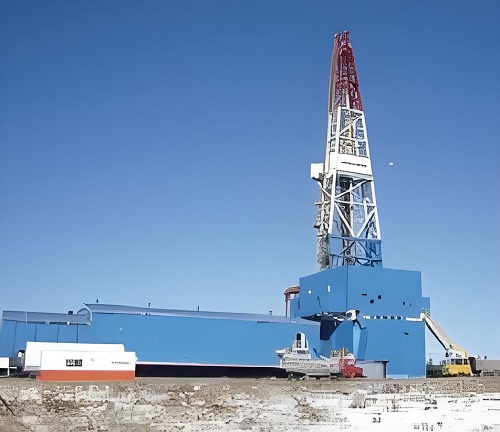
| Harsh environment drilling (arctic/desert) | Extreme conditions make manual operations dangerous and inefficient. Automation protects crews (remote operation) and maintains consistent performance | Type 3 with arctic/desert package |
| Offshore platform drilling | Space constraints, safety regulations, and high operating costs make automation a necessity | Type 4 — offshore smart rig (explosion‑proof, corrosion‑resistant) |
| Deep and ultra‑deep well drilling | High pressures and complex formations require precision and consistency that AC‑VFD closed‑loop control delivers | Type 3 — ZJ70 or ZJ90 with full AC‑VFD |
| Operator training and crew development | Consistent automated operations provide a safer, more predictable environment for new crew members | Type 1 with enhanced training interfaces |
9. Why Choose SJ for Smart Rig Specifications?
Sinopec‑grade quality. As a wholly‑owned subsidiary of Sinopec Group, SJ operates under quality management protocols that govern one of the world's largest integrated energy companies. The company possesses 200+ national patents and has reached internationally leading levels in fast‑moving and fast‑loading drilling rigs, low‑temperature oil equipment, and high‑power fracturing units. It is recognised as a "national enterprise technology centre”, a national civilised unit, a national manufacturing single‑item championship demonstration enterprise, and has won the second prize of the National Science and Technology Progress Award.
Vertically integrated manufacturing. SJ produces everything—the AC‑VFD drives, the mast, substructure, drawworks, mud pumps, top drives, automated pipe handling equipment and high‑pressure fluid control products—under one roof. No assembling components from multiple vendors and hoping they integrate.
50,000 m² assembly yard with full FAT. SJ possesses a rig assembly yard covering 50,000 m² with 24 rigging‑up positions and two offshore rig commissioning sites (four rig positions), where a test of 750 ton can be performed and 12 drilling or workover rigs can be assembled and commissioned simultaneously. Before any smart rig leaves the facility, it undergoes full factory acceptance testing (FAT). Customer‑witnessed verification is available.
Global after‑sales support. SJ maintains regional support infrastructure across the Middle East, Southeast Asia, and other key markets, with 24/7 remote support, field service engineers for commissioning, operator training, preventive maintenance and emergency service.
API‑certified and third‑party verified. All smart rig components are API Q1, ISO 9001 and HSE management system certified, with API monograms for Spec 4F (structures), 7K (drilling equipment), 8C (hoisting equipment), 6A (wellhead equipment) and 16C (choke and kill manifolds). Third‑party inspection through DNV, ABS, Lloyd's or any accredited agency is available.
Future‑ready architecture. SJ’s smart rigs are designed with data acquisition capabilities compatible with AI and machine learning systems for predictive maintenance and optimisation. As the global market for autonomous drilling rigs grows, SJ's architecture is built to evolve.
10. Frequently Asked Questions (FAQ)
Q1: What defines a "smart rig” in SJ’s product line?
A smart rig at SJ is a drilling or workover unit that integrates AC‑VFD electric drive (stepless speed control), PLC‑based centralised control, automated pipe handling (auto catwalk, iron roughneck, pipe handler), digital driller’s HMI, and real‑time data acquisition with remote transmission capability. The rig can be operated from the driller's cabin or remotely, with automated functions including auto‑bit‑feed, torque and speed control, and pipe connection automation.
Q2: What is the difference between AC‑VFD and conventional DC drive for smart rigs?
AC‑VFD (Variable Frequency Drive) systems use AC motors with IGBT‑based inverters, offering higher efficiency, regenerative braking (energy recovery), fewer electrical connections, better motor efficiency, less noise and fewer emissions, and inherently better compatibility with PLC‑based automation systems. AC‑SCR‑DC systems (available as an alternative) are DC motor drives with AC generator sets and SCR rectifiers — simpler technology with proven reliability for medium‑depth drilling. SJ offers both depending on customer preference.
Q3: What automated pipe handling equipment does SJ provide?
SJ provides a complete ecosystem: Automatic Catwalk — transports tubulars from the pipe rack area to the drill floor with automatic lifting and lowering of the drill string; ZMT120 Iron Roughneck — makes up and breaks down pipe connections (3½″–10″, 120,000 ft·lbs torque, wireless remote control); Pipe handler — automatically transports, racks and stores drill strings from the well centre to the finger beams, working together with catwalk and roughneck for fully automated operations.
Q4: What is the typical connection time per pipe with the automated system?
The ZMT120 iron roughneck completes a make/break cycle in ≤ 37 seconds in automated sequences. With full coordination of auto catwalk, iron roughneck and pipe handler, connection time is reduced by up to 50 % compared to manual operations.
Q5: How many crew members are required to operate an SJ smart rig?
A full AC‑VFD smart rig with automated pipe handling reduces the drill floor crew from five to two operators. For fully autonomous‑ready configurations, the reduction can be up to 75 % on the drill floor. One driller in the cabin can control all rig systems (drawworks, top drive, mud pumps, pipe handling) through the touch‑screen HMI.
Q6: What are the power supply options for AC‑VFD smart rigs?
SJ AC‑VFD rigs can operate from AC 600 V – 690 V, 50 Hz or 60 Hz power supplied by:
-
Onboard AC generator sets (diesel‑driven) for remote operations without grid power
-
Platform/pad grid power where available (lower fuel costs, lower emissions)
-
Hybrid configurations (diesel‑electric) for maximum flexibility
Q7: What is the temperature rating for SJ smart rigs?
Standard rating: −30 °C to +55 °C for electrical components (VFD/MCC room rated to −30 °C–+55 °C). Extended ratings available:
-
Arctic package: −45 °C with low‑temperature steel, hydraulic fluids and heated enclosures
-
Desert package: +55 °C continuous operation with enhanced cooling, multi‑stage cyclonic air filtration and sand‑resistant coatings
Q8: What is the typical lead time for an SJ smart rig?
Lead times vary by depth rating, configuration and automation level:
-
XJ series workover rigs (automation‑ready): 6–9 months
-
ZJ series AC‑VFD smart rigs (standard Type 1): 8–12 months
-
BigEasy series (BE550/BE770): 8–10 months
-
Offshore smart rigs (custom): 10–14 months
Contact SJ's sales team for current delivery schedules.
Q9: Does SJ provide operator training for smart rig systems?
Yes. SJ provides comprehensive training programs at its Jingzhou facility or on‑site at your location covering: AC‑VFD control system operation, touch‑screen HMI and PLC programming, auto‑catwalk and iron roughneck operation, data acquisition and remote monitoring systems, emergency procedures and failure recovery, and preventive maintenance for automated systems.
Q10: What is the global market outlook for smart drilling rigs?
The global autonomous drilling rigs market is projected to grow at a CAGR of approximately 7–8 % through 2032, driven by safety regulations, labor constraints in remote operations, and the maturation of AI/robotics technologies. The Middle East remains the most buoyant drilling market, with significant growth in automated rig demand expected. SJ is positioned at the forefront of this transition with fully API‑certified smart rigs and field‑proven automated pipe handling systems.







