
High pressure cementing truck
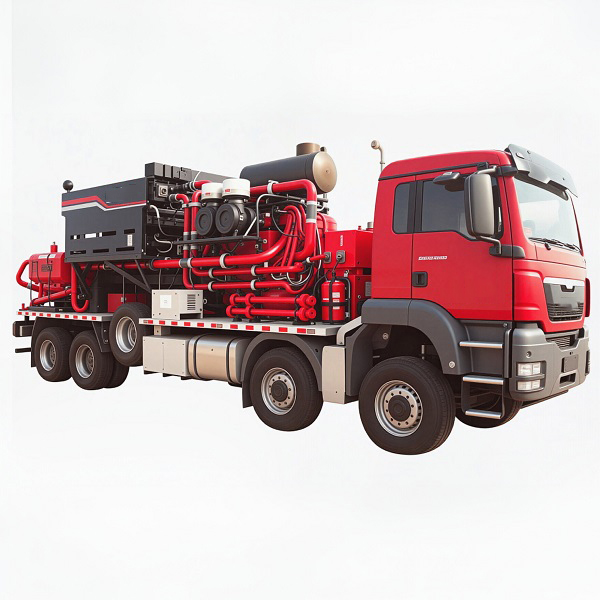
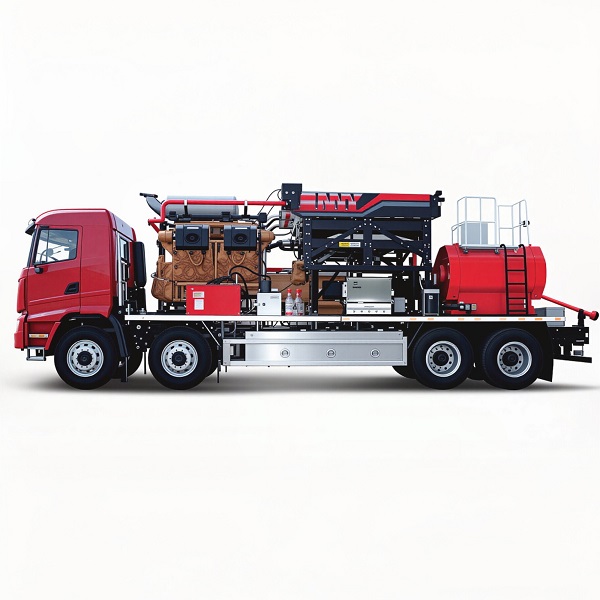
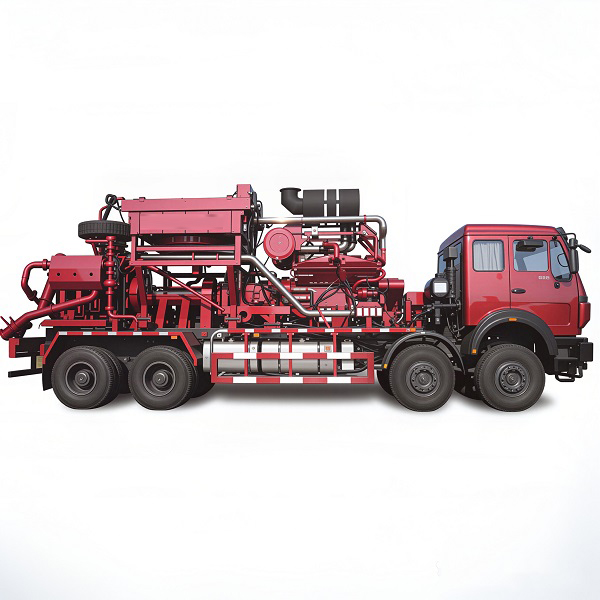
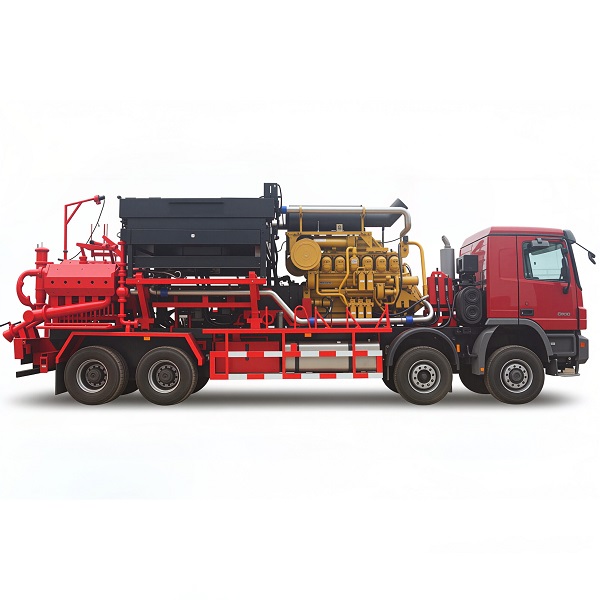
Technical Specifications – High Pressure Cementing Truck
GJC Series – Our Standard Cementing Truck Lineup
| Parameter | GJC‑1000 | GJC‑2000 | GJC‑2600 |
|---|---|---|---|
| Pump Configuration | 1 × 1,000 HP triplex | 2 × 1,000 HP triplex (twin) | 2 × 1,300 HP quintuplex (twin) |
| Total Horsepower | 1,000 HHP | 2,000 HHP | 2,600 HHP |
| Max Discharge Pressure | 10,000 PSI (69 MPa) | 15,000 PSI (103 MPa) | 20,000 PSI (138 MPa) |
| Max Discharge Rate | 8 bpm @ 5,000 PSI | 12 bpm @ 5,000 PSI | 15 bpm @ 5,000 PSI |
| Pump Type | Triplex (3 plungers) | Triplex or quintuplex (specify) | Quintuplex (5 plungers) |
| Density Meter | Optional | Coriolis or radiometric | Coriolis or radiometric |
| Density Accuracy | ±0.2 ppg (manual) | ±0.1 ppg (auto) | ±0.1 ppg (auto) |
| Mixing System | Jet mixer (manual) | Jet mixer + ADC | Jet mixer + ADC |
| Liquid Additive Points | 2 | 4 | 4 |
| Dry Additive Feeder | Optional | Yes (1) | Yes (2) |
| Chassis | 6×4 (Caterpillar/ Mercedes) | 8×4 or 8×6 | 8×6 (heavy duty) |
| Overall Dimensions (L×W×H) | 10m × 2.5m × 3.8m | 11.5m × 2.5m × 4.0m | 12m × 2.5m × 4.1m |
| Weight (GVW) | ~25 metric tons | ~32 metric tons | ~38 metric tons |
| Control System | Manual / basic PLC | SOFElink cementing | SOFElink cementing |
| API Compliance | API 7K (pump), API 6A (iron) | API 7K, 6A | API 7K, 6A |
| Optional Arctic Package | -45°C | -45°C | -45°C |
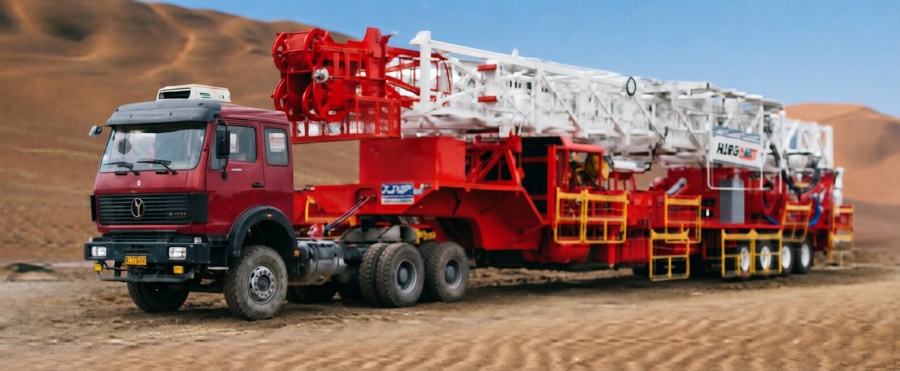
Applications – Where Our Cementing Truck Is Used
Our high pressure cementing trucks are deployed across all types of well construction and remedial cementing:
-
Primary cementing – surface casing, intermediate casing, production casing, and liner cementing
-
Squeeze cementing – repairing primary cement failures, plugging back zones, or shutting off water
-
Plug cementing – setting cement plugs for abandonment or sidetracking
-
Remedial cementing – block squeezes, packer cementing, and casing repair
-
Well abandonment – permanent plugging of depleted or non‑commercial wells
-
Deep HPHT wells – high pressure cementing (up to 20,000 PSI) for deep gas and oil wells
-
Offshore supply – skid‑mounted version available for platform installation (not truck)
Product Types – Cementing Truck Configurations
We offer three primary configurations, plus specialized variants.
1. GJC‑1000 – Single Pump, Compact Unit
Best for: Small operators, shallow wells, workover cementing, or as a backup unit.
Features:
-
1,000 HP triplex pump
-
10,000 PSI maximum pressure
-
Manual or basic automatic density control
-
Lighter weight, lower cost
-
Ideal for wells under 2,500m depth
2. GJC‑2000 – Twin Pump, Industry Workhorse
Best for: Most onshore cementing operations – intermediate and production casing in wells up to 5,000m.
Features:
-
Twin 1,000 HP pumps (2,000 HP total)
-
15,000 PSI rating
-
Automated density control (Coriolis meter)
-
4 liquid additive pumps
-
Dry additive feeder
-
SOFElink control with data logging
This is our most popular model – it covers 80% of cementing jobs globally.
3. GJC‑2600 – High Pressure, Deep Well Specialist
Best for: HPHT wells (5,000m+), deep gas wells, squeeze cementing through small perforations requiring very high pressure.
Features:
-
Twin 1,300 HP quintuplex pumps (2,600 HP total)
-
20,000 PSI pressure rating
-
Quintuplex design – smoother flow, lower maintenance
-
Redundant density meters (dual)
-
Full SOFElink automation with remote operation
-
Heavy‑duty 8×6 chassis for rough terrain
4. Arctic Cementing Truck (GJC‑2000A / GJC‑2600A)
Best for: Siberia, Northern Canada, Alaska – any location with sustained temperatures below –20°C.
Features:
-
All GJC‑2000 or GJC‑2600 features plus:
-
Heated mixing tub and water tank
-
Low‑temperature hydraulic fluids (–55°C pour point)
-
Heated control cabin
-
Engine block and battery heaters
-
Electric heat tracing on pressure lines
5. Skid‑Mounted Cementing Unit (Offshore / Platform)
Best for: Offshore platforms, barges, or locations where a truck cannot access.
The same pumps, mixing system, and controls mounted on a steel skid instead of a truck chassis. Can be craned onto a platform and tied into platform utilities. Available in 1,000 HP, 2,000 HP, and 2,600 HP variants.
Why Choose SJ Petro for Your High Pressure Cementing Truck?
Because a failed cement job costs far more than the truck that pumped it. You need reliability, precision, and support – not just a low price.
| Your Cementing Challenge | SJ Petro’s Answer |
|---|---|
| "We’ve had density swings that ruined a squeeze job. Our manual mixing isn’t consistent.” | Our automated density control holds ±0.1 ppg through the entire job. No guessing. No density spikes. |
| "We’re drilling deeper wells. 10,000 PSI is no longer enough.” | GJC‑2600 delivers 20,000 PSI – enough for deep HPHT cementing and high‑pressure squeeze jobs. |
| "If one pump fails mid‑job, we’re in trouble.” | Twin pump design. One pump can often finish the job at reduced rate – we’ve done it. Redundancy is built in. |
| "Our cementing contractor is slow to mobilize. We lose days.” | Truck‑mounted means drive to location, rig up in 1–2 hours. We’ve seen units pumping cement within 3 hours of arrival. |
| "We operate in extreme cold. Standard trucks freeze up.” | Arctic package – heated everything. Proven in Siberia at –45°C. |
| "We need API certification for our tender.” | Our pumps are API 7K; cement heads and iron are API 6A. Full documentation included. |
More reasons cementing operators trust SJ Petro:
-
Sinopec Group heritage – 80+ years of oilfield equipment manufacturing
-
Tens of thousands of cement jobs – our units have cemented some of China’s deepest wells
-
Global track record – cementing trucks delivered to Russia, Kazakhstan, UAE, Saudi Arabia, Indonesia, Nigeria, and across South America
-
In‑house manufacturing – pumps, mixing systems, and controls all built in our ISO/API certified facilities
-
Comprehensive training – we train your operators and maintenance crew during delivery
-
Spare parts availability – we stock wear parts (valves, seats, packing) for all our pump models, plus engine and transmission parts
Frequently Asked Questions (FAQ) – High Pressure Cementing Truck
Q1: What is the difference between a cementing truck and a fracturing truck?
A: Cementing truck – Designed for well cementing (primary, squeeze, plug). Features precise density control, twin pumps for redundancy, lower rates (8–15 bpm), and continuous operation for hours. Pressure range 5,000–20,000 PSI.
Fracturing truck – Designed for reservoir stimulation (proppant fracturing, acidizing). Features much higher rates (30–100 bpm), higher horsepower (2,500+ HP per unit), and sand handling capability. Pressure range 10,000–15,000 PSI typically.
Some trucks can do both with modifications, but purpose‑built units perform better. Our cementing trucks are optimized for slurry placement, not proppant pumping.
Q2: How accurate is your automated density control system?
A: ±0.1 pounds per gallon (ppg) when properly calibrated and operated with consistent dry cement and water quality. That’s equivalent to about ±12 kg/m³ in metric units. For comparison, many manual systems have errors of 0.5–1.0 ppg, which can significantly affect compressive strength and thickening time.
Q3: Can your cementing truck handle foam cement (nitrogen injection)?
A: Yes, but it requires additional equipment. Our trucks can be fitted with a nitrogen injection skid (separate unit) that ties into the discharge line. The SOFElink control system can manage nitrogen rate to maintain target foam quality. We have supplied foam cement packages for light‑weight cementing applications. Contact us for details.
Q4: What is the maximum continuous pumping time at full rate?
A: Our trucks are designed for continuous duty. The limiting factors are fuel (diesel) and fluid end temperature. At 15 bpm and 5,000 PSI, the GJC‑2600 can pump for 6+ hours without stopping – more than enough for any cement job (most jobs are 1–3 hours). The fluid end may require a cool‑down period after extended high‑pressure pumping; we recommend following our duty cycle guidelines.
Q5: How long does it take to switch between different cement blends?
A: If you are using the same truck for multiple blends (e.g., lead slurry followed by tail slurry), the transition is instantaneous via the computer control system – you pre‑program the sequence. However, physically cleaning the mixing tub and water system to change cement types (e.g., from class G to class H) takes about 1–2 hours, depending on how thoroughly you flush.
Q6: Do you offer a version with a centrifugal pump for bulk cement transfer?
A: Yes. Many of our cementing trucks include a hydraulically driven centrifugal pump that can transfer cement from bulk silos or tote bins to the mixing tub. This is optional on GJC‑2000 and standard on GJC‑2600.
Q7: What kind of data does your SOFElink cementing system record?
A: For every job, the system logs:
-
Slurry density (continuous)
-
Pump rate (bpm or m³/min)
-
Discharge pressure (PSI/MPa)
-
Cumulative volume pumped (bbls/m³)
-
Water flow rate
-
Cement feed rate
-
Additive rates (each chemical)
-
Time stamps for every data point (1 second intervals typical)
Data can be exported as CSV, PDF report, or integrated with the operator’s electronic drilling recorder (EDR). We also provide a job report automatically at the end of pumping.
Q8: What spare parts should I keep for a GJC‑2000 cementing truck?
A: For a truck operating 50–100 cement jobs per year, we recommend:
-
2 full sets of valves and seats (tungsten carbide)
-
4 sets of packing (all plungers)
-
2 plungers (if you use a single size – otherwise one of each size you use)
-
1 set of suction and discharge valve springs
-
1 set of fluid end gaskets and O‑rings
-
2 engine oil filters, 2 fuel filters
-
2 transmission filters
-
Assorted hammer union seals (2″ and 3″)
We provide a custom list with your purchase.
Q9: Can I get a cementing truck certified for offshore use (DNV/ABS)?
A: Yes. For offshore platforms, we offer a skid‑mounted version (not truck) that can be certified to DNV 2.7‑1 or ABS standards. The truck chassis is not suitable for offshore due to corrosion and transport constraints. The skid unit uses the same pumps and mixing system but on an offshore‑rated skid with corrosion protection and marine‑certified components. Lead time is longer (8–10 months). Contact us for a separate quotation.
Q10: What is the warranty on a high pressure cementing truck?
A: 12 months after commissioning or 18 months after shipment – whichever comes first. The warranty covers manufacturing defects on all components (pumps, mixing system, electronics, chassis). Wear parts (valves, seats, packing, plungers, filters) are not covered but are available as spares. Extended warranty is available for an additional fee (up to 5 years).
Q11: Do you provide financing or leasing for cementing trucks?
A: Yes. For qualified buyers, we offer:
-
Direct financing (through partner banks) – terms up to 5 years
-
Operating lease – 1–3 years, with option to purchase at end
-
Milestone payments – 30/40/30 (deposit, pre‑shipment, after site acceptance)
Contact our sales team for a lease quote based on your credit and location.
Q12: How does your pricing compare to Halliburton, Schlumberger, or NOV cementing units?
A: For equivalent specifications (same horsepower, same pressure, same level of automation), our trucks are typically 25–40% lower than major Western brands. The difference is factory‑direct pricing and lower overhead – not lower quality. Our pumps are API certified and field‑proven. We’re happy to provide a side‑by‑side comparison quote with any competitor’s specification sheet.







