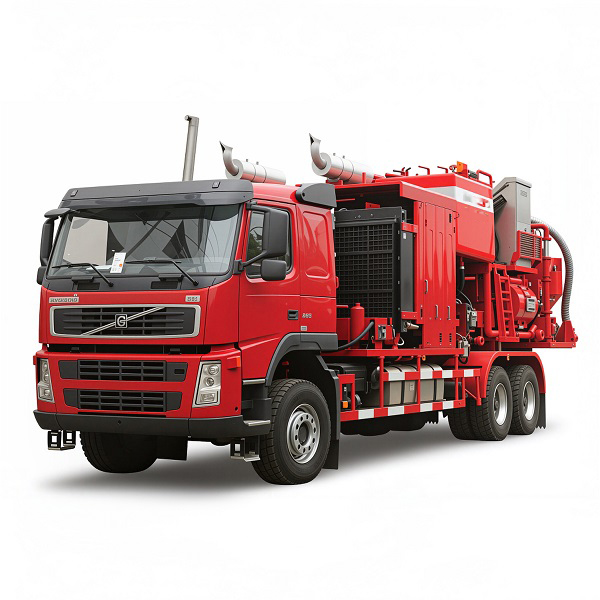
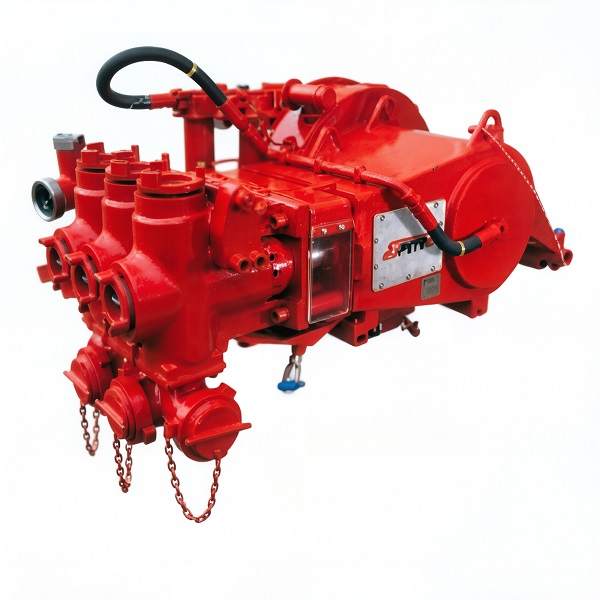
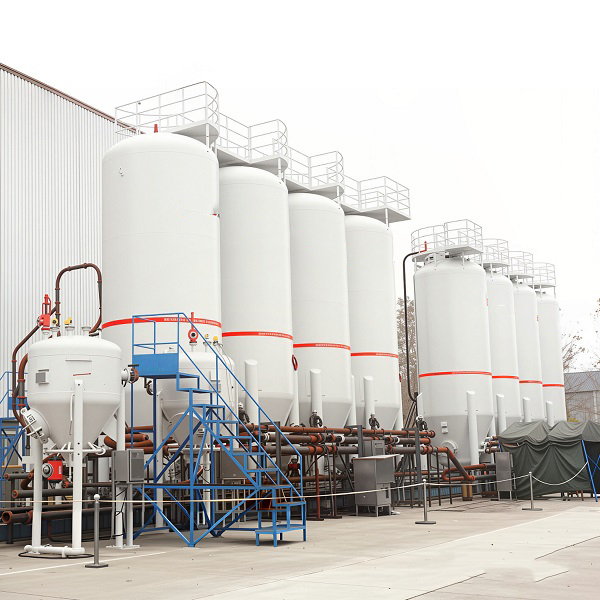
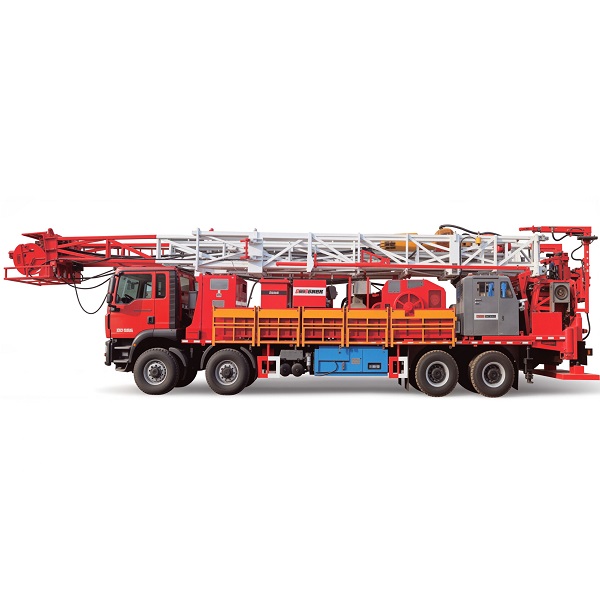
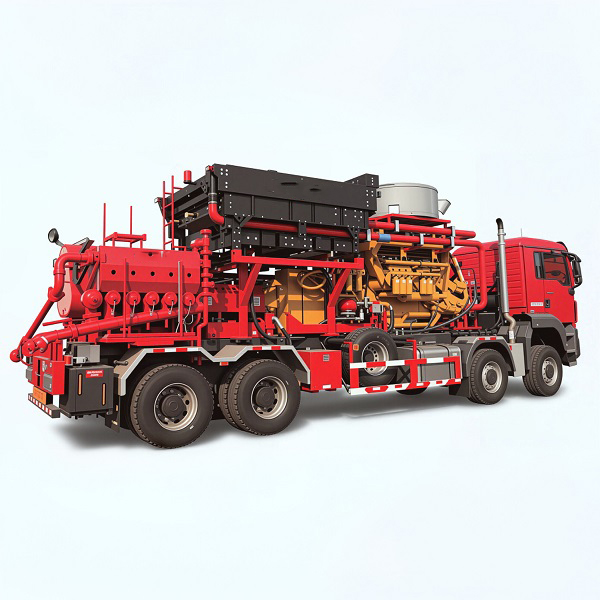
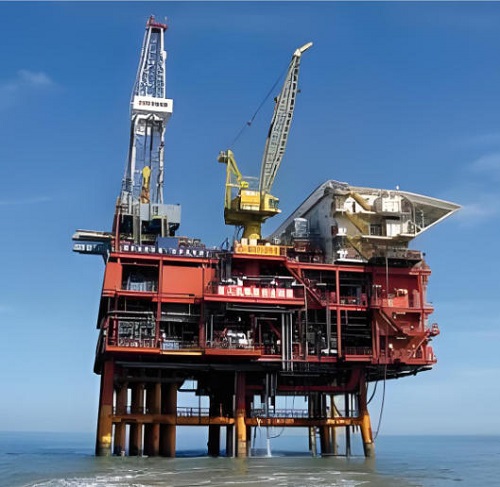
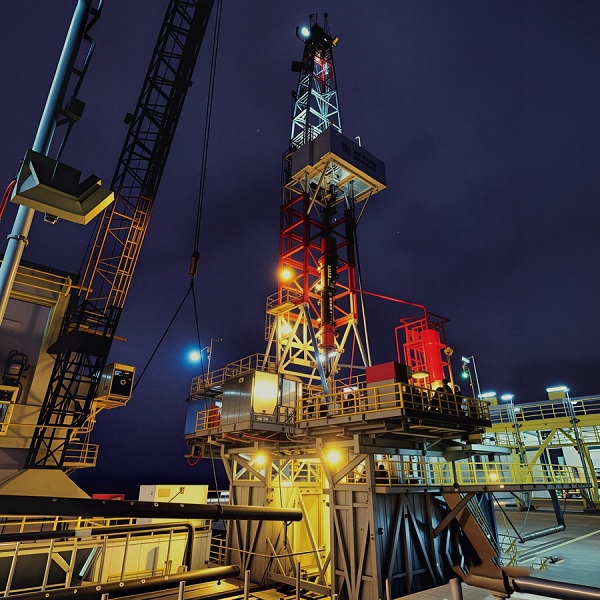
Fracturing unit set technology
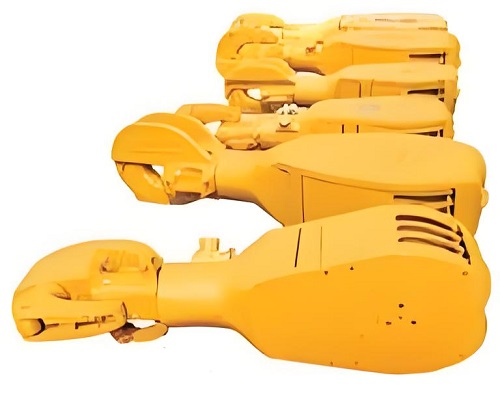
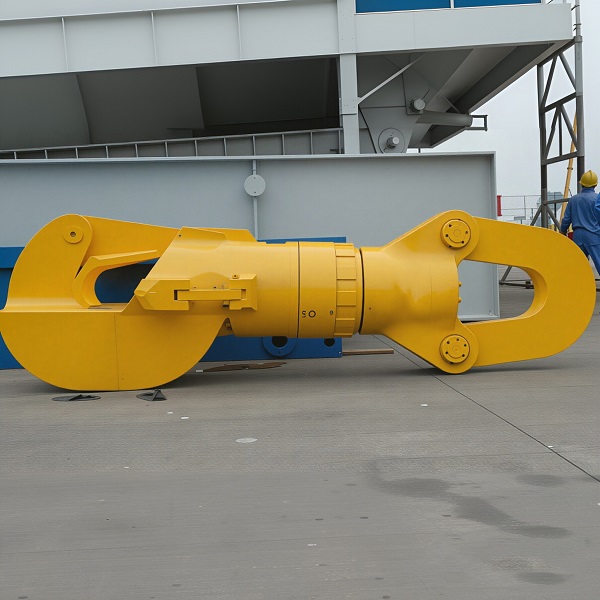
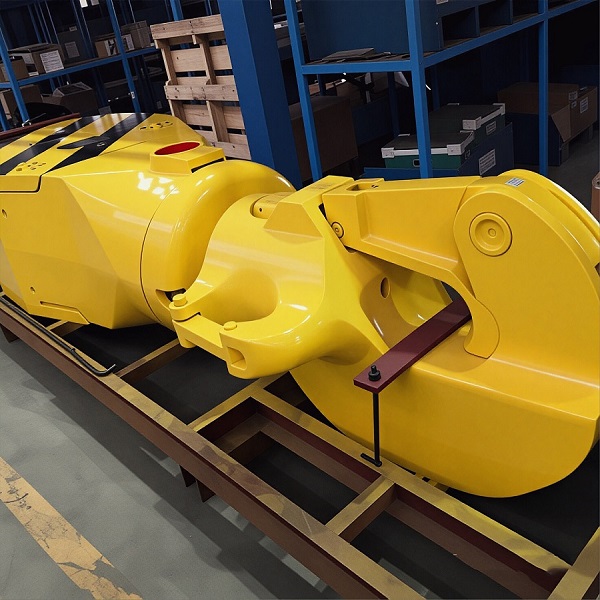
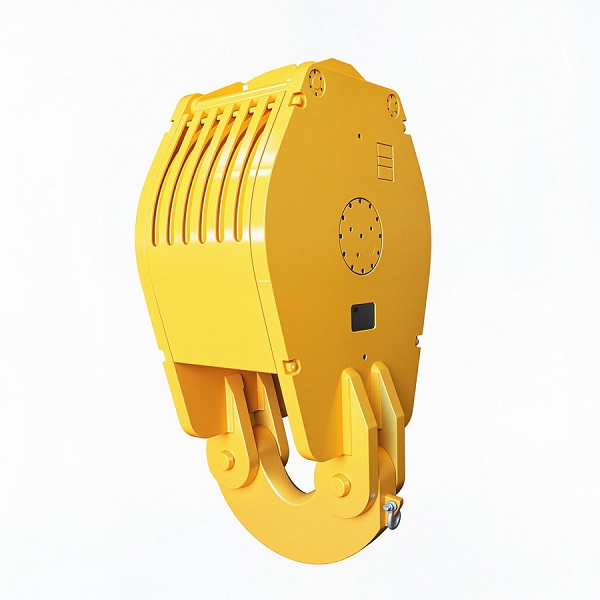
Technical Specifications – QWS Pump Series
| Parameter | QWS-2500 | QWS-3000 | QWS-3500 | QWS-4500 | QWS-5000 |
|---|---|---|---|---|---|
| Max brake HP | 2,500 | 3,000 | 3,500 | 4,500 | 5,000 |
| Plunger size options (in) | 3.5, 4, 4.5 | 3.5, 4, 4.5, 5 | 4, 4.5, 5 | 4.5, 5, 5.5 | 5, 5.5, 6 |
| Max pressure (psi) | 15,000 | 15,000 | 15,000 / 20,000 | 15,000 / 20,000 | 15,000 / 20,000 |
| Max flow rate (bpm @ plunger) | 18 (4.5″) | 22 (4.5″) | 25 (5″) | 32 (5.5″) | 40 (6″) |
| Fluid end material | Forged alloy | Forged alloy + SS liner | High-strength + carbide coating | Super alloy (custom) | Super alloy (custom) |
| Valve seat OD (in) | 4.25 | 4.25 | 4.75 | 4.75 | 5.25 |
| Power end bearing type | Tapered roller | Tapered roller | Tapered + journal | Journal (pressure-fed) | Journal (pressure-fed) |
| Lubrication oil capacity (gal) | 35 | 40 | 55 | 70 | 85 |
| Weight (lbs, dry) | 18,000 | 21,000 | 25,000 | 32,000 | 38,000 |
| API compliance | API 7K | API 7K | API 7K | API 7K | API 7K |
Common across all models:
-
Gear ratio: 6.353:1 or 8.047:1 (selectable)
-
Max continuous rod load: 250,000 lbs (QWS-2500 to 3500), 350,000 lbs (4500-5000)
-
Certifications: API Q1, ISO 9001, CE, ATEX (optional)
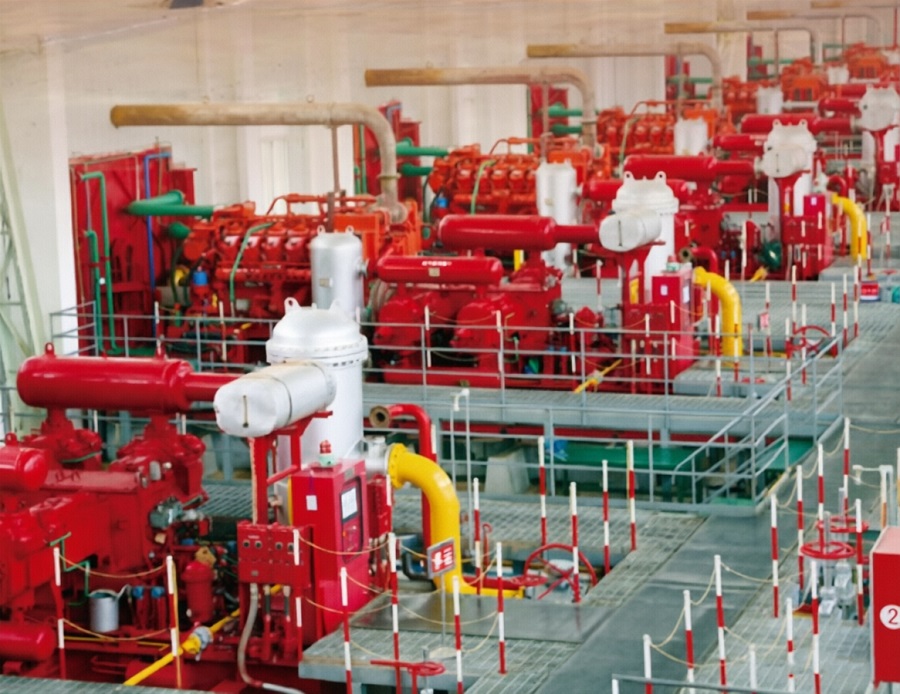
Product Types – Fracturing Unit Set Technology Configurations
| Configuration | Drive | Automation | Best For | Key Tech Features |
|---|---|---|---|---|
| Diesel-mechanical (standard) | Diesel engine + Allison transmission | Manual/Semi | Conventional wells | Proven, lower upfront |
| Diesel-electric | Diesel genset + electric motor | Semi/Full | Shale pads, noise-sensitive | Smoother control, lower emissions |
| Dual-fuel (gas substitution) | Diesel + NG injection | Full | Remote with field gas | 70% gas use, cost savings |
| All-electric (grid) | Grid power + VFD | Full | Near power lines, zero emission | Lowest fuel cost, silent operation |
| Hybrid (battery + diesel) | Diesel + battery buffer | Full | Peak shaving, transient reduction | 25% less engine runtime |
| Containerized smart unit | Any drive | Full + IoT | Fly-in, offshore, arctic | Modular, remote-ready |
Applications – Technology in Action
| Play Type | Key Technology | Performance Impact |
|---|---|---|
| Shale gas (Sichuan Basin) | All-electric + FleetSync + valve wear monitoring | 98% uptime, 3,000+ pumping hours per pump before fluid end failure |
| Tight gas (Tarim, 7,000m deep) | 20,000 psi fluid end + dual-fuel | Achieved 18,000 psi treating pressure, 70% gas substitution |
| Offshore fracturing (Bohai Bay) | Containerized electric + remote telemetry | Operated from FPSO, zero local emissions, remote expert support |
| Desert heavy oil (Middle East) | High-temp seals + sand-tolerant packing | Packing life doubled from 80 to 190 hours at 50°C ambient |
| Urban / near-community frac | Acoustic enclosure + electric drive | Noise reduced to 75 dBA @ 50m, no complaints |
Why Choose SJ Petro for Fracturing Unit Set Technology?
1. Technology Born from Operating Experience – Not Just Engineering
We are not a pure manufacturer. We are part of Sinopec, one of the world's largest fracturing service providers. Every technology we develop is first tested in Sinopec’s own fields – including the Fuling shale gas project (China’s largest). If it doesn’t survive 500 hours of 15,000 psi pumping with 8 ppg sand, it never reaches our catalog.
2. Patented Innovations You Can’t Get Elsewhere
Our QWS pump series, bi-directional valve seats, active packing lubrication, and FleetSync automation are protected by multiple patents. You won’t find these features in generic pumps.
3. Industry-Leading Fluid End Life
Through metallurgy, geometry optimization, and real-time monitoring, our fluid ends routinely exceed 3,000 pumping hours before overhaul – compared to industry average of 1,500-2,000 hours. That means lower operating cost and fewer mid-job failures.
4. Full Technology Stack – Pump to Cloud
Unlike component suppliers (pump only) or service companies (operate only), we provide the complete technology ecosystem: the pump, the engine/transmission pairing, the control system, the data platform, and the training to use it effectively. No "integration risk” of mixing brands.
5. Open Data Architecture
We do not lock you into proprietary data formats. Our telemetry system exports standard WITSML and CSV files. You own your data. You can feed it into your own analytics or use our dashboard – your choice.
6. Continuous Improvement Through R&D
We operate a dedicated fracturing technology R&D center with:
-
6,000 HP pump test stand
-
High-pressure flow loop (20,000 psi)
-
Proppant slurry erosion test facility
-
Metallurgy and non-destructive testing labs
New technologies (e.g., AI-based valve failure prediction, ceramic plungers) are developed and validated here before field deployment.
7. Global Support for High-Tech Equipment
Advanced technology requires knowledgeable support. Our technicians receive continuous training on new features. We offer remote diagnostic access (with your permission) and can deploy specialists to your location.
FAQ – Fracturing Unit Set Technology
Q1: What is the biggest technical challenge in high-pressure fracturing – and how does your technology solve it?
A: The fluid end. Conventional designs suffer from premature cracking and valve/seal erosion at pressures >15,000 psi. Our solution combines: (1) forged high-strength alloy with proprietary heat treatment, (2) CFD-optimized flow passages that reduce velocity spikes, (3) bi-directional valve seats that double life, and (4) real-time monitoring that warns before failure. Result: typical fluid end life doubled.
Q2: How does your electric frac technology compare to diesel in terms of cost and reliability?
A: Electric frac has 40% lower energy cost (at typical US industrial grid rates) and near-zero maintenance on the drive train. Reliability is higher because electric motors have far fewer moving parts than diesel engines. The challenge is grid access. For remote locations, we offer mobile gas turbine generators or diesel-electric hybrids. Our all-electric fleet has completed over 500 stages in China with 99.5% uptime.
Q3: What is the practical maximum pressure your pumps can deliver continuously?
A: For the QWS-4500 with special fluid end, we have demonstrated 20,000 psi continuous for 200+ hours in the lab. Field duty at 18,000 psi is routine in our Sichuan deep gas wells. For 15,000 psi standard operations, our pumps are conservative. Tell us your required pressure, and we’ll recommend the appropriate model and fluid end option.
Q4: How accurate is your valve wear monitoring system?
A: The acoustic emission method detects valve closing impact energy. When the impact energy drops by 40% from baseline, we estimate 10-20 remaining hours before complete failure. We’ve validated this with over 500 valve replacements. It’s not perfect (±10 hours), but it prevents sudden failures during a stage.
Q5: Can your technology retrofit onto existing fracturing units from other brands?
A: Yes, partially. Our FleetSync automation and remote telemetry can be added to most pumps (regardless of brand) with external sensors and a control gateway. Our valve wear monitoring requires sensor installation on each pump. We cannot retrofit our fluid end geometry to non-SJ pumps, but we can supply replacement fluid ends that fit many common pump frames (e.g., Halliburton, Schlumberger). Contact us for compatibility.
Q6: How do you train our crews to use your advanced technology?
A: We provide a tiered training program:
-
Level 1 (2 days): Basic operation, data interpretation, alarm response
-
Level 2 (3 days): Advanced diagnostics, valve wear monitoring, FleetSync calibration
-
Level 3 (5 days): Maintenance of high-tech components (sensors, telemetry, controls)
Training is done at your site or our facility. Simulators available.
Q7: What is the typical ROI for upgrading to dual-fuel technology?
A: Assuming $3.00/mmBTU natural gas vs. $2.50/gallon diesel, 70% gas substitution, 2,000 pumping hours per year: annual fuel savings of $80,000-$120,000 per pump. Payback period for dual-fuel kit (approx $80k-$100k) is 12-18 months. For high-utilization fleets, even shorter.
Q8: Are your electric frac units truly "plug and play” with different grid voltages/frequencies?
A: We supply step-down transformers and VFD cabinets that accept input from 480V to 13.8kV, 50/60 Hz. Our team performs on-site grid assessment and configures the protection settings. You need to provide a dedicated feeder and disconnect switch – we handle the rest.