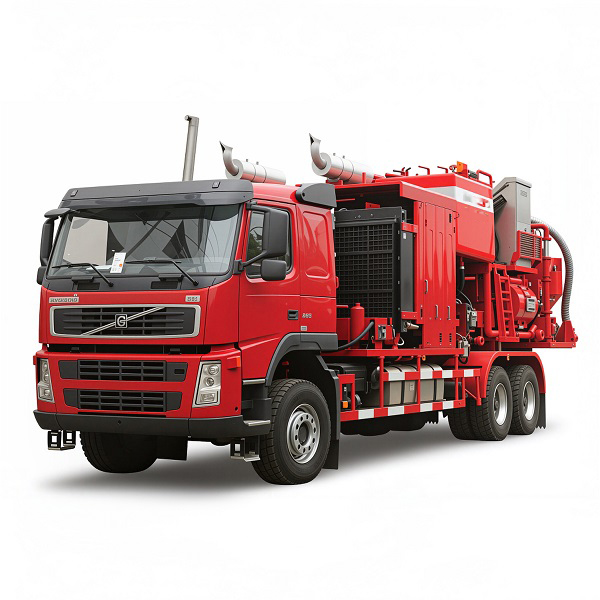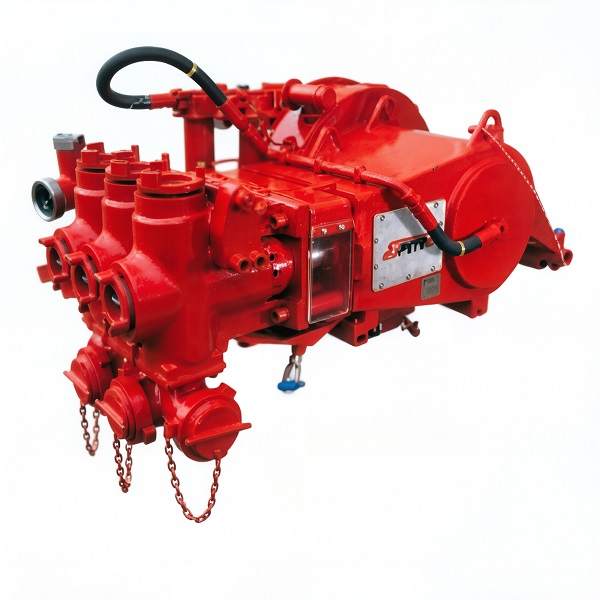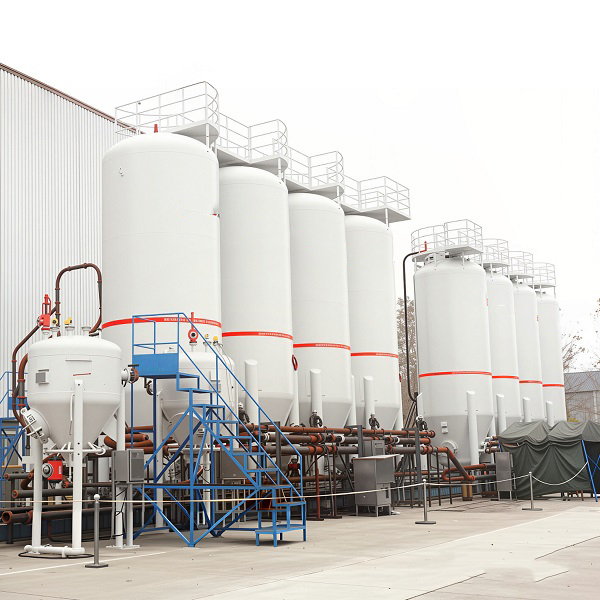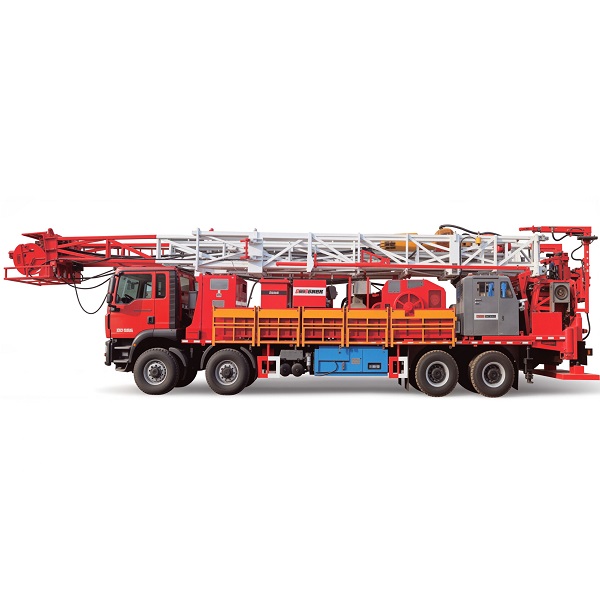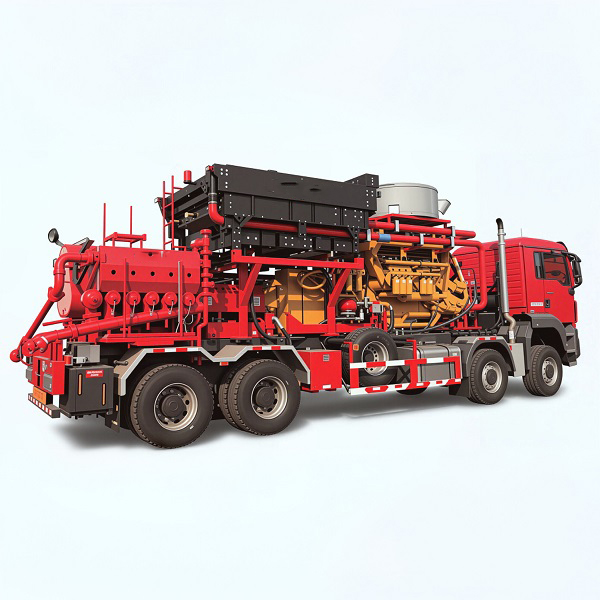
Fracturing unit set maintenance
Technical Reference – Critical Component Life & Maintenance Parameters
| Component | Typical Service Life | Maintenance Actions | When to Replace |
|---|---|---|---|
| Valve & Seat | 60-120 pumping hours (varies by sand concentration) | Inspect every 20 hours for wear and washout | Loss of pump efficiency, visible channeling |
| Plunger & Packing | 150-300 hours | Check packing adjustment daily; inspect plunger surface for scoring | Packing leaks, pressure slippage, plunger scoring |
| Fluid End Block | 5,000-10,000 pumping hours | Annual NDT inspection (magnetic particle, dye penetrant) | Cracking detected, repeated valve seat movement |
| Power End Bearings | 8,000-12,000 hours | Oil analysis every 250 hours; vibration monitoring continuously | Excessive wear metals, elevated vibration |
| Manifold Iron (Fittings) | 1,000-2,000 jobs | Pressure test before each job; visual inspection for pitting | Cracks, wall thinning, hammer union damage |
| Hydraulic Hoses | 2-3 years or 4,000 hours | Visual inspection monthly; pressure test annually | Cracking, abrasion, leaks at fittings |
| Diesel Engine | 20,000+ hours (major overhaul) | Oil/filter change every 250-500 hours; valve lash adjustment | Low compression, excessive blow-by, oil consumption |
| Control System (PLC/HMI) | 8-10 years | Firmware updates annually; backup configuration daily | Obsolete components, reliability issues |
Our Maintenance Innovations & Advantages
1. OEM-Backed Engineering & Data
We designed the fracturing equipment we maintain. That means we have original engineering drawings, material specifications, and testing criteria – not guessed values. When we inspect a fluid end, we know exactly where cracks are most likely to form. When we rebuild a transmission, we use the precise OE tolerance data.
2. API-Compliant & Industry-Standard Procedures
Our maintenance processes follow the SY/T 7461-2019 standard ("Petroleum and Natural Gas Drilling and Production Equipment – Use and Maintenance of Fracturing Pumping Equipment”), which we helped develop. That means structured levels of maintenance (daily, weekly, monthly, quarterly, annual) with documented checklists, safety interlocks, and HSE requirements.
3. ISO & API Certified Facilities
Our repair centers maintain: ISO 9001 (quality), ISO 14001 (environmental), ISO 45001 (HSE), and API Q1 (quality management). We’ve also earned ISO 9001 and API dual certifications and implemented ERP systems for full traceability.
4. Genuine OEM Parts – No Counterfeits
Many third-party shops use "compatible” parts of unknown origin. We stock genuine SJ Petro replacement parts, including:
-
Fluid end valve assemblies (seats, bodies, seals)
-
Plungers (chrome-plated, ceramic, solid carbide)
-
Packing sets (standard, high-pressure, acid-resistant)
-
Power end bearings, bushings, thrust washers
-
Engine and transmission service kits
-
Hydraulic hoses, fittings, and seal kits
-
Control system sensors, PLC modules, touch panels
Using OEM parts means proper fit, correct metallurgy, and documented traceability. No guesswork.
5. Global Service Network
Our maintenance teams operate regionally through:
-
Regional repair hubs – Dubai (Middle East), Houston (Americas), Singapore (Asia-Pacific), Calgary (Canada – planning)
-
Field service engineers – Deployed from these hubs, covering most oil-producing regions within 48-72 hours
-
Mobile repair units – Fully equipped vans/trucks for on-site pump changeouts and diagnostics
6. Predictive Maintenance Digital Platform
We offer an optional digital health monitoring platform for your entire fracturing fleet:
-
Dashboard showing real-time status of every pump and ancillary unit
-
AI-assisted anomaly detection trained on thousands of pump hours of failure data
-
Automated work order generation when alarms trigger
-
Historical trending for lifecycle cost analysis
-
Accessible via web browser or mobile device – your operations team knows the health of your fleet from anywhere
7. Training & Skill Transfer
The best maintenance program still requires skilled people to execute it. We provide:
-
Operator maintenance training – Daily inspection routines, fluid checks, common troubleshooting
-
Technician training – In-depth pump overhaul procedures, control system diagnostics, predictive tool operation
-
Management training – How to interpret maintenance data, optimize scheduling, calculate TCO
We can certify your crews to perform Level 1 and Level 2 maintenance independently – giving you long-term self-sufficiency.
Why Choose SJ Petro for Fracturing Unit Set Maintenance?
One OEM – One Standard – One Point of Accountability
When your fracturing fleet is a mix of brands (your current frac pumps, a Caterpillar engine, a third-party blender), who do you call when something fails? The pump manufacturer blames the engine. The engine distributor blames the controls. The controls supplier blames the software. You get stuck in the middle.
With SJ Petro as your single maintenance partner, that finger-pointing ends. We are accountable for the entire equipment set – pump, engine, transmission, control system, manifold, and blender. If something fails under our maintenance program, we diagnose it, fix it, and answer for it. No passing the buck.
Backed by Sinopec – The World’s Largest Refiner & Oilfield Operator
Sinopec Group operates hundreds of fracturing units across China’s most demanding basins – from the deep gas fields of Sichuan to the offshore fields of Bohai Bay. Our maintenance practices are honed through decades of real field experience, not just textbook theory. You get maintenance programs that have been proven on thousands of actual jobs.
Built the Industry Standard – SY/T 7461-2019
We were instrumental in drafting China’s national fracturing equipment maintenance standard. That means when we say "Level 1 preventive maintenance,” you know exactly what is included. There’s no ambiguity. No "interpretation.” Just a clear, documented, auditable procedure.
6000hp Pump Test Center – Unmatched Diagnostic Capability
Our facility includes a 6,000 hp pump test center and seven professional laboratories for material analysis, fluid testing, and performance validation. When we rebuild a pump, we can test it under full load before it ever leaves our shop. You don’t find that capability at third-party repair shops.
Cost-Effective Compared to OEM Alternatives
Many operators believe that original manufacturer maintenance is automatically expensive. At SJ Petro, we offer OEM-quality service at competitive rates – typically 20-30% less than comparable service contracts from western manufacturers. The savings come from our integrated supply chain, local manufacturing, and low overhead – not from cutting corners on quality.
Applications – Where Our Maintenance Solutions Deliver
| Environment | Maintenance Challenges | Our Solution |
|---|---|---|
| Shale Gas Pads (High-Intensity) | 24/7 pumping at 12,000+ psi for weeks | Predictive monitoring + on-site field service + quick pump changeout |
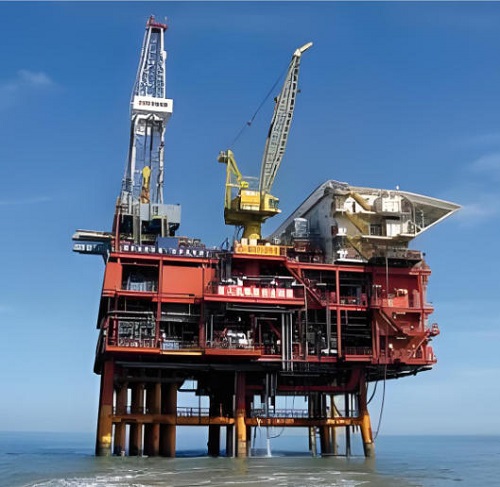
| Offshore Fracturing Vessel | Remote location, no local support | Remote diagnostics + pre-shipped critical spares + service team on standby |
| Desert Operations | Abrasive sand ingress, extreme heat, long distances | High-frequency PM + sand filtration + thermal monitoring |
| Arctic / Low Temperature | Frozen fluids, difficult engine starts, operator exposure | Winterization inspections, heated enclosures, cold-weather PM checklist |
| Multi-Fleet Operator | Inconsistent maintenance across rigs | Standardized PM program + digital tracking across all fleets |
| Aging Fleet / Capital-Constrained | Equipment nearing end-of-life | Condition-based overhaul planning to extend life at lowest cost |
FAQ – Fracturing Unit Set Maintenance
Q1: Do you only maintain SJ Petro equipment, or can you maintain other brands as well?
A: We maintain fracturing equipment from ALL major manufacturers – including Halliburton, Schlumberger, NOV, Caterpillar, Cummins, Jereh, and others. We are an OEM for fracturing equipment, but our maintenance expertise extends across brands. However, when we maintain our own equipment, you benefit from original engineering data and certified parts that no third-party shop can match.
Q2: What is the difference between preventive, predictive, and reactive maintenance – and which do I need?
A: Most operators need a combination. Reactive maintenance (fix it when it breaks) leads to unplanned downtime and higher costs – but is sometimes unavoidable. Preventive maintenance (scheduled PM based on hours) catches wear patterns early and is essential for high-utilization fleets. Predictive maintenance (monitoring with sensors and analytics) identifies specific failure modes before symptoms appear – ideal for critical pumps where failure would shut down a stage. Our approach is to build a tiered plan that balances your budget, risk tolerance, and operational demands.
Q3: Can you provide 24/7 emergency support for remote locations?
A: Yes. Our 24/7 support center is staffed for emergency calls. For critical parts, we can air-freight within 72 hours from regional hubs. For on-site technician dispatch, our typical response time is 48-72 hours for most international destinations (travel time dependent on visas). For active frac campaigns, we can pre-position technicians and spares to avoid delays.
Q4: What kind of warranty do you provide on maintenance work?
A: All repair and overhaul work carries a 6-month or 1,000 operating hour warranty (whichever comes first) on parts and labor. Parts replaced are covered by original OEM warranty where applicable. We also offer extended warranty for an additional fee.
Q5: Do you offer maintenance as a subscription service (e.g., fixed monthly fee)?
A: Yes. We offer predictive maintenance subscription plans for operators with larger fleets (10+ units). The subscription includes: 24/7 remote monitoring, monthly on-site inspections by a technician, all scheduled PM labor (parts extra), and priority emergency response. Pricing is based on fleet size and operating hours. Contact us for a custom proposal.
Q6: How do I know when it’s time for a major fluid end replacement vs. just replacing wear parts?
A: We use a combination of factors: total pumping hours, NDT inspection results (magnetic particle on critical areas), historical failure patterns, and observed performance degradation (pressure loss, efficiency drop). We provide a health assessment report for each fluid end annually or at 5,000-hour intervals. If you’re unsure, we can send a technician to inspect and give a recommendation.
Q7: Can you train my local maintenance team to handle basic repairs themselves?
A: Absolutely. Training is a core part of our offering. We provide:
-
On-site training (2-5 days) at your facility
-
Training at our facility (1-2 weeks) with hands-on pump rebuilds and diagnostics
-
Virtual classroom for basic operator maintenance
-
Documentation – digital maintenance checklists and troubleshooting guides
We can also certify your personnel to API-specified competency levels.
Q8: What spare parts should I keep on site for a 5-pump frac fleet?
A: We provide a customized critical spares inventory based on your equipment models, operating intensity, distance from our hub, and your budget. Typically includes:
-
Valve and seat sets (2-3 per pump)
-
Packing sets (1-2 per pump)
-
Plungers (1-2 per pump)
-
Sensor kit (pressure, temperature)
-
Hydraulic hose assortment
-
Fasteners and seals for manifold
-
Filters (oil, fuel, hydraulic)
We can also set up a consignment stock at your location – you pay only what you use.