
Dual well rig configuration
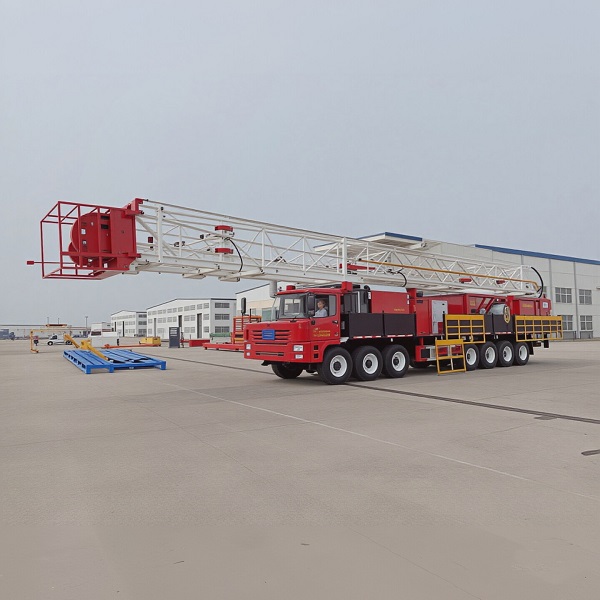

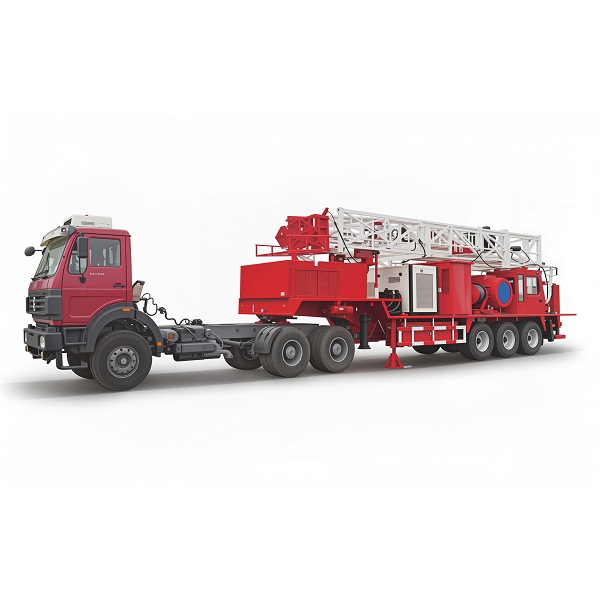
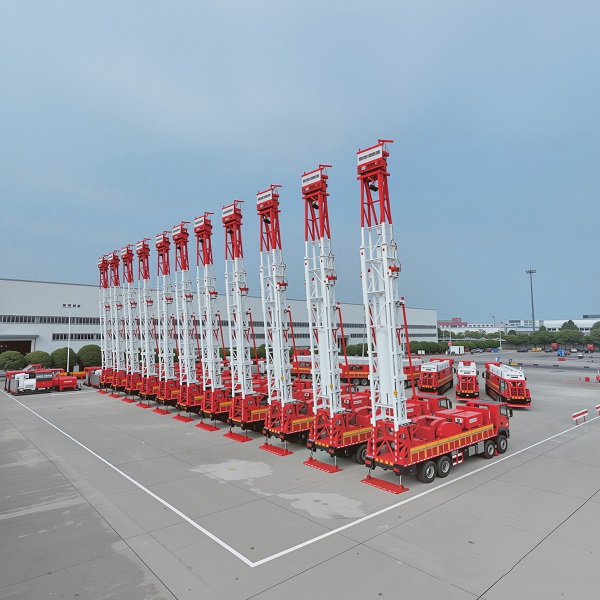
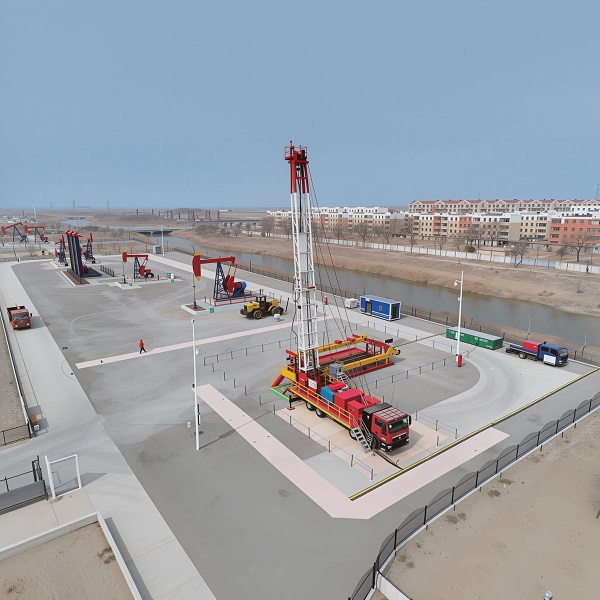
Technical Specifications – Example Configurations
The table below shows three typical dual well rig configurations. Your configuration will be custom.
| Parameter | Compact Sequential | Standard Simultaneous | High‑Capacity Walking |
|---|---|---|---|
| Operation mode | Sequential (1 mast) | Simultaneous (2 masts) | Simultaneous + walking |
| Well spacing | 3 – 5 m | 6 – 8 m | 8 – 15 m |
| Hook load per side | 250,000 lbs | 250,000 lbs | 350,000 lbs |
| Mast type | 3‑section telescopic | 3‑section telescopic | 3‑section heavy |
| Mast extended height | 102 ft | 102 ft | 112 ft |
| Moving system | Hydraulic skidding (rails) | Hydraulic skidding (rails) | Hydraulic walking (omni) |
| Move time (20 m) | 2 – 3 hours | 3 – 4 hours | 5 – 7 hours |
| Drive type | Diesel‑hydraulic | Diesel‑hydraulic | Electric + solar |
| Automation level | Semi‑auto (one side) | Semi‑auto (both sides) | Full auto (both sides) |
| Control system | PLC + HMI | SCADA‑ready | Fully remote |
| Total rig weight (approx) | 350 tons | 550 tons | 750 tons |
| Footprint (working) | 40×35 ft | 65×40 ft | 80×50 ft |
| Transport modules | 28 | 42 | 55 |
| Estimated capex (USD) | $8M – $10M | $12M – $15M | $18M – $22M |
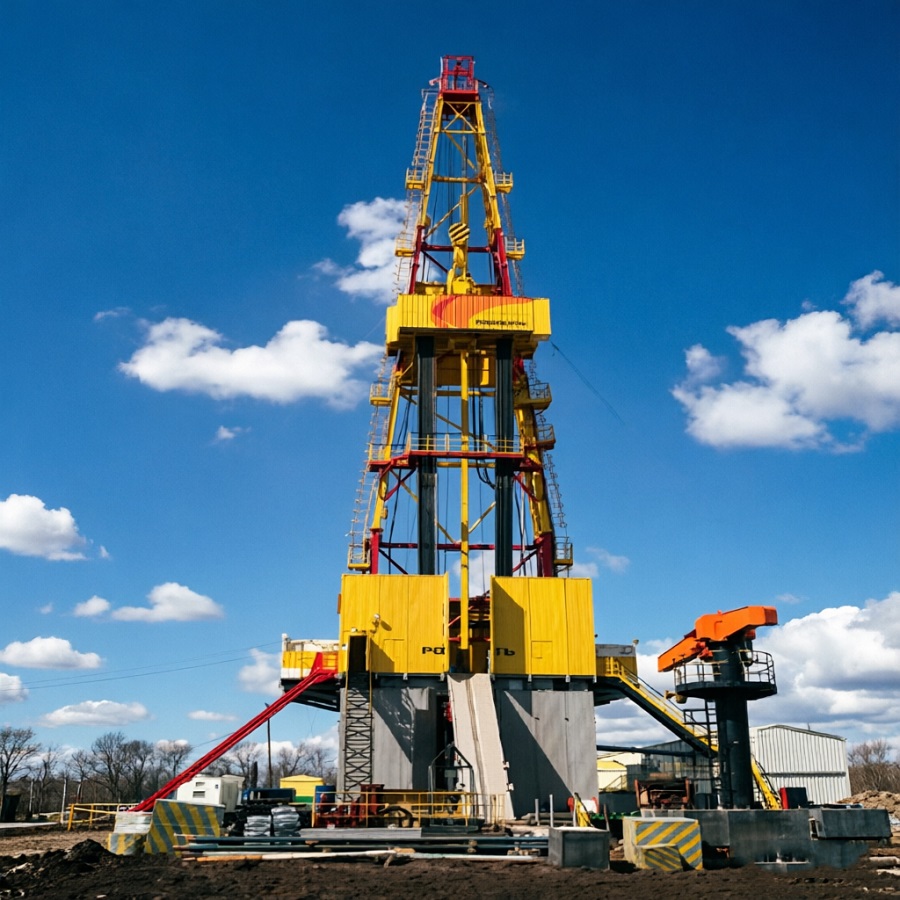
Applications by Configuration Type
| Pad Type | Recommended Configuration | Key Config Choices |
|---|---|---|
| Small shale pad (4–6 wells, inline) | Sequential skidding | 3m spacing, semi‑auto, diesel‑hydraulic |
| Large shale pad (20+ wells, multi‑row) | Simultaneous walking | Walking system, full auto, SCADA‑ready |
| Offshore platform (6–8 slots, radial) | Simultaneous rotating | Rotation module, electric drive, offshore package |
| Urban drilling (tight space, 2–4 wells) | Sequential skidding (compact) | Short skid beams, low noise (electric) |
| Remote desert (scattered wells) | Sequential walking | Solar electric, arctic/desert package |
| Workover campaign (12 wells) | Sequential skidding (light) | Lower hook load, fast moves, basic automation |
Product Types – Pre‑Engineered Configuration Families
We offer four configuration families that cover 80% of customer needs. Each family is a starting point – you modify any parameter.
| Family | Operation | Moving | Drive | Automation | Typical Well Count |
|---|---|---|---|---|---|
| SJ‑DS‑C (Compact Sequential) | Sequential | Skid (rails) | Diesel‑hydraulic | Semi‑auto | 4 – 10 |
| SJ‑DS‑E (Electric Sequential) | Sequential | Skid (rails) | Electric (grid) | Semi‑auto | 4 – 10 |
| SJ‑DP‑S (Standard Simultaneous) | Simultaneous | Skid (rails) | Diesel‑hydraulic | Semi‑auto (both) | 8 – 20 |
| SJ‑DP‑W (Walking Simultaneous) | Simultaneous | Walking | Hybrid / solar | Full auto | 20+ or complex layout |
Why Choose SJ Petro for Your Dual Well Rig Configuration?
1. We Do Not Have a "Standard” Rig – Every dual rig we build is configured from scratch based on your pad layout. No square‑peg‑round‑hole.
2. Free Configuration Consultation – Send us your pad drawing and well data. Our engineers will propose the optimal configuration – sequential vs simultaneous, moving method, power, automation – with a clear rationale.
3. Simulation Before Build – We model your configured rig in 3D, simulate moves between wells, and estimate pad completion time. You see what you are getting before we cut steel.
4. Interchangeable Components Across Configurations – Many parts (hydraulic pumps, control valves, pipe handling units) are common across our configuration families. Spare parts inventory stays manageable.
5. Future‑Proof Design – Configured rigs can be upgraded later (e.g., sequential to simultaneous, skidding to walking) because we design mounting interfaces for future expansion.
6. Global Compliance – API 4F, 7K, 8C, plus regional certifications (CE, ATEX, etc.) as needed.
7. Sinopec Engineering Depth – Access to hundreds of dual rig configurations already deployed. We know what works.
Frequently Asked Questions (FAQ)
Q1: What information do you need to configure a dual well rig for my pad?
Minimum: number of wells, well spacing (center‑to‑center), target depths, and whether you prefer sequential or simultaneous. Additional helpful info: pad diagram, formation drillability, power availability, and any environmental constraints.
Q2: How long does the configuration process take?
Initial proposal with recommended configuration: 5–7 business days after receiving your data. Detailed engineering and 3D modeling: 2–4 weeks. Manufacturing: 8–14 months depending on complexity.
Q3: Can I change the configuration after manufacturing starts?
Yes, but changes may affect cost and delivery. We build configuration freezes at major milestones (substructure fabrication, hydraulic system assembly). Discuss changes early.
Q4: What is the most cost‑effective configuration for a 6‑well pad?
Typically sequential skidding with diesel‑hydraulic drive and semi‑auto pipe handling. Capex ~$8M–$10M. For 6 wells, simultaneous is usually overkill.
Q5: When does simultaneous make sense over sequential?
When you have 12+ wells, or when offshore platform days are extremely expensive. Simultaneous cuts pad time by 35–45% but costs ~40% more than sequential.
Q6: Can I configure a dual rig to work on both wells at the same time with different depths?
Yes. Our simultaneous configuration has two independent masts and top drives. You can drill well A to 4,000m while well B is at 2,000m – no interference.
Q7: Do you offer electric drive for both sequential and simultaneous?
Yes. Electric (AC‑VFD) is available for all configurations. For simultaneous, we size the transformer and VFD cabinets for peak combined load.
Q8: Can the moving system be changed later (skid to walk)?
Yes, on most configurations we design the substructure with mounting points for both skid beams and walking units. You can start with skidding (lower cost) and upgrade to walking later.
Q9: What is the maximum well spacing your configuration can handle?
For skidding (rails): up to 50 meters with extended beams. For walking: unlimited – you can walk 100 meters or more. We have done 300m walks on large pads.
Q10: Can I configure a dual rig for both drilling and workover?
Yes. Specify the lower hook load for workover (e.g., 150k lbs) and we design masts and substructure accordingly. The skidding/walking system works the same for both.
Q11: Do you provide training for the specific configuration?
Yes. Training is tailored to your configuration – whether sequential or simultaneous, skid or walk, manual or automated. We use your actual control software and moving sequence.
Q12: How do I get a configuration proposal for my pad?
Fill out our Dual Rig Configuration Request Form on this page – upload your pad layout (PDF or CAD) and answer a few questions about well depths and operations. We will respond within 5 business days with a recommended configuration and budget estimate.






