Drill bit selection guide
Section 1: Understanding Drill Bit Basics
Before you pick a specific bit, you need to understand the three main categories and their trade‑offs.
-
Steel Tooth (Milled Tooth) Tricone Bits – Teeth are machined directly into the steel cones. Hardfacing is applied for wear resistance. Best for soft to medium‑soft formations (clays, sands, soft limestone, chalk, anhydrite). Advantages: low cost per bit, very high ROP in soft rock. Disadvantages: short life in hard or abrasive formations.
-
TCI (Tungsten Carbide Insert) Tricone Bits – Press‑fitted tungsten carbide inserts replace steel teeth. The inserts are dramatically harder and more wear‑resistant. Advantages: long life in hard, abrasive, or fractured formations. Disadvantages: higher initial cost; may lose inserts if run in very soft rock with high WOB.
-
PDC (Polycrystalline Diamond Compact) Bits – Fixed diamond cutters shear the rock continuously (no moving parts). Advantages: extremely high ROP in soft‑medium formations, long life, excellent directional control. Disadvantages: poor performance in hard, interbedded, or highly abrasive formations; cannot be used in formations with cemented gravel or chert (diamond cutters chip).
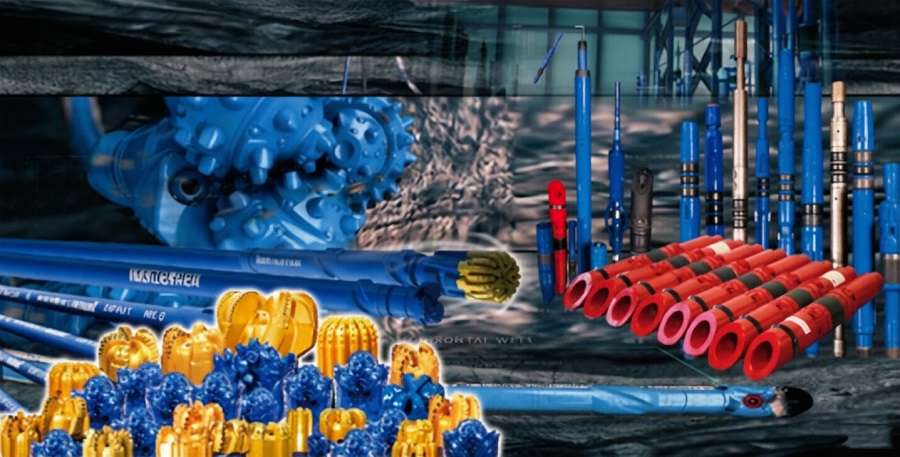
A simple rule of thumb: steel tooth for soft, TCI for hard/abrasive, PDC for soft‑medium with continuous lithology.
Section 2: Decoding the IADC Code – Your Roadmap to Tricone Selection
The IADC (International Association of Drilling Contractors) code is a four‑digit classification system for tricone bits. Understanding it is the single most important skill in drill bit selection.
| Digit Position | Meaning | Values | Description |
|---|---|---|---|
| 1st Digit | Series / Formation type | 1, 2, 3 | Milled tooth bits for soft to medium formations |
|
|
|
4, 5, 6, 7, 8 | TCI bits for medium to extremely hard formations |
| 2nd Digit | Formation hardness within series | 1 (softest) to 4 (hardest) | Higher number = harder rock |
| 3rd Digit | Bearing & seal type | 1, 2, 3, 4, 5, 6, 7 | (see table below) |
| 4th Digit | Special features | Usually 1 (standard) | Reserved for custom features |
Bearing & Seal Codes (3rd Digit)
| Code | Bearing Type | Seal Type | Application |
|---|---|---|---|
| 1 | Standard roller | None (open) | Water wells, mining, low cost |
| 2 | Air-cooled roller | None | Air drilling applications |
| 3 | Roller | Rubber (elastomer) | Standard oil/gas drilling |
| 4 | Roller | Metal face seal | High temperature, extended runs |
| 5 | Journal | Rubber seal | Better high‑load capacity than roller |
| 6 | Journal | Metal seal | Premium for deep/hot wells |
| 7 | Journal | Rubber seal (enhanced) | High‑performance oil/gas bits |
Example: IADC 5‑3‑7 means TCI bit (first digit 5) for medium‑hard formation (second digit 3) with journal bearing and rubber seal (third digit 7).
Section 3: Formation‑Based Selection Guide
The table below is a quick reference for matching IADC codes to common lithologies. Use it as your primary drill bit selection guide.
| Formation Type | Example Rocks | IADC Code Range | Bit Type | Recommended Tooth/Insert |
|---|---|---|---|---|
| Very soft / unconsolidated | Clay, mud, fine sand, recent sediments | 1‑1‑1 to 1‑2‑1 | Steel tooth | Long, widely spaced teeth |
| Soft | Claystone, soft shale, chalk, coarse sand, gravel | 1‑3‑1 to 1‑4‑1 | Steel tooth | Medium‑long teeth |
| Soft to medium | Sandstone, medium shale, anhydrite, soft limestone | 2‑1‑1 to 2‑2‑1 | Steel tooth | Medium teeth |
| Medium | Medium sandstone, sandy limestone, hard claystone | 3‑1‑1 to 3‑2‑1 | Steel tooth | Short, compact teeth |
| Medium to medium‑hard | Hard shale, medium limestone, dolomite, hard sandstone | 4‑1‑3 to 4‑3‑3 | TCI | Chisel or conical inserts |
| Medium‑hard | Compacted shale, hard limestone, moderately abrasive sandstone | 5‑1‑3 to 5‑3‑3 | TCI | Conical or ballistic inserts |
| Hard | Dolomite, hard limestone, quartzite, taconite, hard sand | 6‑1‑3 to 6‑3‑3 | TCI | Round or ballistic inserts |
| Very hard / extremely abrasive | Granite, basalt, chert, pyritic formations, other igneous/metamorphic rocks | 7‑1‑3 to 8‑3‑3 | TCI | Dense, closely spaced round inserts |
| Soft to medium (high ROP) | Shale, claystone, siltstone, soft limestone | PDC (any blade count) | PDC | 13‑19 mm cutters |
| Interbedded | Alternating soft/hard stringers | PDC (heavy set) or TCI | Evaluate transition carefully | – |
Section 4: Technical Specifications – Comparison of Bit Types
The table below compares key technical parameters across bit categories to support your drill bit selection decision.
| Parameter | Steel Tooth (Milled) | TCI (Tungsten Carbide Insert) | PDC (Polycrystalline Diamond) |
|---|---|---|---|
| Typical IADC range | 1‑1‑1 to 3‑4‑7 | 4‑1‑3 to 8‑3‑7 | Not IADC‑classified |
| Formation compressive strength (MPa) | 0 – 50 | 20 – 200+ | 0 – 100 |
| Recommended WOB (KN/mm of bit diameter) | 0.35 – 1.0 | 0.4 – 1.5 | 0.2 – 1.0 |
| Recommended RPM range | 60 – 150 | 35 – 100 | 50 – 250 |
| Relative bit life (feet) | Short (100‑500 ft typical) | Medium‑Long (500‑2000+ ft) | Long (1000‑5000+ ft) |
| ROP potential | Very high in soft rock | Moderate in hard rock | Very high in continuous soft‑medium rock |
| Sensitivity to interbedded formations | Low | Low | High (cutters may chip) |
| Cost per bit | Low | Medium‑High | High |
| Cost per foot | High in hard rock; low in soft | Low in hard rock | Very low in ideal formations |
Section 5: Bearing Selection Guide
After choosing the tooth/insert type, your next decision is bearing and seal system. This is often overlooked but directly affects bit life at bottom.
| Bearing Type | Seal Type | IADC 3rd Digit | Max Temperature | Best Application |
|---|---|---|---|---|
| Open bearing | None | 1 | Unlimited (if cooled) | Water wells, short runs, shallow drilling |
| Roller bearing | Rubber seal | 3 | 120°C (250°F) | Standard oil/gas, most land rigs |
| Roller bearing | Metal seal | 4 | 200°C (390°F) | Deep wells, geothermal, high RPM |
| Journal bearing | Rubber seal | 5 or 7 | 140°C (285°F) | High WOB applications, directional drilling |
| Journal bearing | Metal seal | 6 | 220°C (430°F) | Ultra‑deep, HP/HT, extended lateral runs |
Section 6: PDC Bit Selection – Beyond IADC
PDC bits are not classified by IADC, but you can select them based on cutter size, blade count, and profile.
-
Cutter size – 13 mm (standard), 16 mm (aggressive), 19 mm (very aggressive). Larger cutters drill faster but are less durable. For hard or interbedded formations, choose smaller cutters (13 mm) for durability.
-
Blade count – 4‑5 blades for soft formations (high ROP, less stabilization). 6‑8 blades for harder or directional work (more cutters distributed, better stability). For directional wells with high build rates, a 5‑6 blade design with short parabola profile (SJ Petro’s specialty) reduces torque fluctuations.
-
Profile – Short parabola (reduces contact area, better for directional), long parabola (better for vertical, longer life), flat profile (aggressive, for soft rock).
Section 7: Common Mistakes in Drill Bit Selection
Even experienced drillers make these errors. Avoid them:
-
Using a TCI bit in very soft clay – The inserts will penetrate too deep, causing high torque and insert breakage. Use a steel tooth bit or PDC.
-
Using a PDC bit in highly interbedded formations – The diamond cutters will chip when they hit hard stringers. If interbedded formations are unavoidable, use a TCI bit with a durable insert shape (round or ballistic).
-
Ignoring dull bit grading – Not inspecting dull bits means you never learn why your selection failed. Always grade dull bits (IADC dull grading system) and track wear patterns.
-
Running a worn bit too long – Once a bearing seal fails or teeth are worn to the base, continued run risks losing cones or diamond cutters (fishing job). Monitor bit life and pull at the first sign of performance drop.
-
Assuming all 5‑3‑7 bits are the same – Different manufacturers use different insert shapes, cone offset, and metallurgy. Our technical team can explain our design differences.
Section 8: Drill Bit Selection Flowchart (Text Summary)
-
Identify formation lithology from offset well logs or cuttings.
-
Estimate compressive strength (soft < 20 MPa; medium 20‑70 MPa; hard 70‑140 MPa; very hard > 140 MPa).
-
Check for interbedded or abrasive zones – If yes, favor TCI.
-
Choose bit category:
-
Steel tooth (IADC 1‑3) for soft, non‑abrasive rock where low cost and high ROP are the drivers.
-
TCI (IADC 4‑8) for harder, abrasive, or interbedded rock where bit life is critical.
-
PDC for continuous soft‑medium formations where maximum ROP is desired, especially in directional wells.
-
-
Select IADC code within the chosen series (higher 2nd digit = harder rock).
-
Choose bearing type based on expected bottomhole temperature and required run length.
-
Validate with offset bit records – If similar formations were drilled successfully with a certain IADC code, that is a strong starting point.
Why Choose SJ Petro for Drill Bit Selection & Supply?
-
Sinopec‑backed technical resources – We are a direct subsidiary of China’s largest oilfield equipment group. Through our collaboration with Kingdream (40+ years of dedicated bit manufacturing), we have access to one of the industry’s deepest drill‑bit engineering databases.
-
API Spec 7‑1 compliant – All our bits meet the rigorous requirements of API Specification 7‑1 for rotary drill stem elements, including drilling and coring bits. Third‑party inspection available.
-
IADC mapping for your field – We can analyze your offset well data and suggest IADC codes even before you order. This service is free for potential customers.
-
Dull bit analysis – Our accredited lab inspects returned bits and provides a written failure analysis (abrasion, impact damage, thermal degradation, etc.) to continuously refine your selection.
-
Complete range in stock – We stock common sizes and IADC codes (8‑1/2", 12‑1/4", 17‑1/2"; IADC 1‑1‑1 through 8‑3‑7) for immediate shipment. Custom orders for non‑stock items: 20‑30 days.
-
Competitive direct pricing – As a manufacturer, we sell factory‑direct. You avoid trading company markups, saving 15‑25% compared to Western brands for equivalent API certification.
-
Technical support at every step – Our drilling engineers are available by email, phone, or site visit to help you interpret dull grades and adjust your next selection.
Frequently Asked Questions (FAQ)
Q1: How do I know if I need a steel tooth bit or a TCI bit?
Rule of thumb: if the rock can be scratched with a pocket knife, start with steel tooth. If you need a hammer to break a sample, start with TCI. For mixed sections, evaluate the percentage of hard stringers. If more than 10‑15% of the interval is hard, the long life of a TCI bit usually justifies the higher initial cost.
Q2: What does IADC code 1‑1‑7 mean?
First digit 1 = steel tooth series for soft formation. Second digit 1 = softest within the series. Third digit 7 = journal bearing with rubber seal. Fourth digit is not used in standard classification. This code is suitable for very soft clay, mud, or shallow sand sections.
Q3: Can I use a PDC bit in directional drilling?
Yes. In fact, PDC bits are preferred for many directional wells because they drill at higher ROP and require fewer trips. However, you need a bit with a short parabola profile and balanced blade design to minimize torque fluctuations and improve toolface control. Our PDC bits are designed specifically for steerability.
Q4: How do I prevent bit balling in sticky shale formations?
Use a bit with aggressive hydraulic design (multiple large‑diameter nozzles directed at the cutting face). In tricone bits, choose a bit with open, widely spaced teeth (IADC 1‑1‑1 or 1‑2‑1). In PDC bits, increase flow rate and use a bit with deeper junk slots.
Q5: What is the maximum RPM for a tricone bit?
For open bearing bits (IADC third digit 1 or 2), maximum RPM is around 80‑100. For rubber‑sealed bits (third digit 3, 5, 7), 120‑150 RPM is acceptable for short intervals. For metal‑sealed bits (third digit 4, 6), up to 200 RPM is possible if formation permits. Always consult the bit’s specific recommended range; overspeeding dramatically reduces bearing life.
Q6: How does a metal‑sealed bearing differ from a rubber seal?
A metal‑face seal uses precision‑lapped metal faces running against each other, lubricated by oil. It withstands higher temperatures (200°C vs. 120‑140°C) and longer run times. It is the standard for deep, hot wells and long horizontal sections. Rubber seals are more forgiving of misalignment and lower cost, but they have lower thermal limits.
Q7: Do you offer bit recertification or rebuild services?
Yes. We can regrind steel tooth bits (replace hardfacing) and rebuild TCI bits (replace lost inserts and refurbish bearings). The service is cost‑effective for premium TCI bits. Send us your dull bits for an evaluation.
Q8: What information do I need to provide for a bit recommendation?
Minimum: formation name or lithology description, bit size (inches), and typical depth interval. Better: offset bit records (IADC code, footage drilled, average ROP, dull grade), a rock sample or photo, and bottomhole temperature. Best: a well summary and drilling program.
Q9: How can I get a copy of your full drill bit selection guide with detailed IADC tables?
Email bits‑guide@sjpetro.com. We will send a PDF with the full IADC code mapping, bearing selection matrix, and recommended drilling parameters for each code.