
Cementing technology
Technical Specifications – Cementing Technology Parameters
The table below summarizes the key technical capabilities of our cementing technology platform.
| Technology Parameter | Value / Range |
|---|---|
| Density control method | Closed‑loop PID with Micro Motion Coriolis meter |
| Density accuracy (steady state) | ±0.02 g/cm³ (±0.16 ppg) |
| Density measurement range | 1.0 – 3.0 g/cm³ |
| Mixing rate (continuous) | 0.3 – 2.3 m³/min (2 – 14.4 bpm) |
| ACM response time | < 1 second |
| Data acquisition channels | Up to 32 (pressure, rate, density, stroke, temperature) |
| Data logging rate | 10 – 20 Hz per channel |
| Remote communication | 4G/5G, satellite (BGAN/Inmarsat), radio, fiber |
| Foam cementing capability | Yes – automated N₂ injection, 40–60% quality |
| Maximum pumping pressure | Up to 18,000 psi (124 MPa) |
| Maximum pump rate (deepwater) | Up to 4.1 m³/min (26 bpm) |
| Slurry temperature range | 0°C – 250°C (32°F – 482°F) |
| Deepwater depth rating | Up to 3,500 m water depth |
| Remote control range | Unlimited (internet / satellite) |
| Certifications | API 7K, API 10A, ABS CDS, DNV, NACE |
Applications of Our Cementing Technology
| Application | Key Technology Deployed |
|---|---|
| Deepwater development wells | Foam cementing, remote subsea control, high‑rate mixing |
| HPHT gas wells | High‑pressure ACM, gas migration prevention, 18,000 psi pumps |
| Shale gas multi‑well pads | Batch job automation, wireless DAS, fleet remote monitoring |
| Geothermal wells (200°C+) | High‑temperature sensors, retarder control, real‑time temperature logging |
| Lost circulation zones | Automated lightweight slurries, stage cementing control |
| Offshore platform cementing | Corrosion‑protected ACM units, remote operation from control room |
| Plug & abandonment campaigns | Precision balanced plug technology, volume verification |
| Arctic / permafrost wells | Low‑temperature additives, heated mixing systems, remote monitoring from heated cabin |
Product Types – Cementing Technology Solutions
We offer cementing technology across four delivery models:
| Product Type | What You Get | Technology Included |
|---|---|---|
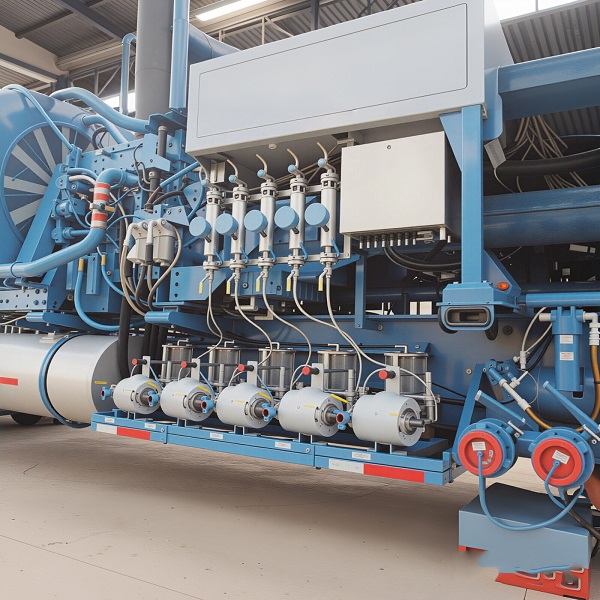
| ACM‑IV.1 Upgrade Kit | Bolt‑on automatic density control for existing cementing units | Micro Motion meter, PLC, control valves, touchscreen HMI |
| Wireless DAS Package | Real‑time data acquisition and remote viewing | Sensors, transmitter, cloud dashboard, mobile app |
| Foam Cementing Module | Nitrogen injection system + foam control software | Automated foam quality control, high‑pressure N₂ regulator |
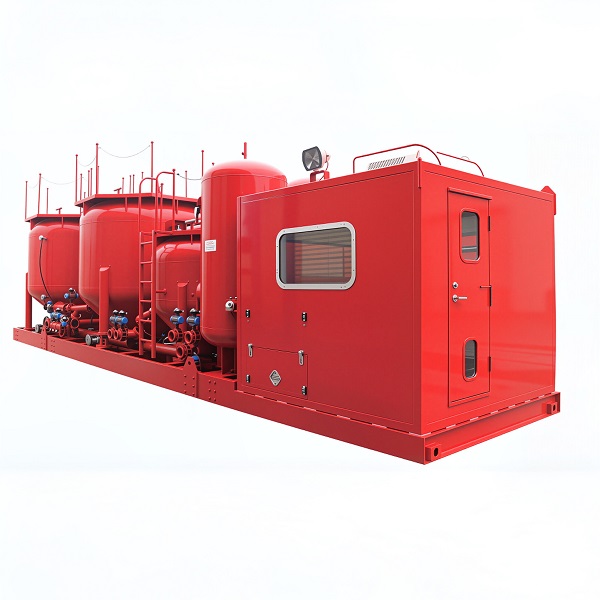
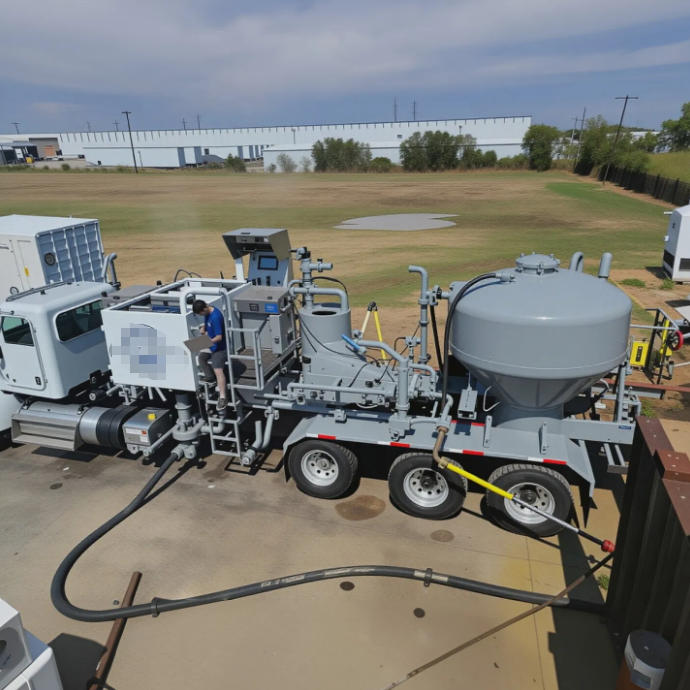
| Full Technology Cementing Unit | New unit with all technologies integrated | ACM, DAS, foam capability, remote control, HPHT rating |
We also provide technology rental – short‑term deployment of advanced cementing technology for specific complex jobs.
Why Choose SJ Petro for Cementing Technology?
1. Field‑Proven Accuracy – Our ACM system has achieved ±0.02 g/cm³ density control on over 5,000 cementing jobs. Not a lab claim – field verified.
2. No Radioactive Source – Unlike some competitors’ nuclear density gauges, our Micro Motion meter uses Coriolis technology – safer, easier to transport and permit.
3. Open Platform – We use standard industrial PLCs (Siemens, Rockwell) and open protocols. You are not locked into proprietary black boxes.
4. Remote Job Support – Our engineers can log into your DAS system during the job, provide real‑time advice, and capture data for post‑job analysis.
5. Continuous Improvement – We release software updates annually. Clients with active support contracts receive new features (e.g., predictive algorithms, new report formats) at no charge.
6. Scalable from Land to Deepwater – The same ACM control logic runs on our land truck units and our deepwater skids. Your crews learn once.
7. Sinopec R&D Backing – Our technology benefits from one of the largest oilfield research organizations in the world – thousands of wells of data.
8. Global Training – We provide simulator‑based training for your operators to master the technology before they touch a real job.
Frequently Asked Questions (FAQ)
Q1: What makes ACM technology better than manual mixing?
Manual mixing depends on operator experience and visual density estimation (a color chart). Density can vary by ±0.1 g/cm³ or more. ACM maintains ±0.02 g/cm³ automatically, eliminating human error and reducing cement waste.
Q2: How does the Micro Motion densitometer work without radioactive source?
It uses Coriolis force measurement – fluid flows through a vibrating tube; the vibration frequency changes with density. No radioactive material, no regulatory permits for transport or storage.
Q3: Can I retrofit ACM to my existing cementing unit (any brand)?
Yes. We offer an ACM retrofit kit that includes the Micro Motion meter, PLC, control valves, and HMI. Installation typically takes 2–3 days. We need to inspect your unit’s mixing system for compatibility.
Q4: What is the maximum distance for wireless data transmission?
Our 4G/5G solution works anywhere with cellular coverage. For remote areas without cell service, we offer satellite transmission (BGAN or Inmarsat) – global coverage. Radio (900 MHz / 2.4 GHz) works up to 10 km line of sight.
Q5: Does your foam cementing technology work with nitrogen only, or also with other gases?
Standard system uses nitrogen (N₂) – the most common gas for foam cement. We can adapt for CO₂ or air on request, with appropriate material compatibility and safety features.
Q6: How does the technology handle very low temperatures (arctic / deepwater seabed)?
The ACM system includes heated enclosures for the Micro Motion meter and control valves. Slurries are formulated with low‑temperature accelerators. We have successfully cemented wells at -40°C ambient and 2°C seabed.
Q7: Can I control multiple cementing units from one remote location?
Yes – our RemoteCem platform allows a single operator to monitor and control up to 16 units simultaneously (depending on network bandwidth). Used by major operators for multi‑pad shale campaigns.
Q8: What is the typical learning curve for a crew new to ACM?
Experienced cementing operators become proficient in 1–2 days of simulator training. The touchscreen interface is intuitive – set density, press "start”, system automatically mixes and maintains.
Q9: Do you provide real‑time alarm notifications?
Yes. The DAS system can send SMS or email alerts for: density out of tolerance, pump rate deviation, high/low pressure, plug bump detected, or system fault. Recipients configurable per job.
Q10: Is the technology compatible with acidizing or fracturing jobs?
The ACM and DAS systems are fluid‑agnostic – they can control density for brine, acid, or fracturing fluids (with appropriate corrosion‑resistant wetted parts). Specify chemical compatibility at order.
Q11: What kind of post‑job reports does the DAS generate?
Automatically generated PDF report includes: job header (date, well, operator), density trace, pressure vs time, rate vs time, cumulative volume, plug bump confirmation, and event log. Exportable to CSV for custom analysis.
Q12: How do I get a technology demonstration?
We offer live demonstrations at our Jingzhou facility (full‑scale ACM unit mixing water and cement) or remote demo via video call showing the DAS dashboard and simulator. Contact us to schedule.







