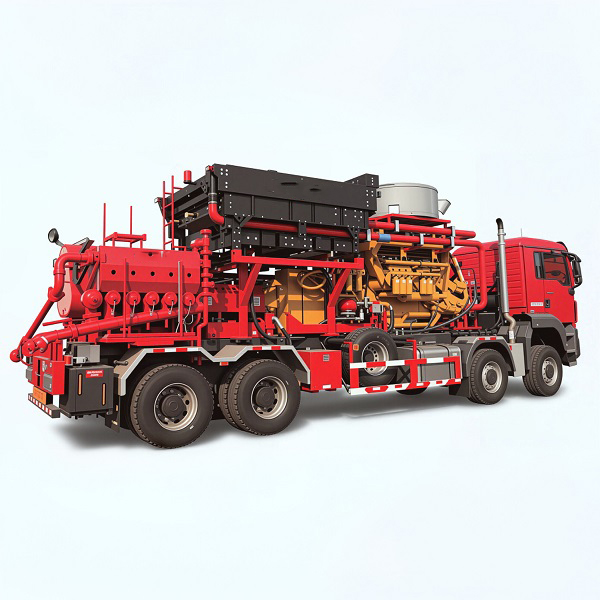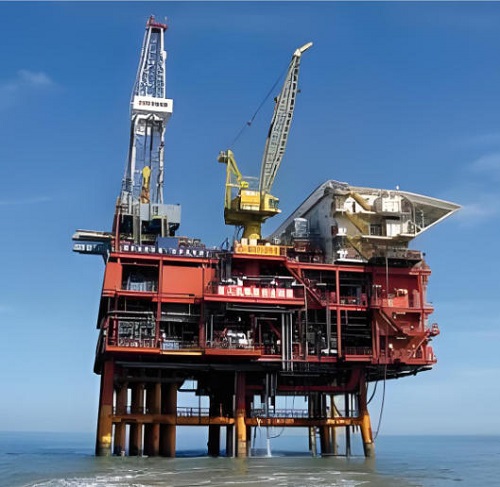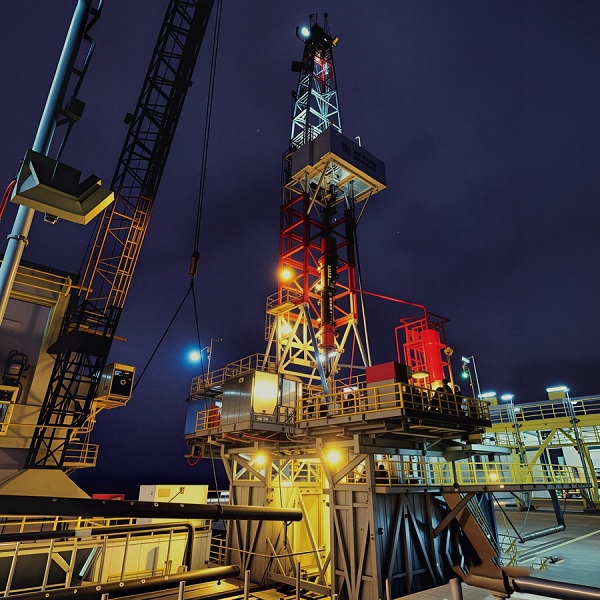
Automated drilling solutions
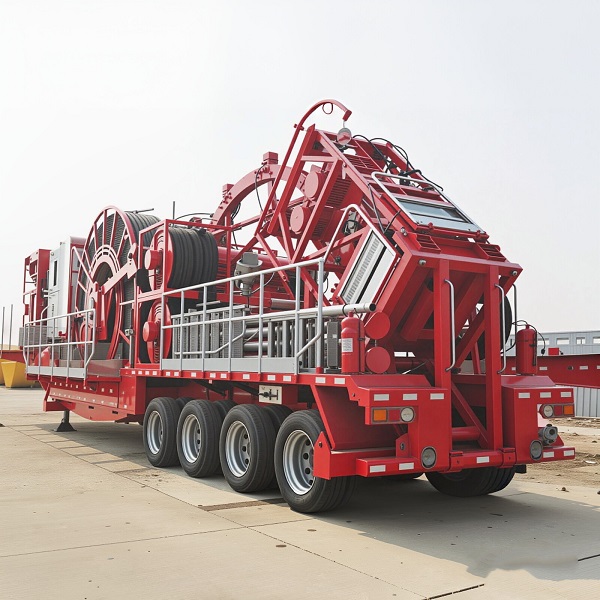
Technical Specifications – Automated Drilling Solutions Packages
The table below presents key specifications for our automated drilling solutions product range. All systems are API/ISO certified.
Automation Component Specifications
| Component | Model / Series | Key Specifications | Control Interface | Automation Level |
|---|---|---|---|---|
| Iron roughneck | TZG‑50 / TZG‑100 / TZG‑160 | 5,000–100,000 ft‑lb (larger optional); single‑button jaw close; torque turn recording; spin speed 0–120 rpm | Integrated PLC; wireless remote backup | Fully automated connection make‑up / break‑out |
| Catwalk machine | HFC‑40 / HFC‑60 | Max pipe length 45–60 ft; vertical lift 15 ft; kicker angle adjustable; RFID tag reader optional | Touchscreen at catwalk + driller console | Single‑button feed to floor |
| Vertical pipe racking arm | PRA‑30 / PRA‑50 | Max lift 6,000 lbs; horizontal reach 12 ft; rotation 180° | Driller console joystick + auto sequence | Stand picking and placing |
| Sensor fingerboard | FBI‑40 / FBI‑60 | 40–180 slots per row; each slot with inductive position sensor; load rating 6,000 lbs per finger | Console inventory screen | Automated stand tracking |
| Automated elevator latch | VLD‑350 / VLD‑500 / VLD‑750 | 350–750 ton; integrated proximity switches; interlocked with top drive | Top drive control loop | Automatic latch / unlatch on block position |
| Driller’s console | HMI‑12 / HMI‑15 | 12″ or 15″ sunlight‑readable touchscreen; dual joysticks; emergency stop with deadman function; integrated camera feed | Local HMI; optional remote terminal | Total rig orchestration |
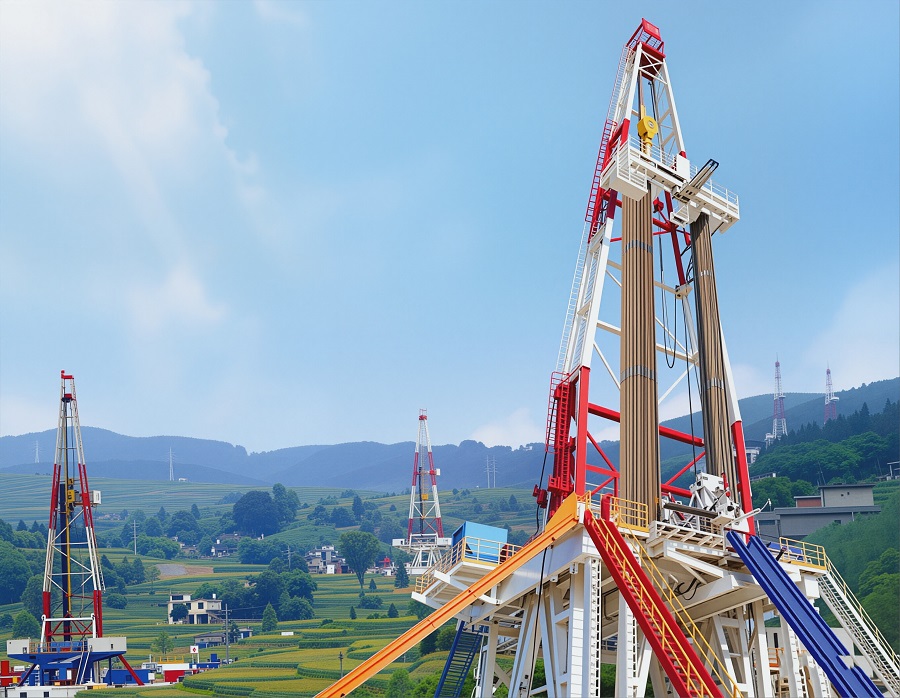
Drill Floor Automation Performance Metrics (Field Data)
| Metric | Manual Operation | SJ Petro Automated (Typical) | Improvement |
|---|---|---|---|
| Connection time (slips‑to‑slips) | 90–120 seconds | 55–70 seconds | 35–40% faster |
| Vertical racking time | 120–180 seconds per stand | 75–90 seconds | 30–40% faster |
| Driller‑floor personnel | 3–4 persons | 1–2 persons (observer) | 50% reduction |
| Connection torque variance | ±10–15% (crew dependent) | ±2% | 70–80% reduction |
| Human‑machine interactions per well | 5,000+ (manual loops) | <500 (exception‑based) | 90% reduction |
| Vibration‑related NPT | Baseline | 15–25% reduction | documented |
| ROP improvement in laterals | Baseline | 35–45% higher | Confirmed in basin studies |
Automation Control Loop Specifications
| Control Loop | Parameter | Control Accuracy | Response Time |
|---|---|---|---|
| Auto‑driller WOB | 0–60,000 lbf | ±500 lbf | 0.2 sec |
| Auto‑driller RPM | 0–250 rpm | ±5 rpm | 0.15 sec |
| Differential pressure | 0–5,000 PSI | ±20 PSI | 0.1 sec |
| Tripping speed (block position) | 0–200 ft/min | ±2 ft/min | 0.05 sec |
| Iron roughneck torque | 0–100,000 ft‑lb | ±2% reading | 0.02 sec |
Product Types – Automated Drilling Solutions Portfolio
We offer automated drilling solutions in four progressive levels, each designed to integrate with new‑build rigs or retrofit existing fleets.
-
Level 1 – Mechanized Assistance – Automated catwalk, iron roughneck, but manual racking. Best for small contractors or shallow wells.
-
Level 2 – Semi‑Automated Floor – Adds automatic connection sequences, fingerboard inventory, remote driller console. No floor crew during tripping.
-
Level 3 – Fully Automated Floor – Adds vertical racking arm, automated elevator latching, and slip automation. Crew reduced to one driller plus maintenance.
-
Level 4 – Remote + AI Driven – Driller operates from town office using remote console; local crew handles only maintenance and emergencies. AI optimization and digital twin monitoring standard.
Applications – Where Our Automated Drilling Solutions Deliver
-
Land drilling – multi‑well pads (shale, tight gas, CBM) – Automated floor slashes slips‑to‑slips time and maintains consistent torque. Critical for 10,000‑ft laterals where every second saved compounds across 3,000+ connections per well.
-
Offshore platform drilling – ATEX‑certified components; remote operation from safe cabin. Our systems are operating on South China Sea platforms.
-
Deepwater semi‑submersibles & drillships – Active heave‑compensated automation. Remote control from shore reduces offshore personnel count.
-
Workover & snubbing units – Automated iron roughneck and catwalk for lighter duty but high repetition.
-
Arctic winter drilling – Heated hydraulic and electric systems; remote driller console allows operation from heated cabin; all components low‑temperature rated (-45°C).
-
Remote / frontier exploration – Minimal crew on site; remote supervisor manages multiple rigs simultaneously. Data historian optimizes second well based on first well’s performance data.
Why Choose SJ Petro for Automated Drilling Solutions?
-
Sinopec‑backed engineering with Kingdream collaboration – Through Kingdream, we bring over 40 years of downhole tool and 80+ years of rig manufacturing expertise. Our 314 R&D engineers design automation systems that speak the same control language as our rigs—seamless integration, no third‑party black boxes.
-
API 8C, API 7K, API 13C, API 4F certified – Our automated hoisting and pipe handling components are API certified. Third‑party inspection (ABS, DNV, BV, SGS) is welcome.
-
Closed‑loop control from floor to bit – Our automation system integrates with the top drive, iron roughneck, catwalk, racking arm, BOP control unit, and mud pumps. The driller’s console orchestrates the entire workflow.
-
Proven field performance – Automation case studies from the Middle East show 43% reduction in connection times; closed‑loop well placement in Guyana achieved 470 meters of automated steering in the lateral section; Corva’s Predictive Drilling demonstrated 100,000–100,000–150,000 per well savings and a 26% drilling speed increase. Our systems deliver similar measurable benefits.
-
Retrofit‑friendly design – You do not need a new rig. Our iron roughneck, catwalk, and control modules can be added to existing rigs. We provide structural engineering for mast and substation modifications.
-
Digital twin enabled – Simulate the entire drilling program before the bit touches formation. The digital twin runs the same control code as the rig floor, so the transition from simulation to operation is seamless.
-
Remote troubleshooting & live support – Our engineers can log into the PLC remotely (with your permission) to diagnose faults, adjust parameters, and push software updates—reducing downtime.
-
24/7 spares support – We stock automation‑specific spares (sensors, solenoid valves, boards, joysticks) in Dubai, Singapore, and Houston agent. Delivery to most global rig sites within 48‑72 hours.
-
Competitive direct pricing – As a Sinopec subsidiary, we are an OEM—not a trading company. Our automation packages cost 15‑25% less than Western brands for equivalent API certification.
-
Warranty – 24 months on automation electronics; 12 months on mechanical components (iron roughneck, catwalk, racking arm). Extended warranty available.
Frequently Asked Questions (FAQ)
Q1: How much can automation reduce my non‑productive time (NPT)?
Field data across multiple basins shows automated connection sequences alone reduce connection time by 30‑40%. Closed‑loop auto‑drillers reduce vibration‑related NPT by 15‑25%. Overall, operators report well delivery cycles shortened by an average of 1–1.5 days per well.
Q2: Do I need to buy a new rig to get automation?
No. We specialize in retrofitting automation components to existing rigs—iron roughneck, catwalk, racking arm, and control console—without replacing the entire mast and substructure. We provide structural engineering support for any necessary modifications.
Q3: How does your torque turn system work?
The PLC monitors torque via strain gauge pins in the roughneck. When the preset target torque is reached (programmed per connection type), the system automatically stops torque application and logs the peak value, the number of turns, and a time stamp. Data can be exported to a USB drive or transmitted to the office.
Q4: Is the automation system failsafe if the PLC loses power?
Yes. All critical safety functions (emergency stop, brake application, BOP interlock) are hardwired or use redundant PLCs with battery backup. If the main controller fails, the system defaults to a safe state—all motion stops, brakes engage—and the operator takes manual control using backup joysticks.
Q5: Can the automation system control third‑party top drives and mud pumps?
Yes. Our control platform uses standard Modbus TCP/IP and Profibus protocols, making it compatible with most major top drive and pump manufacturers. The system can read existing sensors and write setpoints without replacing existing controllers.
Q6: What is the typical ROI for a full automation package (Level 3)?
Based on field data, the payback period for a Level 3 automation package (iron roughneck, catwalk, racking arm, console) ranges from 12‑24 months, depending on daily rig rate and annual operating hours. A 1.5‑day reduction per well on a 10‑well program easily justifies the investment.
Q7: How many people do I need on the rig floor after automation?
Level 1 (mechanized assistance): one or two operators still needed. Level 2 (semi‑automated): one driller + one floor supervisor. Level 3 (fully automated floor): one driller only; no floor crew during tripping. Level 4 (remote): local maintenance technician only; driller operates from remote office.
Q8: Do you provide training for drillers to use your automation system?
Yes. We provide a two‑week training program at our factory or your rig site: classroom (automation theory, safety interlocks, controller interface) and simulator (hands‑on practice with the same HMI). Experienced drillers typically master the system within the first 2–3 wells.
Q9: How do I get a quote for an automated drilling solution?
Email automation@sjpetro.com with:
-
Rig type (land/offshore), make, model, and age
-
Desired automation level (1–4)
-
Key equipment already on rig (top drive, BOP control unit)
-
Any existing automation components
-
Daily rig operating rate (for ROI calculation)
We will respond with a technical proposal, automation specification, budget price, and estimated payback within 5‑7 working days.
Q10: What documentation do you provide with automation systems?
You receive: full electrical & hydraulic schematics; PLC program with commented source code; HMI configuration files; operations manual; safety interlock logic description; material certificates for all structural components; and an installation & commissioning checklist. All documentation is digital and searchable.