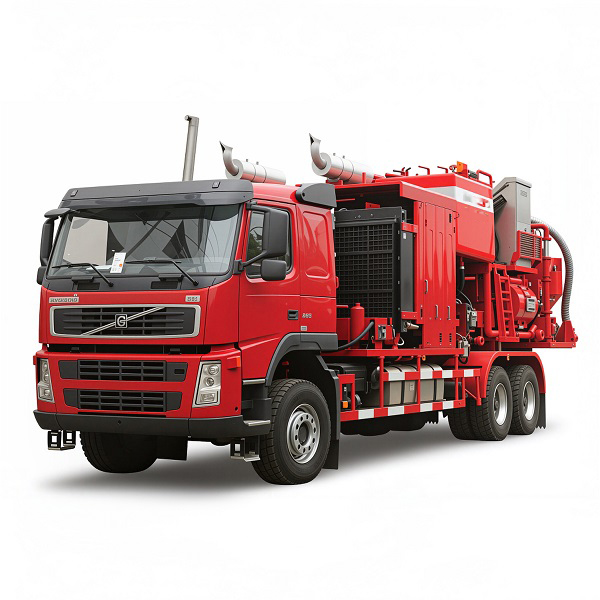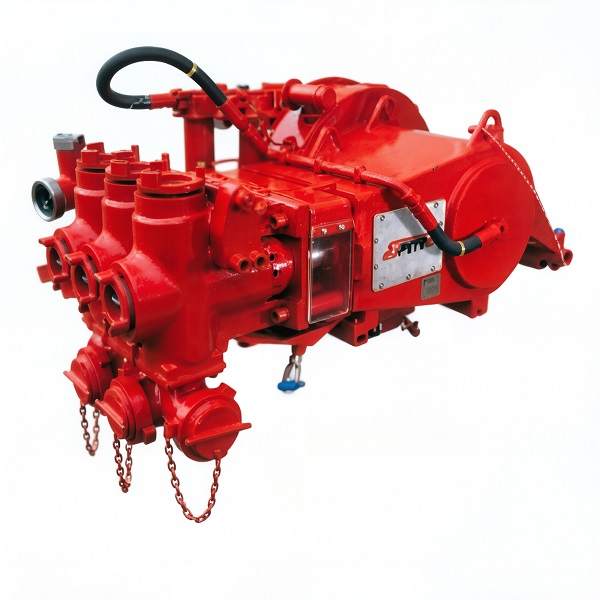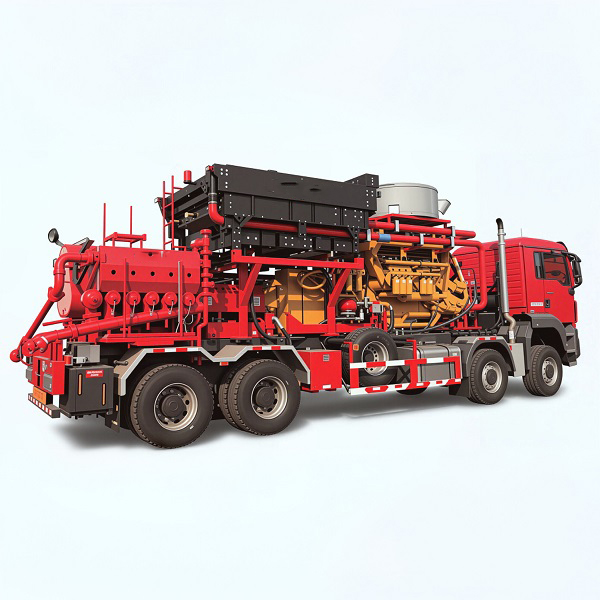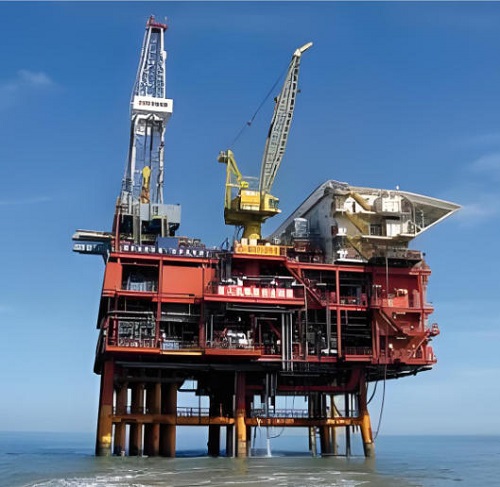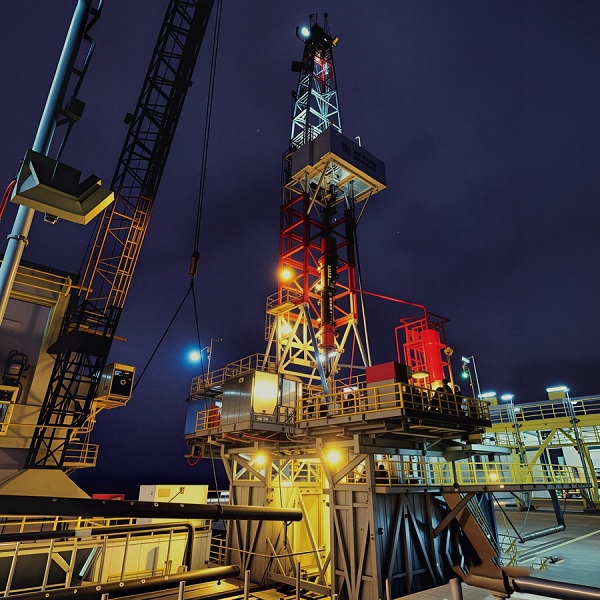
Workover tools
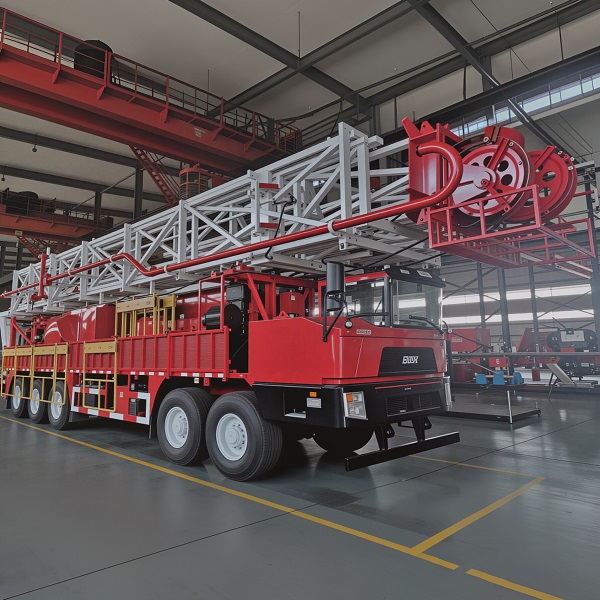
Technical Specifications – Workover Rig Platforms
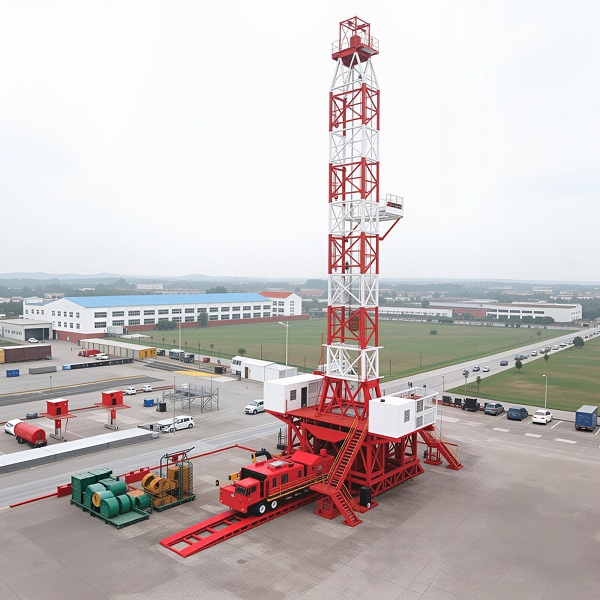
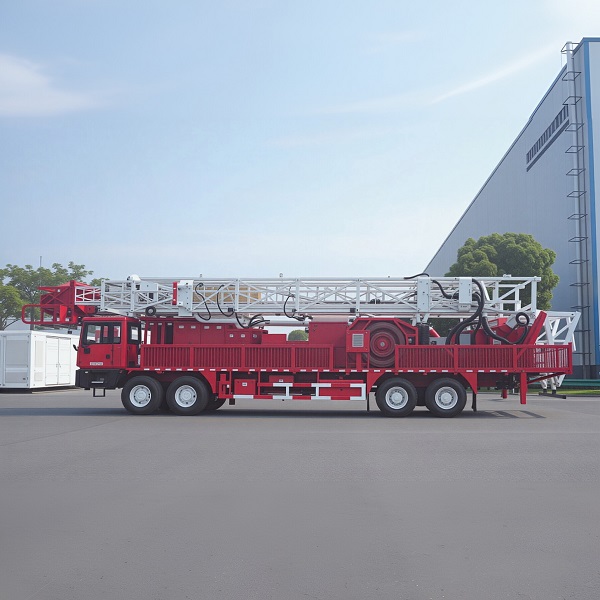
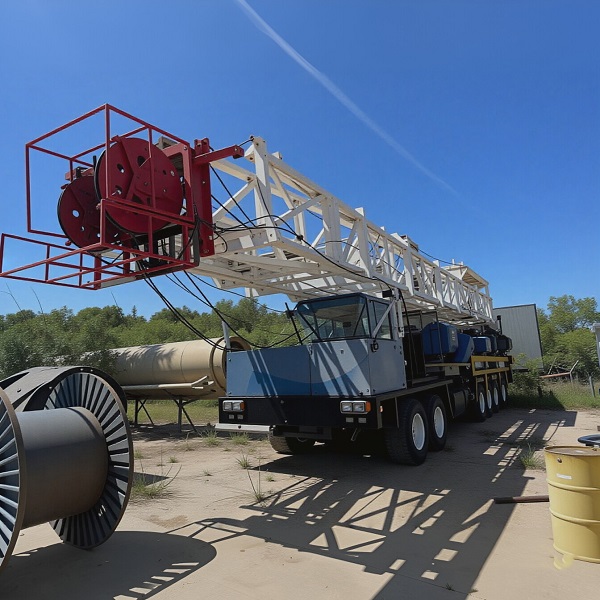
The table below provides key specifications for SJ Petro XJ series workover rigs. For downhole tool specifications (fishing overshots, milling tools, bridge plugs), refer to the product type section above or contact our sales team.
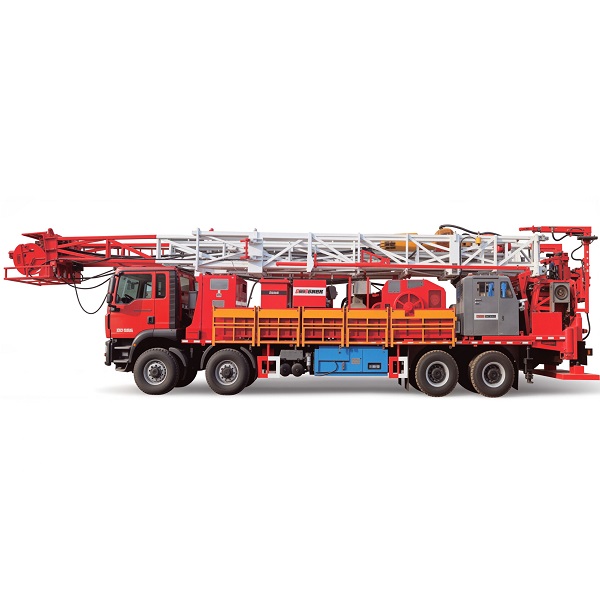
XJ Series Self‑Propelled Workover Rigs – Platform Summary
| Model | Workover Depth (2-7/8″ DP) | Max Static Hook Load | Engine Power | Carrier Drive |
|---|---|---|---|---|
| XJ250 | 3,500 m (11,500 ft) | 735 kN (165,000 lbf) | Cat C9 / 260 kW (350 HP) | 10×8 |
| XJ350 | 3,200 m (10,500 ft) | 900 kN (202,330 lbf) | 360 HP (~268 kW) | 8×8 / 10×8 |
| XJ450 | 5,500 m (18,000 ft) | 1,125 kN (253,000 lbf) | 475 HP (354 kW) | 10×8 |
| XJ550 | 7,000 m (23,000 ft) | 1,350 kN (303,000 lbf) | 540 HP (402 kW) | 10×8 |
| XJ650 | 8,000 m (26,200 ft) | 1,580 kN (355,200 lbf) | CAT 3412 / 485–492 kW | 12×8 |
| XJ1000 | 9,000 m (29,500 ft) | 1,800 kN (405,000 lbf) | 1,000 HP (746 kW) | 14×8 |
| XJ1200 | 10,000+ ft | 2,250 kN (505,800 lbf) | 1,000+ HP | 14×10 |
Product Types – Workover Tools from SJ Petro
We categorize our workover tool offering into four main product families.
1. Fishing Tools
| Tool Type | Application | Key Features |
|---|---|---|
| Overshot (Releasing & Circulating) | External fishing for tubular fish (drill pipe, casing, tubing, tool joints) | Combines catching, reversing, releasing and circulation in one assembly [3†L36-L39]. Integral seal pack‑off ensures circulation efficiency. |
| Fishing Spear (Releasing) | Internal fishing for drill pipe, tubing, casing | Releasing feature permits disengagement if retrieval fails. Compatible with internal cutter and bumper jar [3†L9-L13]. |
| Die Collar / Fishing Tap | Threaded engagement for inside/outside fish | Positive mechanical grip by cutting threads into the fish. |
| Junk Basket (Circulating) | Debris recovery (bit cones, milled metal, formation cuttings) | Allows circulation while retrieving debris through a basket catcher. |
| Strong Magnetic Fishing Tool | Ferrous debris recovery (milled metal, bit cones, valves) | Magnetic capacity rated to 150°C. Body constructed of non‑magnetic stainless steel to focus magnetic field where needed [17†L2-L3]. |
| Lead Impression Block | Fish condition and orientation confirmation | Lead material provides precise physical record of fish top geometry. |
2. Milling Tools
| Tool Type | Application | Key Features |
|---|---|---|
| Flat Bottom Mill / Dress Mill | Dressing the top of a fish to prepare for fishing | Flat bottom design provides optimal fish‑top preparation surface. |
| Tapered Mill / Tapered Junk Mill | Milling irregular or jagged fish tops | Conical profile transitions irregular fish tops to a smooth diameter. |
| Bladed Junk Mill | Grinding and circulating out debris | Bladed design improves cutting efficiency and chip clearance. |
| Section Mill / Casing Mill | Cutting out a section of casing prior to sidetracking | Hydraulically or mechanically expanded cutting arms. Complete window cut in a single run. |
| Conical Mill / Taper Mill | Milling cement, packer rubber, bridge plugs | Aggressive cutting action for composite materials. |
| Pilot Mill | Milling around a pilot or guide pin | Optimized for centered milling operations. |
3. Isolation Tools (Bridge Plugs / Packers)
| Tool Type | Application | Key Features |
|---|---|---|
| SHMB Drillable Bridge Plug | Temporary or permanent zone isolation | Casing sizes 4‑1/2″ to 20″. Hydraulic‑mechanical setting without dedicated setting tool [16†L10]. Right‑hand rotation release. Quick mill‑out with flat bottom mill [16†L11]. |
| Cement Retainer | Directing cement‑squeeze operations | Integrated valve directs fluid through the tool body for precise cement placement in casing repair and abandonment operations. |
| High‑Temperature Bridge Plug | Deep wells, thermal recovery | Temperature rating up to 204°C (400°F) [16†L11]. Suitable for HPHT and thermal recovery applications. |
| Retrievable Packer | Temporary isolation, test‑treat‑test sequences | Can be retrieved after workover completion and reused. Available in hydraulic and mechanical set configurations. |
4. Downhole Accessories & Support Tools
-
Bumper Jars – Delivers impact loads to free stuck fish. Hydraulic jar design provides consistent impact force across a wide operating range.
-
Hydraulic Jars – Delivers upward or downward impact forces to free stuck fish. Adjustable tripping load and stroke length.
-
Safety Joints – Provides a secondary release point if the primary connection becomes stuck. Left‑hand thread release for emergency disengagement.
-
Circulation Subs – Allows fluid bypass around a fish to maintain circulation while fishing. Ball‑activated or drop‑bar designs.
-
Shoe Sockets (Circulating Type) – For retrieving flush‑joint liners and larger‑diameter tubulars. The circulation feature allows the string to be washed over the fish while maintaining returns.
Applications – Where Our Workover Tools Are Used
Our workover tools are deployed across all types of well intervention and remedial operations:
-
Fishing Operations – Retrieve broken drill pipe, dropped tubing, bit cones, milled metal, and other downhole debris using our complete suite of fishing tools [4†L7-L8].
-
Casing Repair – Section mill damaged casing, run casing patch or expandable liner, then mill cement and dress the fish top. Our tapered and flat bottom mills are specifically designed for this sequence.
-
Workover and Recompletion – Using XJ series self‑propelled workover rigs, we support pulling rods, tubing, and pumps; scale removal; zone isolation and perforation cleaning operations [10†L8-L11].
-
Plug and Abandon Operations – Set SHMB bridge plugs (temporarily or permanently), then squeeze cement through the plug body for abandonment or zone isolation. When permanent isolation is required, the bridge plug remains in place; for temporary applications requiring later access, the plug is quickly milled out using a dedicated flat bottom mill [16†L10-L11].
-
Side‑track Operations – Set cement plug, section mill casing window, then dress window edges using a tapered mill to prepare for directional drilling operations.
-
Deep Well Intervention (XJ650 and above) – XJ550, XJ650, XJ1000, and XJ1200 rigs are capable of reaching workover depths of 5,500m to 9,000m, supporting fishing, milling, and zone isolation at the deepest depths [10†L17-L20].
-
Shallow Drilling (XJ450 and above) – When equipped with a rotary table and rotary drive system (rated up to five forward and five reverse speeds), XJ450 and larger models can drill shallow to medium wells in addition to workover operations.
Why Choose SJ Petro for Workover Tools?
Because a successful fishing job requires the right tool for the fish – and a manufacturer who understands the entire well intervention workflow.
| Your Workover Challenge | SJ Petro’s Answer |
|---|---|
| "The fish is stuck deep. I need consistent jarring impact to free it.” | We supply bumper jars, hydraulic jars and safety joints rated for deep well HPHT conditions. |
| "We have limited pad space. A conventional rig won’t fit.” | XJ series self‑propelled rigs on 12×8 or 14×10 chassis – move onto pad in hours, no separate transport vehicles required. |
| "I have a broken drill collar with an irregular top. What should I use?” | Start with a lead impression block to confirm fish condition, then use a tapered junk mill to dress the fish top before engaging an overshot. |
| "I need a bridge plug rated for 400°F.” | Our high‑temperature bridge plug is rated to 204°C (400°F) – suitable for deep HPHT wells and thermal recovery applications [16†L11]. |
| "I want a single manufacturer for both the rig and the tools.” | SJ Petro manufactures XJ series workover rigs and supplies a full range of downhole workover tools through SJS Ltd. [14†L4-L5]. One source, one point of contact. |
| "My tender requires API 11D1 certification.” | Our packers and bridge plugs are API 11D1 V3 certified – the highest performance requirement level [18†L17]. |
More reasons to trust SJ Petro:
-
Over 40 years of workover rig manufacturing – extensive experience in well intervention equipment
-
API 11D1 V3 certified – packers and bridge plugs meet the industry’s highest performance standard [18†L17]
-
API Q1, API 7K, API 4F and API 8C certified – full drilling and well servicing equipment certification
-
Global export track record – tools and rigs delivered to the United States, Russia, Middle East, Southeast Asia, Africa and Central America
-
Integrated manufacturer – both surface equipment (workover rigs) and downhole tools from a single source
-
24‑hour spare parts shipping – emergency parts from our main warehouse
Frequently Asked Questions (FAQ) – Workover Tools
Q1: What are the main categories of workover tools?
A: Workover tools fall into five major categories based on the type of downhole fish: tubular fishing tools (for drill pipe, tubing, casing), rod fishing tools (for sucker rods), cable fishing tools (for wireline or slickline), logging tool fishing tools (for downhole instruments), and miscellaneous small‑object fishing tools [4†L7-L9]. By mechanical design, these can be further classified into taper tools (including various spears and taps), overshot tools, basket tools, hook tools, and other specialty configurations.
Q2: How do I choose the right overshot for a fishing job?
A: Before selecting an overshot, run a lead impression block to confirm the geometry and condition of the fish. Then choose an overshot with an internal diameter that provides approximately 1/8″ clearance over the fish’s outside diameter. We offer both standard and short‑catch overshots, and both standard and quick‑release designs.
Q3: What is the difference between a releasing overshot and a standard overshot?
A: A standard overshot grips the fish via a spiral grapple. If the fish remains stuck after engagement, the overshot must be milled off – a costly and time‑consuming operation. A releasing overshot incorporates a mechanism that allows the tool to be disengaged from the fish by application of right‑hand torque and compression, enabling the operator to retrieve the fishing assembly without milling. Our releasing and circulating overshot further combines catching, reversing, releasing and circulation functions in a single assembly.
Q4: What milling tool do I need for a section of damaged casing?
A: Use a section mill / casing mill to cut out the damaged section. After the section mill has removed the target interval, run a dressing mill (flat bottom mill) through the window to smooth the cut edges before proceeding with the casing patch or cement squeeze.
Q5: Are your bridge plugs API certified?
A: Yes. Our SHMB series bridge plugs and packers are API 11D1 V3 certified . This is the highest performance requirement level under the API 11D1 specification, covering rigorous pressure, temperature, and axial load testing with full documentation and third‑party witness audit.
Q6: What is the temperature rating of your workover tools?
A: Our high‑temperature bridge plugs are rated to 204°C (400°F). Standard tools are rated to 150°C. All magnetic fishing tools retain full magnetic capacity at 150°C. Higher‑temperature materials are available for specialized thermal recovery and deep HPHT applications – contact our engineering team with your specific temperature requirements.
Q7: What is the difference between an XJ250 and an XJ650 workover rig?
A: The XJ250 is designed for shallow to medium workover operations (up to 3,500m depth) and is our best‑selling economic model . The XJ650 is a heavy‑duty workover rig rated for 8,000m workover depth, equipped with a 12×8 self‑propelled carrier and dual Caterpillar engines (485–492 kW total) providing power redundancy. It can also be configured for shallow drilling applications when equipped with a rotary table.
Q8: Can you supply both the workover rig and the downhole tools?
A: Yes. SJ Petro manufactures XJ series self‑propelled workover rigs, and through our subsidiary SJS Ltd., we supply a full range of downhole workover tools including fishing tools, milling tools, bridge plugs and packers. This integrated approach simplifies procurement and ensures compatibility between surface and downhole equipment.