Vertical rig manufacturers
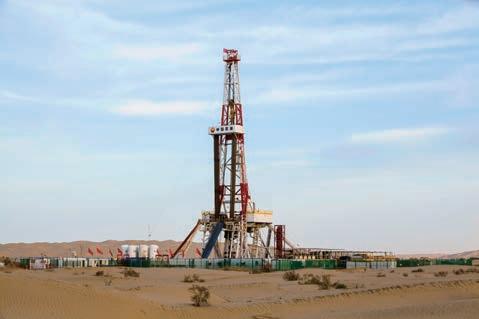
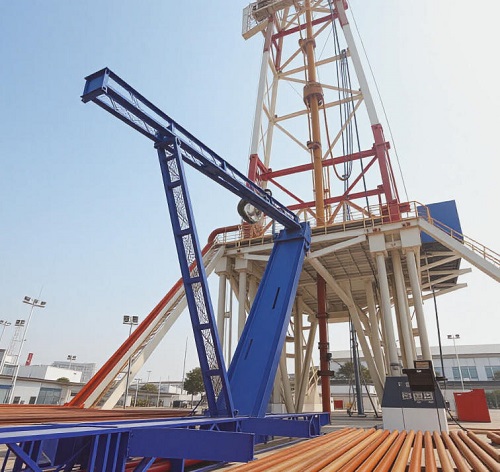
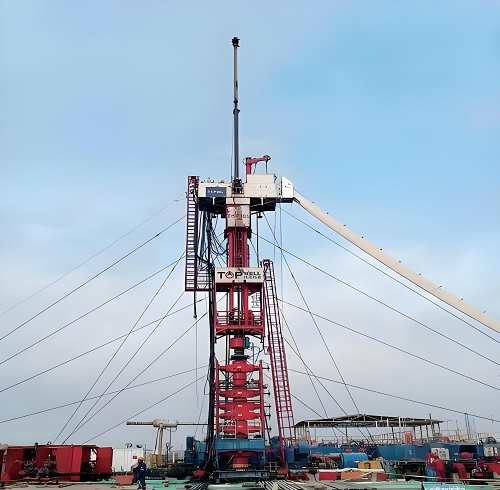
Innovation & Technology Advantages — What Sets SJ Apart as a Vertical Rig Manufacturer
1. API 4F Certified Across All Mast Types
SJ is an API monogram license holder for Spec 4F (drilling and workover structures), covering K-type masts, A-type derricks, tower derricks, substructures and crown block assemblies. This certification verifies that our structures meet the design loading, material quality and fabrication standards required for global oil and gas operations.
2. Comprehensive In‑House Manufacturing — Structural Integrity You Can Trust
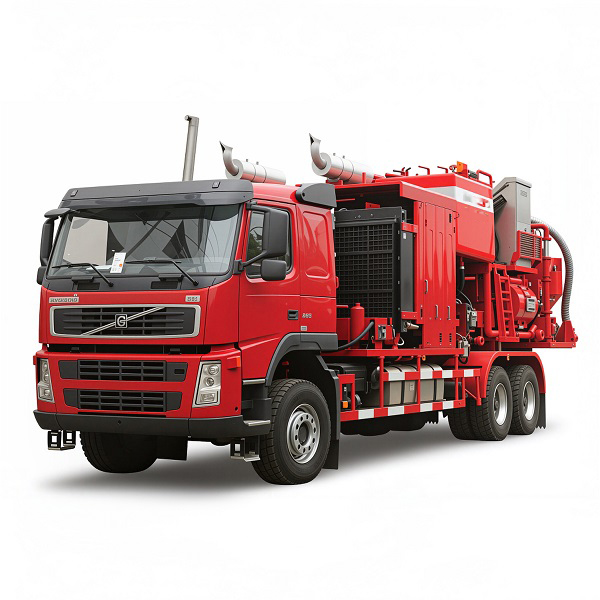
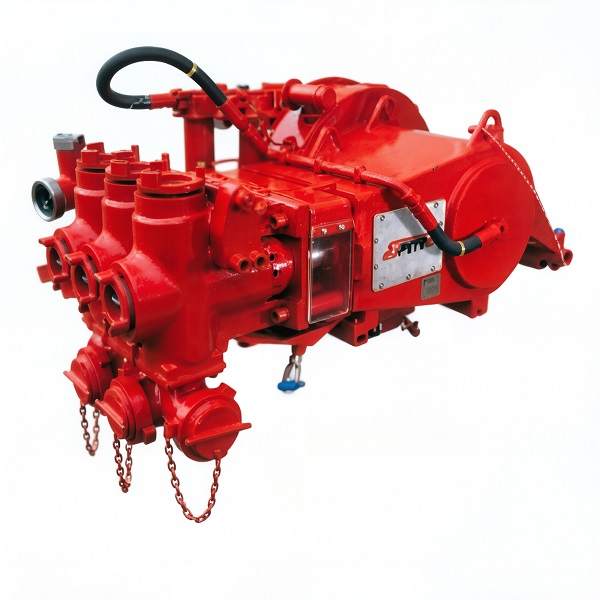
With more than 2,100 precision machine sets, seven dedicated production lines—drawworks, gear boxes, cylinders, masts, high pressure manifolds, plunger pumps and post treatment—and three assembly lines for drilling rigs, workover rigs and cementing equipment, we maintain complete control over structural fabrication from steel selection to final assembly.
This vertical integration means we can offer complete traceability for all API-certified components—something smaller manufacturers often cannot provide.
3. ANSYS Finite Element Analysis — Verified Load Capacity
Every SJ mast and substructure design is analyzed using ANSYS finite element analysis (FEA) before any steel is cut. This verifies load distribution, stress concentrations and structural performance under rated hook load conditions. Verified load ratings you can trust—not conservative guesswork.
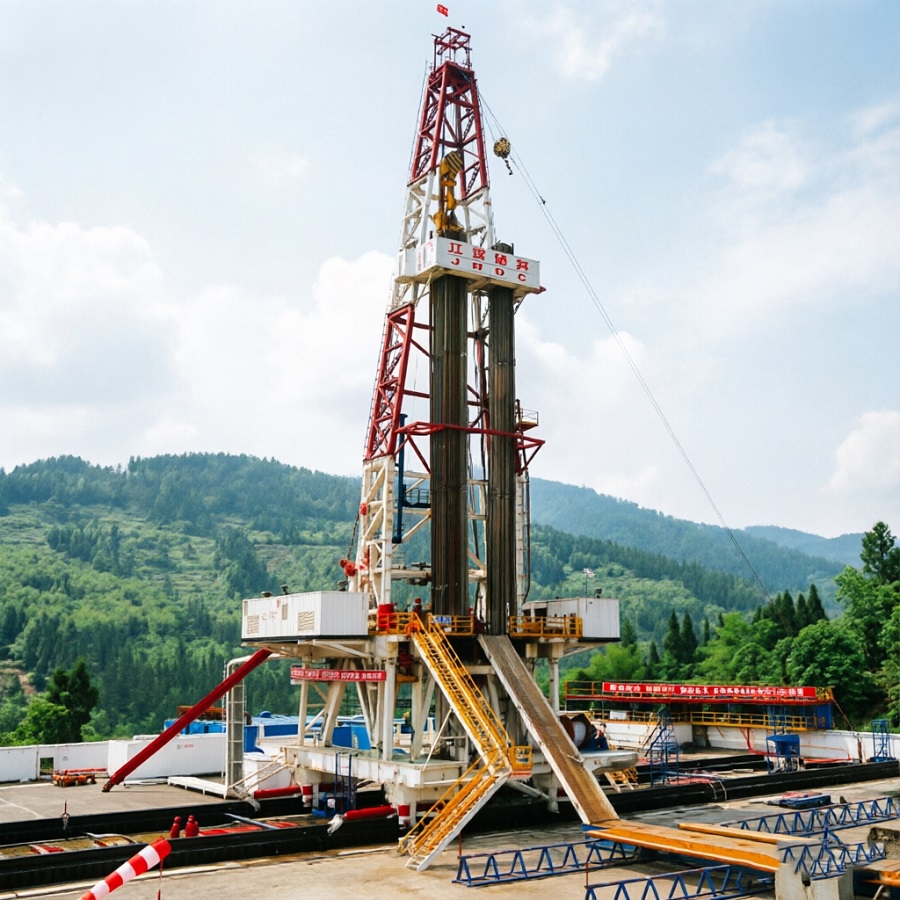
4. Designed for Extreme Environments — Desert, Arctic and Offshore
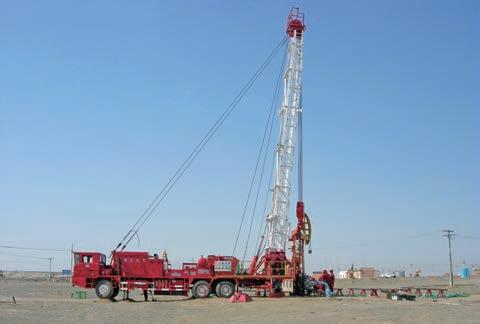
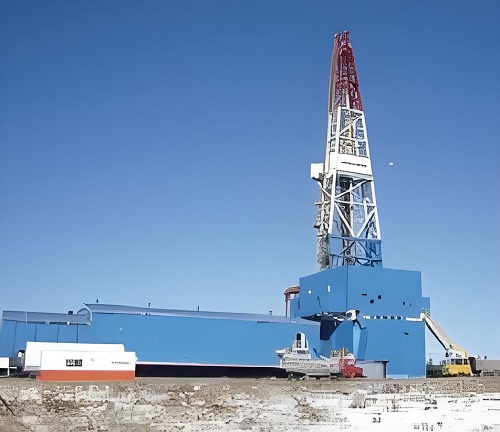
Whether you need a vertical rig in Kuwait at 50°C with sandstorms or in Siberia at -45°C, SJ provides environmental specifications:
-
Desert package: +55°C continuous operation, multi‑stage cyclonic air filtration, sand‑resistant coatings
-
Arctic package: -45°C low‑temperature steel with low‑alloy, high‑strength, low‑temperature impact‑resistance material and specialized low‑temperature welding processes
-
Offshore package: Corrosion‑resistant materials, marine coatings, ABS/DNV classification options
5. Two‑Stage Telescoping Masts for Transport Efficiency
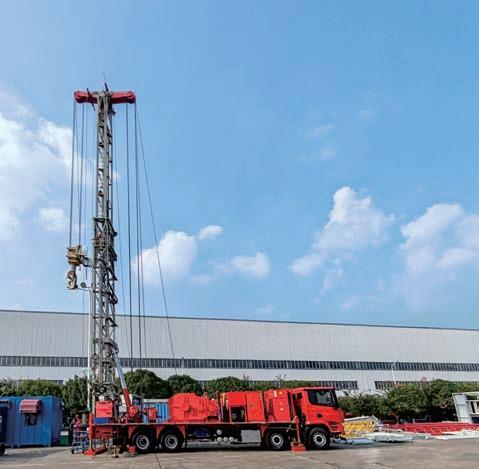
Most SJ masts for workover and mobile drilling rigs use a two‑section telescoping K-type front‑open design. The mast is raised as a whole by hydraulic cylinders—K-type vertical mast raised by hydraulic cylinder as a whole, two‑stage telescoping, high load‑bearing capacity, parallelogram substructure.This eliminates the need for heavy crane support during rig‑up, reducing mobilization time and cost.
6. Low‑Temperature Steel Certification — Down to -45°C
For operators working in arctic and sub‑arctic regions, SJ offers low‑temperature mast packages using low‑alloy, high‑strength, low‑temperature impact‑resistance material with specialized low‑temperature welding processes. All low‑temperature components are certified for operation down to -45°C.
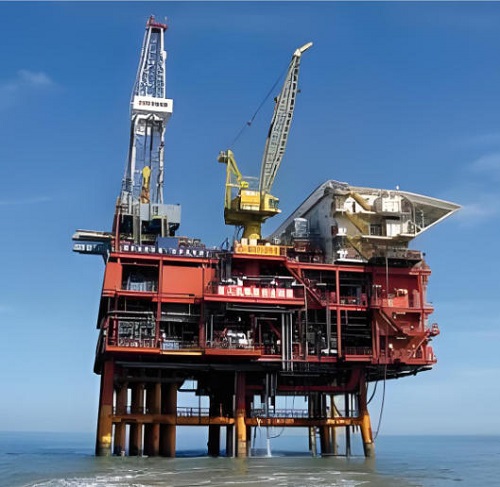
7. Offshore Vertical Rig Expertise — Proven in the South China Sea
SJ has a strong track record in offshore vertical rigs. In 1993, we began developing offshore petroleum drilling and production equipment and produced China's first skid-mounted offshore workover and cementing units. In 1998, we successfully developed 158‑ton offshore drilling and workover rigs for different petroleum platforms in Bohai Bay—awarded the Ninth‑Five National Technology Innovation Excellent Achievement.
Our offshore product range includes series offshore drilling rigs, offshore workover rigs, drilling and workover packages, offshore cementing equipment, offshore fracturing equipment, offshore skid-mounted circulating equipment and offshore high pressure combination manifolds.
8. Fully Compliant with Chinese Petroleum Standard SY/T 6680
SJ follows SY/T 6680-2021—China's petroleum industry standard for drilling rig and workover rig factory acceptance testing, covering structural integrity, material quality, performance parameters and safety verification.This standard ensures that all vertical rig structures undergo rigorous quality control before shipment.
9. Modular Design for Fast Rig‑Up and Rig‑Down
Time is money. SJ's vertical rigs feature integrated modular design that reduces rig‑up/down time by up to 70% compared to conventional rigs. The mast and substructure are interconnected with quick‑connect pins and pre‑hydraulic lines, allowing crews to assemble and raise the mast in hours, not days.
10. Global Delivery and On‑Site Support
From our 50,000 m² assembly yard with 24 rigging‑up positions, we can assemble and commission 12 drilling or workover rigs simultaneously.We have exported vertical rigs to more than 50 countries and maintain regional service teams in the Middle East, Southeast Asia and other key markets.
Technical Specifications — Complete Vertical Rig Reference
XJ Series Workover Rigs — Mast and Substructure Specifications
SJ's XJ series self‑propelled workover rigs cover maximum static load from 300kN to 2,250kN and installed power from 235HP to 1,300HP, including models XJ150, XJ250, XJ350, XJ450, XJ550, XJ650, XJ1000 and XJ1200.The following table provides mast clearance heights, racking board heights and traveling system configurations:
| Model | Workover Depth 2‑7/8″ DP (m) | Nominal Hook Load (kN) | Max Static Load (kN) | Mast Clearance Height (m) | Racking Board Height (to floor, m) | Floor Height (m) | Traveling System | Wireline Dia. (mm) |
|---|---|---|---|---|---|---|---|---|
| XJ250 | 2,000 | 400 | 675 | 21.0 | 7.7 | 2.2 | 3×4 | φ22 |
| XJ350 | 3,200 | 600 | 900 | 31.7 | 17.2 | 3.7 | 3×4 | φ26 |
| XJ450 | 4,500 | 800 | 1,125 | 34.0 | 17.2 | 3.7 | 4×5 | φ26 |
| XJ550 | 5,800 | 1,000 | 1,350 | 34.0 | 17.2 | 4.5 | 4×5 | φ26 |
| XJ650 | 7,000 | 1,200 | 1,470 | 35.0 | 17.2 | 4.5 | 4×5 | φ29 |
| XJ1000 | 8,000 | 1,500 | 1,800 | 38.0 | 17.2 | 6.0 | 5×6 | φ29 |
| XJ1200 | 9,000 | 1,800 | 2,250 | 39.3 | 17.2 | 6.7 | 5×6 | φ32 |
Technical data source: SJ Petroleum Machinery Series of Self‑propelled Workover Rigs catalog.
XJ Series Workover Rigs — Additional Depth Capabilities
The following table provides workover depths for different drill pipe sizes across the XJ series:
| Model | Workover Depth 2‑7/8″ DP (m) | Workover Depth 3½″ DP (m) | Workover Depth 4½″ DP (m) | Maximum Static Load (kN) |
|---|---|---|---|---|
| XJ350 | 3,200 | 2,500 | — | 900 |
| XJ450 | 4,500 | 3,500 | — | 1,125 |
| XJ550 | 5,800 | 4,500 | 3,600 | 1,350 |
| XJ650 | 7,000 | 5,500 | 4,200 | 1,470 |
| XJ1000 | 8,000 | 6,500 | 5,000 | 1,800 |
| XJ1200 | 9,000 | 7,500 | 6,000 | 2,250 |
Technical data source: SJ Petroleum Machinery workover rig product specifications.
K‑Type Vertical Mast — Configuration Details
The K‑type mast is the most common vertical rig structure for land drilling and workover applications:
| Feature | Specification |
|---|---|
| Cross‑section | "П”‑shaped front‑open space truss structure |
| Section construction | Left and right side pieces welded into sections; back truss system |
| Section connections | Pin connections between mast sections |
| Installation method | Low‑height installation, raised as a whole using hydraulic cylinder thrust or winch power |
| Key advantages | High structural rigidity; front‑open design provides unobstructed driller visibility |
| Telescoping option | Two‑stage telescoping structure available for reduced transport height |
| Applicable rig types | ZJ series drilling rigs, XJ series workover rigs, truck‑mounted rigs |
Technical data source: Petroleum industry knowledge standard for K‑type mast design and SJ engineering standards.
Tower Derrick — Offshore Specifications
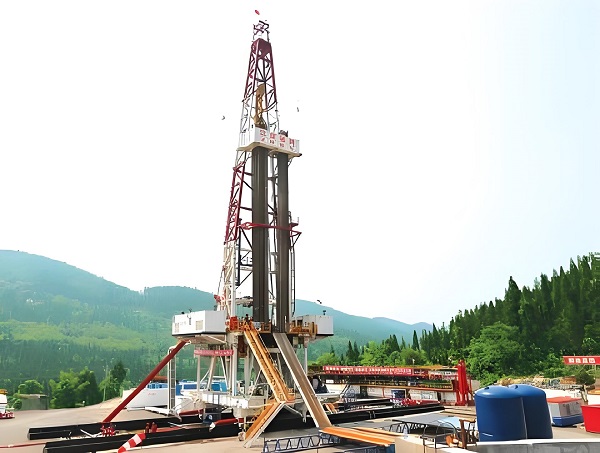
Tower derricks (also known as quadrilateral derricks) are primarily used on offshore drilling platforms and ultra‑deep land drilling rigs:
| Feature | Specification |
|---|---|
| Shape | Four‑edged truncated cone; square cross‑section |
| Construction | Individual steel members with bolted connections |
| Primary application | Offshore drilling platforms — 塔型井架为海洋钻机井架的最主要的一种结构形式 |
| Advantages | Excellent overall stability; very high load‑bearing capacity; good wind resistance |
| Load capacity | Up to 9,000kN (2,000,000 lb) hook load for ultra‑deep applications |
| Environmental rating | Marine corrosion protection; designed for platform‑mounted operation |
A‑Type Derrick — Specifications
A‑type derricks are known for their "full visibility” design, which is particularly valuable for offshore platforms and complex drilling operations:
| Feature | Specification |
|---|---|
| Leg cross‑section | Rectangular or triangular space truss |
| Construction | Sectioned structure with pin connections between sections |
| Installation | Low‑height installation; raised as a whole using winch power via A‑frame |
| Visibility | 井架前后敞开,司钻视野好,被称为"全视野井架” — open front and back, excellent driller visibility |
| Load capacity | Good bearing capacity and overall stability |
| Typical application | Offshore platforms, large land drilling rigs requiring maximum visibility |
Technical data source: Petroleum industry knowledge standard for A‑type derrick design.
ZJ Series Land Drilling Rigs — Mast and Hook Load Specifications
SJ's ZJ series land drilling rigs are designed for depths from 1,000m to 9,000m. These rigs feature K‑type masts with clearance heights ranging from 33m to 49m, fully compliant with API 4F:
| Model | Nominal Drilling Depth (4½″ DP, m) | Max Hook Load (kN) | Drawworks Power (kW/hp) | Mast Clearance Height (m) | Substructure Height (m) |
|---|---|---|---|---|---|
| ZJ30/1700 | 3,000 | 1,700 | 600 / 800 | 33–41 | 6–7.5 |
| ZJ40/2250 | 4,000 | 2,250 | 800 / 1,100 | 43 | 7.5 |
| ZJ50/3150 | 5,000 | 3,150 | 1,100 / 1,470 | 45.5 | 9 |
| ZJ70/4500 | 7,000 | 4,500 | 1,470 / 2,000 | 45–48 | 9–10.5 |
| ZJ90/6750 | 9,000 | 5,850 | 2,200 / 3,000 | 49 | 12 |
Technical data source: SJ Petroleum Machinery ZJ series drilling rig product specifications.
XJ250 Workover Rig — Detailed Technical Data
The XJ250 is one of SJ's most popular light‑duty vertical rigs, equipped with Caterpillar C9 and Allison 4700 transmission, reaching up to 3,500m for workover and well service:
| Parameter | Specification |
|---|---|
| Workover depth (2‑7/8" DP) | 3,500 m (11,500 ft) |
| Mast type | Double‑section K‑type vertical mast |
| Mast clearance height | 21 m (69 ft) — double‑section / 18 m (59 ft) — single‑section |
| Carrier drive | 6×6 full drive chassis |
| Cross‑country capability | Excellent mobility on sandy desert terrain |
Technical data source: SJ PETRO XJ250 product specification and industry listing.
XJ450 Workover Rig — Detailed Technical Data
The XJ450 (80‑ton class) workover rig has a workover depth up to 4,500m and service depth up to 5,500m. Equipped with rotary table, swivel and drilling tools, it can perform as a mobile drilling rig up to 1,500m depth:
| Parameter | Specification |
|---|---|
| Workover depth (2-7/8" DP) | 4,500 m |
| Service depth (3½” DP) | 5,500 m |
| Mobile drilling depth | Up to 1,500 m (when equipped) |
| Mast clearance height | 34 m |
| Racking board height | 17.2 m |
| Floor height | 3.7 m |
Technical data source: SJ PETRO XJ450 product specification.
XJ650 Workover Rig — Detailed Technical Data
The XJ650 offers 7,000m workover depth with 1,470kN max static load:
| Parameter | Specification |
|---|---|
| Engine power | 470 kW (630 hp) at 2,100 rpm |
| Drilling depth (3½” DP) | 2,000 m |
| Workover depth (2‑7/8" DP) | 7,000 m |
| Wireline diameter | φ29 mm |
| Mast clearance height | 35 m |
| Floor height | 4.5 m |
Technical data source: XJ650 product specification.
XJ1000 Workover Rig — Detailed Technical Data
The XJ1000 is a large self‑propelled workover rig with dual engines, primarily used for medium and deep well workover, oil testing, fishing and pumping operations:
| Parameter | Specification |
|---|---|
| Workover depth (2‑7/8" DP) | 8,000 m |
| Workover depth (3½” DP) | 6,500 m |
| Workover depth (4½" DP) | 5,000 m |
| Max static hook load | 1,800 kN |
| Drawworks horsepower | 750 hp |
| Mast clearance height | 38 m |
| Floor height | 6 m |
| Carrier drive type | 14×8 |
Technical data source: SJ Petroleum Machinery Series of Self‑propelled Workover Rigs catalog.
XJ1200 Workover Rig — Detailed Technical Data
The XJ1200 is SJ's highest‑capacity vertical workover rig, designed for ultra‑deep workover operations to 9,000m:
| Parameter | Specification |
|---|---|
| Workover depth (2‑7/8" DP) | 9,000 m |
| Workover depth (3½” DP) | 7,500 m |
| Workover depth (4½" DP) | 6,000 m |
| Max static hook load | 2,250 kN |
| Drawworks horsepower | 1,000 hp |
| Mast clearance height | 39.3 m |
| Floor height | 6.7 m |
| Carrier drive type | 14×10 |
Technical data source: SJ Petroleum Machinery Series of Self‑propelled Workover Rigs catalog.
Mast Model Cross‑Reference — API 4F Rated Mast Models
SJ offers a range of mast models with various load ratings and working heights, all certified to API Spec 4F:
| Mast Model | Max Static Load Rating (kN) | Working Height (m) | Mast Type | Certification |
|---|---|---|---|---|
| JJ315/47‑KZJ | 3,150 | 46.75 | K‑type, telescoping | API 4F |
| JJ450/47‑K | 4,500 | 45 | K‑type | API 4F |
| JJ315/45‑KZJ1 | 3,150 | 45 | K‑type, telescoping | API 4F |
| JJ315/45‑KZJ | 3,150 | 45 | K‑type, telescoping | API 4F |
Technical data source: Industry reference listing for API 4F mast models.
Traveling System and Wireline Specifications
The traveling system defines the number of support lines running from the crown block to the traveling block and hook. SJ's workover rigs use the following traveling system configurations:
| Rig Model | Traveling System | Wireline Diameter (mm) | Application |
|---|---|---|---|
| XJ250 | 3×4 | φ22 | Light‑duty workover, shallow wells |
| XJ350 | 3×4 | φ26 | Medium‑duty workover |
| XJ450, XJ550, XJ650 | 4×5 | φ26–29 | Heavy‑duty workover, medium wells |
| XJ1000, XJ1200 | 5×6 | φ29–32 | Ultra‑deep well workover |
Technical data source: SJ Petroleum Machinery workover rig specifications.
Product Types — SJ Vertical Rig Configurations
SJ offers several configurations of vertical rig structures, each tailored to different operational environments:
| Type | Configuration | Depth Range | Primary Application |
|---|---|---|---|
| Type 1 | XJ Series Self‑Propelled Workover Rig — K‑type vertical mast | 1,000–9,000m workover | Well servicing, fishing, pumping, light drilling |
| Type 2 | XJ Series Heavy‑Duty Workover Rig (XJ750/XJ1000/XJ1200) — K‑type tall mast | 8,000–9,000m workover; 3,000m drilling | Heavy workover, mobile drilling, deep well intervention |
| Type 3 | ZJ Series Land Drilling Rig — K‑type or A‑type vertical mast | 3,000–9,000m drilling | Conventional land drilling, multi‑well pad, cluster wells |
| Type 4 | Offshore Workover and Drilling Package — Tower derrick or A‑type derrick | Platform‑specific | Fixed platform cluster wells, subsea well intervention |
| Type 5 | Telescoping Mast for Mobile Rigs — Two‑stage vertical telescoping | Light to medium depth | Mobile workover, truck‑mounted rigs, helicopter‑portable units |
Type 1: XJ Series Self‑Propelled Workover Rig — K‑Type Vertical Mast
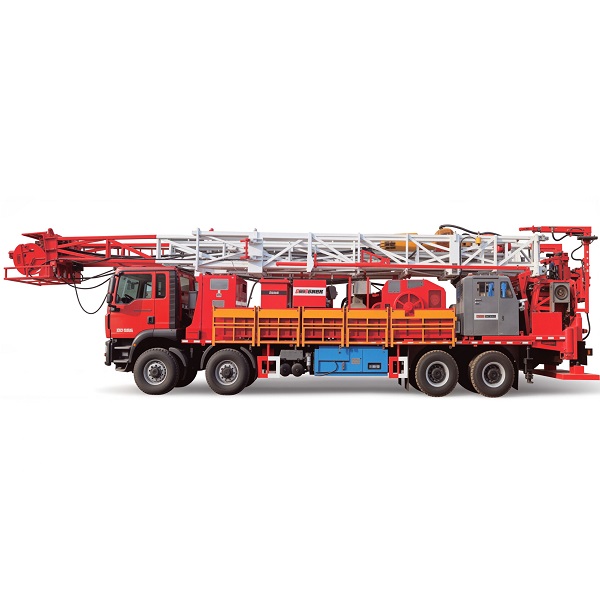
Self‑propelled, truck‑mounted workover rigs with K‑type vertical masts. Mast is raised as a whole by hydraulic cylinders, two‑stage telescoping for transport. Available from XJ250 through XJ1200.
-
Best for: Well workover, oil testing, fishing, pumping operations
-
Depth range: 1,000–9,000m workover depth
-
Key advantage: Excellent driller visibility; fast rig‑up and rig‑down; good cross‑country mobility
Type 2: XJ Series Heavy‑Duty Workover Rig — Tall Mast Configuration
Larger XJ models with taller masts (38–39.3m clearance) and dual‑engine power, capable of both workover and mobile drilling. Mast features two‑stage telescoping, hydraulically raised.
-
Best for: Heavy workover, deep well intervention, mobile drilling campaigns
-
Depth range: 8,000–9,000m workover; 3,000m drilling
-
Key advantage: Tall mast provides greater stand capacity; dual‑engine redundancy for continuous operation
Type 3: ZJ Series Land Drilling Rig — K‑Type or A‑Type Mast
Full‑scale land drilling rigs with K‑type front‑open masts (or A‑type derricks for larger models). Masts range from 33m to 49m clearance height, fully API 4F certified.
-
Best for: Conventional land drilling, multi‑well pad drilling, cluster well development
-
Depth range: 3,000–9,000m drilling depth
-
Key advantage: High structural rigidity; excellent stability in high wind conditions; large stand capacity
Type 4: Offshore Workover and Drilling Package — Tower or A‑Type Derrick
Specialised offshore configurations with tower derricks (quadrilateral) or A‑type derricks. Structures are designed for platform mounting with corrosion‑resistant materials and marine coatings. Hydraulic walking bases enable lateral and longitudinal movement for cluster well operations.
-
Best for: Fixed platform drilling, wellhead platform cluster wells, subsea well intervention
-
Capacity range: Platform‑specific — SJ offers offshore drilling and workover rigs up to 158 t class, multiple platforms serviced since 1998
-
Certifications: API 4F plus ABS/DNV works approval, CE marking as required
-
Key advantage: Excellent visibility (A‑type) or maximum stability (tower); marine‑grade corrosion protection
Type 5: Telescoping Mast for Mobile Rigs — Two‑Stage Vertical Telescoping
Two‑section telescoping masts that extend and retract vertically, allowing low transport height for road and helicopter movement. Raised by winch power or hydraulic cylinder thrust, these are the preferred configuration for mobile workover units.
-
Best for: Mobile workover, truck‑mounted rigs, helicopter‑hangable units
-
Mast height range: 21–35m extended; ~12–19m telescoped for transport
-
Key advantage: Low transport height eliminates oversize permit requirements; fast telescoping operation
Applications — Where SJ Vertical Rigs Deliver Maximum Value
| Application | Why Vertical Rig Matters | Recommended Configuration |
|---|---|---|
| Conventional land drilling (oil and gas) | K‑type mast provides high rigidity and unobstructed driller view; ideal for depths from 1,000m to 9,000m | Type 3 — ZJ series K‑type mast |
| Multi‑well pad drilling / cluster wells | Hydraulic walking base on pad allows vertical rig to move between wellheads without disassembly — K‑type mast retains full functionality at each slot | Type 3 with walking system |
| Well workover and well servicing | K‑type vertical mast with two‑stage telescoping allows low transport height and fast setup; good visibility for precise pipe handling | Type 1 — XJ series |
| Heavy‑duty deep well workover (8,000–9,000m) | Tall masts (38–39.3m) provide clearance for longer stands and heavier tubular strings | Type 2 — XJ1000/XJ1200 |
| Offshore platform drilling | Tower derrick (quadrilateral) provides maximum stability and wind resistance; A‑type offers superior visibility | Type 4 — offshore package |
| Offshore platform workover / cluster well development | Skid‑mounted derrick structure with hydraulic lateral/longitudinal walking base for cluster well operations — moves between platform well slots without disassembly | Type 4 — offshore workover package |
| Remote desert drilling | K‑type mast with desert environmental package (+55°C rating) and sand‑resistant coatings; telescoping design for transport across desert terrain | Type 3 with desert package |
| Arctic drilling (-45°C) | K‑type or A‑type mast with low‑temperature steel certification (-45°C), low‑alloy, high‑strength, low‑temperature impact‑resistance material, specialized welding processes | Type 3 with arctic package |
| Mobile drilling and workover | Two‑stage telescoping mast for low transport height; self‑propelled or trailer‑mounted carriers for rapid deployment | Type 1 (XJ series) |
| Offshore subsea well intervention | Vertical rig structure on jack‑up or semi‑submersible platform; tower derrick for maximum load capacity | Type 4 — offshore package |
Market Context — Why Vertical Rig Demand Is Growing
The global land drilling market is expected to average 4,219 rigs over the 2026‑2030 period, a 4% improvement on the previous five years. The Middle East region is forecast to be the most buoyant drilling market, with an average of 495 rigs expected across the four main GCC countries between 2026‑2030, a 56% increase on the previous period. Within this market, vertical rigs with API 4F certified masts and fast‑moving capabilities are the fastest‑growing segment.
The Difference Between Mast and Derrick
There is often confusion between the terms "mast” and "derrick” when discussing vertical rig structures. While the terms are sometimes used interchangeably in everyday conversation, they have distinct technical meanings:
-
Mast: A portable structure that is assembled in sections at ground level and raised as a complete unit (using winch power or hydraulic cylinders). More common on land workover rigs and mobile drilling rigs because of faster rig‑up times. K‑type masts are portable masts designed for transport between well locations.
-
Derrick: A permanent or semi‑permanent structure assembled piece‑by‑piece from the ground up. Requires crane support for installation and is typically used on offshore platforms or very large land rigs that stay in place for extended periods. A‑type derricks and tower derricks fall into this category.
For operators requiring frequent rig moves (such as pad drilling and cluster well development), masts are the preferred choice. For operators with long‑duration operations in a single location (such as offshore platforms), derricks are more common.
Why Choose SJ as Your Vertical Rig Manufacturer?
1. API 4F Certified — Global Certification for Drilling Structures
All SJ vertical rig structures are designed and manufactured in compliance with API Spec 4F (latest edition, PSL 1 or PSL 2 as required). We are API Q1, ISO 9001 and HSE management system certified, with API monograms for Spec 4F, 7K, 8C, 6A and 16C. Manufacturing processes can be supervised by customers and inspected by any third‑party certification agency.
2. 70+ Years of Manufacturing Heritage
SJ was founded in Lanzhou, Gansu in 1941 and moved to Jingzhou, Hubei in 1969, manufacturing petroleum drilling and production equipment since the end of the 1970s. Our Technical Center employs 314 engineers across three research institutes and we are authorized to operate a post‑doctoral research station.
3. Vertically Integrated Manufacturing — Complete Quality Control
SJ has more than 2,100 sets of precision manufacturing equipment across seven production lines (drawworks, gear boxes, cylinders, masts, high pressure manifolds, plunger pumps and post treatment) and three assembly lines (drilling rigs, workover rigs and cementing/fracturing equipment). Full vertical integration means complete traceability for every API‑certified component.
4. 50,000 m² Assembly Yard with Full Factory Acceptance Testing
We possess a rig assembly yard covering 50,000 square metres with 24 rigging‑up positions and two offshore rig commissioning sites (four rig positions), where 750‑ton load tests can be performed and 12 drilling or workover rigs can be assembled and commissioned simultaneously.
5. Comprehensive Environmental Ratings — Desert, Arctic and Offshore
SJ vertical rigs are available with specialised environmental packages: desert package (+55°C rating, multi‑stage cyclonic air filtration, sand‑resistant coatings), arctic package (-45°C low‑temperature steel with low‑alloy, high‑strength, low‑temperature impact‑resistance material and specialised low‑temperature welding processes) and offshore package (corrosion‑resistant materials, marine coatings, ABS/DNV classification options).
6. Global After‑Sales Support
SJ maintains regional support infrastructure across the Middle East, Russia, Southeast Asia and other key markets. Our 24/7 remote support desk and field service teams are available for commissioning, operator training, preventive maintenance and emergency service. We have exported vertical rigs and components to more than 50 countries.
7. Field‑Proven Offshore Expertise
SJ has been developing offshore vertical rig structures since 1993. We produced China's first skid‑mounted offshore workover and cementing equipment. In 1998, we developed 158‑ton offshore drilling and workover rigs for different petroleum platforms in Bohai Bay — awarded the Ninth‑Five National Technology Innovation Excellent Achievement. We have supplied more than 40 sets of offshore drilling and workover equipment and maintain excellent relationships with CNOOC, COSL, Kerr McGee and ConocoPhillips.
8. Complete One‑Stop Vertical Rig Supplier
SJ manufactures the full vertical rig system — masts, derricks, substructures, crown blocks, traveling blocks, swivels, hooks and high pressure fluid control products — under one roof. One supplier, one warranty, one team that knows the entire system. No sourcing from multiple vendors.
9. ANSYS Finite Element Analysis — Verified, Not Guessed
Every SJ mast and substructure design is analysed using ANSYS FEA to verify load distribution, stress concentrations and structural performance before prototype or production. Verified load ratings you can trust.
10. Competitive Pricing — The Chinese Manufacturing Advantage
SJ vertical rigs are typically priced 30–50% below comparable Western brands (National Oilwell Varco, Bentec, Nabors) for equivalent API‑certified specifications, due to our vertically integrated manufacturing and efficient production systems. Lower price does not mean lower quality — we build to Sinopec‑grade standards and API certifications, with full traceability documentation for every certified component.
Frequently Asked Questions (FAQ)
Q1: What are the main types of vertical rig structures for drilling and workover?
The four main types of vertical rig structures are: K‑type mast (front‑opening), A‑type derrick, tower derrick (quadrilateral), and telescoping mast. K‑type masts are most common for land workover and drilling rigs, offering high rigidity and good driller visibility. A‑type derricks provide "full visibility” for offshore platforms. Tower derricks provide maximum stability for deepwater platforms and ultra‑deep land rigs. Telescoping masts are used on mobile workover rigs for reduced transport height.
Q2: What is API 4F certification, and why does it matter for vertical rigs?
API Spec 4F (Specification for Drilling and Well Servicing Structures) is the industry standard covering the design, manufacture and use of steel derricks, portable masts, crown block assemblies and substructures. It includes requirements for marking, inspection, standard ratings, design loading and design specifications. API 4F certification is essential for international operations, regulatory compliance and ensuring structural integrity under rated hook load conditions. All SJ vertical rig structures are API 4F certified.
Q3: What drilling and workover depths can SJ vertical rigs handle?
-
XJ series workover rigs: 2,000–9,000m workover depth (depending on model)
-
XJ series mobile drilling capability (when equipped): Up to 3,000m drilling depth (XJ750 model)
-
ZJ series land drilling rigs: 3,000–9,000m drilling depth
Q4: What mast clearance heights are available for SJ vertical rigs?
SJ offers mast clearance heights from 21m (XJ250) up to 49m (ZJ90), with intermediate models providing 31.7m, 34m, 35m, 38m, 39.3m, 43m, 45m and 45.5m heights. Taller masts provide greater stand capacity and are preferred for deep well operations where longer stands of drill pipe are required.
Q5: What is the difference between a K‑type mast and an A‑type derrick?
A K‑type mast is a front‑opening structure with a "П”‑shaped cross‑section, assembled in sections and raised as a complete unit (usually using hydraulic cylinders or winch power). It is portable and transports easily between well locations — best for land workover rigs and mobile drilling rigs.
An A‑type derrick has two lattice or tubular legs forming an "A” shape, with open front and back sections. It is typically assembled piece‑by‑piece from the ground up and is more commonly used on offshore platforms or very large land rigs that stay in place for extended periods. A‑type derricks are known as "full‑visibility derricks” because the open design gives the driller an unobstructed view of the wellhead.
SJ manufactures both types.
Q6: What is a telescoping vertical mast, and when would I need one?
A telescoping mast is a two‑section or three‑section mast that extends and retracts vertically. During transport, the mast telescopes down to a much shorter height (typically 12–19m), allowing road transport without oversize permits. At the wellsite, the mast is telescoped up to full operating height (21–49m) using hydraulic cylinders or winch power. Telescoping masts are ideal for mobile workover rigs, truck‑mounted drilling rigs and helicopter‑portable units.
Q7: Do SJ vertical rigs meet Arctic and low‑temperature requirements?
Yes. SJ offers low‑temperature packages for vertical rigs operating in arctic and sub‑arctic regions (-45°C). This includes low‑alloy, high‑strength, low‑temperature impact‑resistance material, specialised low‑temperature welding processes and certification for -45°C operation.
Q8: What is the typical lead time for a SJ vertical rig structure (mast and substructure)?
Lead times vary based on mast type, height and load rating. For standard K‑type two‑section telescoping masts for XJ or ZJ series rigs, typical lead time is 6–9 months from order confirmation to factory acceptance testing (FAT). Custom configurations (offshore packages, arctic steel, etc.) may require 8–12 months.
Q9: How does SJ verify the load capacity of its vertical rig structures?
Every SJ mast and substructure design is analysed using ANSYS finite element analysis (FEA) to verify load distribution, stress concentrations and structural performance under rated hook load conditions. The complete mast assembly also undergoes full load testing at our 50,000 m² assembly yard before shipment, with customer‑witnessed testing available.