Drill bit specifications

Roller Cone (Tricone) Drill Bit — Detailed Technical Specifications
All roller cone bits described here are API Spec 7‑2 compliant. The first critical specification is the IADC code — the global shorthand that tells an engineer everything about a bit's intended formation and design features.
Decoding the IADC Code (Roller Cone Bits)
The three‑digit IADC code is broken down as follows:
| Digit | Meaning | Range / Options |
|---|---|---|
| 1st digit | Cutting structure & formation series | 1–8 (milled tooth: 1–3; TCI: 4–8) |
| 2nd digit | Formation hardness within series | 1 = very soft … 8 = extremely hard |
| 3rd digit | Bearing/seal/gage protection design | 1–7 (1 = standard open bearing … 7 = sealed bearing with gage protection) |
Material & Body Specifications
| Component | Material | Key Features |
|---|---|---|
| Bit body (head) | High‑quality alloy steel forging | Heat‑treated for impact resistance, API 7‑2 |
| Milled teeth | High‑manganese steel | Tungsten carbide hard‑facing on cutting surfaces |
| TCI inserts | Premium tungsten carbide | Spherical/conical/chisel shapes for different formations |
| Hardfacing | Specially formulated tungsten carbide | Applied to all surfaces of steel tooth cutting structure and shirttail tip for extra protection |
| Bearing system | Steel bearing races, ball bearings, roller bearings | Balls lock the cone, reducing the probability of cone‑dropping to minimum |
| Thread connection | API Regular (REG) | Sizes: 2 7/8″, 3 1/2″, 4 1/2″, 6 5/8″, etc. |
| Nozzles | Tungsten carbide orifice plates | Interchangeable, in various diameters |
Bearing Type — The 3rd Digit of IADC Code
The bearing specification is critical for service life, especially in abrasive and high‑temperature conditions.
| IADC Bearing Code | Bearing Type | Application |
|---|---|---|
| 1 | Standard open bearing (roller/ball) | Soft formations, low‑cost applications |
| 2 | Open bearing with gage protection | Moderately abrasive formations |
| 3 | Open bearing with gage and heel row inserts | More abrasive conditions |
| 4 | Sealed roller bearing (non‑lubricated) | General purpose, moderate life |
| 5 | Sealed roller bearing (lubricated) | Extended life in medium formations |
| 6 | Sealed journal bearing (lubricated) | High load, high RPM, hard formations |
| 7 | Sealed journal bearing with gage protection | Extreme conditions, ultra‑deep wells |
Recommended Operating Parameters
Recommended WOB and RPM values vary by IADC code and bit diameter. Use the following as a starting guide.
| IADC Code | Recommended WOB (kN/mm of bit diameter) | Recommended Rotary Speed (RPM) | Formation Type |
|---|---|---|---|
| 111/114/115 (steel tooth, very soft) | 0.3–0.75 | 200–80 | Very soft formations, low compressive strength |
| 417 (TCI, soft) | 0.75–1.0 | 180–60 | Soft formations, clay, sand |
| 537 (TCI, medium‑hard) | 1.0–1.5 | 120–40 | Medium‑hard formations, 60–130 MPa UCS |
| 637 (TCI, hard) | 1.5–2.0 | 80–30 | Hard, abrasive formations |
| 737 (TCI, very hard) | 2.0–2.5 | 60–20 | Very hard, extremely abrasive formations |
Complete Size Range — Tricone Bits
| Bit Diameter (inches) | Bit Diameter (mm) | API Connection Thread | Common IADC Codes |
|---|---|---|---|
| 4 3/4 | 120.7 | 2 7/8″ REG | 114,115,231,241,435,437,517,537,637 |
| 5 1/2 | 139.7 | 3 1/2″ REG | 114,115,231,241,435,437,517,537,637 |
| 6 1/2 | 165.1 | 3 1/2″ REG | All series |
| 8 1/2 | 215.9 | 4 1/2″ REG | 115–117, 217–247, 317–347, 417–447, 517–547 |
| 9 7/8 | 250.8 | 6 5/8″ REG | 115–117, 217–247, 317–347, 417–447, 517–547 |
| 12 1/4 | 311.2 | 6 5/8″ REG | All series |
| 17 1/2 | 444.5 | 7 5/8″ REG | 115–117, 217–247, 317–347, 417–447, 517–547 |
PDC (Polycrystalline Diamond Compact) Drill Bit — Specifications
PDC bits have become the standard for soft to medium‑hard formations, providing exceptional rates of penetration and long bit life.
Key Technical Parameters
| Parameter | Specification |
|---|---|
| Bit diameter range | 3 3/4″ – 17 1/2″ (95 mm – 445 mm) |
| Number of blades | 3 to 9 blades |
| Cutter diameter | 13 mm, 16 mm, 19 mm (common); 25 mm for heavy‑duty designs |
| Cutter material | Synthetic diamond compact (polycrystalline diamond layer + carbide substrate) |
| Matrix material | Steel body or tungsten carbide matrix body (matrix body for more abrasive formations) |
| Nozzle configuration | Multiple nozzles (3 to 12+), position‑optimized via CFD |
| Connection thread | API REG (3 1/2″, 4 1/2″, 6 5/8″ depending on bit size) |
PDC Cutter Size & Application
| Cutter Size (mm) | Typical Application | Manufacturing Method |
|---|---|---|
| 13 | Soft to medium formations; good for directional and motor drilling | Brazed onto blade |
| 16 | Universal cutter, excellent for most applications | Brazed onto blade |
| 19 | Medium‑hard to hard formations; high durability | Brazed onto blade |
| 25 | Hard, interbedded formations; heavy‑duty applications | Brazed onto blade |
Blade Count Selection
| Number of Blades | Typical Bit Diameter | Application |
|---|---|---|
| 3–4 blades | 4 3/4″ – 6 1/2″ | Smaller PDC bits, directional drilling |
| 5–6 blades | 6 1/2″ – 8 1/2″ | Standard general purpose |
| 6–7 blades | 8 1/2″ – 9 7/8″ | Medium diameter, balanced designs |
| 7–9 blades | 12 1/4″ and larger | Large diameter, reduced vibration |
Recommended Running Parameters for PDC Bits
| Formation Type | WOB (kN/mm of bit diameter) | Rotary Speed (RPM) | Torque Range (kN·m) |
|---|---|---|---|
| Very soft | 0.3–0.8 | 150–300 | 5–15 |
| Soft | 0.6–1.0 | 120–220 | 10–25 |
| Medium | 0.8–1.2 | 100–180 | 20–40 |
| Medium‑hard | 1.0–1.5 | 80–140 | 30–55 |
| Hard | 1.2–1.8 | 60–100 | 45–70 |
API Connection Threads — Drill Bit to Bottom Hole Assembly
| Bit Diameter (inches) | Common Pin Connection (API REG) | Box Connection (Bottom Hole Assembly) |
|---|---|---|
| ≤ 4 3/4 | 2 7/8″ API REG Pin | 2 7/8″ API REG Box |
| 5 1/2 – 6 1/2 | 3 1/2″ API REG Pin | 3 1/2″ API REG Box |
| 7 7/8 – 8 1/2 | 4 1/2″ API REG Pin | 4 1/2″ API REG Box |
| 9 7/8 – 12 1/4 | 6 5/8″ API REG Pin | 6 5/8″ API REG Box |
| 13 3/8 – 17 1/2 | 7 5/8″ API REG Pin | 7 5/8″ API REG Box |
Ultra‑Deep Well Drill Bits — Sinopec Diamond Bit Technology
In 2025, the Shendi Take 1 well, China's first 10,000‑meter onshore well, successfully drilled to 4,152 m using a diamond drill bit produced by Sinopec Oilfield Equipment Corp. This ultra‑deep well is designed with a vertical depth of 11,100 m, a depth far surpassing the height of Mount Qomolangma.
The diamond drill bit relies entirely on circular superhard diamond composite sheets to drill through extremely hard rock layers, using both "drilling force” and "grinding force”. Diamond composite sheets can be used to drill through or wear through rock layers. During the drilling process, equipment including drill bit, drill rod and casings with a cumulative weight of more than 2,000 metric tons will penetrate through multiple geological layers.
Product Types — Our Drill Bit Family
Our product line is divided into the following major categories:
| Product Type | API PSL | Diameter Range | Applications |
|---|---|---|---|
| Tricone Bits — Steel Tooth (Milled Tooth) | API 7‑2 | 4 3/4″ – 26″ | Very soft to medium formations, conventional and directional wells |
| Tricone Bits — Tungsten Carbide Insert (TCI) | API 7‑2 | 4 3/4″ – 26″ | Medium to very hard formations, abrasive strata, deep wells |
| PDC Bits — Steel Body | API 7‑2 | 3 3/4″ – 17 1/2″ | Soft to medium‑hard formations, high ROP applications |
| PDC Bits — Matrix Body | API 7‑2 | 3 3/4″ – 17 1/2″ | Moderately abrasive to hard formations, extended intervals |
| Diamond Drill Bits | API 7‑2 | 3 7/8″ – 17 1/2″ | Ultra‑deep wells, extremely hard, fractured formations |
| Drill Bit & Tool Custom Engineering | Per customer specification | Custom | Complex directional well profiles, interbedded sequences |
Applications — Where Our Bits Excel
| Application | Formation Characteristics | Recommended Bit Type | Key Challenge Solved |
|---|---|---|---|
| Conventional onshore vertical wells | Soft to medium shales, sands, limestone | Steel tooth tricone or 5–6 blade PDC | Cost efficiency, fast penetration |
| Horizontal and directional wells | Variable hardness, interbedded | PDC (5–6 blades, 16 mm cutters) | Build‑up section stability, extended reach |
| Deep (5,000 m – 7,000 m) wells | Hard, compacted, abrasive | TCI tricone (IADC 5xx–7xx) or matrix PDC | Durability, gage retention |
| Ultra‑deep (>7,000 m to 11,100 m) wells | Extremely hard, high confining stress | Diamond drill bits (Sinopec Shendi series) | Overcoming extreme hardness, grinding action |
| Offshore platform drilling | Variable, often with interbedded hard streaks | Matrix PDC with premium cutters | Long runs, reduced trips |
| Unconventional (shale) drilling | Shale with chert lenses | PDC (high blade count, 16 mm cutters) | Vibration mitigation, consistent ROP |
| Workover and re‑entry | Existing wellbores with cement/scale | Steel tooth tricone (low cost) | Controlled break‑up, economical |
| Algerian Saharan fields | Complex, heterogenous strata, severe abrasiveness | Sinopec full‑size drill bits | Breaking technical bottlenecks of complex strata |
| North American unconventional plays | Shale with abrasive quartz content | TCI tricone or diamond bits | Extended bit life, reduced downtime |
Why Choose SJ / Kingdream as Your Drill Bit Supplier?
1. National Manufacturing Champion — Award‑Winning Bit Technology
Sinopec Oilfield Equipment Corp has been honored with three National Manufacturing Champions titles in fracturing equipment, drill bits and bridge plugs. This is the highest recognition for Chinese manufacturing in the oil and gas sector.
2. Proven in the World’s Deepest Wells
Our diamond drill bits are instrumental in completing China's first 10,000‑m ultra‑deep well, Shendi Take 1. The 11,100 m designed depth is a world‑class engineering achievement that validates our bit engineering for the most extreme downhole temperatures and pressures.
3. Two Decades of Proven Performance in North America
Sinopec drill bits have been exported to North America as part of the company’s core product offering, alongside drilling tools and completions equipment. Our bits have conquered complex geological layers in the toughest North American basins.
4. Full API Spec 7‑2 Certification Across All Sizes
All drill bits are designed, manufactured and tested to API Spec 7‑2, the international standard for rotary drilling equipment. Our API monogram is your guarantee of compliance.
5. Vertically Integrated Manufacturing — From Steel to Finished Bit
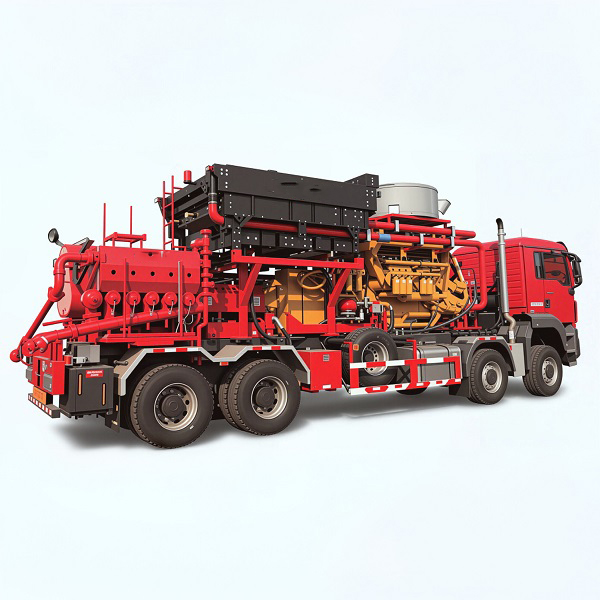
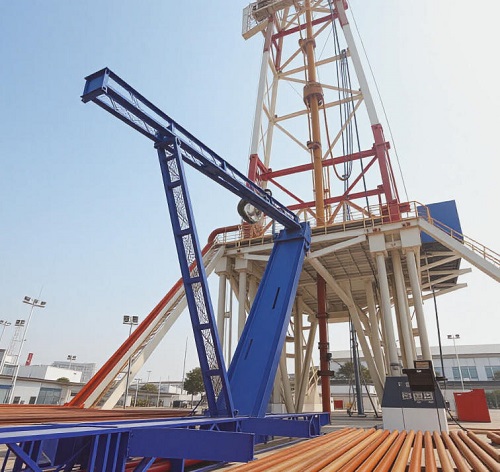
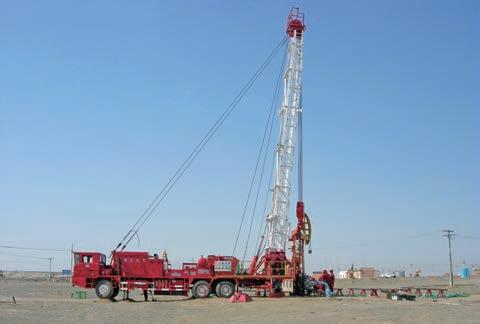
SOFE has 16 production lines with proprietary rights across drill bits and tools, drilling rigs, cementing units and steel pipe. Our manufacturing complex includes a 6000 hp pump test center, seven professional laboratories and a quality inspection center for drilling and production equipment.
6. Global Reach — 40+ Countries, All Major Continents
SOFE has exported its products to more than 40 countries and regions including North and South America, Russia, the Middle East, Algeria and beyond.
7. Comprehensive Certification and Quality Management
We provide complete certification in accordance with API, GOST and CE. Every bit is manufactured under a reliable quality management system with third‑party inspection available.
Frequently Asked Questions (FAQ)
Q1: What is the difference between a steel tooth (milled tooth) tricone bit and a TCI tricone bit?
A steel tooth (milled tooth) bit has cutting structures machined directly into the steel cones, typically hard‑faced with tungsten carbide. These are lower‑cost bits suited for soft to medium formations. A TCI (tungsten carbide insert) bit has pressed‑to‑shape tungsten carbide inserts installed into holes in the cones. TCI bits are much more durable and are used in medium‑hard to very hard, abrasive formations. The IADC code tells you immediately which type you are dealing with: first digit 1–3 indicates steel tooth; first digit 4–8 indicates TCI.
Q2: What is the IADC code, and how do I use it to select a drill bit?
The IADC (International Association of Drilling Contractors) code is a three‑digit number that classifies every roller cone drill bit. The first digit denotes the cutting structure and formation series (1–3 = steel tooth, 4–8 = TCI). The second digit indicates formation hardness within that series (1 = very soft … 8 = extremely hard). The third digit describes bearing, seal and gage protection design (1 = standard open … 7 = sealed with gage protection). Engineers use the IADC code to quickly select the correct bit for a given formation without reviewing lengthy catalogs.
Q3: What is the difference between PDC bits and roller cone bits?
PDC (Polycrystalline Diamond Compact) bits use synthetic diamond cutters that shear the rock formation rather than crushing it. This gives PDC bits 20% faster cutting speeds and 30% longer lifespan in suitable formations, but they can be vulnerable to impact damage in hard, interbedded sequences. Roller cone bits crush and gouge the formation with rotating cones, making them more tolerant of impact loading and suitable for very hard, fractured formations.
Q4: What drill bit sizes does Sinopec / Kingdream manufacture?
We manufacture the full range of API Spec 7‑2 sizes:
-
Tricone bits: 3 7/8″ to 26″
-
PDC bits: 3 3/4″ to 17 1/2″
-
Diamond bits: 3 7/8″ to 17 1/2″
Q5: What connection threads are used on your drill bits?
Our drill bits use API Regular (API REG) threads, the industry standard for rotary drilling connections. Thread sizes vary by bit diameter: 2 7/8″ REG (for bits ≤4 3/4″), 3 1/2″ REG (5 1/2″–6 1/2″), 4 1/2″ REG (7 7/8″–8 1/2″), 6 5/8″ REG (9 7/8″–12 1/4″), and 7 5/8″ REG (≥13 3/8″).
Q6: Can you manufacture custom drill bits for a specific well in my field?
Yes. With three research institutes, an Electric Control Institute and a High‑Pressure Manifold Research Room supported by 314 engineers, we can design custom drill bits to match your specific formation characteristics, directional profile and drilling parameters. Our drill bits have effectively broken through the technical bottlenecks of complex strata and contributed to oil and gas development in Algeria.
Q7: What is the difference between a steel body PDC bit and a matrix body PDC bit?
Steel body PDC bits are machined from high‑strength alloy steel. They offer excellent toughness and are less expensive, but have lower erosion resistance. Matrix body PDC bits use a tungsten carbide matrix material cast around a steel core. They provide far greater erosion and abrasion resistance, making them the preferred choice for hard, abrasive formations and high‑velocity drilling fluids.
Q8: What is the typical PDC cutter size for directional well applications?
For most directional and horizontal well applications, 16 mm PDC cutters are the most common and reliable choice. They strike an excellent balance between durability and rate of penetration. Softer formations benefit from 19 mm cutters (more aggressive), while harder formations may require 13 mm cutters for increased cutter density and point loading.