Vertical lifting rig
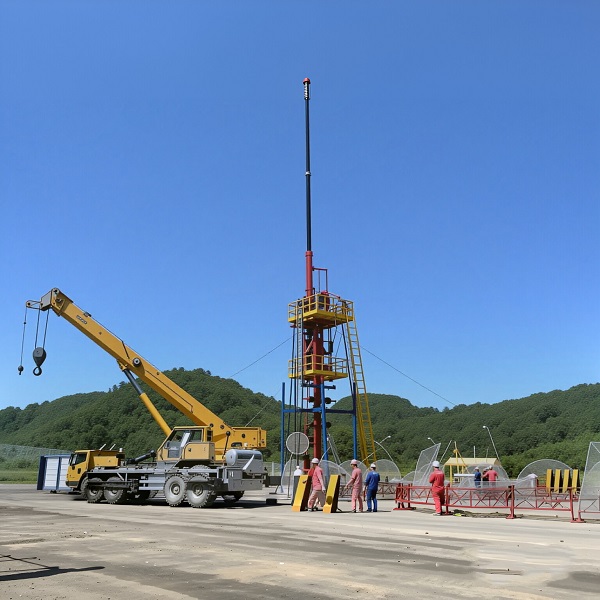
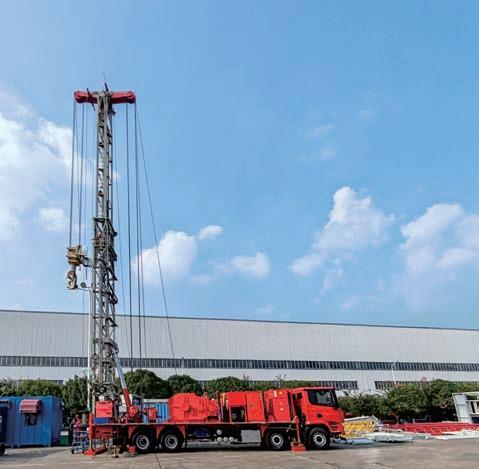
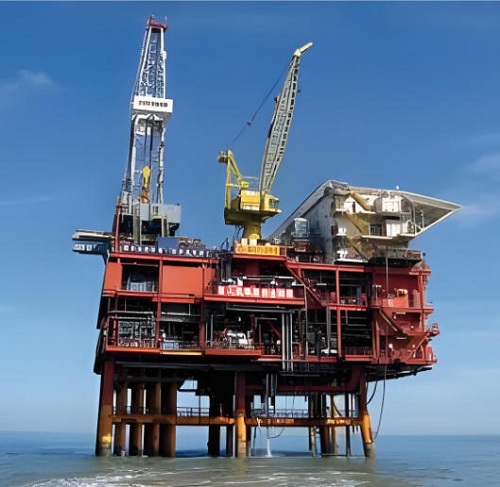
Innovative Technology & Key Features
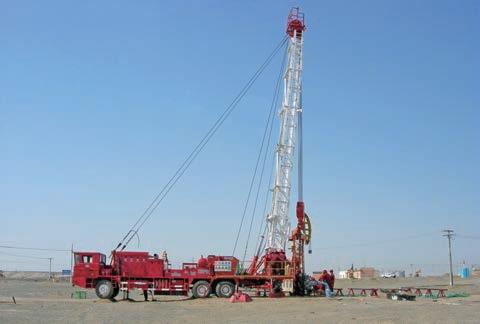
A vertical lifting rig is not just a mast with a hoist. It’s a precision hydraulic system designed for repetitive, controlled lifting of sucker rods, tubing strings, and downhole tools — often under live well conditions. Here’s what sets our vertical lifting rigs apart from conventional pulling units:
-
Dual hydraulic lift cylinders – Two heavy‑duty hydraulic cylinders provide perfectly vertical lift without side loading. The mast is a true vertical structure, not an inclined A‑frame. This eliminates rod and tubing wear at the wellhead.
-
Stepless variable lift speed – From creep speeds (0.5 ft/min) for precision landing to high speed (60 ft/min) for rapid tripping. Smooth, hydraulic speed control protects threads and prevents shock loading.
-
Positive load holding with counterbalance valves – When you stop lifting, the load stays exactly where it is — no drift, no brake wear, no risk of dropped string. Hydraulic counterbalance valves lock the load hydraulically, even if the engine dies.
-
Integrated snubbing capability – Our vertical lifting rigs can be configured with a hydraulic snubbing jack. This allows you to run or pull pipe against well pressure without killing the well — saving days of kill fluid and stimulation costs.
-
Compact, trailer‑mounted or skid‑mounted options – Single‑axle or tandem‑axle trailers for highway transport. The mast telescopes or folds to travel height under 14 ft. Skid‑mounted versions for offshore platforms or permanent installations.
-
Remote wireless pendant control – The operator stands at a safe distance (or inside a heated cab) with a wireless pendant that controls lift speed, direction, and emergency stop. No hand signals, no confusion.
-
Integrated work platform – A hydraulically raised work platform provides safe access to the wellhead and BOP stack. Platform height adjusts to match different BOP configurations.
-
Load and stroke instrumentation – Digital display of hook load (in tons or lbs) and lift height. Data logging available for job reporting and regulatory compliance.
-
Cold‑weather package – Heated hydraulic oil reservoir, low‑temperature hoses and seals, and battery warmers for operation down to -40°C. Proven on 11 rigs delivered to Rosneft.
-
API compliant safety systems – Overload protection, emergency descent (gravity or hydraulic backup), and redundant hydraulic circuits per API 7K and 8C.
Technical Specifications – Vertical Lifting Rigs
Our vertical lifting rigs are available in multiple lift capacities and mast heights to match different well service requirements. Below are our standard models:
| Parameter | VLR‑30 | VLR‑50 | VLR‑80 | VLR‑120 |
|---|---|---|---|---|
| Hook load capacity (max) | 30 tons (66,000 lbs) | 50 tons (110,000 lbs) | 80 tons (176,000 lbs) | 120 tons (264,000 lbs) |
| Mast type | Telescoping / single section | Telescoping (2‑sec) | Telescoping (3‑sec) | Telescoping (4‑sec) |
| Mast height (fully extended) | 45 ft (13.7 m) | 55 ft (16.8 m) | 70 ft (21.3 m) | 85 ft (25.9 m) |
| Lift speed (variable) | 0–50 ft/min | 0–55 ft/min | 0–60 ft/min | 0–60 ft/min |
| Creep speed | 0–3 ft/min | 0–3 ft/min | 0–2 ft/min | 0–2 ft/min |
| Number of lift cylinders | 2 | 2 | 2 | 2 (plus snubbing jack) |
| Cylinder bore / rod dia | 5"/3.5" | 6"/4" | 7"/5" | 8"/5.5" |
| System pressure | 3,000 PSI | 3,000 PSI | 3,500 PSI | 3,500 PSI |
| Power unit | Diesel 150 HP | Diesel 200 HP | Diesel 300 HP | Diesel 400 HP (or electric) |
| Hydraulic tank capacity | 80 gal | 120 gal | 160 gal | 200 gal |
| Mast travel height | Under 14 ft | Under 14 ft | Under 14 ft (with folding) | Under 15 ft (with folding) |
| Mounting type | Trailer or skid | Trailer or skid | Trailer or skid | Skid or truck |
| Operating temp range | -20°C to 50°C | -30°C to 55°C | -30°C to 55°C | -40°C to 55°C (cold pack) |
| Snubbing option | No | Optional | Optional | Standard |
| API compliance | API 7K, 8C | API 4F, 7K, 8C | API 4F, 7K, 8C | API 4F, 7K, 8C |
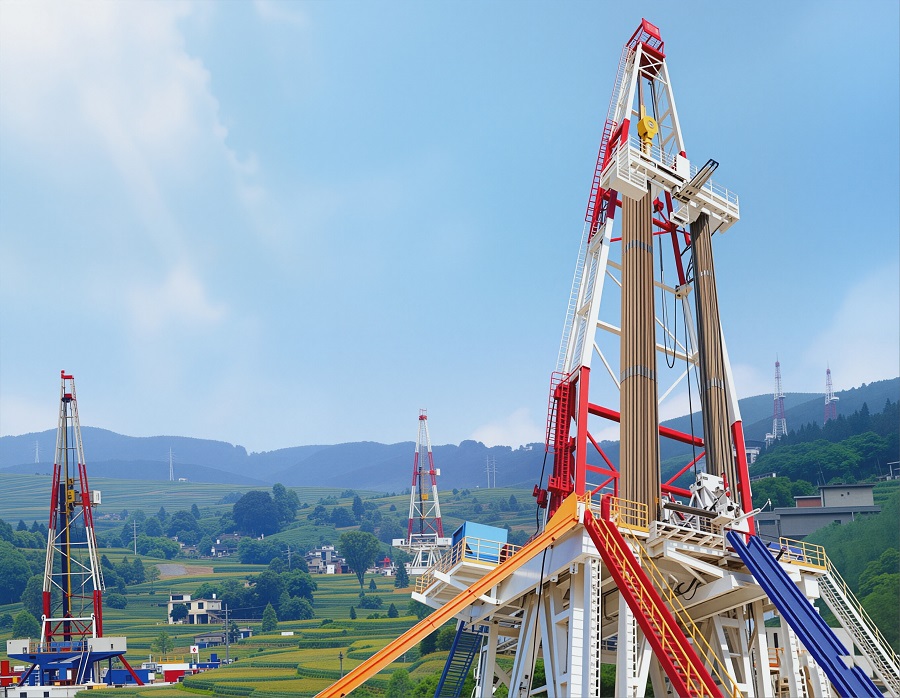
Product Types – Vertical Lifting Rig Portfolio
We offer several configurations of vertical lifting rigs to match different well intervention applications:
-
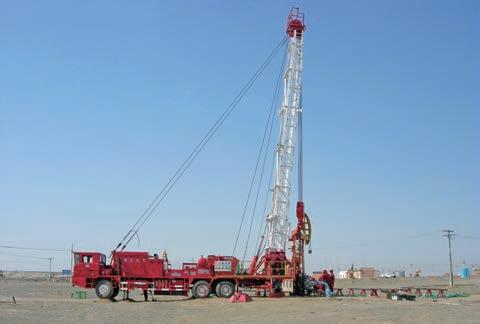
Standard Hydraulic Workover Rig (VLR Series) – For conventional well servicing: pulling rods, tubing, and downhole pumps. Available in 30, 50, 80, and 120 ton capacities. Trailer‑mounted for mobility.
-
Snubbing Unit (Hydraulic Workover Unit) – For live‑well interventions. Includes a hydraulic snubbing jack that runs or pulls pipe against well pressure up to 5,000 PSI or higher. Can be integrated with our vertical lifting mast or purchased as a standalone snubbing stack.
-
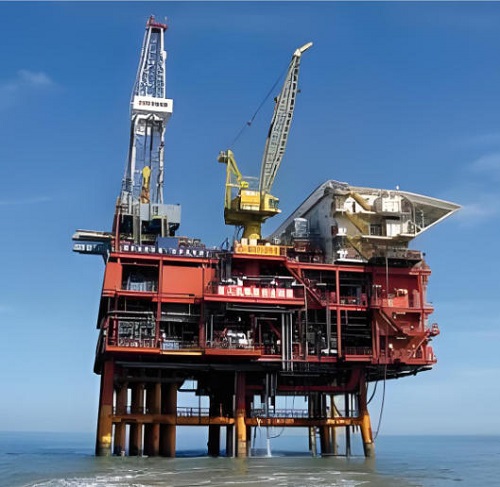
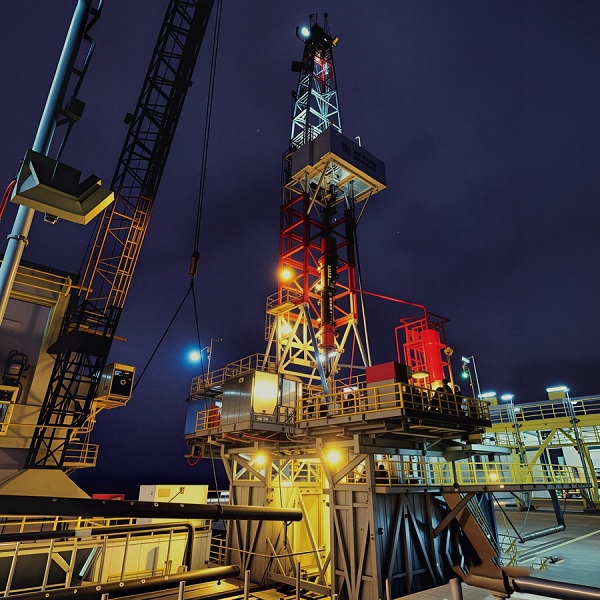
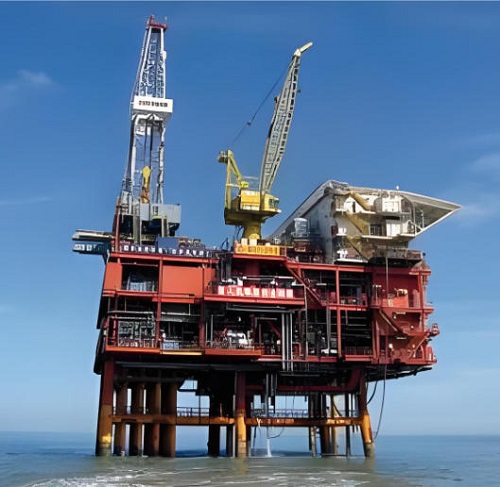
Platform / Offshore Vertical Lifting Rig – Skid‑mounted version with marine coating, explosion‑proof electricals, and compact footprint for platform deck mounting. Rated for offshore environmental conditions.
-
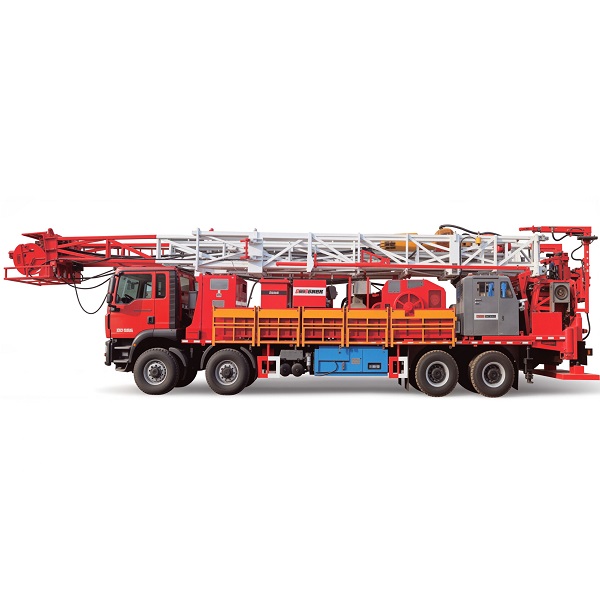
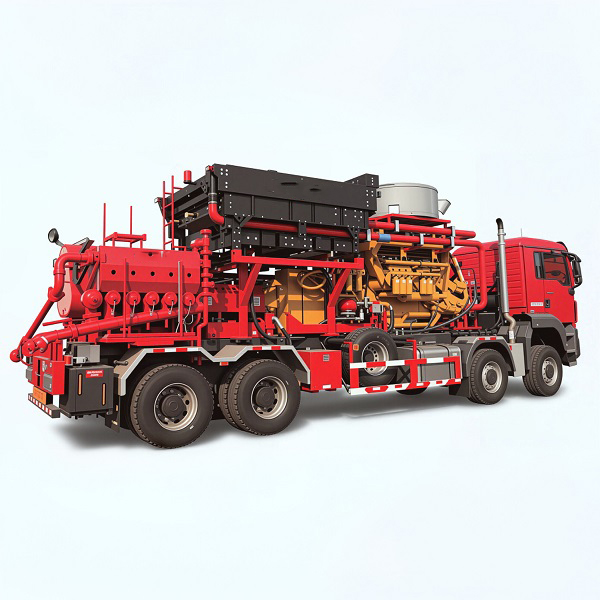
Truck‑Mounted Service Rig – The mast and HPU are permanently mounted on a heavy‑duty truck chassis. Self‑propelled for rapid mobilization between well sites. Ideal for well service contractors with large geographic territories.
-
Rod & Tubing Handling System – Add‑on equipment including a hydraulic rod guide, tubing racking arm, and catwalk. Reduces manual handling and speeds up trip times.
-
Data Acquisition Package – Real‑time display and recording of hook load, lift height, trip cycles, and snubbing forces. USB export for job reports. Optional remote telemetry.
Applications – Where Our Vertical Lifting Rigs Work
Our vertical lifting rigs are used in the following well intervention and workover scenarios:
-
Sucker rod pulling & replacement – For rod‑pumped wells. Our VLR‑30 and VLR‑50 are ideal for pulling corrosion‑damaged or broken rods. Smooth hydraulic lift prevents rod string shock.
-
Tubing workover – Pulling tubing for scale removal, leak repair, or packer retrieval. The VLR‑80 handles typical 2‑7/8" and 3‑1/2" tubing strings to 10,000 ft.
-
Hydraulic snubbing (live‑well intervention) – For wells that cannot be killed due to low pressure, sensitive formations, or environmental restrictions. Our snubbing units operate against up to 5,000 PSI wellhead pressure.
-
Plunger lift maintenance – Pulling and resetting plunger lift systems in gas wells. Our vertical lifting rigs provide the precise control needed to avoid damaging plungers.
-
Downhole pump replacement – Pulling bottom‑hole pumps (ESP, rod pump, progressing cavity pump) for repair or replacement.
-
Coiled tubing support rig – Acting as a vertical lifting backup for coiled tubing units during fishing or milling operations.
-
Offshore platform well servicing – Compact skid‑mounted vertical lifting rigs for platform workover operations where crane access is limited.
-
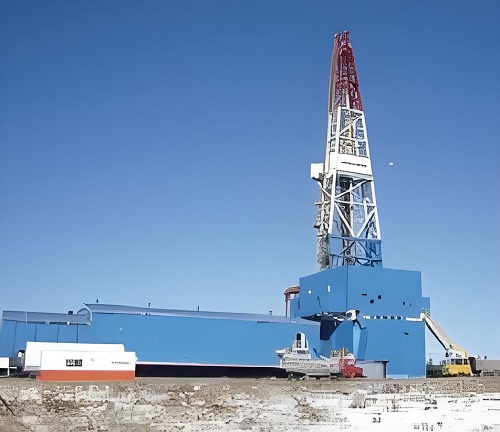
Arctic well intervention – With cold‑weather packages, our VLR‑120 operates reliably at -40°C for year‑round workover in northern fields.
Why Choose SJ Petro for Vertical Lifting Rigs?
-
Sinopec‑backed engineering & manufacturing – Direct subsidiary of China’s largest oilfield equipment group. We have the financial strength, engineering depth (314 R&D engineers), and manufacturing capacity (180,000+ m² campus) to deliver high‑quality workover rigs on time.
-
Over 80 years of oilfield experience – We’ve been building drilling and service equipment since the 1940s. Our vertical lifting rigs benefit from decades of hydraulic design refinement and field feedback.
-
API 4F, 7K, 8C certified – Your compliance documentation is ready. Third‑party inspection (BV, DNV, SGS, ABS) is always welcome.
-
Proven export track record – Over 3,100 international shipments to 30+ countries. We understand customs documentation, export packaging, and LC terms.
-
Full in‑house design & testing – Every hydraulic cylinder, mast section, and control valve is designed by our engineers. We test every rig at full rated load before shipping — you get a factory acceptance test (FAT) report with calibrated load cells.
-
Short lead times – Standard vertical lifting rig: 90–120 days from order to FAT. Snubbing units: 60–90 days. We stock long‑lead hydraulic components to meet urgent schedules.
-
Retrofit & upgrade services – We can add snubbing capability to your existing vertical lifting rig or upgrade the control system to wireless pendant with digital load display.
-
Global field service & training – We provide on‑site commissioning, operator training (1–2 weeks), and remote technical support. Our field engineers have worked in Russia, Kazakhstan, Middle East, and Southeast Asia.
-
Competitive direct‑manufacturer pricing – No trading company markups. You deal directly with the factory that built your rig.
-
12‑month warranty (extendable) – Standard warranty covers all hydraulic and structural components. Extended warranty up to 36 months available.
Frequently Asked Questions (FAQ)
Q1: What is the difference between a vertical lifting rig and a conventional workover rig?
A conventional workover rig uses a winch and wireline to lift, with a mechanical brake for holding. A vertical lifting rig uses hydraulic cylinders for lift and counterbalance valves for positive holding. Hydraulic rigs provide infinitely variable speed, smoother operation, and no brake wear or drift. They are also easier to automate and safer for live‑well snubbing.
Q2: Can your vertical lifting rig perform snubbing operations?
Yes — our VLR‑120 comes standard with snubbing capability, and it is optional on VLR‑50 and VLR‑80. The snubbing jack mounts between the lift cylinders and the wellhead. It can run or pull pipe against well pressure up to 5,000 PSI (higher available on request).
Q3: What is the maximum well depth your vertical lifting rig can service?
Depends on the string weight. For 50 ton rig (VLR‑50): can pull 2‑7/8" tubing (approx 6 lb/ft) to about 15,000 ft. For 80 ton rig: 2‑7/8" tubing to 22,000 ft. For 120 ton rig: 3‑1/2" tubing (approx 12 lb/ft) to about 16,000 ft. Send us your string specifications for a precise calculation.
Q4: Is your vertical lifting rig road legal for highway transport?
Yes. Our trailer‑mounted models (up to VLR‑80) have a travel height under 14 ft and width under 8.5 ft, compliant with most international road regulations. The mast telescopes or folds. We provide transport drawings for permit applications.
Q5: Do you offer electric‑powered vertical lifting rigs?
Yes. If you have grid power or generator power on site, we can replace the diesel engine with an electric motor (380V/460V/690V, 50/60Hz). Electric HPUs are quieter, have lower emissions, and require less maintenance.
Q6: What kind of training do you provide for operators?
We send a field service engineer to your site for 1–2 weeks of hands‑on training, covering: rig setup, hydraulic system operation, load control, emergency procedures, and daily maintenance. We also provide a full manual set and remote support for 12 months.
Q7: Can you retrofit a snubbing jack to my existing vertical lifting rig from another manufacturer?
Possibly — we would need to review your rig’s substructure and lift cylinder geometry. Many older rigs can accept a bolt‑on snubbing jack. Contact our engineering team with your rig’s make and model or drawings.
Q8: What is the typical cost of a vertical lifting rig?
Budget range: VLR‑30 starts around 180,000,VLR‑50around180,000,VLR‑50around280,000, VLR‑80 around 450,000,VLR‑120(withsnubbing)around450,000,VLR‑120(withsnubbing)around650,000. FOB China port. Prices vary with options (cold pack, data acquisition, truck mounting). Request a firm quote with your specifications.
Q9: How long does it take to set up the rig on location?
Two crew members can set up a trailer‑mounted vertical lifting rig in under 2 hours: level the trailer, extend the mast, connect hydraulic hoses, and raise the work platform. Snubbing units require additional BOP stack connection time (1–2 hours).