PDC drill bit price
Technical Specifications – PDC Drill Bit Range
The table below presents key specifications for our standard PDC drill bit range. All bits are API 7‑1 certified and available in both matrix body and steel body constructions.
| Bit Diameter (in/mm) | Body Type | Number of Blades | Cutter Size (mm) | Recommended Formation | Connection |
|---|---|---|---|---|---|
| 4 5/8" (117.5) | Steel / Matrix | 5 | 13 | Soft / medium‑soft | 2 7/8" API REG |
| 6" (152.4) | Steel / Matrix | 5, 6 or 8 | 13 or 16 | Soft – medium soft | 3 1/2" API REG |
| 8 1/2" (215.9) | Steel / Matrix | 5, 6 or 8 | 13, 16 or 19 | Soft – medium (short parabola profile) | 4 1/2" API REG |
| 9 7/8" (250.8) | Steel / Matrix | 6 | 16 | Soft – medium | 6 5/8" API REG |
| 12 1/4" (311.15) | Matrix | 6 or 8 | 16 or 19 | Medium – hard | 6 5/8" API REG |
| 16" (406.4) | Matrix | 7 | 19 | Hard | 7 5/8" API REG |
| 17 1/2" (444.5) | Matrix | 8 | 19 | Very hard / abrasive | 7 5/8" API REG |
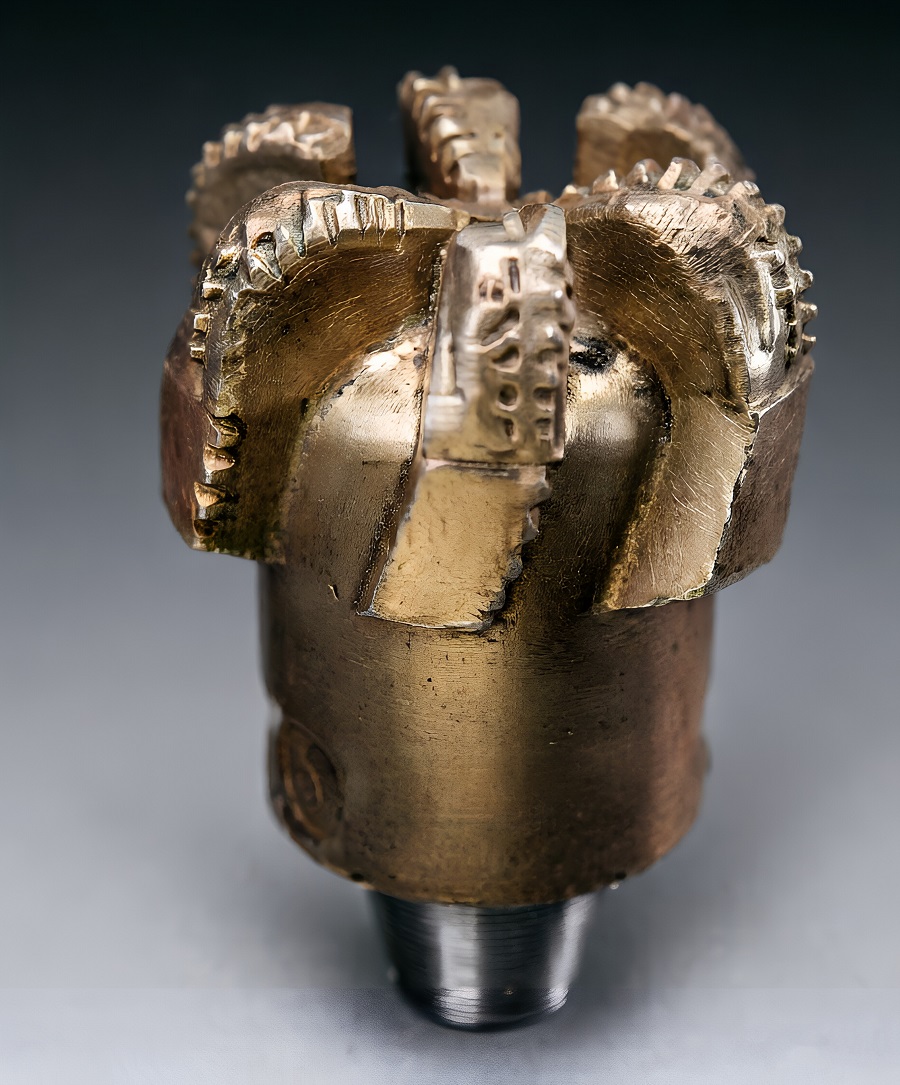
Note: Custom cutter configurations, blade numbers, and profiles are available for non‑standard applications. Nozzle placement and flow area can be engineered to your specific hydraulic horsepower.
Beyond the Price Tag: Why Premium PDC Bits Save You Money
A purely price‑focused procurement strategy for PDC drill bit price often backfires. Here is why:
-
Fewer trips = lower rig time – A premium PDC bit that lasts 3,000 feet in a single run eliminates two or three bit trips. Each trip costs you rig time, casing wear, and crew fatigue.
-
Faster ROP = shorter drilling days – At $50,000 per day rig operating cost, a PDC bit that improves ROP by 30% saves thousands per well.
-
Reduced NPT – Premature bit failure due to thermal wear or impact damage is a primary cause of non‑productive time. Our advanced cutters with superior thermal stability (up to 750°C) resist microcracking even when pushed at higher RPM.
-
Minimal vibration damage to BHA – A well‑designed, force‑balanced PDC bit reduces torsional and lateral vibration, protecting your mud motors, MWD/LWD tools, and other expensive bottom‑hole assembly components.
The formula for true drilling economy is simple:
(Bit Cost + (Rig Cost/Hour × Hours on Bit)) / Feet Drilled = Cost per Foot
When you compare a 5,000PDCbitthatdrills5,000feetin80hours(cost‑per‑foot=5,000PDCbitthatdrills5,000feetin80hours(cost‑per‑foot=2.20) versus a 1,500triconebitthatdrillsthesamesectionin240hourswiththreeruns(cost‑per‑foot=1,500triconebitthatdrillsthesamesectionin240hourswiththreeruns(cost‑per‑foot=4.50), the higher upfront PDC drill bit price delivers a dramatically lower total drilling cost.
Innovative Technology in Our PDC Bits
Our PDC bits incorporate the latest material science and engineering advancements:
-
Non‑planar interface bonding technology – This unique bond interface between the diamond table and carbide substrate eliminates stress concentration, ensuring no microcracking under high loads. The result is an exceptionally durable cutter with excellent self‑sharpening capability.
-
Deep cobalt removal process – By removing cobalt catalyst from the diamond table, our cutters achieve thermal stability up to 750°C. This means you can drill faster with higher RPM without burning out the gauge cutters.
-
Optimal balance of thermal stability, impact toughness, and wear resistance – The best PDC cutter technology balances these three critical properties. Our engineering team fine‑tunes the cutter specification to match your lithology, enabling you to push the speed limits and maximize ROP.
-
Asymmetric blade design – The cutting structure is force balanced, with blades asymmetrically arranged to distribute the load evenly. This results in better stability of the bit, reduced vibration, and improved directional control.
-
Optimized cutter placement for hard rock – Through Kingdream’s extensive application database, we can design cutter layouts that specifically address the challenges of hard, inhomogeneous, and fractured formations encountered in geothermal and deep oil and gas drilling.
-
Customizable hydraulic nozzle placement – The size, number, and placement of nozzles are carefully engineered to optimize fluid flow, maximize bottom‑hole cleaning, and minimize bit body erosion. Proper hydraulics directly increase ROP and extend bit life.
Why Choose SJ Petro as Your PDC Drill Bit Manufacturer?
-
Sinopec‑backed quality with Kingdream expertise – Kingdream (江钻) is a Sinopec group company with over 40 years of dedicated drill‑bit manufacturing history. Founded in 1973, it is a national high‑tech enterprise recognized as a leading oil drill bit manufacturer in China and one of the world’s most advanced in the industry. Through our close collaboration with Kingdream, we bring this legacy of world‑class bit engineering directly to you.
-
API 7‑1 certified, every bit – Full compliance with international standards. Third‑party inspection (ABS, DNV, BV, SGS) is always welcome. Our certification includes API Spec7, Spec7‑1, Spec7K, and Spec5CT monogram.
-
Complete PDC bit range in stock – We stock common sizes from 4 5/8" to 17 1/2" in both steel body and matrix body constructions. Custom configurations and non‑standard sizes are manufactured in 20–30 days.
-
Formation‑specific technical consultation – Our drilling engineers can analyze your offset well data and bit records to recommend the optimal cutter size, blade count, and body material for your specific lithology—before you place an order.
-
Dull bit analysis for continuous improvement – Our accredited laboratory inspects returned bits and provides a written dull grading report (IADC standard) identifying wear mechanisms—abrasion, impact damage, thermal degradation, or balling. This feedback loop helps you refine your selection for the next run.
-
Cost‑per‑foot focused – We do not simply sell bits; we help you reduce total drilling expenses. The same PDC bit that costs 15 times more than a steel‑tooth bit is money‑saving on a cost‑per‑foot basis when it drills faster and stays on bottom longer.
-
Competitive direct manufacturer pricing – No trading company markups. You pay factory‑direct prices for Sinopec‑level quality, typically 15‑20% below Western brands for equivalent API 7‑1 certification.
-
Global shipping and support – We have exported PDC bits to over 30 countries, with our team handling all export documentation, including commercial invoices, packing lists, certificates of origin, and bills of lading.
-
Warranty – 12 months on all PDC bits against material and workmanship defects.
Frequently Asked Questions (FAQ)
Q1: What is the typical PDC drill bit price range for an 8 1/2" oilfield bit?
For a standard 8 1/2" steel‑body PDC bit with 5 or 6 blades and 16 mm cutters, prices typically range from 5,000to5,000to12,000 depending on cutter technology and bearing options. Matrix‑body versions for harder rock applications range from 8,000to8,000to18,000. Larger diameter bits (12 1/4" and above) cost more due to increased material and complex cutter layouts.
Q2: Are your PDC bits available for geothermal drilling?
Absolutely. Our PDC bits are widely used in geothermal wells. Geothermal environments require bits that handle high temperatures (up to 200°C) and hard, fractured rock. We supply PDC bits with metal‑sealed bearings and advanced thermal‑stable cutters specifically engineered for these demanding conditions.
Q3: How do I get a quote for PDC drill bits?
Email us at pdc@sjpetro.com with:
-
Bit diameter (inches or mm)
-
Desired body type (steel or matrix)
-
Formation description and depth interval
-
Expected flow rate (GPM or L/s)
-
Target section length
We will provide a price within 24‑48 hours.
Q4: Why are matrix‑body PDC bits more expensive than steel‑body?
Matrix bodies are cast from a tungsten carbide powder mixture in a high‑temperature sintering process. This production method is more complex and time‑consuming than machining a steel body, and the tungsten carbide material itself is more costly. However, matrix bodies offer far superior erosion and abrasion resistance in hard, high‑velocity drilling environments, often justifying the higher upfront price with longer bit life.
Q5: Should I always choose the lowest PDC drill bit price?
No. The most economically sound approach is to evaluate cost per foot: (Bit Cost + Rig Rate × Drilling Hours) / Footage Drilled. A moderately more expensive bit that lasts longer and drills faster will deliver a lower total cost.
Q6: What is the difference between steel body and matrix body PDC bits?
A steel‑body bit is machined from a single piece of AISI 4145H high‑strength steel and heat‑treated for toughness. Steel bodies are easier and faster to manufacture and repair. A matrix‑body bit is made from a tungsten carbide composite sintered in a high‑temperature furnace. The resulting material is extremely hard and abrasion‑resistant, making matrix bodies the preferred choice for hard, abrasive rock and high‑velocity drilling conditions, but at a higher price and with longer lead times.
Q7: Do your PDC bits work in directional drilling and horizontal wells?
Yes. Our 5‑blade and 6‑blade PDC bits with short parabola profiles are specifically designed for steerability, reducing torque fluctuations and improving toolface control in build sections and laterals. We have successfully supplied PDC bits for directional drilling programs in Kuwait and other key markets.
Q8: Can you customize a PDC bit for a specific rock formation?
Yes, that is one of our core strengths. Through Kingdream, we maintain a vast database of bit performance records across different formations worldwide. We can design a bit with specific cutter sizes, blade counts, and hydraulic configurations to match your exact lithology—whether it is soft clay, hard shale, quartzite, or fractured granite.
Q9: What quality documentation do you provide with each PDC bit?
Each bit is accompanied by: API 7‑1 certificate of conformance, material test certificates (EN 10204 3.1) for the steel body, cutter certification, dimensional inspection report, non‑destructive testing (MPI/UT) report (as applicable), and a commercial invoice for customs clearance.
Q10: How can I reduce my overall cost per foot when buying PDC drill bits?
Optimize your PDC drill bit price selection by running a dull bit analysis after each run, adjusting your bit selection based on the wear pattern, and working closely with our engineering team to fine‑tune cutter layouts, blade counts, and hydraulics. Many customers reduce their cost‑per‑foot by 20‑30% after just 2‑3 runs with our formation‑specific engineering support.