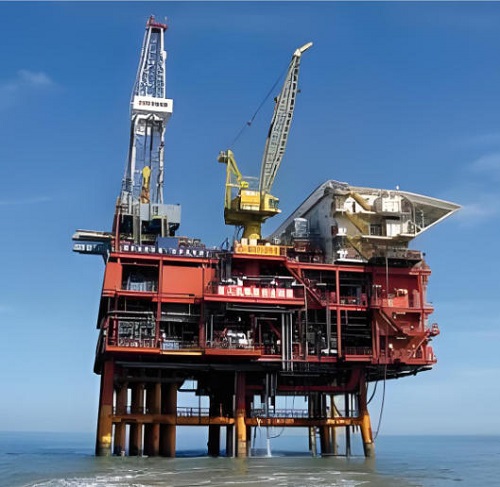
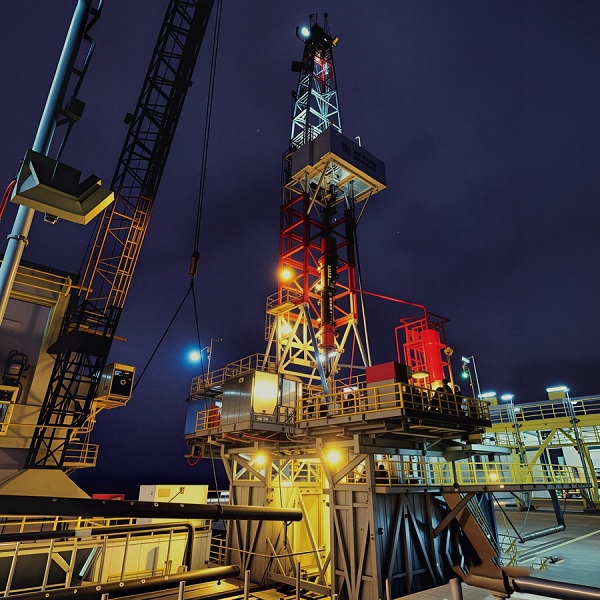
Inter-well moving technology
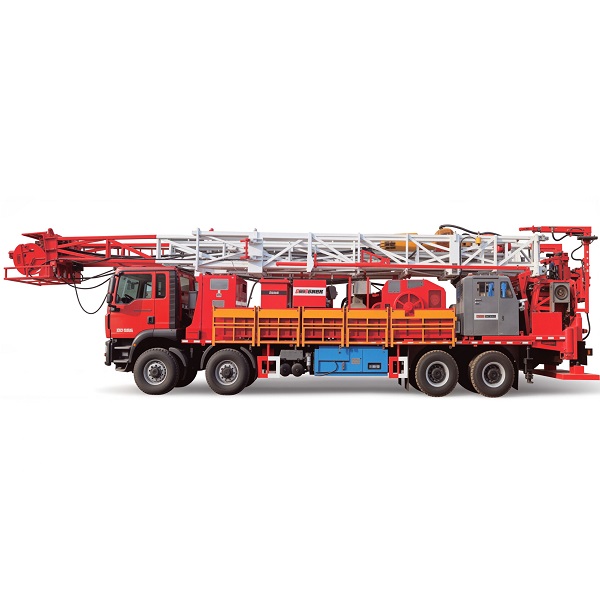
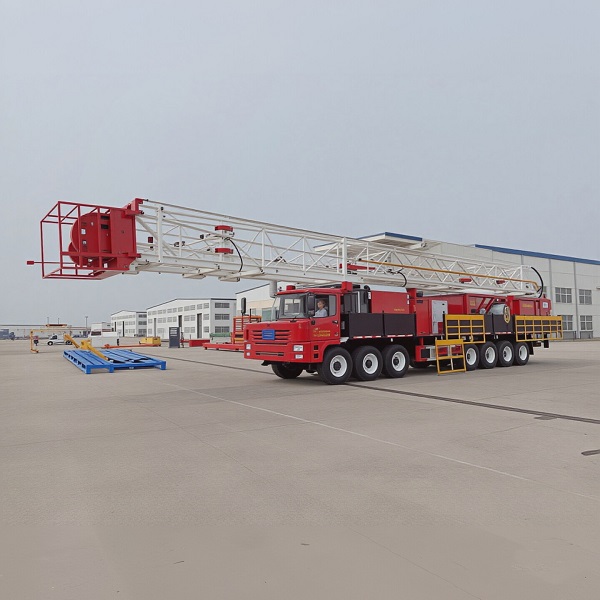
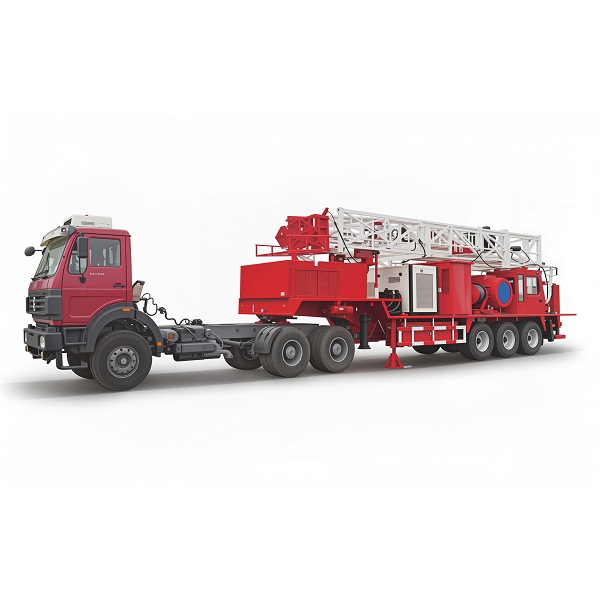
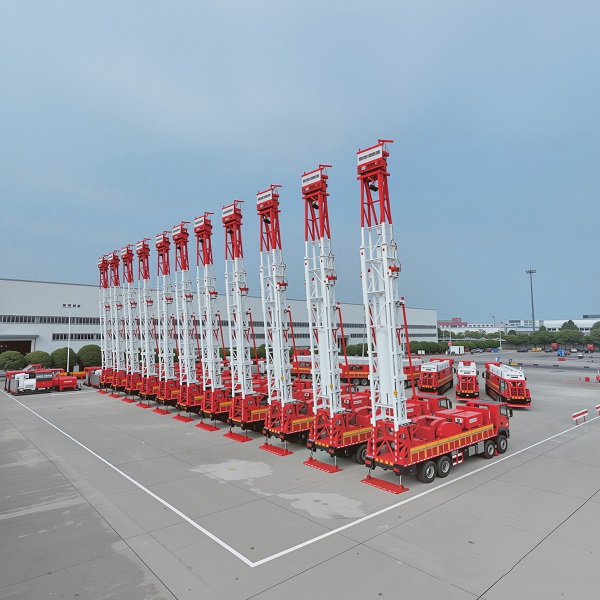
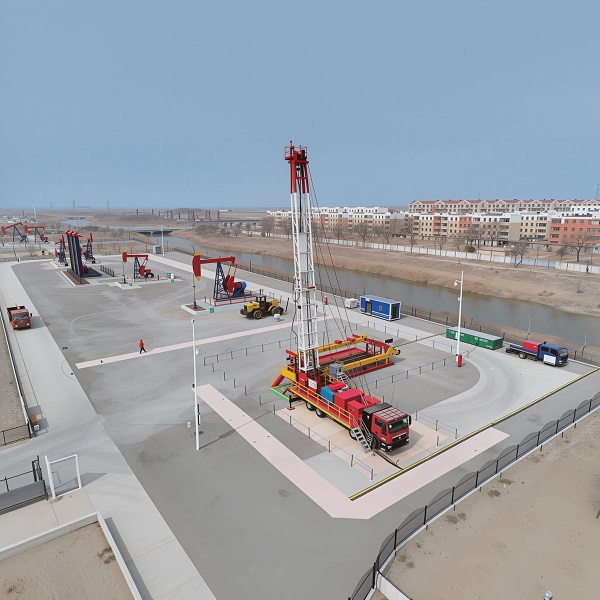
Technical Specifications – Technology Parameters
These parameters define the capability of our inter-well moving technology platform. Actual values vary by system size.
| Technology Parameter | Skidding System | Walking System |
|---|---|---|
| Synchronization accuracy (cylinder position) | ±1 mm | ±1 mm |
| Rig leveling accuracy (inclinometer) | ±0.05° | ±0.05° |
| Load measurement per cylinder (range) | 0 – 500 tons (accuracy ±1%) | 0 – 500 tons (accuracy ±1%) |
| Control loop update rate | 20 Hz | 20 Hz |
| Wireless range (line of sight) | 300 m | 300 m |
| Wireless protocol | Encrypted 2.4 GHz (proprietary) | Encrypted 2.4 GHz |
| Emergency stop response time | < 50 ms | < 50 ms |
| Holding valve leak rate | < 5 drops/min at rated pressure | < 5 drops/min |
| Operating temperature (standard) | -20°C to +50°C | -20°C to +50°C |
| Operating temperature (arctic package) | -40°C to +40°C | -40°C to +40°C |
| PLC type | Siemens S7‑1500 or Rockwell CompactLogix (user choice) | Siemens S7‑1500 or Rockwell CompactLogix |
| Data logging storage | 100 moves (internal) | 100 moves (internal) |
| Power supply (control system) | 24V DC from power pack or rig | 24V DC from power pack or rig |
Technology Applications
| Application | How the Technology Adds Value |
|---|---|
| Shale gas multi‑well pads (10–30 wells) | Automated move sequences reduce operator fatigue; data logs prove move efficiency |
| Offshore platform slot skidding | Remote wireless operation keeps operator away from deck edge; inclinometers detect platform tilt |
| Workover rig relocation | Fast move cycles (2–4 hours) with precision alignment; auto‑stop eliminates guesswork |
| Batch drilling campaigns | Repeatable moves to exact well centers – no manual measuring each time |
| Environmental sensitive areas | No rig‑down means zero spills from disconnected hoses; closed‑loop hydraulics |
| Arctic operations | Low‑temp rated sensors and fluids; heated control console |
Technology Variants (By Control Complexity)
We offer three tiers of inter-well moving technology to match your operational needs and budget:
| Tier | Control Type | Key Features | Best For |
|---|---|---|---|
| Manual | Wired pendant, analog gauges | Basic lift/push/pull, no synchronization – operator visually aligns | Small rigs (<300 tons), low move frequency |
| Automated | PLC with touchscreen, wired or wireless | Synchronized cylinders, load sensing, data logging, auto‑level | Most standard operations (500–1,500 tons) |
| Fully Autonomous | PLC + laser alignment + AI move planning | Pre‑program pad layout, one‑button move to any well, collision detection | Large pads with frequent moves (1,000–2,000+ tons) |
Why Choose SJ Petro’s Inter-Well Moving Technology?
1. 15+ Years of Hydraulic Control Experience
We have been engineering heavy‑load hydraulic synchronization since 2008. Our technology evolved from Sinopec’s internal rig‑moving needs – field proven on thousands of moves.
2. Open Architecture – No Proprietary Lock‑In
We use standard Siemens or Rockwell PLCs. You own the code. You can modify or troubleshoot with any local controls engineer. No expensive "dealer only” service calls.
3. Real‑World Accuracy, Not Lab Claims
Field data from recent projects: ±4 mm average final positioning on skidding systems, ±7 mm on walking systems. Verified by client surveys.
4. Rapid Deployment
We pre‑program the control software for your specific pad layout before shipment. On site, commissioning takes 2–3 days instead of weeks.
5. Global Remote Support
If you have a control issue, our engineers can log into the PLC via VPN (with your permission) and diagnose in real time. Average resolution time: 4 hours.
6. Continuous Improvement
We release software updates every 12 months – new features, bug fixes, improved algorithms. Free for clients with active support contracts.
7. Training Simulator
We provide a laptop‑based simulator that mimics the control console. Your operators can practice moves offline – no risk to the rig.
Frequently Asked Questions (FAQ)
Q1: What makes your inter-well moving technology different from simple hydraulic jacks?
Simple jacks lift and push independently – no synchronization. Our technology uses closed‑loop feedback from position sensors and load cells, controlled by a PLC that adjusts each cylinder 20 times per second. This prevents twisting and binding.
Q2: Can your technology be retrofitted to an existing hydraulic skidding system (another brand)?
Yes. We can replace the control valves, add sensors, and install our PLC console to any existing cylinder‑based system. We need to inspect the hydraulic circuit first.
Q3: How does the wireless control handle interference on a busy rig site?
Our system uses frequency‑hopping spread spectrum and encrypted communication. It automatically avoids 2.4 GHz interference (Wi‑Fi, radios). We also provide a hardwired backup cable – plug it in if wireless fails.
Q4: What happens if the PLC crashes during a move?
The holding valves remain closed – rig does not move. The operator switches to emergency manual mode (hydraulic override valves) to safely complete the move or return to start. The PLC restarts in under 30 seconds.
Q5: Can the technology move the rig with the mast fully loaded (pipe in setback)?
Yes, but we recommend using the heavy‑load algorithm which reduces acceleration and speed. The system automatically detects load via pressure sensors and adjusts parameters. No extra hardware needed.
Q6: How do you handle uneven ground settlement during a walk?
Inclinometers detect tilt. The system automatically adjusts individual walking unit lift heights to keep the substructure level. If tilt exceeds 0.5°, the system stops and alerts the operator.
Q7: Do you provide the hydraulic power pack as part of the technology?
The control technology works with any hydraulic power pack that provides variable flow (proportional or servo valves). We can supply the power pack if needed, but the technology is independent.
Q8: Can the system be operated from a remote operations center (off‑site)?
Yes, with our teleoperation option – you add a fiber optic link and a second console in your office. The operator can see real‑time video (from pad cameras) and move the rig. Used for high‑risk areas.
Q9: What is the learning curve for operators?
Experienced operators learn basic move sequences in 4 hours. Advanced features (auto‑stop, load sharing) take 1 day of simulator training. We provide a quick reference card for daily use.
Q10: How often does the technology need recalibration?
Position sensors and load cells are calibrated at the factory. Field recalibration is recommended every 12 months or after 200 moves. We provide a calibration procedure and software tool.
Q11: Does the technology work in extreme cold (‑40°C)?
Yes, with our arctic package: low‑temperature rated sensors, PLC with internal heater, heated control console, and synthetic hydraulic fluid. Tested to ‑45°C in Inner Mongolia.
Q12: How do I get a technology demonstration?
We offer a live demo at our Jingzhou facility (full‑scale skidding system with 200‑ton test weight) or a remote demo via video call showing the simulator and control console. Contact us to schedule.