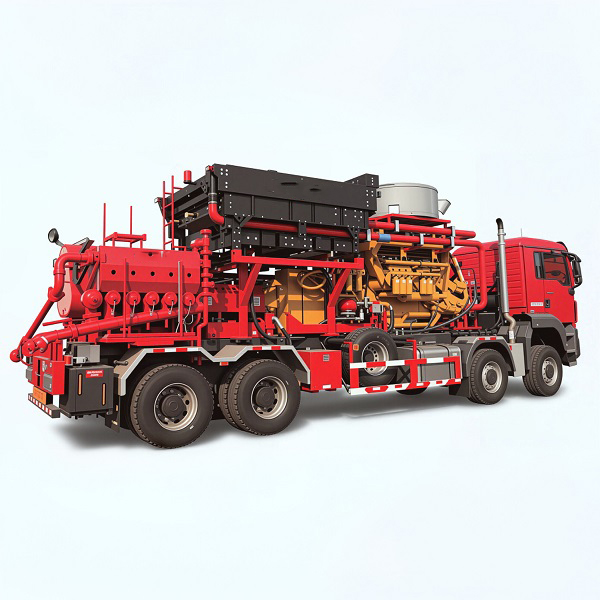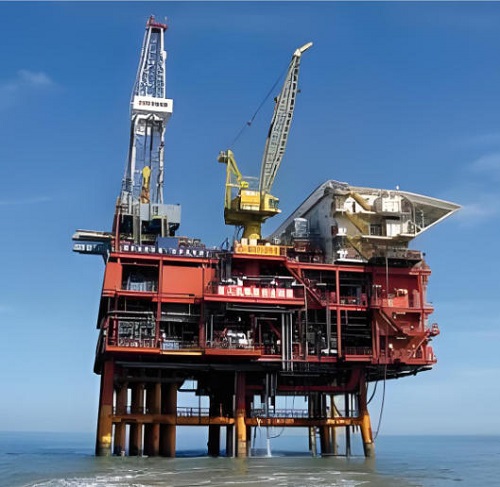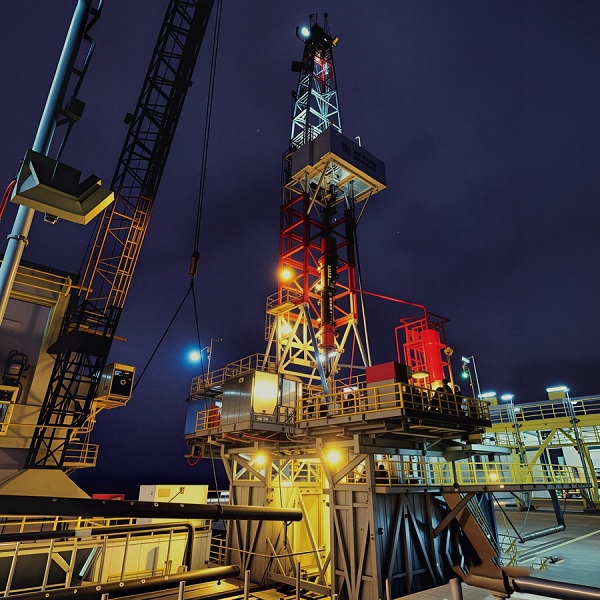
Inter-well Moving Device for Cluster Wells
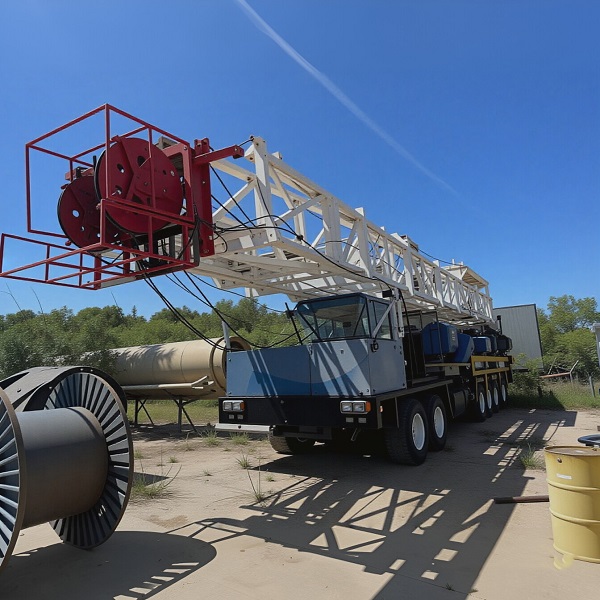
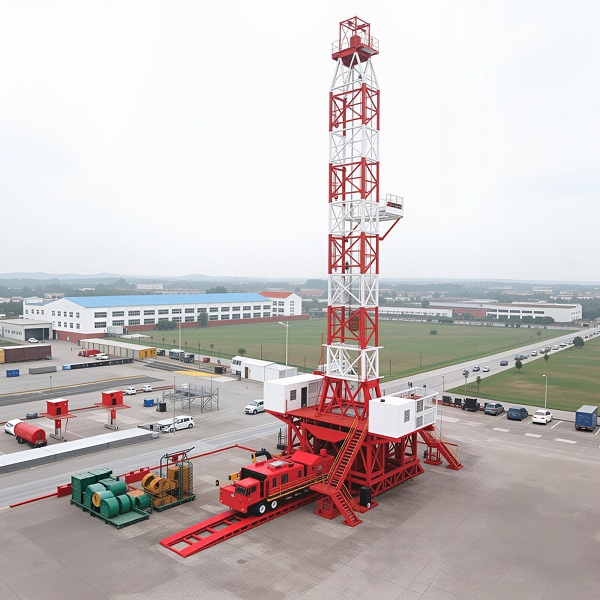
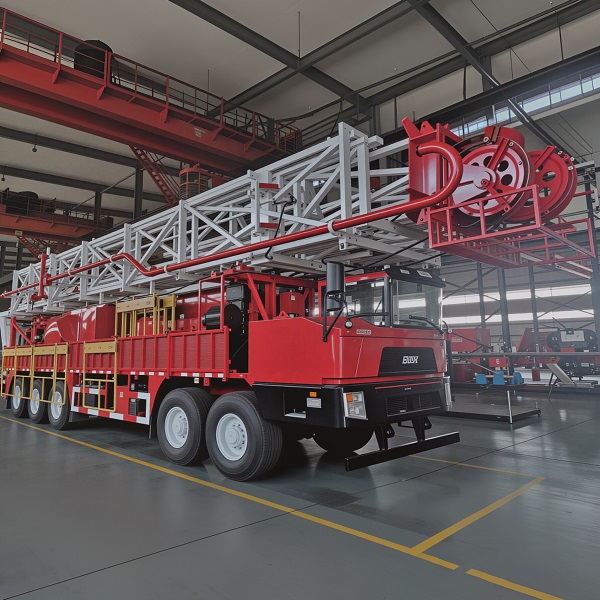
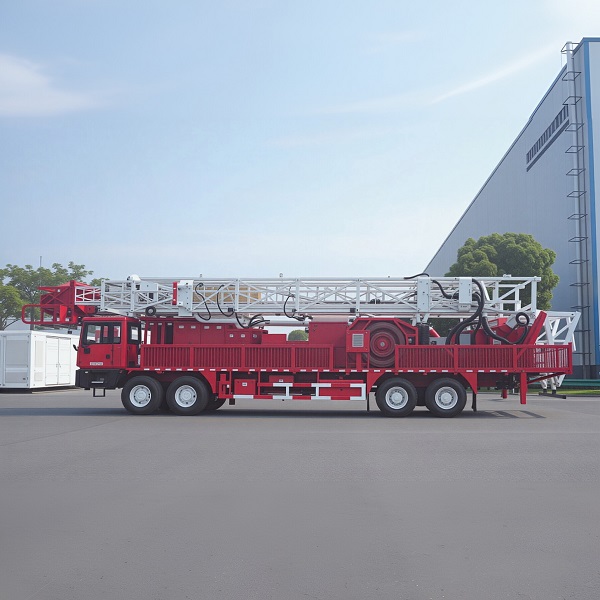
Technical Specifications – Inter-well Moving Devices for Cluster Wells
The table below provides key specifications for SJ Petro inter‑well moving systems. For complete engineering data sheets, contact our technical sales team.
Hydraulic Walking System – Core Specifications
| Parameter | SJ Petro Specification |
|---|---|
| Number of walking units | 4 (standard) – configurable for larger rigs |
| Total lifting capacity (standard) | Up to 1,200 t (2,645,000 lbs) |
| Lifting capacity per unit | Up to 300 t (661,000 lbs) |
| Maximum walking speed | Up to 14 m/h (46 ft/h) |
| Maximum lifting height | 150 mm (5.9 in) |
| Maximum stride length per cycle | 500 mm (19.7 in) |
| Directional capability | 360° rotation; forward, backward, sideways |
| Rotation capability | Continuous 360° around well centre |
| Ground‑bearing pressure (walking) | ≤ 7,500 lbf/ft² (≤ 36,600 kgf/m²) |
| Maximum working pressure | 2,466 PSI (170 bar) |
| Hydraulic flow rate | 63.4 GPM (240 L/min) |
| Power unit | Standalone hydraulic power unit (HPU) or integration with rig HPU |
| Control | Wireless zone‑rated remote console (optional hardwired backup) |
| Total weight (four units) | Approximately 58,000 lbs (26,300 kg) |
| Stand area per unit | Approximately 4.4 m² (47 ft²) |
| Operating temperature | Standard: -20°C to +55°C; Arctic: -45°C available |
| API Compliance | API 4F, 7K, 8C (certification available) |
Skidding / Rail System – Core Specifications
| Parameter | SJ Petro Specification |
|---|---|
| Rail type | Single guide rail, double guide rail, leapfrog type |
| Maximum load capacity | Up to 1,500 t (3,307,000 lbs) |
| Maximum moving speed | Up to 5 m/h (16 ft/h) |
| Maximum stride length per cycle | 1,000 mm (39.4 in) |
| Moving direction | Bidirectional straight‑line (forward / backward) |
| Cylinder arrangement | Double or quadruple hydraulic cylinders |
| Control | Hardwired console (wireless optional) |
| Rail material | High‑strength low‑alloy steel, heat‑treated |
| Ground preparation required | Yes – levelled pad with track supports |
| Best application | Long‑row cluster development, large rigs |
| API Compliance | API 4F, 7K, 8C (certification available) |
Product Types – Inter-well Moving Device Configurations
We offer three main inter‑well moving device configurations, plus custom engineered solutions for specialised applications.
1. Hydraulic Walking System (4‑Unit, Full‑Directional)
Best for modular rigs, artificial islands, multi‑row cluster wells, irregular well spacing, minimal ground preparation.
Consists of four independent walking units attached to the rig substructure, a central hydraulic power unit (HPU), a wireless remote control console, hydraulic hoses with quick‑disconnect couplings, and optional turntable for continuous rotation. Lifting capacity up to 1,200 t (300 t per unit). This system can be retrofitted to existing rigs or integrated into new‑build rigs.
2. Rail Skidding System (Single or Double Guide Rail)
Best for large land rigs, long‑row cluster development (up to 20 wells in a row), heavy‑duty applications requiring high load capacity and simple linear movement.
Configuration includes skidding beams (rails) laid across the pad length, hydraulic cylinders mounted on the rig substructure, a central HPU or rig HPU integration, and either a hardwired or wireless remote control console. System allows one‑person operation for moving the rig along the rail to each subsequent wellhead.
3. Leapfrog / Walking Beam System
Best for cluster wells with extremely tight spacing where conventional walking or skidding units may not fit; ideal for artificial islands and offshore platforms.
Configuration features alternating walking beams that advance by lifting and moving one beam ahead of the rig while the other beam remains in contact with the ground. The rig "leapfrogs” from one position to the next in a walking‑beam motion. This design is compact and imposes very low ground‑bearing pressure.
4. Wheel‑Rail System (Mobile Rig Carrier)
Best for cluster wells where the rig must move between pads as well as between wellheads on the same pad, or for mixed terrain (paved roads to pad tracks).
Configuration mounts the rig on wheeled carriers that run on rails laid across the pad. For moves to a different pad, the wheeled carrier can be towed or driven over roads without special permits. The rail sections are modular and can be repositioned as the drilling campaign progresses. This system offers the fastest well‑to‑well move times.
5. Retrofit Walking System for Existing Rigs
Best for operators who already own a rig and want to add inter‑well moving capability without replacing the rig.
Our retrofit package includes four walking units, HPU, control console and installation supervision. The system is designed to attach to existing substructure without major modifications. The retrofit has been successfully performed on rigs from multiple manufacturers.
6. Arctic‑Rated Inter‑well Moving System
Best for cluster well pads in Siberia, Northern Canada, Alaska and other cold‑climate regions. Features low‑temperature hydraulic fluids, heated HPU enclosure, insulated hydraulic hoses, cold‑rated seals and bearings, and heated operator console.
7. Offshore / Artificial Island Moving System
Best for near‑shore artificial islands, offshore platforms and other space‑constrained locations. Includes bidirectional moving system with compact footprint, marine‑grade corrosion protection (paint, coatings, stainless steel components), and DNV or ABS certification available.
Applications – Where Inter‑well Moving Devices Are Used
-
Artificial island cluster drilling – narrow space demands precise, predictable movement between closely spaced wellheads; deployed in Jidong Oilfield and Bohai Bay
-
Onshore multi‑well pads – shale gas, tight gas and conventional fields with 10–30 wells per pad; walking and skidding systems enable continuous drilling without rig‑down
-
Long‑row cluster development – oilfields where wells are arranged in a single line; rail skidding system moves the rig along the row one well at a time
-
Multi‑row cluster development – wells arranged in a grid pattern (e.g., 5 × 5); hydraulic walking system with 360° rotation moves the rig from any well to any other
-
Offshore platforms – walking systems integrated into platform substructure for well intervention and workover
-
Arctic cluster pads – short drilling windows demand rapid well‑to‑well moves; cold‑climate walking systems operate reliably at -45 °C
-
Desert cluster pads – walking and skidding systems operate on sand with minimal ground preparation; sealed hydraulics resist dust and sand ingress
Why Choose SJ Petro for Your Inter‑well Moving Device?
Because moving the rig is not the end of the job – it is the beginning of the next well. You need a system that works every time, in your specific climate and pad geometry, and with your existing rig if you are retrofitting.
| Your Challenge | SJ Petro’s Answer |
|---|---|
| "I have 20 wells in a single row. How do I move the rig efficiently?” | Rail skidding system – move along the row one well at a time, up to 1,500 t load capacity. |
| "My wells are in a 5 × 5 grid. I need to move in multiple directions.” | Hydraulic walking system – 360° rotation; walk forward, backward, sideways; move from any well to any other. |
| "I already own a rig. Can I add moving capability without replacing it?” | Retrofit walking system – attaches to existing substructure; we provide installation supervision. |
| *"I operate in -45 °C winters. Will the hydraulics freeze?”* | Arctic package – low‑temp fluids, heated HPU, insulated hoses, cold‑rated seals. Proven in Russia. |
| "My pad has limited space. The rig cannot turn around.” | Walking system with turntable – continuous 360° rotation; turn the rig without additional space. |
| "My tender requires API certification.” | Full API 4F, 7K, 8C compliance. API monogram available. Complete documentation package. |
More reasons to trust SJ Petro:
-
Sinopec Group heritage – founded in 1941, over 80 years of oilfield equipment engineering
-
In‑house manufacturing – we design, fabricate and test our own walking systems, HPUs and structural components
-
API 4F, 7K, 8C certified – full international certification, not "designed to” claims
-
Global track record – inter‑well moving systems delivered to China, Middle East, Russia, Southeast Asia and Africa
-
Full documentation – material test reports, structural calculations, load test certificates, as‑built drawings, API data sheets
-
On‑site commissioning & training – included with every system purchase; we train your crew until they are confident
Frequently Asked Questions (FAQ) – Inter‑well Moving Device for Cluster Wells
Q1: What is an inter‑well moving device for cluster wells?
A: An inter‑well moving device is a hydraulic system (walking, skidding or rail‑based) that moves a drilling rig laterally across a cluster well pad without disassembling the rig. The system lifts the rig off the ground, moves it to the next wellhead, and sets it down – all controlled by a single operator. This eliminates the need for cranes, transport trucks and multiple rig‑up / rig‑down cycles.
Q2: What is the difference between a walking system and a skidding system?
A: A walking system uses four independent lift‑and‑walk units that allow the rig to move in any direction – forward, backward, sideways – and rotate 360°. It works on unprepared ground and is ideal for multi‑row cluster wells. A skidding system moves the rig along fixed guide rails or beams in a straight line. It is best for long‑row cluster development where wells are arranged in a single line.
Q3: Can I retrofit your inter‑well moving device to an existing rig?
A: Yes. We offer a retrofit package that includes four walking units, hydraulic power unit, control console and installation supervision. The system attaches to the existing rig substructure without major modifications. We have successfully retrofitted rigs from multiple manufacturers.
Q4: What is the maximum weight capacity of your moving systems?
A: Our standard hydraulic walking system has a total lifting capacity of 1,200 t (2,645,000 lbs), with 300 t per unit. For larger rigs, we can engineer systems with increased capacity. Our rail skidding system can handle up to 1,500 t.
Q5: How fast does the rig move between wells?
A: Walking speed is up to 14 m/h (46 ft/h). For a typical well‑to‑well move of 10–15 m (33–50 ft), the walking sequence takes approximately 1–1.5 hours, including lifting, walking and setting down. Skidding speed is approximately 5 m/h.
Q6: Does the system require a separate hydraulic power unit?
A: The system can be powered by the rig's existing hydraulic power unit (HPU) if it has sufficient capacity. Alternatively, we supply a standalone HPU that attaches to the substructure and moves with the rig. The standalone HPU is available with a local control panel or wireless remote console.
Q7: What ground preparation is required before using a walking system?
A: The hydraulic walking system imposes low ground‑bearing pressure (≤ 7,500 lbf/ft²) and is designed to operate on typical well pad surfaces without extensive preparation. The pad should be reasonably level and free of large debris. For soft or unstable ground, we recommend spreading steel pads under the walking units.
Q8: Can the walking system operate on uneven ground?
A: Yes. Each walking unit can be independently controlled to compensate for ground irregularities. The lift cylinders are designed with ball‑and‑socket connections to limit off‑centre loading on uneven terrain.
Q9: How does the system align the rig with the next wellhead?
A: The remote control console provides real‑time position feedback. The operator walks the rig in short increments, guided by visual markers or laser alignment systems. For high‑precision applications, we can integrate laser or optical guidance.
Q10: Can the walking system rotate the rig on the pad?
A: Yes. Our walking system includes a rotation mechanism (turntable) that allows the rig to rotate continuously around a point. This is particularly useful on artificial islands and other space‑constrained locations where the rig cannot turn using conventional methods.