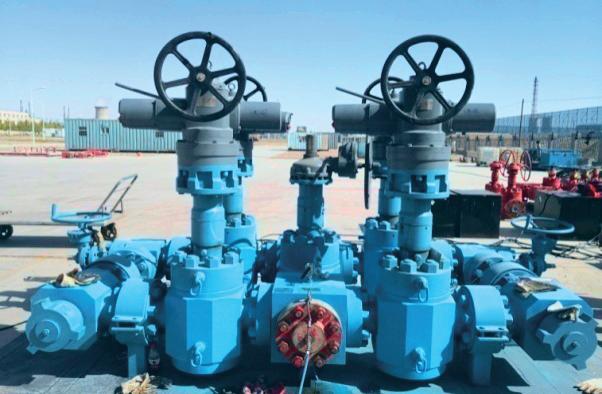
Technical Specifications (SJ‑GVH Series – 15,000 psi / 103 MPa)
Below are specifications for our most popular high‑pressure gate valve. Other sizes and pressure classes available on request.
|
Parameter
|
Specification
|
|
Pressure Rating (API 6A Class)
|
15,000 psi (103.5 MPa) – also available 10k, 20k
|
|
Bore Size (Nominal)
|
2‑1/16″, 2‑9/16″, 3‑1/8″, 4‑1/16″, 5‑1/8″
|
|
Full Bore ID
|
52 mm (2‑1/16″), 65 mm (2‑9/16″), 78 mm (3‑1/8″)
|
|
Body Material
|
Forged AISI 4130 (75K yield) – NACE MR0175 compliant
|
|
Trim Material
|
Gate & seat: 17‑4PH with stellite facing (HRC 40‑45)
|
|
Stem Material
|
17‑4PH (precipitation hardened)
|
|
Packing
|
Live‑loaded Chevron V‑ring (PTFE + carbon fiber)
|
|
Seat Type
|
Metal‑to‑metal (primary) + HNBR (secondary)
|
|
Temperature Range (Elastomer dependent)
|
–29°C to +121°C (standard) / –46°C to +180°C (optional)
|
|
Fire Safety
|
API 6FA certified
|
|
Fugitive Emissions
|
ISO 15848‑1 (Class B)
|
|
End Connections
|
API 6A flanges (studded), optional threaded or weld
|
|
Operation
|
Handwheel (std), bevel gear, or actuator
|
|
Operating Torque (2‑9/16″ at 15k psi)
|
< 150 Nm (handwheel)
|
|
Hydrostatic Test Pressure (Body)
|
1.5× rated – 155 MPa (22,500 psi)
|
|
Hydrostatic Test Pressure (Seat)
|
1.1× rated – 114 MPa (16,500 psi)
|
|
API PSL
|
PSL 3 as standard (PSL 2 or 3G optional)
|
|
API PR
|
PR 1 (standard) or PR 2 (dynamic test)
|
Application Fields
High‑pressure gate valves are used wherever fluid needs to be reliably shut off under extreme conditions.
-
Wellhead Christmas Trees
The master valve, wing valve, and swab valve on a surface wellhead. Our valves are used on over 2,000 wellheads in China, Kazakhstan, and Oman. The live‑loaded packing eliminates frequent retightening – a maintenance headache in remote fields.
-
Frac Manifolds & Zipper Frac Systems
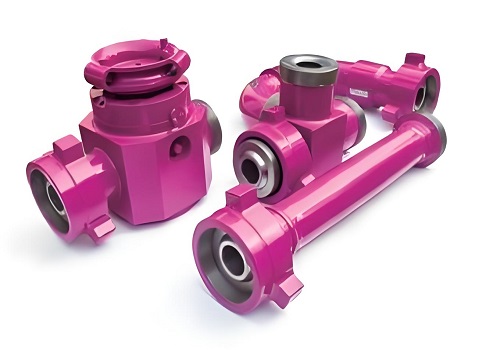
During hydraulic fracturing, valves are opened and closed under high pressure, often with abrasive proppant in the fluid. Our metal‑to‑metal seat resists erosion. In the Permian Basin, operators have run our valves for 200+ frac stages without seat replacement.
-
[Image Placeholder: Gate valves installed on a frac manifold with hammer‑union connections]
High‑Pressure Injection Manifolds
Water injection, gas injection, or chemical injection lines – valves must seal bubble‑tight to prevent cross‑flow. Our bi‑directional sealing ensures zero leakage even when injection pressure varies.
-
Subsea Equipment (Surface Trees Only – Not Subsea)
For surface flowlines and platform manifolds, our valves provide reliable isolation. Note: For subsea applications (below 50 m), we refer you to our subsea valve division – different material and actuator requirements.
-
Pipeline Block Valves
On high‑pressure gas or liquid pipelines requiring periodic isolation for maintenance. Our full‑bore design allows pigging without removal.
-
High‑Pressure Testing Manifolds
For pressure testing of BOPs, wellheads, or pipelines, our valves provide leak‑free isolation. The low‑torque operation is appreciated when making multiple open/close cycles per test.
Why Choose SJ Petroleum Machinery for High‑Pressure Gate Valves?
1. Forged, Not Cast – Strength You Can Trust
Some competitors use cast bodies to save cost. We do not. Every valve body is forged and heat‑treated in our own shop. We can trace each forging batch to its heat certificate. For high‑pressure gas service, that traceability is non‑negotiable.
2. Field‑Proven Packing Life
Stem leakage is the #1 failure mode for gate valves in service. Our live‑loaded packing system has been tested in the lab to 50,000 cycles and in the field to 8+ years without adjustment. We have side‑by‑side data comparing our packing life to conventional designs – ask for the report.
3. Full API 6A Compliance, Third‑Party Witnessed
We hold API 6A and API Q1 licenses. Our pressure test records are audited quarterly. If you require DNV, BV, or ABS witness during FAT, we can arrange it at no extra charge (subject to their availability).
4. Local Stock in Major Oil Regions
We keep inventory of common sizes (2‑9/16″ and 3‑1/8″, 15k psi) in Houston, Dubai, and Jingzhou. For urgent field replacements, we can ship within 24 hours. Custom valves take 8–12 weeks.
5. Customizable Trim & Materials
Need 13Cr for mild CO₂? 22Cr duplex for seawater? Inconel 625 for 20% H₂S? We have qualified welding and heat treatment procedures for all major corrosion‑resistant alloys. Tell us your fluid composition, and we will recommend the right trim.
6. Actuator Ready
Our valves are designed with actuator mounting in mind (ISO 5211 pad). Whether you need pneumatic, hydraulic, or electric actuation – we supply complete actuated valve packages, assembled and tested as a unit.
Frequently Asked Questions (FAQ)
Q1: What is the difference between your gate valve and a slab gate valve?
A slab gate has a solid plate that moves across the bore, with seats that spring‑load against the plate. Our design is a parallel‑expanding gate – two pieces that expand against the seats when closed, providing a mechanical wedge effect. This gives higher sealing reliability at low differential pressures (e.g., when upstream and downstream pressures are nearly equal). For most high‑pressure production and frac applications, we recommend the expanding gate.
Q2: Can your valves handle sand or proppant without damage?
Yes – the metal‑to‑metal seat (stellite facing) is highly erosion resistant. For severe sand production or slickwater frac with high proppant loading, we recommend our optional tungsten carbide seat insert. We have valves that have survived 300 frac stages with 2 lb/gal proppant – seat wear was less than 0.5 mm.
Q3: What is the maximum temperature for your standard valve?
With standard HNBR backup seals: –29°C to +121°C. For high‑temperature service (up to 180°C), we use AFLAS or perfluoroelastomer (Kalrez). For extreme high temperature (250°C+), we offer a fully metal‑sealed version with no elastomers – API 6A Class T. Lead time is longer for these.
Q4: How do I repack the stem packing?
You do not need to remove the valve from the line. Loosen the packing flange, remove the old V‑rings with a packing puller, insert new rings, and retighten the flange to the specified torque (we provide a card with the valve). The whole process takes 30 minutes for a trained technician. For high‑cycle applications, we recommend a packing inspection every 2 years.
Q5: Do you provide fire‑safe certification?
Yes. Our valves are API 6FA fire‑tested (the test simulates a 30‑minute 1,000°C fire). We provide the certificate with each valve. For projects requiring ABS, DNV, or Lloyds fire test witness – we can arrange as a custom order.
Q6: What is the typical lead time for a standard valve?
Off‑the‑shelf sizes (2‑1/16″ to 4‑1/16″, 15k psi, 4130 body): 2–4 weeks from receipt of order. Custom materials (22Cr, Inconel) or higher pressure classes (20k psi): 8–12 weeks. Actuators add 2–4 weeks.
Q7: Can you provide torque and pressure drop curves?
Yes. For each valve size and pressure class, we have engineering data sheets with operating torque at differential pressure and Cv (flow coefficient). These are available for download or we can email them.
Q8: Do your valves meet NACE for sour gas?
All our standard 4130 valves are supplied with NACE MR0175 heat treatment and hardness control (< 22 HRC for pressure bodies). For high H₂S partial pressures (> 100 mbar), we recommend upgrading to 22Cr duplex or Inconel trim. Tell us your H₂S and CO₂ concentrations, and we will provide a material recommendation.
Q9: What is your warranty?
24 months from date of shipment against defects in material and workmanship. The live‑loaded packing is warranted for 12 months or 10,000 cycles, whichever comes first. Extended warranty available for an additional fee.
Q10: Do you offer a buy‑back or exchange program for old valves?
For large volume users (50+ valves per year), we have an exchange program: you send us your failed valves (any brand), we inspect and rebuild them, and you get a credit toward new SJ valves. Ask our sales team for details.
Tag: Vertical lifting system | Pneumatic Slip | Stepping system