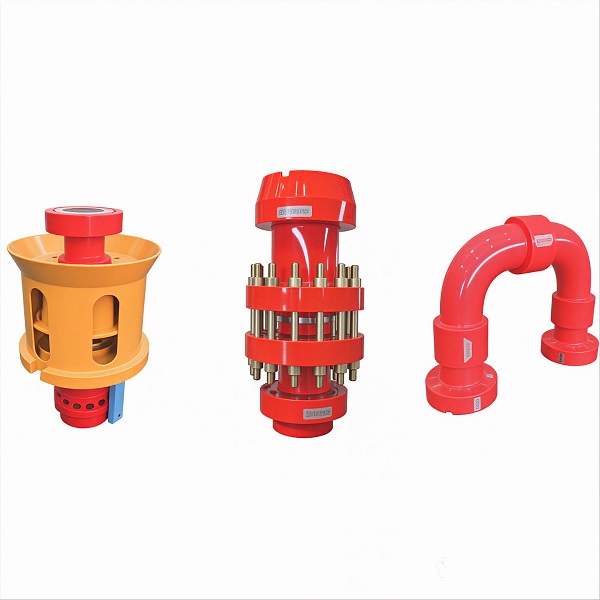
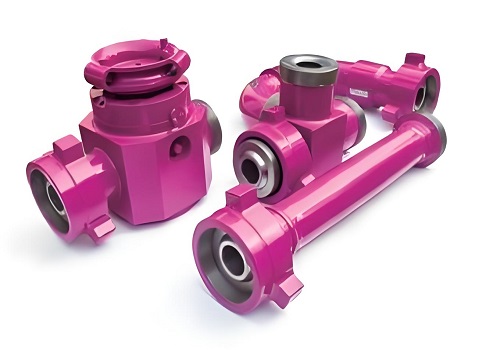
-
Fully Forged Body (No Castings):Body, bonnet, and flanges are forged from AISI 4130, 17‑4PH, or corrosion‑resistant alloys. Each forging is heat‑treated and hardness‑tested. No porosity, no shrinkage voids – critical for high‑pressure gas or hydrogen service.
-
Metal‑to‑Metal Seat with Optional Elastomer Seal:Standard configuration: hardened stellite seat (HRC 40–45) against a stellite‑faced disc. This handles sand, debris, and high temperatures. For applications requiring bubble‑tight shutoff (e.g., gas lines), we add an elastomer seal (NBR, HNBR, or AFLAS) behind the metal seat – zero leakage at low differential pressure.
Products
High-pressure fluid control check valve
Product Types
We manufacture three main categories of high‑pressure check valves, each optimized for a specific flow regime.
| Product Type | Design | Best For | Flow Direction |
|---|---|---|---|
| SJ‑CKL (Lift Check) | Guided piston / disc with spring | Horizontal or vertical upward flow, clean to mildly dirty service, high cycle frequency | Horizontal or vertical (up) |
| SJ‑CKS (Swing Check) | Hinged disc (non‑slamming version) | Large bore (4‑1/16″+), low frequency cycling, gas or liquid | Horizontal only |
| SJ‑CKM (Nozzle / Silent Check) | Axial flow with multiple orifices | High‑pressure gas, pulsating flow (reciprocating pumps), noise‑sensitive areas | Horizontal or vertical |
Each type is available in pressure classes from 2,000 psi to 20,000 psi, bore sizes from 1‑13/16″ to 7‑1/16″ (larger on request), and materials from carbon steel to 22Cr duplex to Inconel.
For fracturing service, we recommend the SJ‑CKM nozzle check – it handles sand‑laden fluid and eliminates the water hammer that destroys standard checks in frac operations.
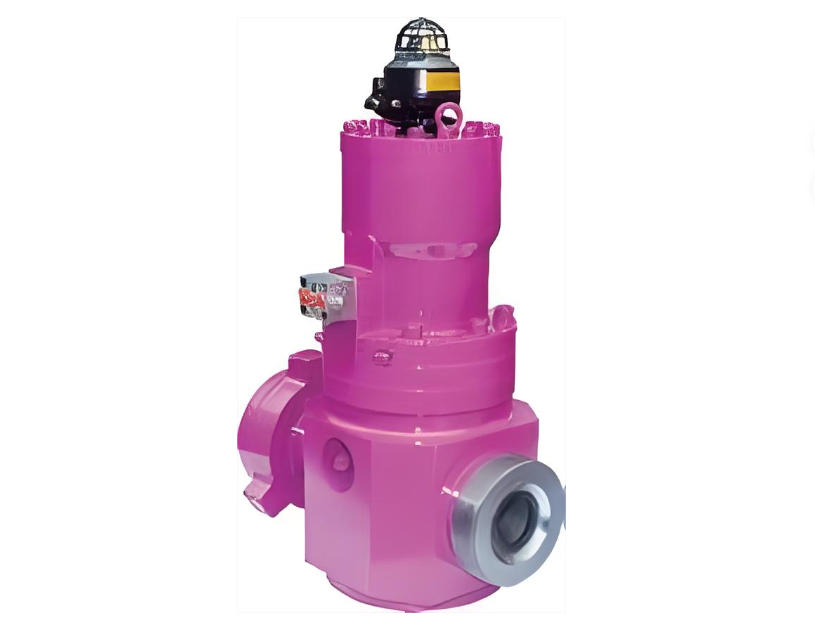
Technical Specifications (SJ‑CKL Lift Check – 15,000 psi, 2‑9/16″ Bore)
Below are specifications for our most common high‑pressure lift check valve. Other sizes and pressure classes available.
| Parameter | Specification |
|---|---|
| Pressure Rating (API 6A Class) | 15,000 psi (103.5 MPa) – also 5k, 10k, 20k |
| Bore Size (Nominal) | 2‑1/16″, 2‑9/16″, 3‑1/8″, 4‑1/16″ |
| Full Bore ID | 52 mm (2‑1/16″), 65 mm (2‑9/16″), 78 mm (3‑1/8″) |
| Body Material | Forged AISI 4130 (75K) – NACE MR0175 |
| Disc / Seat Material | 17‑4PH with stellite facing (HRC 40–45) |
| Spring Material | Inconel 718 (standard) |
| Seal Type | Metal‑to‑metal (std) or metal + elastomer backup |
| Cracking Pressure | 0.1 bar (1.5 psi) – custom up to 2 bar |
| Pressure Drop at Rated Flow (Cv) | < 0.5 bar for water – Cv = 45 (2‑9/16″) |
| Closing Time | 0.2 – 0.4 seconds (non‑slamming) |
| Temperature Range | –29°C to +121°C (elastomer dependent) / metal seal to 250°C |
| End Connections | API 6A flanges (std) or threaded / weld / hammer‑union |
| Orientation | Horizontal or vertical upward (spring keeps disc closed when flow stops) |
| Maintenance | Seat & disc replaceable via bonnet removal (top entry on large sizes) |
| Hydrostatic Test (Body) | 1.5× rated – 22,500 psi (155 MPa) |
| Hydrostatic Test (Seat) | 1.1× rated – 16,500 psi (114 MPa) (low pressure bubble test for elastomer seal) |
| API PSL | PSL 3 (standard) – PSL 3G for sour |
| API PR | PR 1 (standard) – PR 2 available |
| Fugitive Emissions | ISO 15848‑1 (when specified with bonnet packing) |
Application Fields
High‑pressure check valves are used wherever reverse flow must be prevented in upstream oil and gas systems.
-
Wellhead Christmas Trees (Flow Line Wing)
Installed downstream of the wing valve to prevent backflow from the flowline into the well when downstream pressure exceeds well pressure. Our compact lift check fits between wing valve and choke. -
High‑Pressure Frac Manifolds
During zipper fracturing, multiple wells are fracced sequentially. Check valves on each frac line prevent backflow from a well being fracced into idle wells. Our nozzle check (SJ‑CKM) handles abrasive proppant and eliminates slamming that can crack manifold welds. -
Gas Injection Compressor Discharge
Reciprocating compressors produce pulsating flow. Standard check valves hammer open and closed with each pulse, failing quickly. Our silent check (CKM) with spring‑assisted closing cushions each pulse – proven service life 5+ years in gas injection service. -
Hydraulic Power Units (HPU) for BOP Control
High‑pressure hydraulic lines (3,000–5,000 psi) need check valves to prevent fluid backflow when pumps are switched. Our compact threaded‑end check valves are common in subsea and surface BOP control panels. -
Chemical Injection Quills
Preventing wellbore fluid from backflowing into chemical injection lines (methanol, scale inhibitor, corrosion inhibitor). Our small‑bore check valves (1″ NPT, 10,000 psi) are used on thousands of injection points. -
Pig Launcher / Receiver Bypass Lines
Check valves on bypass lines ensure pigging flow goes the correct direction – essential for pipeline safety.
Why Choose SJ Petroleum Machinery for High‑Pressure Check Valves?
1. Designed for Pulsating & Sand‑Laden Service
Standard industrial check valves fail quickly in oilfield service – they rely on gravity or a light spring that cannot handle pulsation or debris. Our disc guide, heavy‑duty spring (Inconel), and stellite seating are field‑proven in the hardest applications, including 500+ frac stages per valve.
2. Non‑Slamming = No Water Hammer
Water hammer can generate pressure spikes 5× the working pressure, bursting pipes and damaging meters. Our lift and nozzle checks close progressively, not abruptly. In field tests, our valves produced 90% lower pressure spikes than equivalent swing checks.
3. True API 6A Compliance, Not "Design Based On”
We hold API 6A and API Q1 licenses. Every check valve is manufactured under an API‑approved quality management system. Third‑party witness (DNV, BV, ABS) is available at no extra cost.
4. Material Traceability to Heat Number
Each forging is stamped with a heat number traceable to the mill certificate. We maintain records for 15 years. For NACE applications, we provide hardness test reports for every pressure‑containing part.
5. Fast Spares & Exchange Program
We stock seat kits, disc assemblies, and springs for all common sizes in Houston, Dubai, and Jingzhou. For large users, we offer an exchange program: you send us worn valves, we rebuild them to new condition with new seats and springs at 40% of new valve cost.
6. Custom Cracking Pressure
Standard cracking pressure is 0.1 bar (1.5 psi). For applications needing higher cracking pressure (e.g., to prevent chatter in pulsating flow), we can adjust the spring to 0.5, 1.0, or 2.0 bar – no engineering fee for standard increments.
Frequently Asked Questions (FAQ)
Q1: What is the difference between a lift check and a swing check?
A swing check has a hinged disc that swings open and closed. It has lower pressure drop but tends to slam shut when flow reverses suddenly – causing water hammer. A lift check has a disc that moves axially along a guide; it closes more gently and is better for high‑pressure or pulsating service. For most oilfield high‑pressure applications, we recommend a lift check or nozzle check.
Q2: Can your check valve handle sand and proppant from fracturing?
Yes, but the seat must be metal‑to‑metal (stellite). Soft‑seated (elastomer) valves will be cut by sand in a few cycles. Our SJ‑CKM nozzle check with stellite seat is used in frac manifolds where proppant concentration reaches 4 lb/gal. After 200 stages, seat wear is less than 0.010″ – still sealing.
Q3: How do I know if my check valve is leaking?
Small reverse flow leaks are hard to detect. We recommend installing a pressure gauge downstream of the check valve. Close the upstream block valve, vent downstream pressure to zero, then monitor pressure buildup. If pressure rises, the check valve is leaking. For critical lines, we offer a check valve with an integral bypass and test port – ask about our SJ‑CKT series.
Q4: What is the typical service life of your check valve?
In clean gas or liquid service (no sand, no pulsation), 10–15 years with no maintenance. In severe frac service (sand, 500 cycles per stage), seat and disc typically need replacement after 800–1,000 stages. Springs are good for 50,000 cycles – replace them at the same time as the seat.
Q5: Do your check valves require regular maintenance?
No moving parts require lubrication. We recommend a visual inspection and seat leak test every 2 years for production service, or every 100 cycles for frac service. The seat and disc are field‑replaceable on top‑entry models. On end‑entry models, you must remove the valve from the line – but that is rarely needed.
Q6: Can I install your check valve in a vertical downward flow line?
No – lift check valves require horizontal or vertical upward flow. In vertical downward flow, gravity keeps the disc open, and it may not close when flow stops. For vertical downward, use a swing check with a hinge pin on the top (to allow gravity closure) – but even that is not foolproof. We recommend rerouting the line to horizontal if possible.
Q7: What is your maximum pressure rating?
20,000 psi (140 MPa) for 2‑1/16″ through 4‑1/16″ bore. For 5‑1/8″ bore, maximum is 15,000 psi due to flange limitations. For pressures above 20,000 psi (e.g., ultra‑deep HPHT wells), please contact our engineering team for custom solutions.
Q8: Do you offer check valves with position indication (open/closed)?
Yes. For critical applications, we can add a proximity switch or limit switch to the disc position indicator. You will know remotely whether the check valve is open or closed. This is common on gas injection lines where reverse flow must be detected immediately.
Q9: What is the typical lead time for a check valve?
Stock sizes (2‑1/16″ and 2‑9/16″, 10k/15k psi, 4130 body) – 2–3 weeks. Corrosion‑resistant alloys (22Cr, Inconel) – 8–10 weeks. Large sizes (4‑1/16″+) – 6–8 weeks. Actuated or instrumented valves – add 4 weeks.
Q10: Do you provide material certifications and pressure test reports?
Yes – always. You receive a data book containing: material test reports (MTR) for all pressure parts, heat treat logs, hardness test reports, hydrostatic test charts (body and seat), NDE reports (MT, UT), and the API monogram certificate. For sour service, we include NACE compliance certificates.
Tag: Automated rig manufacturers | Automated rig price | Drill floor manipulator specifications | Drill floor manipulator manufacturers | Elevator price | Wheel-rail rig movement
Send Inquiry