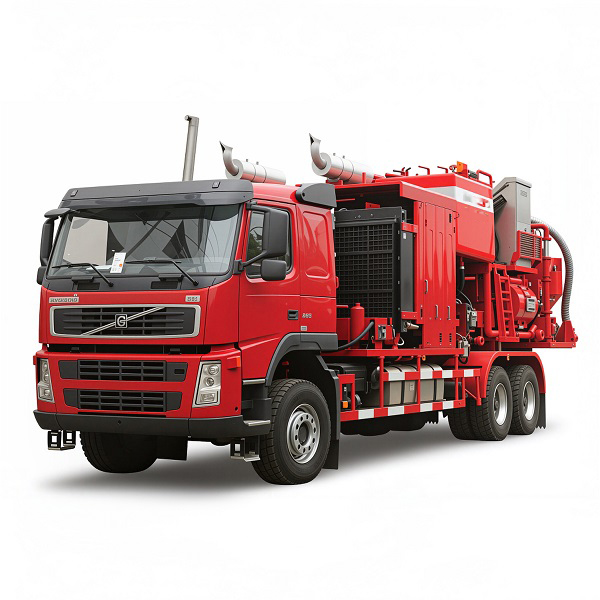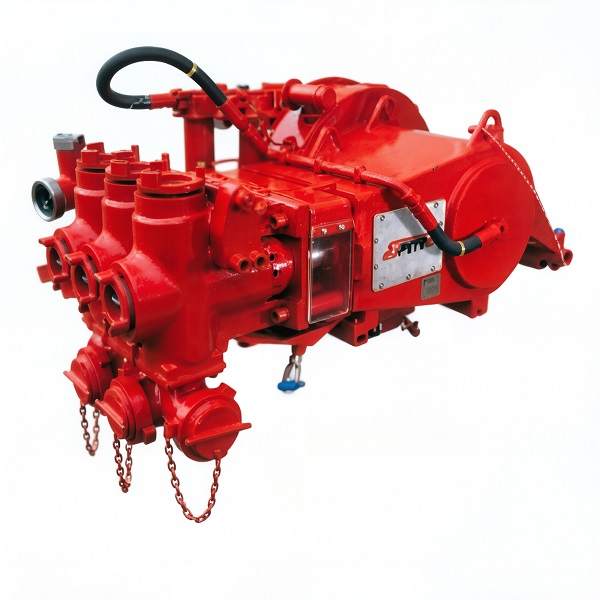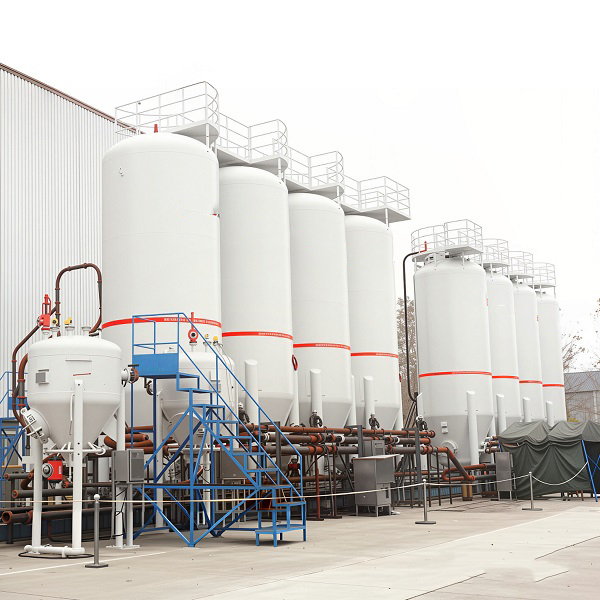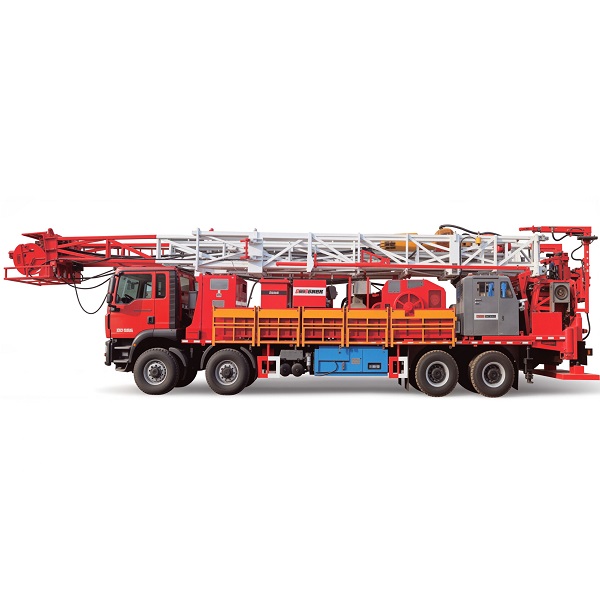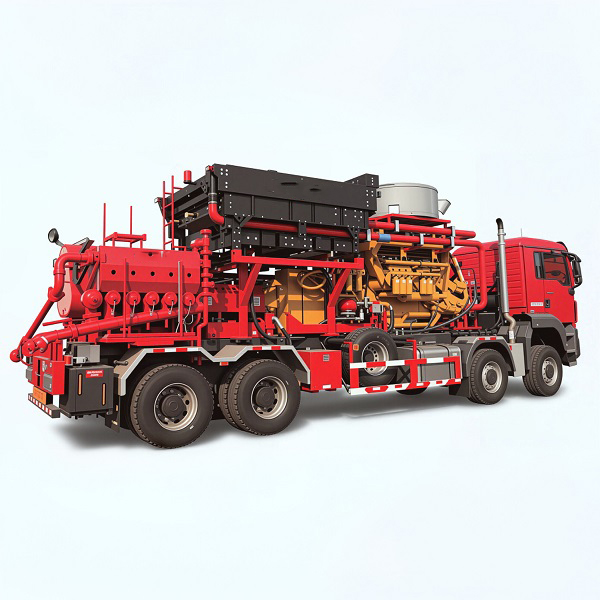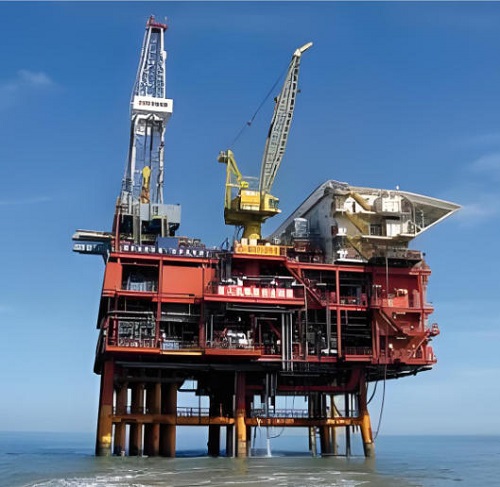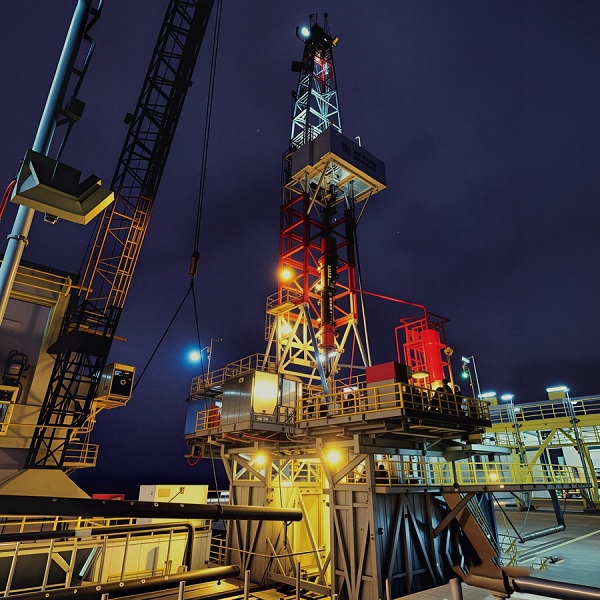
Heavy workover equipment
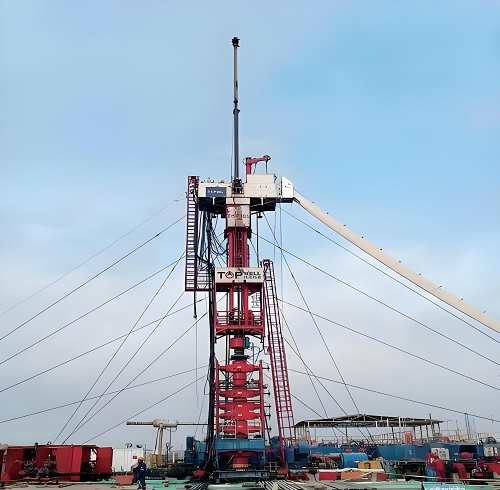
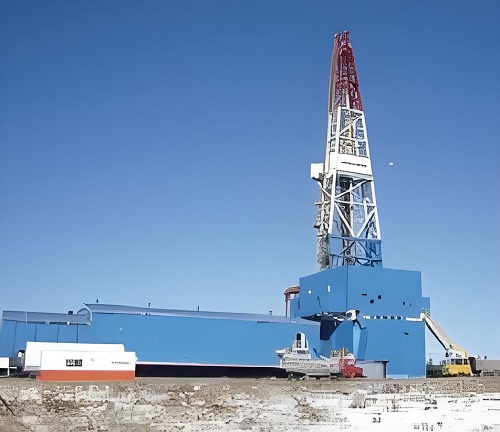
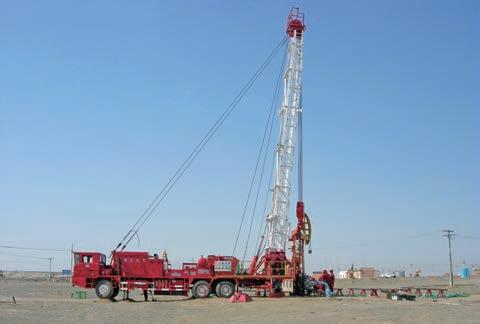
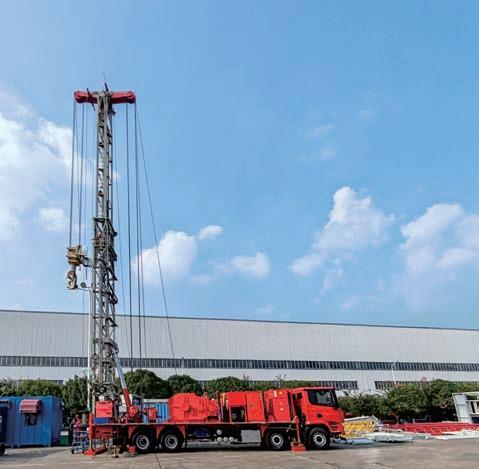
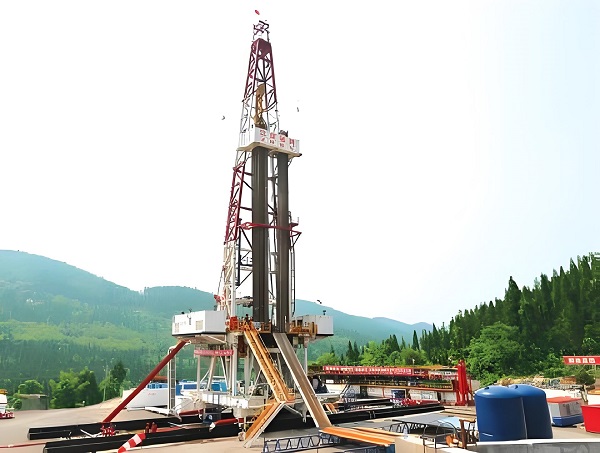
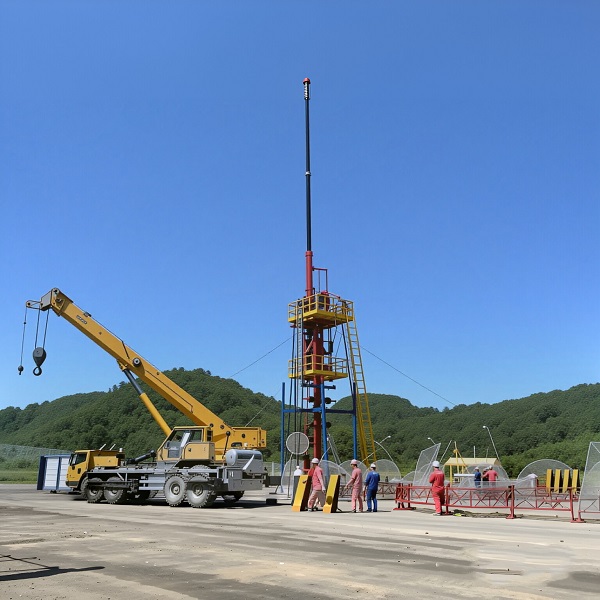
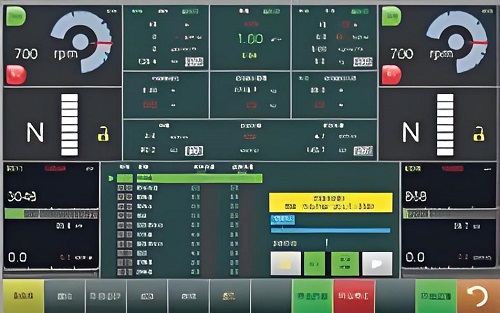
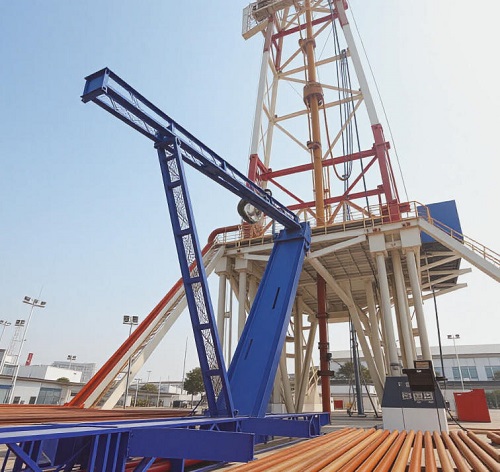
Technical Specifications – Heavy Workover Models (XJ550 through XJ1200)
All data below is compiled from SJ Petro product documentation and industry sources. Specifications reflect standard configurations; custom variants available.
| Parameter | XJ550 | XJ650 | XJ750 | XJ1000 | XJ1200 |
|---|---|---|---|---|---|
| Max static load (kN / tons) | 1,350 kN (135 t) | 1,580 kN (158 t) | — | 1,800 kN (180 t) | 2,250 kN (225 t) |
| Rated hook load (kN) | 1,000 kN | 1,200 kN | — | 1,500 kN | 1,800 kN |
| Drawworks power (HP) | 550 HP | 650 HP | 750 HP | 1,000 HP | 1,000 HP |
| Workover depth (2‑7/8” DP) | 5,800 m | 7,000 m | 8,000 m | 8,000 m | 9,000 m |
| Workover depth (3‑1/2” DP) | 4,500 m | 5,500 m | — | 6,500 m | 7,500 m |
| Workover depth (4‑1/2” DP) | 3,600 m | 4,200 m | — | 5,000 m | 6,000 m |
| Drilling depth (mobile) | 2,000 m | 2,000 m | 3,000 m | 4,000–5,000 m | 5,000–6,000 m |
| Engine | Cat C13 | Cat C18 | Dual Cat C15 | Cat C18/C27 | Cat C27/C32 |
| Transmission | Allison 4500/4700 | Allison | Dual Allison M5610HR | Allison heavy‑duty | Allison heavy‑duty |
| Traveling system | 4×5 (Φ26mm) | 4×5 (Φ29mm) | 6×5 (Φ29mm) | 5×6 (Φ29mm) | 5×6 (Φ32mm) |
| Mast height | 34 m | 35 m | — | 38 m | 39.3 m |
| Floor height | 4.5 m | 4.5 m | — | 6 m | 6.7 m |
| Dimensions (L×W×H) | 18.5 × 3.1 × 4.2 m | 19.9 × 3.1 × 4.37 m | 22.2 × 3.1 × 4.45 m | — | — |
| Gross vehicle weight | ~55,000 kg | ~55,000 kg | ~76,000 kg | — | — |
| Max travel speed | 45 km/h | 45 km/h | 45 km/h | 45 km/h | 45 km/h |
| Carrier drive | 10×8 | 12×8 | 14×8 | 14×8 | 14×10 |
| API compliance | Q1, 4F, 7K, 8C | Q1, 4F, 7K, 8C | Q1, 4F, 7K, 8C | Q1, 4F, 7K, 8C | Q1, 4F, 7K, 8C |
| Temp range (standard) | –30 °C to +55 °C | –30 °C to +55 °C | –30 °C to +55 °C | –30 °C to +55 °C | –30 °C to +55 °C |
| Cold‑weather optional | –45 °C operation | –45 °C operation | –45 °C operation | –45 °C operation | –45 °C operation |
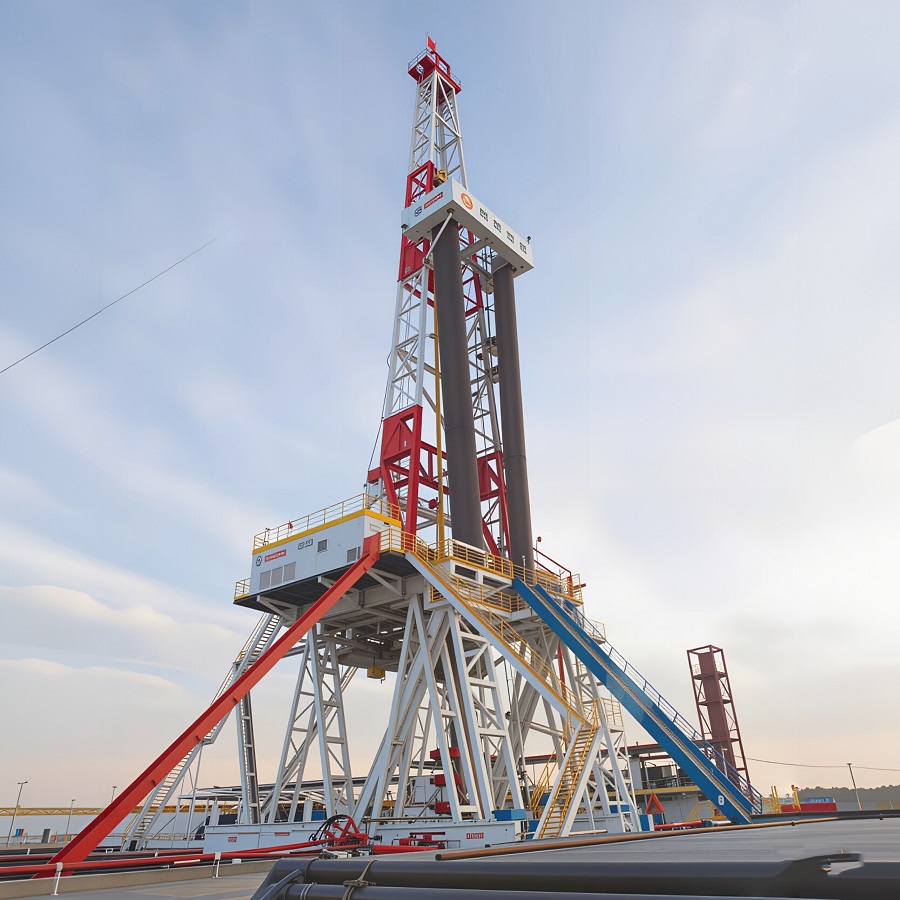
Product Types – Heavy Workover Equipment Lineup
| Product Series | Type | Max Hook Load | Workover Depth | Best For |
|---|---|---|---|---|
| XJ550 (SXJ550) | Self‑propelled workover / drilling | 135 t / 1,350 kN | 5,800 m (2‑7/8” DP) | Mid‑heavy workover; fishing and recompletion jobs |
| XJ650 (SXJ650) | Self‑propelled workover / drilling | 158 t / 1,580 kN | 7,000 m (2‑7/8” DP) | Heavy workover; drilling infill wells to 2,000 m; proven in South America, Western Africa, Middle East |
| XJ750 (SXJ750) | Self‑propelled workover / drilling | ~170 t / 1,700 kN | 8,000 m (2‑7/8” DP) | Deep workover; dual engines for continuous high‑load operation |
| XJ1000 (SXJ1000) | Self‑propelled workover / drilling | 180 t / 1,800 kN | 8,000 m (2‑7/8” DP) | Extra‑heavy workover; full‑scale drilling to 4,000 – 5,000 m |
| XJ1200 (SXJ1200) | Self‑propelled workover / drilling | 225 t / 2,250 kN | 9,000 m (2‑7/8” DP) | Ultra‑deep workover; maximum hook load in XJ series |
| Offshore Modular HWO System | Skid‑mounted hydraulic workover | Custom, up to 225 t | Platform‑dependent | Subsea intervention; platform workover; space‑constrained offshore decks |
Application Fields – Where Heavy Workover Equipment Is Mission‑Critical
Heavy workover equipment isn’t for every well. But for the wells that need it, nothing else works.
1. Deep Well Fishing and Milling (3,500 – 9,000 m)
A fishing job at 6,000 m is a completely different problem than one at 2,000 m. Tensile loads are higher, jarring forces are greater, and the likelihood of requiring multiple runs is significant.
How SJ Petro helps: Our XJ1000 and XJ1200 with 1,800–2,250 kN hook load provide the pulling power needed for deep fishing jobs. The traveling system (5×6 or similar) keeps hoisting forces manageable while delivering the lifting capacity required.
2. Casing Exit, Sidetracking and Milling Jobs
Many heavy workover jobs involve cutting windows in casing, milling sections of the original casing, and sidetracking into new reservoir targets. These operations require high torque at the rotary table and sustained hook load while milling.
How SJ Petro helps: Our heavy XJ units can be equipped with larger rotary tables (ZP175 and above) and a robust traveling system to handle the torque and cyclical loads of milling operations. The high mast clearance provides room for fishing jars and milling assemblies.
3. Deep Well Recompletions and Workover (7,000 – 9,000 m)
When a deep well (7,000 m+) requires tubing change, packer retrieval or perforation, the weight of the string alone challenges lesser rigs. Retrieving 5,000 m of 3‑1/2” tubing can exceed 800 kN before adding the weight of the fishing assembly.
How SJ Petro helps: The XJ1200 with 2,250 kN (225 tons) static load capacity handles the heaviest strings in the industry. Workover depth of 9,000 m with 2‑7/8” DP and 7,500 m with 3‑1/2” DP covers virtually every deep intervention scenario.
4. Offshore Platform Heavy Workover
Offshore platforms present a unique challenge: deck space is limited, but the workover requirements are just as demanding as onshore. Operators need equipment that can fit within platform constraints while still delivering heavy pulling capacity.
How SJ Petro helps: Our modular HWO systems are designed for space‑constrained offshore environments. Marine‑grade coatings and corrosion‑resistant components extend service life. ABS, DNV or CCS certification is available upon request.
5. Subsea Well Intervention with Riser
Heavy subsea workover requires a drilling‑capable rig and all of its capabilities – mainly for running a marine drilling riser. This is distinct from light intervention (performed through existing tubing with coiled tubing or wireline).
How SJ Petro helps: Our heavy workover units can be configured as platform‑based systems for subsea intervention. The XJ1000 and XJ1200 provide the hook load and riser‑handling capacity required for heavy subsea workover campaigns.
6. Shallow Gas and Tight Gas Workover
Shallow gas and tight gas reservoirs present unique workover challenges: deviated wells, high sand production, frequent scale buildup, and tight spacing between wells on large pads. The workover may be shallow (1,500 m) but the frequency is high.
How SJ Petro helps: The mobility of our self‑propelled heavy rigs becomes the advantage. XJ650 moves between pads at 45 km/h. On a 50‑well shallow gas field, that mobility translates directly into fewer non‑productive days and lower unit intervention costs.
Why Choose SJ PETROLEUM MACHINERY for Heavy Workover Equipment?
Let’s skip the marketing fluff. Here’s the real case.
1. We’re a wholly‑owned subsidiary of Sinopec. That’s not just a name. Our rigs are validated in Sinopec’s own oilfields (Shengli, Jiangsu, Tarim) before they ever reach export markets. You’re not our beta tester. As a National Hi‑tech Enterprise and China Critical Technological Equipment Nationalization Base, we’ve been at this since 1941.
2. Full API certification for international procurement. API Q1, 4F, 7K, 8C – we meet the standards that every serious tender requires. Offshore certifications (ABS, DNV, CCS) available upon request. That’s not"equivalent.” That’s the standard.
3. Proven global track record. Our equipment has been exported to more than 30 countries including Russia, CIS states, North Africa and the Middle East. XJ650 is highly popular among users across South America, Western Africa and the Middle East, providing reliable performance in diverse and challenging environments.
4. Field‑proven powertrain with global parts availability. Cat diesel engines and Allison transmissions are supported in every oil‑producing region. Your mechanics know them. Parts supply chains exist. That matters when you’re operating 5,000 km from the factory.
5. Cost‑effective without corner‑cutting. Our heavy workover rigs typically cost 30‑40% less than comparable Western brands – not because we compromise on quality, but because we control our own manufacturing, maintain lean operations, and don’t charge a brand premium.
6. Complete IP ownership – no third‑party licensing. Our workover rig designs, control systems and hydraulic systems are自主研发 (independent R&D) with complete intellectual property rights. No licensing fees. No technology transfer restrictions. No foreign vendor lock‑in.
7. Dual‑purpose engineering – workover and drilling. A rig that only does workover sits idle between jobs. A rig that can drill medium wells keeps generating revenue. Our XJ650 through XJ1200 are built to be both. That’s not an afterthought – it’s part of the design from the beginning.
8. Cold‑weather proven. We’ve built and delivered heavy workover rigs that operate at –45 °C in Russian arctic conditions. If you’re operating in cold climates, we know what works and what fails when the temperature drops.
Frequently Asked Questions (FAQ)
Q1: What distinguishes heavy workover equipment from medium workover equipment?
The key distinctions are hook load capacity, power output and depth rating. Heavy workover units operate at 550–1,300 HP with maximum static loads from 1,350 kN to 2,250 kN (135–225 tons) , reaching depths of 7,000 – 9,000 m. Medium duty rigs (XJ350, XJ450) top out around 900–1,125 kN and 4,500 m. If your intervention depths exceed 5,000 m or your fishing loads approach 1,000 kN, you need heavy equipment.
Q2: Can your heavy workover rigs also drill new wells?
Yes. Our XJ550 through XJ1200 can be equipped with a rotary table, swivel and drilling tools to function as mobile drilling rigs for medium‑depth wells. Drilling depths range from 2,000 m (XJ650) to 5,000 – 6,000 m (XJ1000/XJ1200) depending on configuration.
Q3: What engines and transmissions do you use on heavy models?
Our heavy workover rigs are powered by Caterpillar diesel engines (C13, C18, C15, C27, C32) paired with Allison automatic transmissions (including dual M5610HR configurations on some models) – globally supported components that your mechanics already know.
Q4: Are your heavy workover rigs API certified?
Yes. Our workover rigs are designed and manufactured in accordance with API Spec Q1, 4F, 7K and 8C. Rotary tables meet API 7K standards. For offshore applications, we can provide ABS, DNV or CCS certification upon request.
Q5: How fast can your heavy workover rig travel between wells?
Maximum travel speed is 45 km/h for heavy XJ models (XJ650, XJ750, XJ1000, XJ1200). XJ650 weighs ~55,000 kg and is 19.9 × 3.1 × 4.37 m; XJ750 is larger at 22.2 × 3.1 × 4.45 m and ~76,000 kg. Despite the size, carrier drive configurations up to 14×10 provide excellent mobility.
Q6: Do you offer cold‑weather versions of your heavy workover rigs?
Absolutely. Our cold‑weather heavy workover rigs have been exported to Russian operators and operate at –45 °C (with storage down to –60 °C). Features include low‑temperature steel and seals, heated enclosures for electronics, insulated piping systems and specialized arctic lubricants.
Q7: What is the typical workover depth for your heaviest model?
The XJ1200 reaches workover depth of 9,000 m with 2‑7/8” DP, 7,500 m with 3‑1/2” DP and 6,000 m with 4‑1/2” DP. Maximum static load is 2,250 kN (225 tons). This covers virtually every deep intervention scenario in current oilfield operations.
Q8: Can your heavy workover rigs be used for offshore applications?
Yes. We offer skid‑mounted modular HWO systems specifically designed for space‑constrained offshore platforms and subsea well intervention. All offshore components are marine‑grade with corrosion‑resistant coatings. ABS, DNV or CCS certification available upon request.
Q9: What is the rig‑up time for a heavy workover rig?
Because all operating systems are pre‑mounted on the carrier chassis, typical rig‑up time is 1–3 days from arrival to mast erection and operational readiness. Rig‑down is similarly quick – a critical advantage for multi‑well campaigns where mobilization time directly impacts field economics.
Q10: Do you provide training for our crews?
Yes. Our heavy workover rig training packages include:
-
Classroom instruction on rig systems, controls and heavy‑load operational safety
-
Onsite commissioning and hands‑on coaching during the first well
-
Maintenance and troubleshooting courses for your mechanics, specifically covering Cat engines, Allison transmissions and hoisting systems
-
Remote refresher training via video conferencing
All documentation is provided in English (or your preferred language) with detailed technical diagrams specific to your configuration.