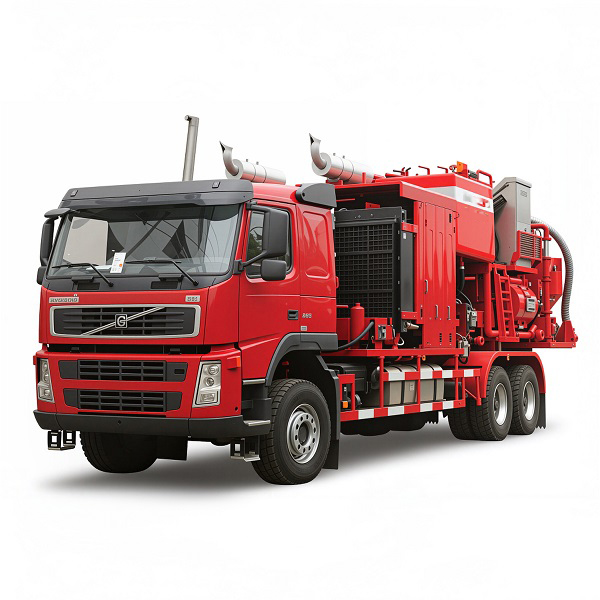
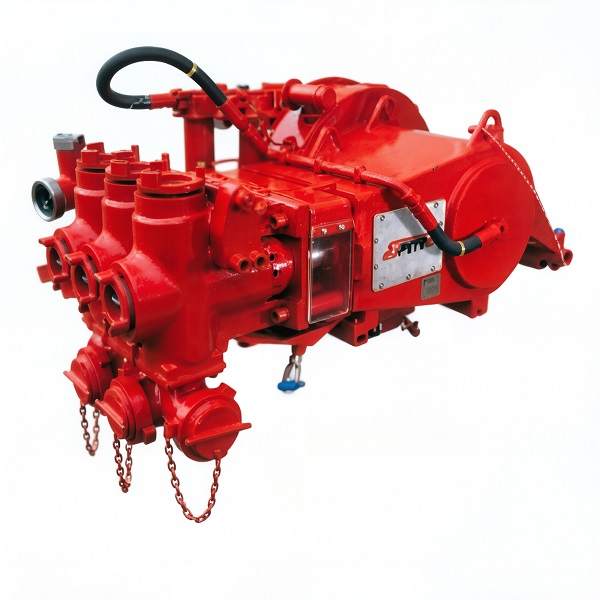
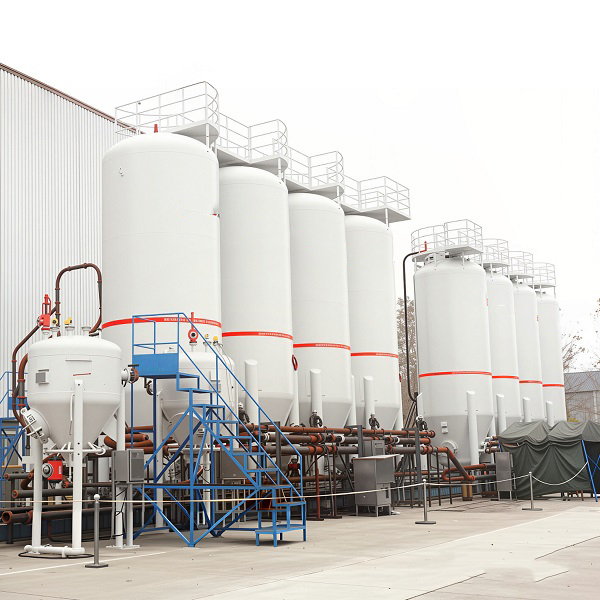
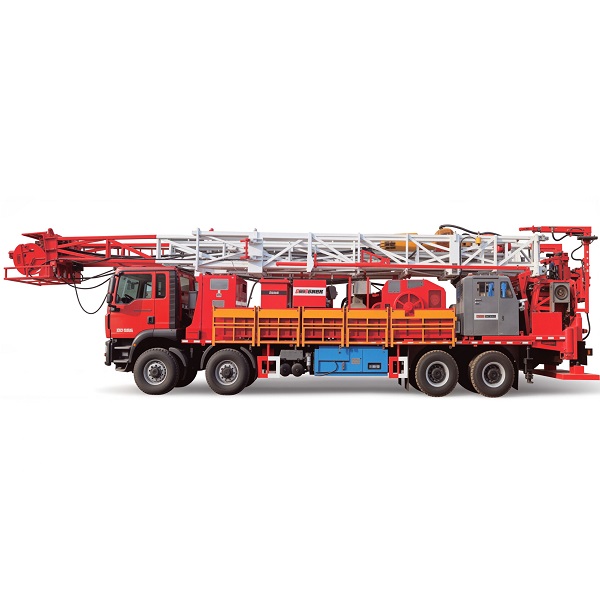
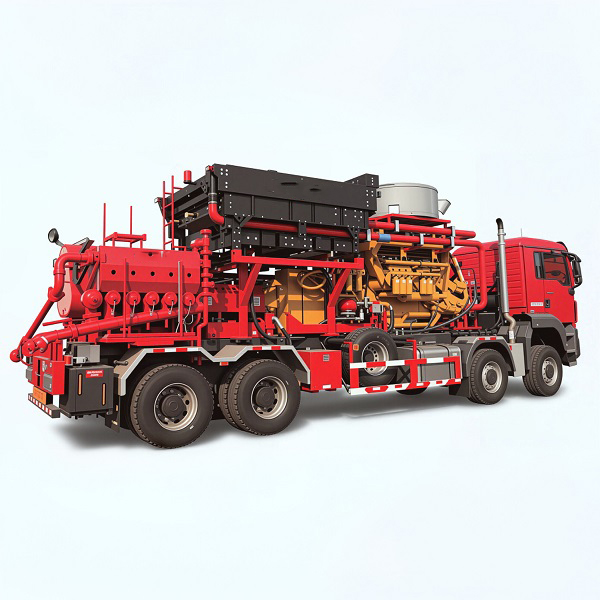
Fracturing unit set specifications
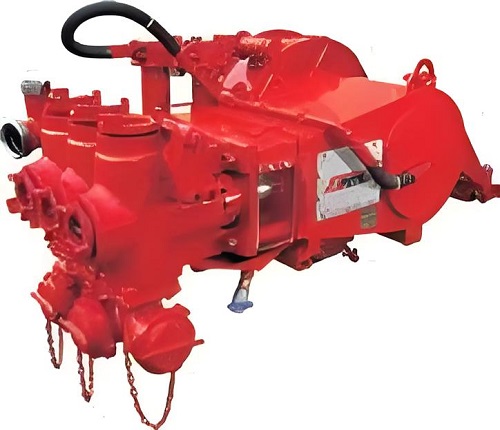
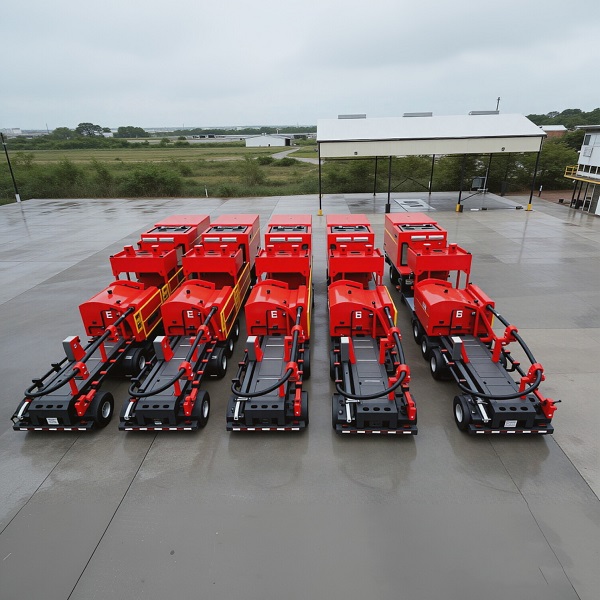
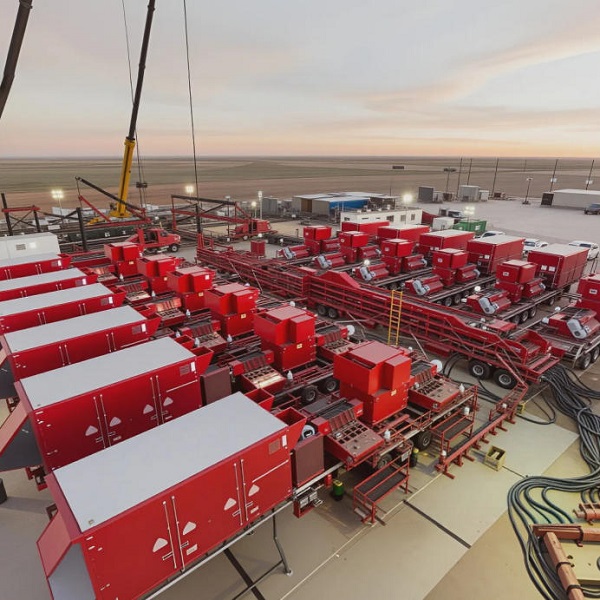
Technical Specifications – Standard Fracturing Unit Sets
The tables below provide key specifications for our three standard unit set models. Complete data sheets (including horsepower vs. pressure curves for all plunger sizes, dimensional drawings, and material certifications) are available upon request.
FUS‑1000 (2‑Pump Unit Set) – Core Specifications
| Parameter | Diesel Version | Electric Version |
|---|---|---|
| Pump model | 2 × QPA2500‑D | 2 × SCF8000‑E |
| Total continuous horsepower | 5,000 HHP (3,730 kW) | 16,000 HHP (11,930 kW) |
| Max working pressure | 105 MPa (15,312 PSI) | 175 MPa (25,400 PSI) |
| Plunger size (standard) | 5″ (127 mm) | Custom |
| Max flow rate @ 5,000 PSI | 3.8 m³/min (1,004 GPM) per pump | 1.45 m³/min (383 GPM) per pump (at 175 MPa) |
| Blender sand rate | 3,000 lbs/min (1,360 kg/min) | 3,000 lbs/min |
| Blender accuracy | ±2% of setpoint | ±2% |
| Manifold rating | 105 MPa, 3″ hammer unions | 175 MPa, 3″ |
| Control system | SOFElink Basic | SOFElink Basic |
| Footprint (rigged up) | 15m × 12m | 12m × 10m |
| Total weight (approx.) | 35 metric tons | 28 metric tons |
| Transport dimensions (L×W×H) | 12m × 2.5m × 4.0m (split across 2 trucks) | 2 × 40‑ft containers |
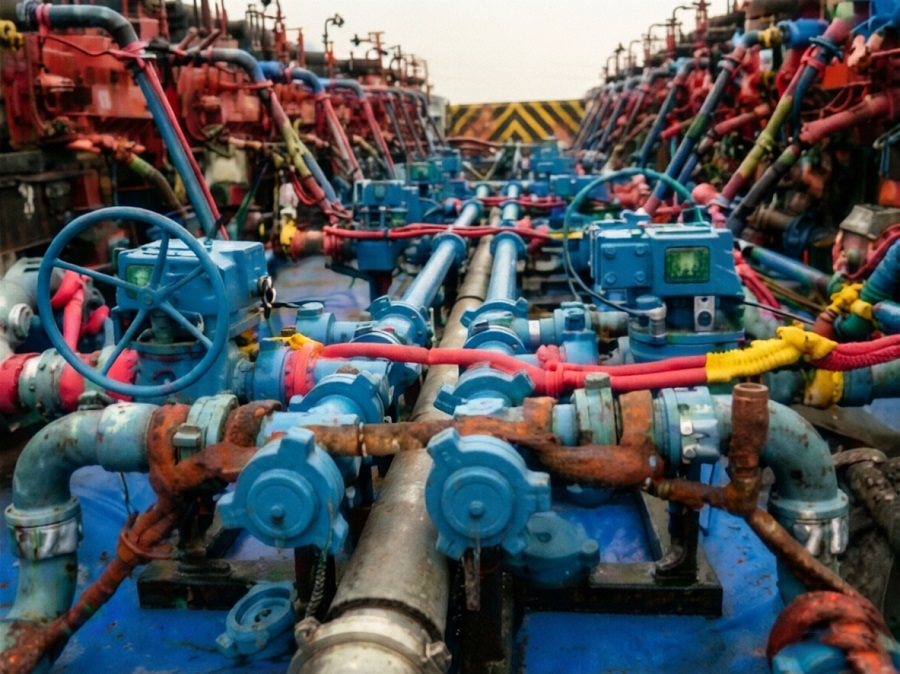
FUS‑2000 (4‑Pump Unit Set) – Core Specifications
| Parameter | Diesel Version | Electric Version |
|---|---|---|
| Pump model | 4 × QPA2500‑D | 4 × SCF8000‑E |
| Total continuous horsepower | 10,000 HHP (7,460 kW) | 32,000 HHP (23,860 kW) |
| Max working pressure | 105 MPa (15,312 PSI) – optional 140 MPa | 175 MPa (25,400 PSI) |
| Plunger size options | 4.0″, 4.5″, 5.0″, 5.5″ | Custom (per well design) |
| Max flow rate (total, all pumps) | See curve below | See curve below |
| Blender sand rate | 6,000 lbs/min (2,720 kg/min) | 6,000 lbs/min |
| Blender accuracy | ±2% sand, ±1% liquid | ±2% sand, ±1% liquid |
| Manifold rating | 105 or 140 MPa, 4″ header | 175 MPa, 4″ dual header |
| Control system | SOFElink Advanced | SOFElink Advanced with predictive maintenance |
| Footprint (rigged up) | 25m × 15m | 20m × 14m |
| Total weight (approx.) | 70 metric tons | 56 metric tons |
| Transport | 5–6 flatbed trucks | 4 × 40‑ft containers + mobile substation |
QPA2500 Pump – Horsepower vs. Pressure Table (Continuous)
| Plunger Diameter | Max Flow @ 5,000 PSI | Max Flow @ 8,000 PSI | Max Flow @ 10,000 PSI | Max Pressure |
|---|---|---|---|---|
| 4.0″ (102 mm) | 2.4 m³/min (634 GPM) | 1.5 m³/min (396 GPM) | 1.2 m³/min (317 GPM) | 15,312 PSI |
| 4.5″ (114 mm) | 3.1 m³/min (819 GPM) | 1.9 m³/min (502 GPM) | 1.5 m³/min (396 GPM) | 12,100 PSI |
| 5.0″ (127 mm) | 3.8 m³/min (1,004 GPM) | 2.4 m³/min (634 GPM) | 1.9 m³/min (502 GPM) | 9,800 PSI |
| 5.5″ (140 mm) | 4.65 m³/min (1,228 GPM) | 2.9 m³/min (766 GPM) | 2.3 m³/min (608 GPM) | 8,100 PSI |
Flow rates are total per pump. Multiply by number of pumps for unit set total. Curves assume 100% volumetric efficiency. Contact SJ Petro for detailed efficiency factors.
SCF8000 Pump – Horsepower vs. Pressure Table (Continuous, 175 MPa Rating)
| Plunger Diameter | Max Flow @ 10,000 PSI | Max Flow @ 15,000 PSI | Max Flow @ 20,000 PSI | Max Pressure |
|---|---|---|---|---|
| Custom (per well design) | 1.45 m³/min (383 GPM) | 0.97 m³/min (256 GPM) | 0.73 m³/min (192 GPM) | 25,400 PSI |
Fluid End Service Life – Specification Table
| Pump Model | Fluid End Material | Service Life (High‑Sand Shale) | Service Life (Clean Fluid / Acid) |
|---|---|---|---|
| QPA2500 (standard) | Forged alloy steel | 800 – 1,200 hours | 2,000 – 3,000 hours |
| QPA2500 (upgraded) | Stainless steel | 1,200 – 1,800 hours | 3,000 – 4,000 hours |
| SCF8000 | 2nd‑gen stainless steel | 2,000 – 2,500 hours | 4,000 – 5,000 hours |
Product Types – Specification Packages We Provide
We offer specification documentation at four levels, depending on your needs.
1. Standard Data Sheet (Free with Every Unit Set)
For our standard FUS‑1000, 2000, and 4000 models, we provide a complete data sheet including:
-
General arrangement drawing
-
Pump performance curves (all plunger sizes)
-
Blender sand and liquid rate specifications
-
Manifold pressure and temperature ratings
-
Control system functional description
-
Basic test certificates
2. Engineered Specification Package (For Custom Configurations)
When you need non‑standard components – different plunger sizes, upgraded materials, special coatings – our engineering team produces a custom specification package including:
-
FEA analysis of pressure‑containing parts
-
Custom horsepower vs. pressure curves
-
Fatigue life prediction (based on your expected cycle profile)
-
Certified material test reports for custom alloys
-
Third‑party witnessed testing (optional)
Lead time: 4–6 weeks for engineering and documentation.
3. Tender Specification Package (For International Bids)
For operators responding to NOC or major oil company tenders, we provide a complete tender documentation package:
-
API 7K and 6A data sheets (formatted to tender requirements)
-
Full material traceability (EN 10204 3.1)
-
NDT reports with inspector certifications
-
Third‑party witness test reports (if ordered)
-
Compliance matrix (mapping our specifications to tender clauses)
-
Letter of conformance
We have supplied tender packages for projects in the Middle East, Russia, Africa, and Southeast Asia.
4. Digital SOFElink Specification (Live Performance Data)
For operators who want to verify specifications in real time, our SOFElink platform continuously compares actual pump performance against rated specifications. The digital spec sheet includes:
-
Live horsepower vs. pressure overlay
-
Real‑time fluid end wear estimation
-
Alerts when actual performance deviates from spec
-
Historical trend analysis
This turns a static spec sheet into a dynamic quality control tool.
Applications – Where Precise Fracturing Unit Set Specifications Matter
Accurate, verifiable specifications are critical in these scenarios:
-
Deep shale gas (3,500–5,000m) – Requires 140+ MPa treating pressure. You need SCF8000 specifications with 175 MPa rating, not 105 MPa.
-
HPHT conventional wells – High pressure demands fluid end materials rated for thermal cycling and H₂S exposure.
-
High‑sand‑volume fracturing – Predicting fluid end life requires realistic wear data, not optimistic marketing claims.
-
International tenders – NOCs and majors demand API 7K/6A certification with full material traceability.
-
Pad layout and logistics planning – Dimensional drawings are essential for crane lifts, transport, and safety clearances.
-
Fleet standardization – Large operators need consistent specifications across multiple unit sets to simplify maintenance and spares.
Why Choose SJ Petro for Fracturing Unit Set Specifications?
Because our specifications are not marketing. They are engineering data, verified by test stands and field records.
| Your Specification Need | SJ Petro’s Answer |
|---|---|
| "I need API 7K data sheets for an international tender.” | Full API certification. We provide the documentation – including third‑party witness testing if required. |
| "My well requires 140 MPa. Standard 105 MPa specs won’t work.” | SCF8000 is rated to 175 MPa continuous. We provide the pressure curves to prove it. |
| "I need to know fluid end life in my specific sand concentration.” | We provide a fluid end life prediction worksheet – input your sand, pressure, rate, and get an estimated life. |
| "I’m laying out a pad. I need exact dimensions and connection points.” | Complete dimensional drawing set provided – including connection flange locations and hammer union orientations. |
| "I have a non‑standard target rate and pressure. What plunger size do I need?” | Our engineering team will generate a custom curve and recommend the optimal plunger diameter. |
| "I need to verify that my existing pumps are still meeting spec.” | SOFElink retrofit provides real‑time performance monitoring against original specifications. |
More reasons to trust SJ Petro fracturing unit set specifications:
-
Over 40 years of fracturing equipment engineering – we know what the numbers actually mean
-
In‑house test stands up to 20,000 HP – we verify our specifications before you ever see them
-
API Q1, API 7K, API 6A certified – not "designed to” – certified
-
Field data from China’s deepest shale wells – our specifications are validated at 140 MPa, 4,500m depth
-
Global engineering support – our team will review your well program and recommend the correct specifications
-
Complete documentation packages – MTRs, test reports, NDT, dimensional reports – all provided
Frequently Asked Questions (FAQ) – Fracturing Unit Set Specifications
Q1: What is the difference between "maximum working pressure” and "test pressure” in your specifications?
A: Maximum working pressure (MWP) is the highest continuous pressure at which the equipment is designed to operate under normal conditions. Test pressure is the pressure applied during factory hydrostatic testing – typically 1.5× MWP. For example, our SCF8000 has an MWP of 175 MPa, and each unit is hydrostatically tested to 262.5 MPa before shipment. This 50% safety margin ensures reliable operation at rated pressure.
Q2: How do your horsepower ratings compare to other manufacturers? Are they continuous or peak?
A: We publish continuous horsepower ratings – the power the pump can deliver 24/7 without derating or damage. Many competitors publish peak or intermittent ratings that are 20–30% higher than their continuous capability. If you see a "3,000 HP” pump from another manufacturer, ask for the continuous rating. Our QPA2500 is 2,500 HP continuous; our SCF8000 is 8,000 HP continuous.
Q3: How accurate are your flow rate specifications?
A: Our flow rate specifications are verified on our in‑house test stands using calibrated Coriolis meters and are typically within ±2% of published values. However, actual field flow rate depends on fluid density, suction pressure, fluid end condition, and system backpressure. We provide correction factors in our detailed data sheets.
Q4: What is the expected fluid end life for your unit sets in abrasive sand fracturing?
A: For the SCF8000 with second‑generation stainless steel pump head: 2,000+ hours between major rebuilds. For the QPA2500 in similar service: 800–1,200 hours. These numbers are based on actual field records from Sichuan Basin and other shale plays. We provide a fluid end life prediction worksheet with each specification package – you input your expected sand concentration, pressure, and rate, and we output an estimated service life.
Q5: Do your specifications include NACE MR0175 compliance for sour gas service?
A: Yes. For H₂S environments, we offer fluid end trims and elastomers that meet NACE MR0175/ISO 15156. The specification package includes material certifications confirming compliance with sour service requirements. Additional H₂S testing (SSC, HIC) is available upon request.
Q6: Can you provide third‑party witnessed testing to verify your specifications?
A: Yes. For an additional fee, we can arrange for third‑party inspection (SGS, BV, DNV, or your nominated agency) to witness pressure testing, dimensional inspection, and performance verification. The witness signs off on our test reports, and the documentation is included in your specification package. This is common for international tenders where independent verification is required.
Q7: What is the dimensional envelope for a standard FUS‑2000 unit set?
A: For a diesel FUS‑2000 (4 × QPA2500 skids, 1 blender, 1 manifold skid, 1 data van, loose iron):
| Component | Length | Width | Height | Weight |
|---|---|---|---|---|
| Each pump skid | 5.5m | 2.5m | 2.8m | 18 t |
| Blender skid | 7.5m | 2.5m | 3.5m | 15 t |
| Manifold skid | 6.0m | 2.2m | 1.2m | 8 t |
| Data van | 6.0m | 2.5m | 2.8m | 6 t |
Rigged up footprint (all components positioned): approximately 25m × 15m. Complete dimensional drawings are available upon request.
Q8: Do you provide custom specifications for non‑standard plunger sizes?
A: Yes. We have engineered plunger diameters outside our standard 4.0″, 4.5″, 5.0″, 5.5″ range for customers with specific rate/pressure trade‑offs. Custom sizes typically require 8–10 weeks for engineering validation (FEA, test coupon verification, and prototype testing). Minimum order quantities may apply.
Q9: Can I get a specification sheet for a unit set I already own (serial number lookup)?
A: Yes. For any SJ Petro fracturing unit set manufactured in the last 15 years, we retain as‑built records including material test reports, test certificates, and dimensional reports. Provide the serial number of the main pump or unit set ID, and we can retrieve the original specification package. For older units, we may have limited records – but we can also perform field verification testing to generate current specifications.