
Cementing specifications
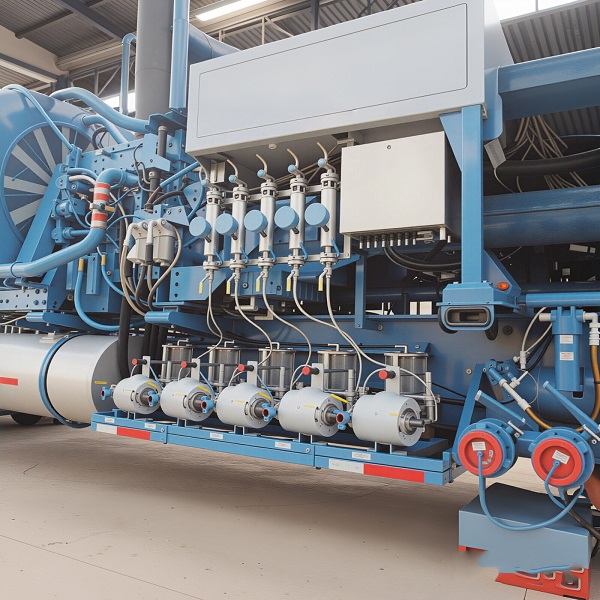
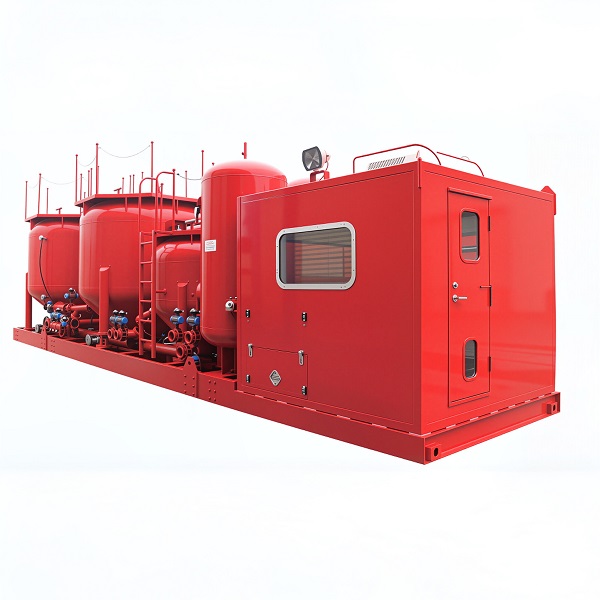
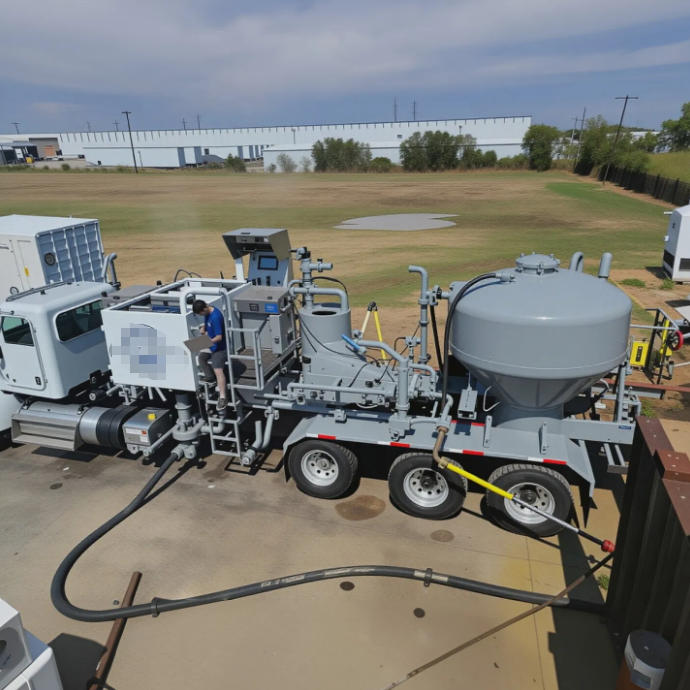
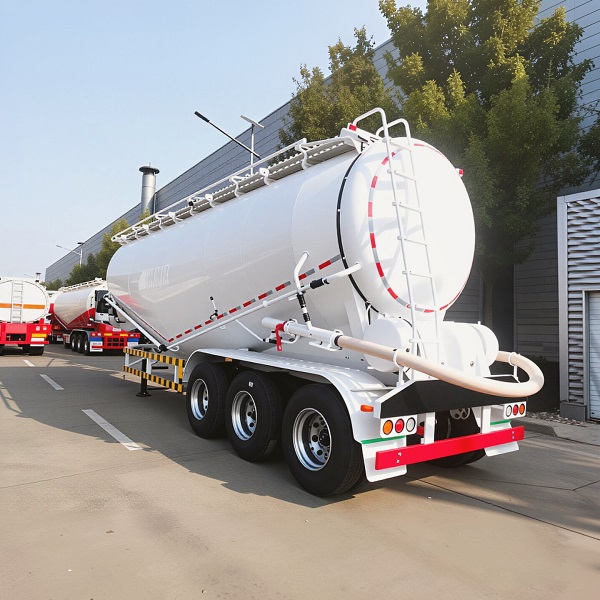
Automatic Cement Mixing (ACM) System Specifications
Our ACM‑IV.1 is the brain of the cementing unit – controlling density and mixing quality.
| Parameter | ACM‑IV.1 Specification |
|---|---|
| Control type | PLC‑based, closed‑loop PID |
| Density sensor | Micro Motion CMF (Coriolis, non‑radioactive) |
| Density measurement range | 1.0 – 3.0 g/cm³ |
| Density accuracy | ±0.02 g/cm³ at steady state |
| Density response time | < 1 second |
| Mixing principle | High‑energy recirculating jet mixer |
| Mix water flow control | Automated control valve with flow meter |
| Cement feed control | Variable‑speed auger or butterfly valve |
| Mixing capacity range | 0.3 – 2.3 m³/min (2 – 14.4 bpm) |
| Operator interface | Touchscreen HMI (7″ or 12″) |
| Data logging | Pressure, rate, density, volume, time (export to USB) |
| Remote control | Optional wireless (100 m range) |
| Languages | English, Chinese, Spanish, Arabic (others on request) |
Hydraulic / Plunger Pump Specifications (TPH400 Family)
The TPH400 triplex pump is the core pumping component across our cementing units.
| Parameter | TPH400 (4″ plunger) | TPH400 (4‑1/2″ plunger) |
|---|---|---|
| Max pressure | 103.5 MPa (15,000 psi) | 77.2 MPa (11,200 psi) |
| Max rate | 1.18 m³/min (7.4 bpm) | 1.5 m³/min (9.4 bpm) |
| Power requirement | 400 hp | 475 hp |
| Liner size range | 4″ only | 4″ or 4‑1/2″ |
| Fluid end material | Stainless steel (NACE optional) |
|
| Valves / seats | Tungsten carbide or stainless |
|
| Packing | High‑pressure, field replaceable |
|
| Suction / discharge connections | 4″ Fig 1502 hammer union |
|
| Weight (pump only) | 2,800 kg | 2,900 kg |
For deepwater applications, we offer larger pumps (up to 2,200 HP, 7‑1/2″ liners). Contact for data sheets.
Bulk Cement Handling & Mixing Tank Specifications
| Parameter | Specification |
|---|---|
| Bulk cement tank capacity | 20 – 100 m³ (optional modular) |
| Pneumatic transfer rate | 1.5 – 3.0 m³/hour |
| Mixing water tank capacity | 5 – 20 m³ |
| Batch mixer option | 5 – 15 bbl batch capacity |
| Liquid additive system | Up to 4 independent additive pumps |
| Additive metering accuracy | ±2% of setpoint |
Physical & Transport Specifications
| Unit Type | Length (m) | Width (m) | Height (m) | Weight (kg) | Transport |
|---|---|---|---|---|---|
| SJ-CS-1 (skid) | 7.2 | 2.5 | 2.8 | 14,000 | Flatbed or container |
| SJ-CS-2 (skid) | 9.0 | 2.5 | 2.8 | 24,500 | Flatbed or container |
| SJ-CT-2 (truck) | 12.5 | 2.55 | 3.8 | 32,000 | Self‑driven |
| SJ-CS-2S (each split skid) | 8.0 | 3.3 | 3.9 | <15,000 | Offshore crane |
| Container unit | 6.058 | 2.438 | 2.591 | 17,000 | Standard 20ft container |
Applications & Model Selection Guide
| Well Type / Operation | Recommended Cementing Unit | Key Specification Driver |
|---|---|---|
| Land shallow wells (<2,000 m) | SJ-CS-1 skid or SJ-CT-2 truck | 77 MPa, 1.5 m³/min sufficient |
| Land deep wells (4,000 – 6,000 m) | SJ-CS-2 or SJ-CT-2 | 103 MPa, twin pump for backup |
| Offshore platform (standard) | SJ-CS-2 (skid) | Marine coating, twin pump redundancy |
| Offshore platform (crane‑limited) | SJ-CS-2S split skid | Per‑skid weight <15t |
| Deepwater / HPHT (6,000 – 8,000+ m) | Deepwater high‑pressure skid | 18,000 psi, 26 bbl/min, dual mixing |
| Remote desert / jungle | SJ-CS-1 or SJ-CS-2 with desert cooling package | 55°C ambient rating |
| Arctic / extreme cold | Any unit with cold‑weather package | -40°C capability, heated enclosures |
Product Types – Cementing Equipment by Configuration
We organize our cementing equipment into seven distinct specification families:
| Family | Configuration | Pressure (max) | Rate (max) | Primary Use |
|---|---|---|---|---|
| Single Pump Skid | SJ-CS-1 | 11,200 psi | 1.5 m³/min | Land, desert, basic offshore |
| Twin Pump Skid | SJ-CS-2 | 15,000 psi | 2.7 m³/min | High pressure, deep wells |
| Truck Mounted | SJ-CT-2 | 15,000 psi | 1.5 m³/min | Onshore mobility |
| Offshore Split Skid | SJ-CS-2S | 15,000 psi | 2.7 m³/min | Platform crane limits |
| Deepwater Skid | Custom | 18,000 psi | 4.1 m³/min | Deepwater drillships |
| Container Skid | 20ft box | 15,000 psi | 2.7 m³/min | Corrosive / remote |
| Foam Cementing Unit | With N₂ system | 15,000 psi | Foam capable | Deepwater / weak zones |
All families available with ACM‑IV.1 automatic density control, DAS data acquisition, and NACE / sour service option.
Why Choose SJ Petro for Cementing Specifications & Equipment?
1. Full API Compliance – Our equipment meets or exceeds API 10A (cement classes), API 10D (downhole tools), API 7K (pumps). All pressure ratings verified by hydrostatic test.
2. Transparent Specification Sheets – Every unit comes with a certified test report showing actual pressure, rate, and density accuracy achieved during factory acceptance.
3. Modular Design – Easy to Maintain – All components (pumps, engines, control systems) are off‑the‑shelf industrial parts. No proprietary "black boxes” that require dealer service.
4. Third‑Party Certification – We can arrange ABS, DNV, CCS, or Lloyd’s witnessing and certification for any unit.
5. Interchangeable Components – Pumps, engines, and mixing systems are common across the SJ‑CS and SJ‑CT families – reduces spare parts inventory.
6. Global Spares Support – Regional hubs in Houston, Dubai, and Singapore stock critical cementing unit spares (packings, valves, sensors, ACM boards).
7. Custom Engineering – Need a pressure rating not listed? A special density range? We can modify the unit to your specific job requirements.
8. Sinopec Engineering Backing – Continuous R&D based on thousands of cementing jobs – our specifications are field‑proven, not just theoretical.
Frequently Asked Questions (FAQ)
Q1: What is the difference between single and twin pump cementing units?
Single pump units have one pumping system; twin pump units have two independent pumps and engines. Twin units offer redundancy (if one fails, the job continues) and higher combined rate (2.7 m³/min vs 1.5 m³/min). For HPHT or critical wells, twin pumps are strongly recommended.
Q2: What density accuracy can I expect from the ACM system?
±0.02 g/cm³ under stable mixing conditions. The Micro Motion densitometer provides real‑time feedback, and the PLC adjusts water and cement feeds automatically. This exceeds typical field requirements.
Q3: What is the maximum working pressure of your cementing units?
Standard twin skids: 103.5 MPa (15,000 psi). Deepwater skids: up to 124 MPa (18,000 psi). Higher pressures (20,000 psi) available as custom design – contact engineering.
Q4: Are your cementing units suitable for offshore platform crane lifts?
Our SJ-CS-2S split skid is designed specifically for offshore – each half weighs under 15,000 kg (33,000 lbs), fits within typical platform crane capacities. The two halves connect quickly with high‑pressure hoses and electrical cables.
Q5: Do the specification tables include NACE / sour service options?
Standard units use carbon steel wetted parts. For H2S / CO2 service, we offer NACE MR0175 compliant fluid ends (stainless steel or Inconel overlay) and corrosion‑resistant sensors. Specify at order.
Q6: What is the ambient temperature range for normal operation?
Standard: -20°C to +50°C. Arctic package: -40°C to +40°C (synthetic fluids, battery heaters, insulated enclosures). Desert package: up to +55°C (oversized coolers, sand filters).
Q7: How do I interpret "max discharge rate” vs "mixing capacity”?
Max discharge rate is the total pump output (including cement slurry, displacement water, or acid). Mixing capacity is the rate at which the ACM can prepare fresh slurry (density controlled). For jobs where you pump pre‑mixed slurry from tanks, mixing capacity may be irrelevant; for continuous mixing jobs, the two must be matched.
Q8: Can your cementing unit pump fluids other than cement?
Yes. The same pumps can circulate completion fluids, brine, acid (for acidizing), and fracturing fluids (for light frac jobs). Internal coatings may be required for strongly corrosive acids – advise your application.
Q9: What data does the DAS system record?
Pressure (suction and discharge), pump rate (stroke counter or flow meter), slurry density, cumulative volume (total and instantaneous), engine RPM, transmission gear, and density setpoint. Data can be exported as CSV or PDF.
Q10: Do you provide the remote control option for all units?
Yes, as an option. The wireless remote pendant (2.4 GHz, 100 m range) allows the operator to control pump start/stop, rate, and emergency stop from a safe distance. Wired remote also available.
Q11: What is the typical lead time for a cementing unit built to these specifications?
Standard units (SJ-CS-1, SJ-CS-2): 4 – 6 months from order. Truck units (SJ-CT-2): 5 – 7 months. Deepwater / custom units: 8 – 12 months.
Q12: Can I get a certified specification sheet for a unit before purchase?
Yes. We provide a preliminary data sheet during the quoting stage. After manufacturing, we provide the Final Factory Test Report – including actual pressure, rate, and density accuracy achieved.
Q13: Are your specifications compliant with API Q1?
Our manufacturing process is ISO 9001:2015 certified, and we follow API Q1 quality management principles. Formal API monogramming for cementing units is available on request (additional fees for API audit).
Q14: How do I request a custom specification quote?
Provide your maximum well depth, expected cement slurry density range, required pump rate (m³/min or bpm), and any special environmental or material conditions. Our engineering team will respond with a custom specification sheet and fixed price within 7 business days.







