
Cementing pumping unit
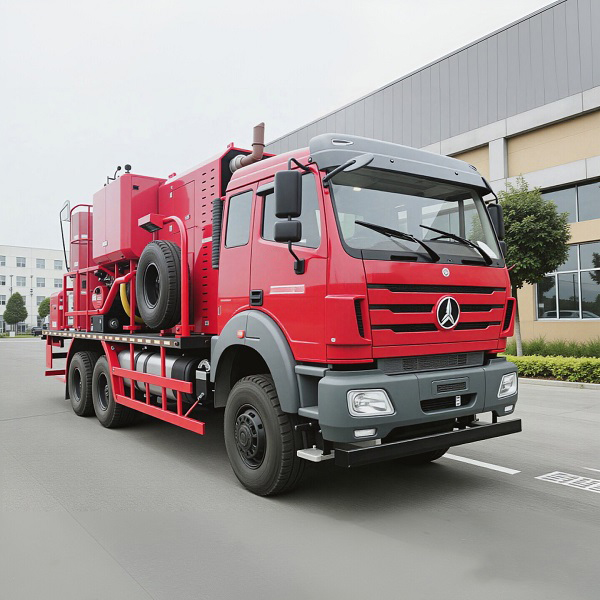
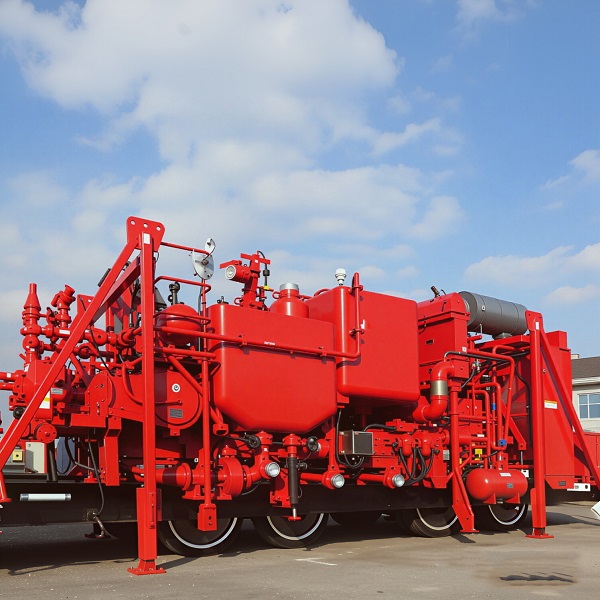
Technical Specifications – Cementing Pumping Unit
The table below shows specifications for standalone pumping units without ACM mixing systems.
| Parameter | Single Pump Unit | Twin Pump Unit |
|---|---|---|
| Model | SJ‑CPU‑1 | SJ‑CPU‑2 |
| Pump(s) | 1 × TPH400 | 2 × TPH400 |
| Engine(s) | 1 × CAT C13 (475 HP) or C15 (540 HP) | 2 × CAT C15 (1,072 HP total) |
| Transmission(s) | Allison 4700 | 2 × Allison 4700 |
| Max pressure (4″ plunger) | 15,000 psi | 15,000 psi |
| Max pressure (4‑1/2″ plunger) | 11,200 psi | 11,200 psi |
| Max flow rate (4‑1/2″ plunger) | 1.5 m³/min | 2.7 m³/min |
| Fluid end material | Stainless steel (standard) | Stainless steel (standard) |
| NACE option | Inconel 625 | Inconel 625 |
| Discharge connections | 2″ Fig 1502 (standard) | 2 × 2″ or 3″ manifold |
| Data acquisition | Optional (stroke counter + pressure) | Optional |
| Control | Local panel (start/stop, pressure gauge) | Local panel + remote start optional |
| Skid weight | 14,000 kg | 24,500 kg |
| Skid dimensions (L×W×H) | 7.2×2.5×2.8 m | 9.0×2.5×2.8 m |
| Container fit | 40ft open top | 40ft flat rack |
| Certifications | API 7K | API 7K |
| Lead time | 3‑4 months | 4‑5 months |
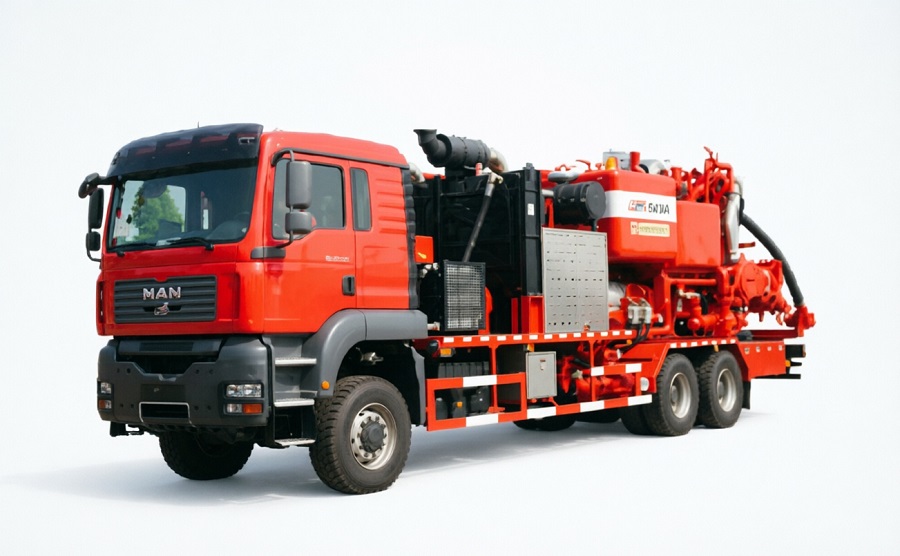
Applications – Where Standalone Pumping Units Excel
| Application | Why Pumping Unit Alone is Sufficient |
|---|---|
| Primary cementing (batch mixed) | Use a batch mixer to prepare slurry, pump with unit |
| Squeeze cementing | Small volumes from bulk trailer – no continuous mixing needed |
| Acidizing | Pump pre‑mixed acid from tank → no mixing system required |
| Pressure testing casing | Pump water or brine – simple, no cement |
| Backup unit for twin configuration | Second unit provides redundancy without extra mixing equipment |
| Offshore platform (space limited) | Compact skid fits where full ACM skid does not |
| Workover / well servicing | Pump small plugs or spacers – manual batch mixing sufficient |
| Water / brine transfer | Use as high‑pressure transfer pump |
Product Types – Cementing Pumping Units
We offer pumping units in three base configurations, plus custom variants:
| Type | Configuration | Mounting | Key Feature |
|---|---|---|---|
| SJ‑CPU‑1S | Single pump skid | Skid | Most economical, easy to ship |
| SJ‑CPU‑2S | Twin pump skid | Skid | Redundancy, higher rate |
| SJ‑CPU‑1T | Single pump truck | Truck (6×4 or 8×4) | Self‑propelled, road legal |
| SJ‑CPU‑2T | Twin pump truck | Truck (8×6) | Mobile twin pump |
| SJ‑CPU‑HP | Single or twin, high pressure | Skid or truck | 18,000‑20,000 psi |
Why Choose SJ Petro Cementing Pumping Units?
1. API 7K Certified Pump – Not "designed to” – actually certified. Full traceability from heat code to test record.
2. Stainless Steel Fluid End Standard – Many competitors use carbon steel (which rusts after first job). Our stainless steel lasts for years.
3. Redundant Twin Option – Two independent pumps, two engines. If one fails, the other keeps pumping.
4. Quick‑Change Liner System – Change from 4″ to 4‑1/2″ plungers in under 30 minutes. No special tools.
5. Field‑Proven TPH400 Design – Over 1,000 pumps in service globally. Reliable, easy to maintain, parts available worldwide.
6. Compact Skid – Easy Transport – Fits in a 40ft container (single pump) or flat rack (twin). No oversize permits.
7. NACE Ready – Inconel fluid end, tungsten carbide valves, AFLAS seals – for sour service.
8. Sinopec Engineering – Designed by the same engineers who build complete cementing spreads. Not a "garage” pump.
9. Global Service – Spare parts (packing, valves, seats) stocked in Houston, Dubai, Singapore. 24/7 support.
Frequently Asked Questions (FAQ)
Q1: What is the difference between a cementing pumping unit and a complete cementing skid?
A pumping unit includes only the engine, transmission, and pump – no mixing system (ACM), no bulk handling, no water tank. A complete cementing skid adds the ACM and may include bulk storage. Choose a pumping unit if you already have mixing capability or only need to pump pre‑mixed fluids.
Q2: Can I add an ACM mixing system to your pumping unit later?
Yes – our pumping units can be retrofitted with our ACM‑IV mixing skid (separate unit). The pump suction can be connected to the ACM outlet. Contact engineering for interface details.
Q3: What is the maximum pressure with the 4″ plunger?
15,000 psi (103.5 MPa) continuous. The pump is hydrotested to 22,500 psi (1.5×). For 20,000 psi operation, we offer a high‑pressure variant.
Q4: Can the pumping unit be used for acidizing?
Yes – with stainless steel fluid end (standard) it is acid‑compatible. For stronger acids, we recommend Inconel or Super Duplex options.
Q5: Do you offer electric drive pumping units?
Yes – we can replace the diesel engine with an electric motor (400‑1,500 HP) and VFD. Ideal for offshore platforms or urban sites where emissions are restricted.
Q6: What is the typical maintenance interval for the TPH400 pump?
Valve and seat replacement: 500‑1,000 pumping hours (depending on abrasiveness). Packing replacement: 300‑500 hours. Fluid end inspection: every 2,000 hours. Detailed schedule provided.
Q7: Can I mount your pumping unit on my own truck chassis?
Yes – we can supply the skid‑mounted unit, and you bolt it to your chassis. We provide mounting drawings and a list of recommended chassis specifications.
Q8: What is the warranty on the pumping unit?
12 months from commissioning or 18 months from shipment (whichever first). Engine warranty by CAT (24 months or 2,000 hours). Extended warranty available.
Q9: Do you provide remote control for the pumping unit?
Yes – optional wireless pendant (50m range) or wired remote panel. Allows operator to start/stop pump and adjust engine speed from a safe distance.
Q10: How do I get a quote for a cementing pumping unit?
Provide: desired configuration (single/twin), mounting (skid/truck), pressure and rate requirements, drive type (diesel/electric), and any special materials (NACE). We will respond within 3‑5 business days.







