Automated drilling system
Innovative Technology & Key Features
1. Unified Control Platform – One HMI for the Entire Rig
Traditional rigs have separate controls for drawworks, top drive, mud pumps, BOP, and pipe handling – each with its own panel, its own logic, and its own operator. Our automated drilling system replaces all of them with a single, intuitive touchscreen console.
-
Common data model – All sensors use the same engineering units, time‑stamp format, and alarming thresholds. No data silos.
-
Seamless integration – The system commands the AC VFD drawworks, top drive, iron roughneck, auto catwalk, racking arm, mud pumps, BOP control unit, and choke manifold from one interface.
-
Role‑based access – Driller, toolpusher, company man, and remote supervisor each see only the screens and controls they need.
2. Closed‑Loop Drilling Control – Optimization Without Human Intervention
The heart of any automated drilling system is the auto‑driller that closes the loop around downhole and surface measurements.
-
Real‑time parameter adjustment – The controller maintains target WOB, RPM, and differential pressure by modulating drawworks brake and top drive speed every 100‑200 milliseconds.
-
Vibration suppression – When accelerometers in the BHA detect excessive lateral or axial vibration, the system automatically reduces WOB or RPM until vibration subsides, then restores parameters.
-
Stick‑slip mitigation – Monitoring rotary torque oscillations, the system adjusts RPM to break the stick‑slip cycle, protecting the bit and BHA from sudden torque spikes.
-
ROP optimization – Machine learning models continuously adjust parameters to maximize ROP without exceeding safe vibration or torque limits.
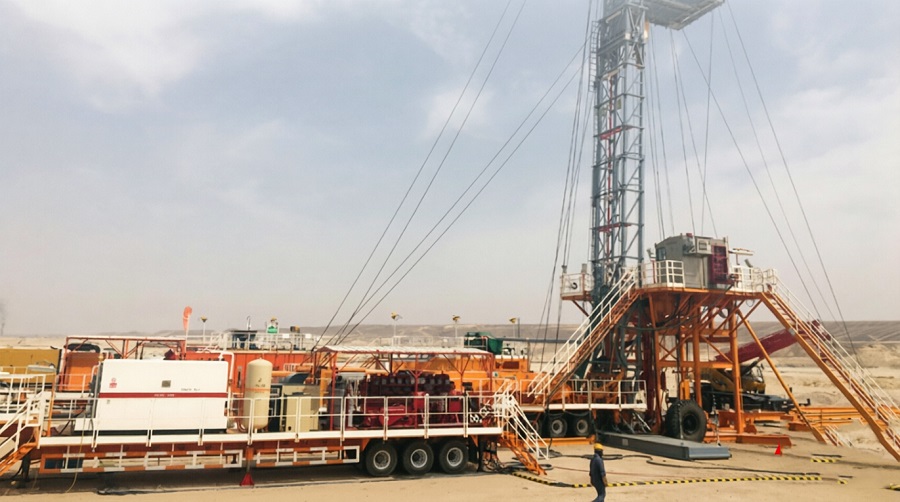
3. Automated Connection & Tripping Sequences – One‑Button Execution
The repetitive work of making and breaking connections is fully automated:
-
Make‑up sequence – The iron roughneck positions itself, closes the backup jaw, closes the spinner jaw, spins the pipe at high speed, transitions to torque mode, applies precisely programmed torque (with ±2% accuracy), logs the value, and retracts – all triggered by a single button on the touchscreen.
-
Break‑out sequence – Similar to make‑up but with reverse rotation and controlled breakout torque to avoid thread damage.
-
Slip‑to‑slip tripping – The system coordinates elevator, slips, and block hoist to pull stands from the hole and rack them in the fingerboard without floor crew.
4. Remote Monitoring & Cloud‑Connected Data Management
Modern drilling requires visibility across the fleet, not just at one rig. Our automated drilling system includes an industrial edge computer and secure cloud uplink.
-
Real‑time dashboards – Supervisors anywhere with an internet connection can see hookload, block position, torque, RPM, pump pressure, flow, and downhole data side‑by‑side for all rigs in the fleet.
-
Data historian – All sensor data (1‑10 Hz sampling) is time‑stamped and stored. Users can replay any drilling section, generate KPI reports, and export to third‑party analytics tools.
-
Predictive maintenance – Machine learning models analyze sensor trends to predict bearing wear, seal life, and fluid end fatigue. Alerts are sent days or weeks before a failure would occur.
-
Remote control option – With proper safety interlocks and site approval, a remote driller can take command from an office workstation – ideal for remote locations or expert support during complex operations.
5. Digital Twin Simulation – Plan Before You Drill
Before you spud the well, the automated drilling system can simulate the entire drilling program on a digital twin.
-
Full‑fidelity model – The twin uses the same control code as the rig floor, plus a physics‑based formation interaction model.
-
What‑if analysis – Test different bit selections, BHA configurations, and drilling parameters without risking a single meter.
-
Crew training – New drillers can practice every sequence (connections, tripping, sliding, auto‑drilling) in a risk‑free virtual environment.
Technical Specifications – Automated Drilling System
System Architecture & Performance
| Parameter | Specification |
|---|---|
| Control platform | Siemens S7‑1500 / Allen‑Bradley CompactLogix (customer choice) |
| Communication protocols | Profinet, EtherNet/IP, Modbus TCP, OPC UA |
| Human‑machine interface (HMI) | 15″ or 19″ ruggedized touchscreen, sunlight readable, IP66 |
| Control loop cycle time | 50‑200 ms (configurable) |
| Data sampling rate | 1‑10 Hz (selectable per data type) |
| Edge computing | Industrial PC with 1 TB SSD, 16 GB RAM |
| Cloud connectivity | Cellular 4G/5G or satellite, VPN secured |
| Remote operation latency | < 100 ms for control commands (with good connection) |
| Data historian | 1 year on‑board, optional unlimited cloud storage |
| Alarm management | ISA‑18.2 compliant, with alarm shelving, suppression, and analytics |
| Safety integrity | SIL 2 (IEC 61508) for critical functions (ESD, brake control) |
| Operating temperature (electronics) | -30°C to +55°C (‑40°C optional) |
| Enclosure rating | IP66, NEMA 4X (explosion‑proof for Zone 1/2 optional) |
Closed‑Loop Control Accuracy
| Parameter | Control Range | Steady‑state Accuracy | Response Time |
|---|---|---|---|
| WOB (block control) | 0 – 60,000 lbf | ±500 lbf | 0.2 sec |
| Top drive RPM | 0 – 250 rpm | ±5 rpm | 0.15 sec |
| Differential pressure | 0 – 5,000 PSI | ±20 PSI | 0.1 sec |
| Hookload (auto‑drill) | 0 – rated load | ±1% of reading | 0.2 sec |
| Iron roughneck torque | 0 – 160,000 ft‑lb | ±2% of target | 0.02 sec |
| Mud pump flow rate | 0 – 1,200 GPM | ±10 GPM | 0.5 sec |
Data Management & Reporting
| Feature | Details |
|---|---|
| Standard reports | Daily drilling report (IADC format), bit record, trip analysis, connection log |
| Custom reports | User‑definable via drag‑and‑drop interface |
| API integration | REST API for exporting data to third‑party analytics (Corva, DrillOps, etc.) |
| Alerts & notifications | SMS, email, or in‑app push |
Product Types – Automated Drilling System Configurations
We offer automated drilling systems in scalable configurations to match your rig size, automation ambition, and budget:
-
Basic Automation Package (Level 1) – Centralized HMI for drawworks, top drive, and mud pumps. Data logging and basic alarms. No pipe handling integration. Suitable for older rigs stepping into automation.
-
Connection Automation Package (Level 2) – Adds iron roughneck and auto catwalk integration. One‑button make‑up and break‑out sequences. Fingerboard inventory tracking. Remote monitoring dashboard.
-
Full Floor Automation (Level 3) – Adds vertical racking arm, automated elevator latch, slip automation, and closed‑loop auto‑driller. No floor crew during tripping. Full data historian.
-
Remote + AI Package (Level 4) – Adds remote operation capability, digital twin simulation, machine learning for ROP optimization and predictive maintenance. Cloud‑based fleet management.
-
Offshore / ATEX Package – Explosion‑proof HMI, intrinsically safe sensors, redundant control modules, and marine‑grade enclosures. Compliant with offshore platform safety requirements.
-
Retrofit Kit – For existing rigs with mechanical or DC drives, we supply sensor packages, PLC upgrade, and HMI console to bring the rig to Level 1 or Level 2 automation.
Applications – Where Our Automated Drilling System Excels
Our automated drilling system has been deployed on:
-
Land rigs (conventional and multi‑well pads) – Reduces connection time, eliminates human variability, and provides consistent torque for thousands of connections per well.
-
Offshore platform rigs – ATEX‑certified components enable safe operation in hazardous areas. Remote operation reduces offshore personnel count.
-
Jackup and semi‑submersibles – Closed‑loop auto‑driller maintains steady WOB despite vessel heave (when paired with active heave compensation).
-
Workover rigs – Lighter version of the automation system for snubbing and tubing handling.
-
Arctic winter drilling – Heated enclosures and low‑temperature electronics maintain operation at -45°C.
Why Choose SJ Petro for Your Automated Drilling System?
-
Sinopec‑backed engineering – As a direct subsidiary of China’s largest oilfield equipment group, we have 314 R&D engineers and an 180,000+ m² manufacturing campus. Our control engineers write the source code – no black‑box third‑party software.
-
Open architecture – Our system uses standard industrial protocols (Profinet, Ethernet/IP, Modbus). It integrates easily with third‑party top drives, mud pumps, and BOP control units. You are not locked into a proprietary ecosystem.
-
Proven in the field – Over 30 automated drilling systems installed on land and offshore rigs since 2018. References available.
-
Retrofit expertise – We have automated older mechanical rigs, turning them into Level‑2 systems. Our sensor packages and PLC upgrades work with existing hardware.
-
Global remote support – Our engineers can log into the system (with your permission) to diagnose issues, update software, or optimize control loops, reducing downtime and travel costs.
-
Competitive direct pricing – No trading company markups. As an OEM, we offer API‑certified automation systems at 15‑25% below Western brands.
-
Warranty – 24 months on automation electronics; 12 months on sensors and actuators. Extended warranty available.
Frequently Asked Questions (FAQ)
Q1: How is an automated drilling system different from an automated drilling rig?
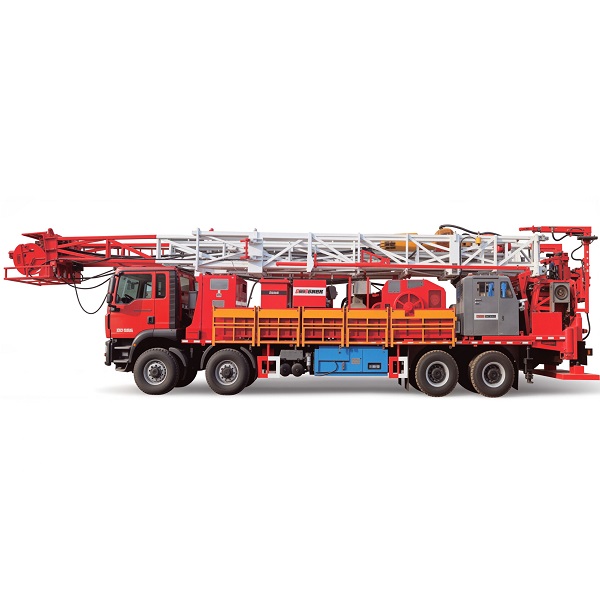
The "system” is the control platform, data management, and software that runs on the rig. The "rig” includes the mechanical equipment (drawworks, mast, pumps, etc.). You can buy an automated drilling system as a retrofit to automate an existing rig, or you can buy a new automated drilling rig with the system pre‑integrated.
Q2: Can your system work with third‑party top drives and BOPs?
Yes. Our control platform uses open protocols (Modbus TCP, Profinet). We have successfully integrated with top drives from Canrig, NOV, and Varco, and BOP control units from Cameron and NOV. We will need the communication interface specifications from those suppliers.
Q3: How long does it take to install a retrofit automation system on a working rig?
A Level 1 or Level 2 retrofit (central HMI, auto‑driller, data logging) can be installed during a scheduled maintenance stop – typically 7‑14 days, depending on sensor installation and cabling. Level 3 (full floor automation) requires more extensive modification and may need 4‑6 weeks.
Q4: Is the automated drilling system safe if the network fails?
Yes. The safety‑critical functions (emergency stop, brake control, BOP interlock) are hardwired or use redundant PLCs with battery backup. The automation system can continue operating without the remote connection or cloud uplink. Local HMI and controls remain functional.
Q5: Can I run the rig from my office computer?
Our Level 4 system includes a remote operation console. With proper network security and interlock approval (e.g., a local "remote enable” switch on the rig), a trained remote driller can control all rig functions from an office workstation. Most operators use this for supervision and optimization, not primary control, but full remote operation is technically feasible.
Q6: What training do you provide for drillers and maintenance crew?
We provide a two‑week training course at our factory or your site: one week classroom (system architecture, safety, HMI navigation) and one week hands‑on with a simulator. After commissioning, we stay on site for 3‑5 days for on‑the‑job coaching. We also provide remote refresher training.
Q7: How much does the automated drilling system reduce connection time?
Field data shows that our automated connection sequence reduces slips‑to‑slips time from an average of 90‑120 seconds (manual) to 55‑70 seconds (automated) – a 30‑40% reduction. On a well with 2,000 connections, this saves 20‑30 hours of rig time.
Q8: What kind of data does the system log, and how can I access it?
The system logs all drilling parameters: hookload, block position, WOB, torque, RPM, pump pressure, flow rate, mud properties, connection torque, vibration, downhole temperature/pressure (if available). Data can be accessed via the historian interface on the rig or through the cloud portal. You can export to CSV, Excel, or API.
Q9: Do you offer a cloud‑based fleet management dashboard for multiple rigs?
Yes. Our cloud platform aggregates data from all rigs equipped with our system. Supervisors can view KPIs, compare performance between rigs, receive alerts, and download reports. The dashboard is included in Level 2 and above systems.