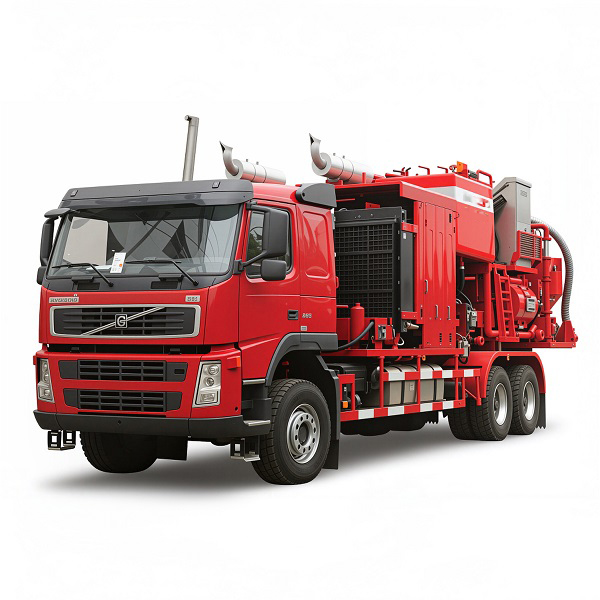
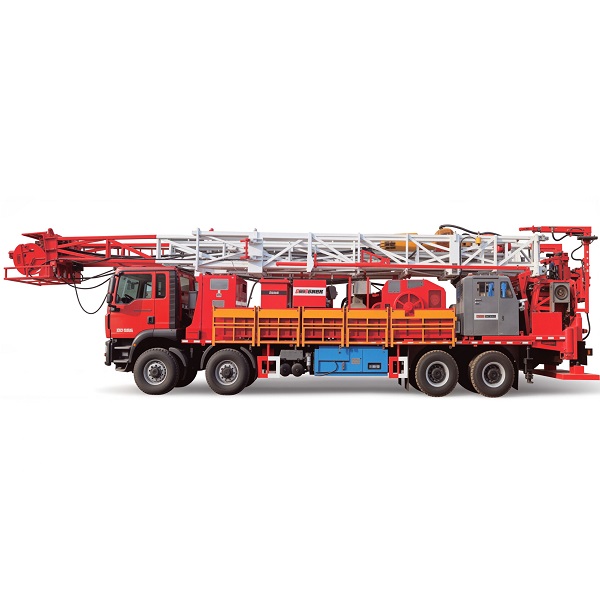
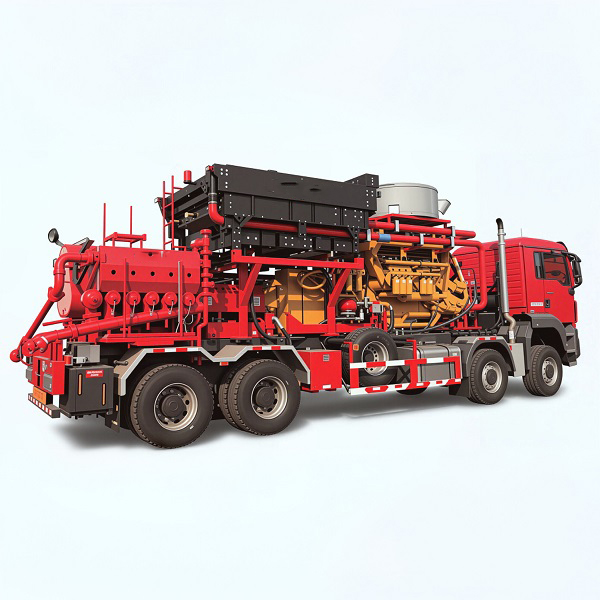
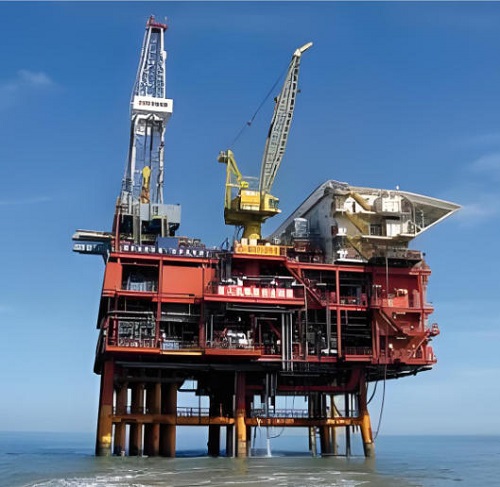
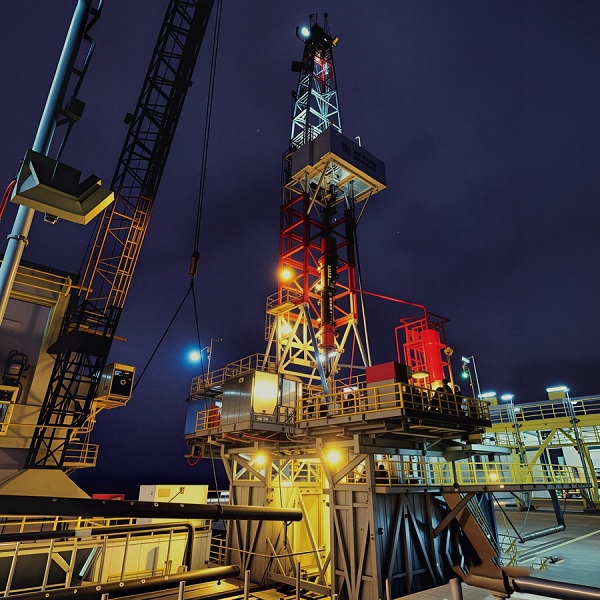
Workover derrick
Technical Specifications – XJ Series Workover Derricks
The following table summarizes workover derrick specifications for SJ Petro XJ series workover rigs. All derricks are designed and fabricated according to API Spec 4F.
XJ Series Workover Derrick Specifications – Mast Parameters
| Model | Derrick Height (m/ft) | Racking Board Height (m/ft) | Racking Board Capacity | Max. Hook Load (kN/lbf) | Workover Depth (2-⅞″ DP) | Traveling System |
|---|---|---|---|---|---|---|
| XJ150 | 21 m (69 ft) | 7.7 m (25.3 ft) | — | 450 kN (101,200 lbf) | 1,000 m | 3×4 |
| XJ250 | 21 m (69 ft) | 7.7 m (25.3 ft) | — | 675 kN (151,800 lbf) | 2,000 m | 3×4 |
| XJ350 | 31.7 m (104 ft) | 17.2 m (56.4 ft) | 4,000 m (2-⅞″ tubing) | 900 kN (202,330 lbf) | 3,200 m | 3×4 |
| XJ450 | 34 m (112 ft) | 17.2 m (56.4 ft) | — | 1,125 kN (253,000 lbf) | 4,500 m | 4×5 |
| XJ550 | 34 m (112 ft) | 17.2 m (56.4 ft) | — | 1,350 kN (303,000 lbf) | 5,800 m | 4×5 |
| XJ650 | 35 m (115 ft) | 17.2 m (56.4 ft) | 2,000 m (4-½″ DP) | 1,580 kN (355,200 lbf) | 7,000 m | 4×5 |
| XJ1000 | 38 m (125 ft) | 17.2 m (56.4 ft) | — | 2,000 kN (449,600 lbf) | 8,000 m | 5×6 |
| XJ1200 | 39.3 m (129 ft) | 17.2 m (56.4 ft) | — | 2,250 kN (505,800 lbf) | 9,000 m | 5×6 |
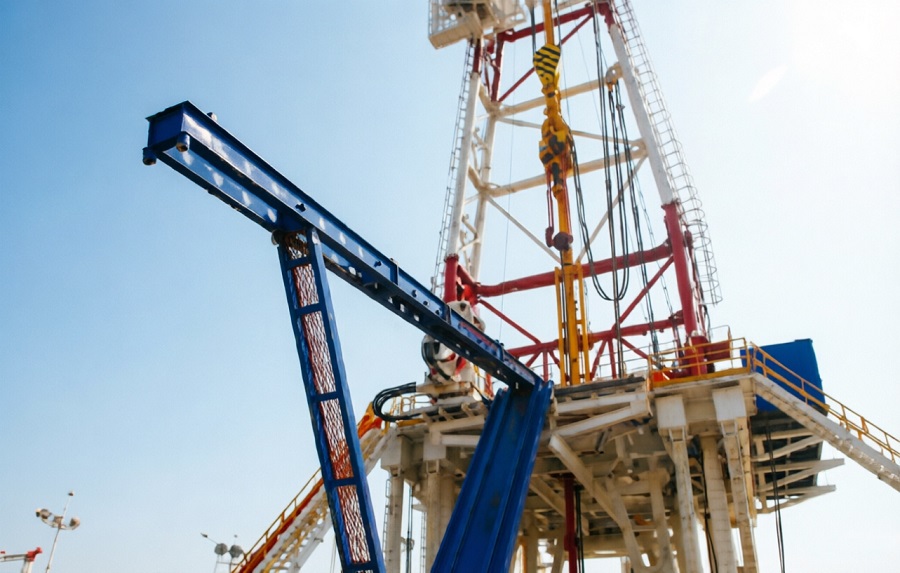
Mast Configuration – Detailed Parameters
| Parameter | XJ350 | XJ550 | XJ650 | XJ1200 |
|---|---|---|---|---|
| Mast type | Two‑section telescopic | Two‑section telescopic | Two‑section telescopic | Two‑section telescopic |
| Front opening | Yes | Yes | Yes | Yes |
| Lifting method | Hydraulic cylinders | Hydraulic cylinders | Hydraulic cylinders | Hydraulic cylinders |
| Telescoping method | Hydraulic | Hydraulic | Hydraulic | Hydraulic |
| Inclination angle | Adjustable (screw mechanism) | Adjustable | Adjustable | Adjustable |
| API standard | API Spec 4F | API Spec 4F | API Spec 4F | API Spec 4F |
| Max. wind speed | 30 m/s (98 ft/s) | 30 m/s | 30 m/s | 30 m/s |
| Racking board (height) | 17.2 m (56.4 ft) | 17.2 m | 17.2 m (24.5 m optional) | 17.2 m |
| Racking board capacity | 4,000 m (2-⅞″ tubing) | — | 2,000 m (4-½″ DP) | — |
Hydraulic Raised & Telescoped – The Mechanism Explained
Workover derricks are raised from horizontal transport position to vertical operating position using hydraulic cylinders. The process is controlled from a panel in the driller's cabin, with pressure sensors and limit switches ensuring each stage is completed before the next begins.
On arrival at a wellsite, the truck‑mounted workover rig is positioned over the wellhead. The hydraulic system first raises the mast from its horizontal traveling position to the vertical position. Once vertical, the telescoping section extends—either manually or automatically—to the required height. The racking board rises with the telescoping section, giving the crew elevated working platform access for stand handling.
This integrated raising and telescoping eliminates crane requirements, reduces crew exposure during rig‑up, and cuts mobilization time dramatically compared to conventional derricks.
Some manufacturers offer optional digital remote control for mast raising and telescoping, allowing the operator to adjust from a safe distance—a significant safety advantage in high‑traffic worksites.
Substructure height and mast design are coordinated so that the racking board aligns with the pipe setback area. In the XJ series, the racking board sits at approximately 17.2 metres above the rig floor for most models, with a clear working height that allows stands of 3–4 joints to be racked vertically.
For deeper wells and longer stands, the XJ650 offers an optional racking board height of 24.5 metres, enabling handling of 4‑joint stands, which reduces connection time per tubing run.
Workover Derrick Product Types – Mast Classes by Rig Model
Workover derricks are classified by the rig model they are installed on. SJ Petro manufactures a complete range of API 4F masts for the full XJ series line.
1. Light‑Duty Mast (XJ150–XJ250)
Derrick heights of 21 metres, 3×4 traveling systems, hook loads from 450–675 kN. Racking board heights of 7.7 metres. For shallow wells up to 2,000 metres. Ideal for light well interventions, tubing changes, and pump repairs.
2. Medium‑Duty Mast (XJ350–XJ450)
Derrick heights of 31.7–34 metres, 3×4 or 4×5 traveling systems, hook loads from 900–1,125 kN. Racking board heights of 17.2 metres. For well depths up to 4,500 metres. These models are the most widely exported, with hundreds operating across the United States, Western Africa, and the Middle East.
3. Heavy‑Duty Mast (XJ550–XJ650)
Derrick heights of 34–35 metres, 4×5 traveling systems, hook loads from 1,350–1,580 kN. Racking board heights of 17.2 metres (optional 24.5 metres on XJ650). For wells up to 7,000 metres. The XJ650 serves as a 2‑in‑1 rig capable of both workover (7,000 m) and light drilling (2,000 m).
4. Ultra‑Heavy Mast (XJ1000–XJ1200)
Derrick heights of 38–39.3 metres, 5×6 traveling systems, hook loads from 2,000–2,250 kN. For deep wells up to 9,000 metres. These masts require high‑strength alloy steels and reinforced substructure support. Typically used for deep gas wells and offshore platform workover applications.
5. Arctic‑Rated Workover Mast
For Siberian, Northern Canadian, and Alaskan drilling campaigns. Incorporates low‑temperature steels with Charpy V‑notch impact testing at -46°C or lower, cold‑hardened hydraulic components, heated control enclosures, and anti‑icing coatings on exposed surfaces. Operates continuously at -45°C with storage capability to -60°C.
6. Desert‑Rated Workover Mast
For Sahara, Arabian Desert, and Central Asian basins. High‑temperature coatings and UV‑resistant paints; oversized cooling systems for hydraulic components; sand‑sealed enclosures for all sliding elements.
7. Offshore Marine Mast
Marine‑grade corrosion protection, explosion‑proof electrical systems, and compact substructure integration for platform deck space. Compliant with offshore classification society requirements.
Application Fields – Where Workover Derricks Deliver Value
Well Workover & Tubing Replacement
The workover derrick supports the traveling block and elevators that pull existing tubing strings and run replacement strings. In dead wells—where no surface pressure is present—the derrick operates in hydraulic workover (HWO) mode. In live wells—where reservoir pressure pushes upward—the derrick must support both the weight of the string and the upward expulsion force until the string weight overcomes that pressure.
Fishing Operations – Retrieving Lost Equipment
When the drill string parts, a bit drops, or a packer is stuck, the derrick supports the weight of fishing tools—overshots, spears, jars—that retrieve the fish from the wellbore. The derrick must be able to hang up to the full tensile capacity of the workover rig's drawworks while the jar delivers impact loads.
Well Stimulation & Acidizing
Workover derricks provide the vertical support needed to run acidizing strings, coiled tubing, or stimulation tools into the well. The mast's front‑opening design gives unobstructed access for pumping lines, chemical injection hoses, and downhole tools—minimizing interference during pressure pumping operations.
Shallow Drilling (2‑in‑1 Rigs)
When the XJ650 is equipped with a rotary table and swivel, its derrick is used for shallow drilling operations, completing wells from 500 to 2,000 metres. The same mast serves both drilling and workover functions, making it ideal for operators needing a single rig for multiple well services.
Multi‑Well Pad Servicing
On shale pads with 20–40 wells, a truck‑mounted workover rig moves from wellhead to wellhead, raising its mast at each location. The hydraulic raise/telescope system must cycle hundreds of times without wear or misalignment. SJ Petro XJ masts are designed for high‑cycle durability, with reinforced pivot points and low‑friction sliding surfaces.
Offshore Platform Workover
Workover derricks on offshore platforms are typically modular, with compact footprints and marine‑grade coatings. The mast may be skid‑mounted to service multiple slots from a single platform location. Derrick heights are adjusted to platform clearance limitations—often 21–26 metres rather than full land heights.
Arctic Remote Workover
In Siberia, Northern Canada, and Alaska, workover rigs must travel to remote wells over winter roads and raise their masts at -40°C. Arctic‑rated masts use low‑temperature steel that does not become brittle, hydraulic systems with synthetic low‑pour‑point fluids, and heated grease fittings for all sliding components. SJ Petro has delivered low‑temperature workover rigs for Russian Arctic operations with field‑proven reliability.
Desert Workover
In the Sahara, Arabian Desert, and Central Asian basins, derricks operate at +55°C ambient temperatures. The hydraulic raising system must be protected from fluid thinning and seal degradation. Desert‑rated masts use high‑temperature hydraulic seals, UV‑resistant coatings, and ventilation systems to prevent heat accumulation inside the mast structure.
Why Choose SJ Petro for Workover Derricks?
Over 50 Years of Oilfield Manufacturing – Founded in 1941
SJ Petroleum Machinery Co., founded in 1941, belongs to Sinopec — one of the world's largest oil and gas conglomerates. The company has over 2,000 employees and a production area of 296,000 square metres, with an additional 663,000‑square‑metre total site. Over 110 national technology patents and nearly 20 international certifications support the engineering quality of every mast delivered.
API Spec 4F Fully Compliant – Welded & Fabricated for Service
All SJ Petro workover derricks are designed and manufactured in accordance with API Spec 4F – Specification for Drilling and Well Servicing Structures, covering design, fabrication, testing, welding, and nondestructive examination requirements. Complete certification documentation—material test reports (MTRs), welding procedure specifications (WPS), dimensional inspection records, and NDT (MPI/UT) reports—is included with every shipment. Third‑party inspection by BV, SGS, DNV, or ABS is welcome at any stage of manufacturing.
Hydraulic Telescoping & Raising – Field‑Proven Reliability
The two‑section front‑opening telescopic mast is hydraulically lifted and telescoped, giving workover crews rapid rig‑up and smooth height adjustment. The double‑section design provides dual safety protection while keeping transport dimensions road‑legal.
Global Export Track Record – Over 30 Countries
SJ Petro workover rigs have been exported worldwide, with the XJ350—often painted with American flag colors—standing as a signature product in Oklahoma, Texas, and Kansas. Hundreds of XJ350s operate across the United States. The XJ650 is renowned for powerful capability, stable performance, and great mobility in South America, Western Africa, and the Middle East.
Full Workover Rig Portfolio – One Manufacturer, One Quality Standard
SJ Petro's XJ series covers maximum static loads from 300 to 2,250 kN and installed power from 235 to 1,300 HP, including XJ150, XJ250, XJ350, XJ450, XJ550, XJ650, XJ1000 and XJ1200. The power system, drawworks system, and driving system are all installed on a carrier, making installation and movement fast and simple. These rigs are suitable for workover operations for wells ranging from 1,000 to 9,000 metres, and for drilling operations for medium and shallow wells when equipped with a rotary table.
FEA‑Optimized Mast Design – Stress Reduction, Longer Life
Finite element analysis of workover mast structures identifies stress concentrations at the crown block and leg connection areas. SJ Petro masts are designed with uniform stress distribution, reducing maximum stress by 30% compared to conventional designs and extending service life under high‑cycle conditions.
5‑Year Warranty – Confidence in Quality
SJ Petro offers a 5‑year warranty on select drilling and well servicing equipment, reflecting the company's confidence in manufacturing quality and long‑term reliability under high‑cycle workover conditions. Standard warranty is 12 months on components, with extended warranty options available for fleet operators.
Frequently Asked Questions (FAQ)
Q1: What is the difference between a workover derrick and a conventional drilling derrick?
A: Workover derrick – Typically mounted on a self‑propelled truck or trailer; must fold, telescope, and raise hydraulically at each new wellhead; designed for high‑cycle fatigue (hundreds of raise/lower cycles per year); front‑opening design for unobstructed well center access. Conventional drilling derrick – Permanently erected or skidded between wells; typically larger and taller (up to 54 metres); designed for months‑long campaigns, not frequent relocation; not optimized for rapid raise/lower cycles.
Q2: What API standard applies to workover derricks?
A: API Spec 4F – Specification for Drilling and Well Servicing Structures covers the design, fabrication, and testing of derricks, portable masts, crown block assemblies, and substructures. SJ Petro workover derricks are API 4F compliant.
Q3: How is the mast raised on a workover rig?
A: SJ Petro workover rig masts are hydraulically raised and telescoped. The mast is raised from horizontal transport position to vertical using hydraulic cylinders controlled from the driller's cabin. Once vertical, the telescoping section extends to full working height using a secondary hydraulic system. Interlock logic prevents mast movement if the rig is not properly leveled or if wind speed exceeds safe limits.
Q4: Can a workover derrick be used for both workover and drilling operations?
A: Yes. When equipped with a rotary table, swivel, and additional drilling components, the same derrick—on XJ650 and larger models—can perform shallow drilling operations. The XJ650 serves as a 2‑in‑1 rig for both workover (7,000 m) and drilling (2,000 m).
Q5: What is the maximum hook load capacity of SJ Petro workover derricks?
A: SJ Petro XJ series workover derricks cover maximum hook loads from 450 kN (XJ150) up to 2,250 kN (XJ1200). The XJ650 handles 1,580 kN, sufficient for workover operations to 7,000 metres and drilling to 2,000 metres.
Q6: What wind speed can an API 4F workover derrick withstand?
A: SJ Petro workover derricks are designed for maximum wind speeds of 30 m/s (98 ft/s) during operation. Certain models achieve wind resistance levels up to Beaufort 12. For offshore operations or regions with extreme wind conditions, custom wind ratings are available.
Q7: Do you offer Arctic‑rated workover derricks?
A: Yes. SJ Petro Arctic‑rated workover derricks are designed for continuous operation at -45°C, with storage capability to -60°C. They incorporate impact‑tested steel (Charpy V‑notch at -46°C or lower), low‑temperature hydraulic fluids, cold‑hardened seals, and anti‑icing coatings. These masts have been delivered on low‑temperature workover rigs for Russian Arctic operations.
Q8: What is included in the API 4F certification package for a workover derrick?
A: Each mast shipment includes: material test reports (mill certificates) for all structural steel, welding procedure specifications (WPS) and welder performance qualifications (WPQ), dimensional inspection records (post‑fabrication), NDT (magnetic particle / ultrasonic / dye penetrant) inspection reports, hydrostatic test certificate (for hydraulic cylinders), and a certificate of conformance to API Spec 4F with API monogram license reference.