Wheel-rail Moving Device
Technical Specifications
General Wheel-Rail Moving Device Specifications
| Parameter | Value / Range |
|---|---|
| Compatible Rig Hook Load Range | 400 kN – 4,500 kN |
| Compatible Rig Weight (Typical) | 80 – 400 metric tons |
| Maximum Moving Load per Wheel Set | 50 – 150 tons (multiple wheel sets per rig) |
| Rail Length per Segment | 8 – 14 meters |
| Rail Type | Steel I-beam / flat rail with guide flanges |
| Walking Stroke per Cycle | 600 – 1,000 mm (customizable) |
| Walking Speed (Hydraulic stepping) | ~540 – 600 mm/min |
| Movement Direction | Bidirectional (forward/reverse) on single axis; 90° lateral with turntable |
| Synchronization Accuracy | ≤ 2.5% (multi-point jacking systems) |
| Hydraulic System Pressure | 21 – 35 MPa |
| Lifting Cylinder Capacity (each) | 500 – 1,200 kN |
| Walking Cylinder Capacity (each) | 300 – 800 kN |
| Temperature Range (Standard) | -20°C to +55°C |
| Temperature Range (Arctic Package) | -45°C to +40°C |
Rail System Specifications
| Parameter | Specification |
|---|---|
| Rail Track Width (Center-to-Center) | Customized to rig substructure footprint (typically 4–8 meters) |
| Rail Weight per Meter | 30 – 60 kg/m (depending on load requirement) |
| Rail Straightness Tolerance | ≤ 2 mm per 10 meters |
| Rail Height | 80 – 150 mm |
| Connection Type | Bolted fishplates with alignment pins |
| Ground Contact | Prepared pad surface (compacted gravel, concrete, or steel matting) |
| Maximum Gradient | ≤ 1% (grade) |
Hydraulic Power Unit Specifications
| Parameter | Specification |
|---|---|
| Pump Type | Variable displacement axial piston pump |
| System Pressure | Up to 35 MPa (5,000 psi) |
| Flow Rate | 80 – 200 L/min (depending on cylinder configuration) |
| Reservoir Capacity | 400 – 1,000 liters |
| Power Source | Rig’s diesel engine PTO / electric motor / standalone diesel engine |
| Control Type | Pilot-operated proportional valves with manual backup |
| Filtration | 10-micron absolute with bypass indicator |
Load and Movement Capacity — By Rig Class
| Rig Class (Nominal Drilling Depth) | Typical Rig Weight (fully loaded) | Wheel Assemblies | Walking Stroke | Estimated Move Time (5m pad spacing) |
|---|---|---|---|---|
| ZJ30 (3,000 m) | 100–150 tons | 8–12 wheels | 800 mm | 3–4 hours |
| ZJ40 (4,000 m) | 150–220 tons | 12–16 wheels | 800 mm | 3–4 hours |
| ZJ50 (5,000 m) | 200–280 tons | 16–20 wheels | 1,000 mm | 4–5 hours |
| ZJ70 (7,000 m) | 260–350 tons | 20–24 wheels | 1,000 mm | 4–5 hours |
| ZJ90 (9,000 m) | 320–450 tons | 24–32 wheels | 1,000 mm | 5–6 hours |
Product Types — Configurations Available from SJ
SJ offers several configurations of wheel-rail moving devices, depending on your rig size, pad layout, and operational requirements:
Type 1: Hydraulic Walking System (Hydraulic Stepping Type)
The most common configuration for land drilling rigs. The rig is lifted by hydraulic cylinders, pushed forward along rails by walking cylinders, and lowered again. This is the system described above — simple, reliable, and field-proven across hundreds of wells.
-
Best for: Standard pad drilling, cluster wells, batch drilling operations
-
Movement: Straight-line forward/backward
-
Control: Centralized driller’s panel or remote pendant
Type 2: Railway Skidding System (X-Axis Only)
A simplified version that uses rolling wheels but relies on external anchors or winches rather than integral walking cylinders. The rig rolls along rails, but motive force comes from a separate unit. This is less common today but still used for smaller rigs or cost-sensitive applications.
-
Best for: Smaller rigs, budget-constrained operations
-
Movement: Straight-line only
-
Control: Manual or semi-automated
Type 3: Hydraulic Walking + Turntable (Lateral Movement Capable)
The most advanced configuration. A turntable assembly between the wheel bogies and the rig substructure allows the wheel sets to rotate 90 degrees. This enables the rig to move laterally across the pad — not just forward and backward along a single rail axis. Operators can drill one row of wells, rotate the wheel configuration, and move sideways to the next row.
-
Best for: Large multi-well pads, dense cluster well layouts, offshore platform applications
-
Movement: Straight-line + 90° lateral (grid pattern capability)
-
Control: Full VFD integration with position feedback
Type 4: Integrated Rig-Mounted System
The system is designed as a permanent part of the rig’s substructure — not a separate rental unit. All components (wheels, lift cylinders, walking cylinders, hydraulic power unit) are integrated into the rig’s chassis. This configuration is optimal for operators who plan to move the rig repeatedly across multiple pad locations.
-
Best for: Dedicated pad drilling contractors, operators with multi-year drilling campaigns
-
Movement: As per base system (Type 1 or Type 3)
-
Control: Full integration with rig’s main control cabin
Type 5: Custom Offshore Platform Configuration
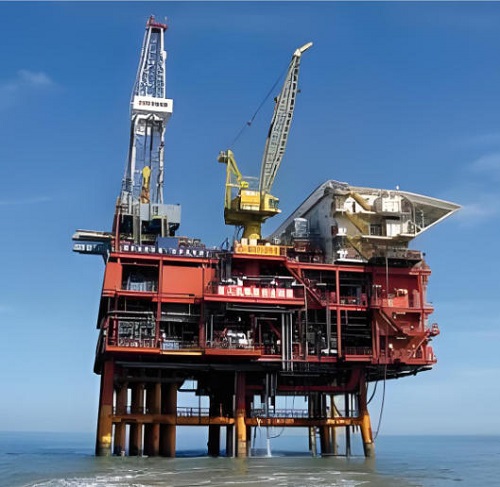
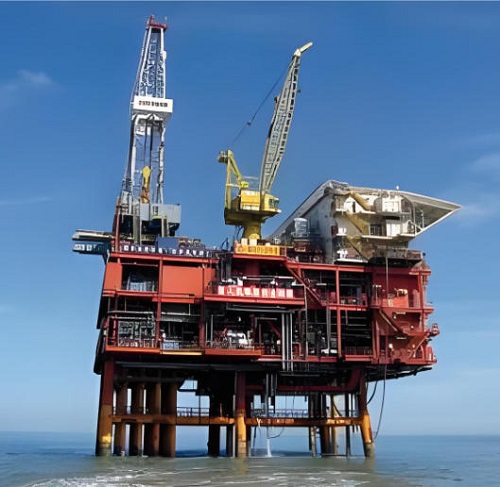
For offshore applications (jack-up rigs or fixed platforms), SJ offers wheel-rail systems adapted for marine environments. These include corrosion-resistant materials (stainless steel fittings, specialized coatings), explosion-proof electrical systems (Exd II BT5/Exd II BT6 with IP55 protection), and compact footprints for space-constrained platform decks.
-
Best for: Offshore platform drilling, jack-up rigs, wellhead platform cluster development
-
Movement: Straight-line or lateral depending on platform deck configuration
-
Control: Remote operation from safe area with explosion-proof enclosures
Applications — Where SJ’s Wheel-Rail Moving Device Delivers Value
| Application | Why Wheel-Rail Is the Right Choice | Typical Equipment |
|---|---|---|
| Pad drilling / multi-well pads | Move between wellheads without disassembly; 3–5 hour pad-to-pad transfers vs. 2–3 days of crane work | Hydraulic walking system (Type 1) |
| Cluster well development | Service multiple wellheads from a single pad — a single rig can drill 6–12 wells without leaving the pad | Hydraulic walking system (Type 1) |
| Shale gas and tight oil plays | High well density; cost pressure demands minimal non-drilling time | Hydraulic walking + turntable (Type 3) |
| Batch drilling operations | Drill, move, drill, move — the production model for modern land drilling | Integrated rig-mounted system (Type 4) |
| Offshore platform cluster wells | Space constraints and crane limitations make wheel-rail systems essential | Offshore configuration (Type 5) |
| Arctic and cold climate drilling | Heavy snow and ice make road transport difficult — rail systems provide reliable movement | Low-temperature package (Type 1 or Type 3 with -45°C rating) |
| Environmental sensitive areas | Rail systems have minimal ground disturbance and allow precise movement without heavy truck traffic | Any configuration |
| Workover rig well-to-well movement | Move workover units between wells on production pads without calling in heavy lift equipment | Railway skidding system (Type 2) or smaller hydraulic walking system |
A 2025 patent for a "deep well drilling rig train-type translation mechanism” specifically describes a structure consisting of a rail assembly and a support frame assembly with jacking cylinders and wheel sets at the bottom — exactly the configuration SJ manufactures for multi-well cluster drilling operations.
In China’s shale gas fields, rigs equipped with integrated moving systems have demonstrated average move times of under 4 hours with a crew of just 4 people, compared to conventional rig-down/rig-up moves requiring 12+ hours and significantly larger crews. That difference adds up to millions of dollars in saved rig time over the course of a multi-well campaign.
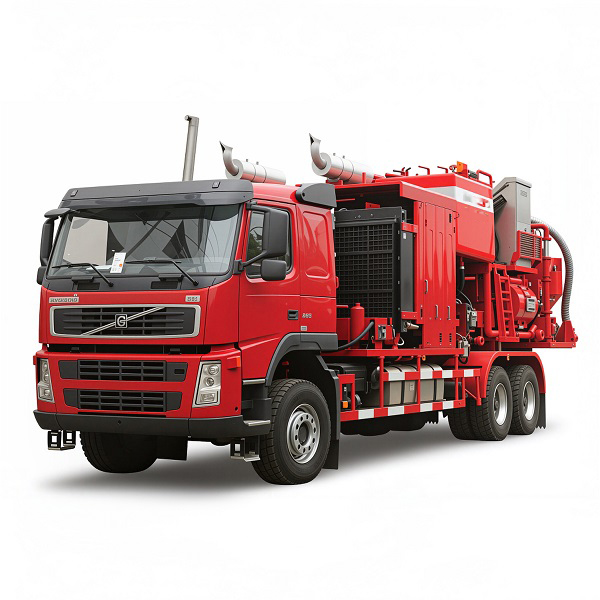
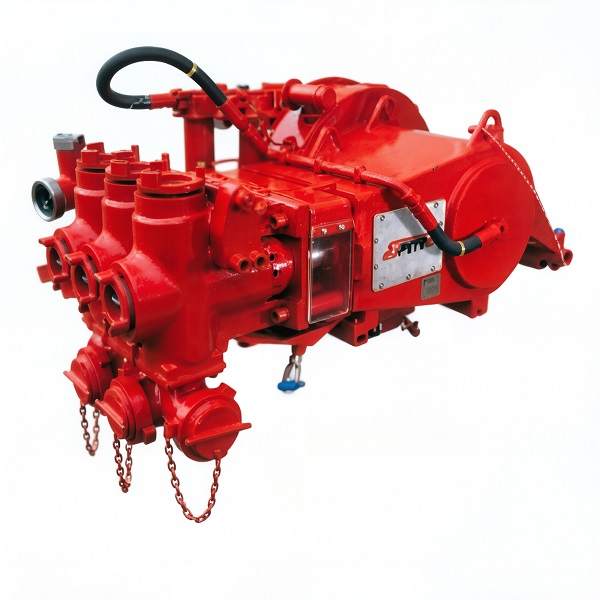
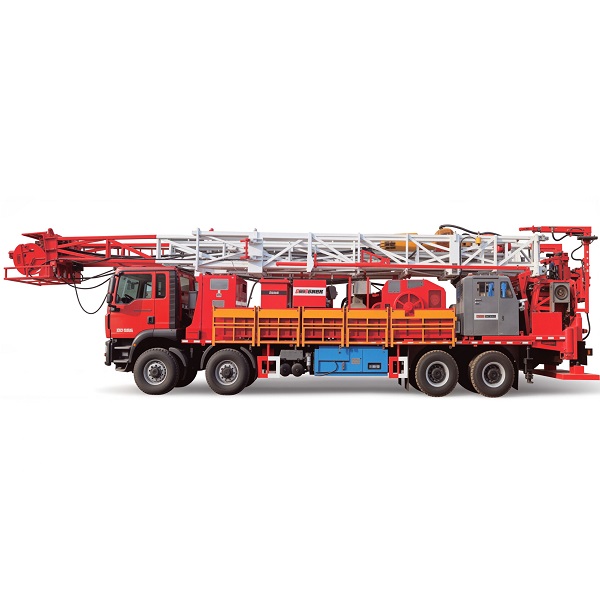
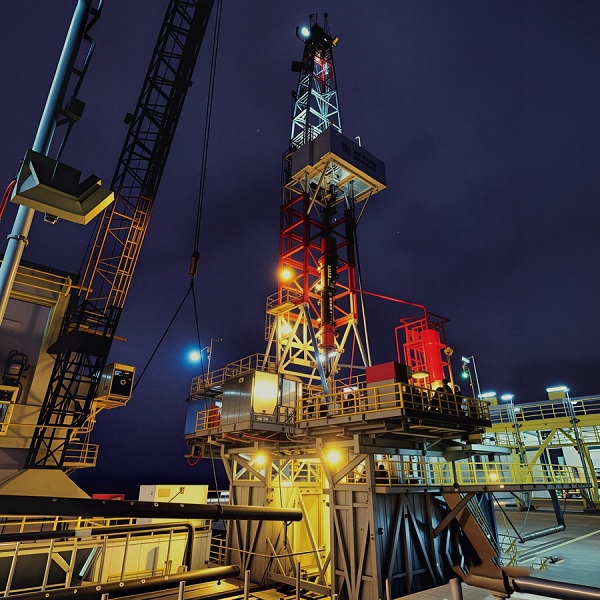
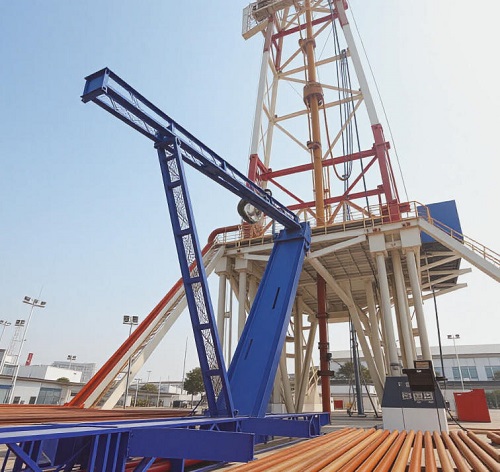
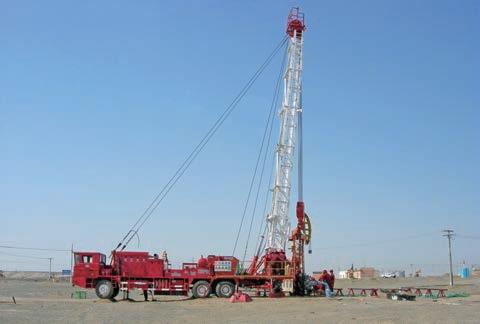
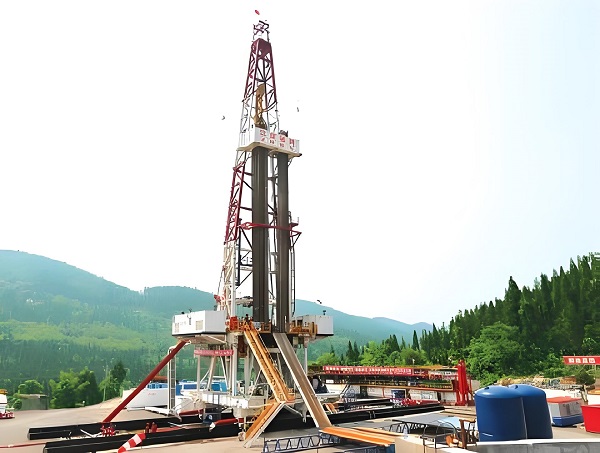
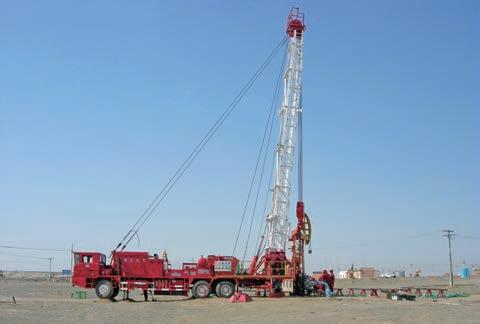
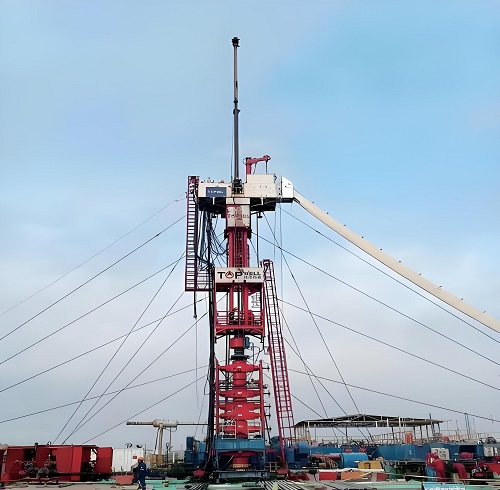
*[Product images: A drilling rig equipped with SJ’s wheel-rail moving device being repositioned on a multi-well pad — 3-hour well-to-well transfer saves rig time and reduces costs]*
Why Choose SJ Petroleum Machinery for Your Wheel-Rail Moving Device?
1. Sinopec-Grade Quality — Built to National Oil Company Standards
As a Sinopec subsidiary, SJ operates under the same quality management protocols that govern one of the world’s largest integrated energy companies. Our API Q1 and ISO 9001 certifications aren’t just wall plaques — they’re the operating standards across our entire 180,000 m² facility. We follow SY/T 6680-2021 — China’s petroleum industry standard for drilling rig and workover rig factory acceptance testing — ensuring every moving device meets or exceeds industry requirements for structural integrity, performance, and safety before it leaves our factory.
2. Over 70 Years of Manufacturing Heritage
From our founding in Lanzhou in 1941 to our relocation to Jingzhou in 1969, SJ has been at the forefront of Chinese petroleum equipment manufacturing. We rank 2nd among China’s Top 10 Petroleum Drilling and Production Equipment Manufacturers. When you buy from SJ, you’re buying from a company with a proven track record across more than 50 countries.
3. In-House Engineering and Manufacturing
We don’t outsource critical components. Our 314 engineers and researchers design every system. Our seven production lines — including dedicated drawworks, gear box, cylinder, mast, and high-pressure manifold lines — fabricate the components. Our 50,000 m² assembly yard tests the complete system before it ships. Full vertical integration means you get consistent quality and complete traceability.
4. Field-Proven Performance — Not Brochure Engineering
Our wheel-rail moving systems aren’t prototypes. They’ve been deployed on actual drilling pads in China’s shale gas fields, in Kazakhstan’s cluster well developments, and in Southeast Asian offshore platforms. The numbers are real: <4 hour move times, 4-person crews, and positioning accuracy within millimeters.
5. Custom Engineering for Your Specific Rig
No two rigs are identical, and no two pad layouts are the same. SJ works directly with your team to design the wheel-rail moving system that matches your rig’s substructure, load distribution, and pad geometry. Rail track width, number of wheel sets, cylinder capacities — everything is tailored to your operation.
6. Comprehensive After-Sales Support
SJ maintains regional service centers and parts warehouses in strategic locations including Dubai (Middle East), Singapore (Southeast Asia), and Houston (Americas). Our 24/7 remote support desk and field service engineers are available to assist with installation, commissioning, operator training, and ongoing maintenance.
7. API-Certified Components Throughout
All load-bearing components are designed to API Spec 8C (hoisting equipment) and API Spec 7K (drilling and well-servicing equipment) standards. High-pressure hydraulic components are rated to 35 MPa and manufactured to international standards. Full traceability documentation is provided for every certified component.
8. Competitive Pricing — The Chinese Manufacturing Advantage
SJ’s wheel-rail moving devices are priced 30–50% below comparable Western systems (National Oilwell Varco, Schlumberger/Lift & Slide) for equivalent specifications, due to our vertically integrated manufacturing and lower labor costs. But lower price doesn’t mean lower quality — we build to Sinopec-grade standards that exceed typical budget competitors.
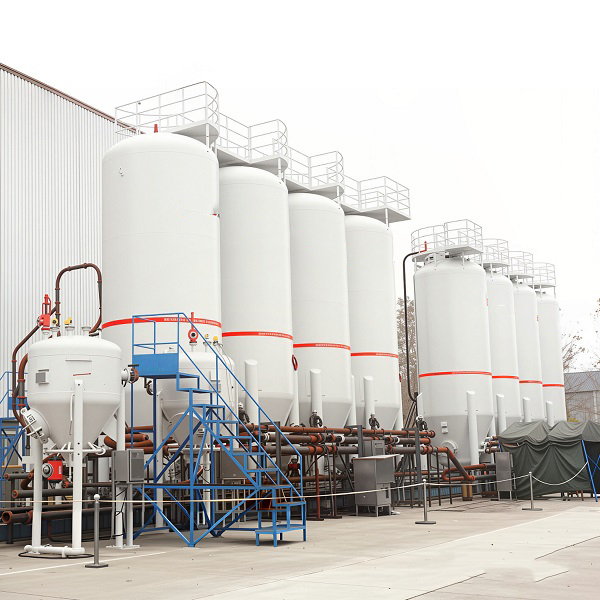
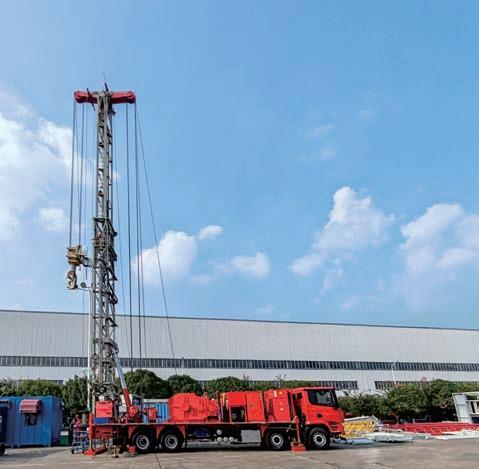
*[Product images: SJ’s 50,000 m² assembly yard with drilling rigs and moving systems undergoing final testing — large-scale manufacturing reduces costs while maintaining quality]*
Frequently Asked Questions (FAQ)
Q1: What is a wheel-rail moving device for drilling rigs?
A wheel-rail moving device is a hydraulic system that moves a drilling rig laterally across a well pad along steel rails. It lifts the rig off the ground, pushes it along the rails using hydraulic cylinders, and lowers it back down at the next wellhead — all without disassembling the rig. This technology eliminates the need for cranes, trucks, and days of rig downtime when moving between wells on cluster pads.
Q2: What is the difference between a wheel-rail moving system and a hydraulic walking system?
The terms are often used interchangeably. In practice:
-
Wheel-rail systems use steel wheels running on steel rails (rolling friction)
-
Hydraulic walking systems (sometimes called "Lift & Slide”) lift the rig, push it forward on fixed skid shoes, and lower it — sliding friction
Wheel-rail systems have lower friction and longer wear life, but they require rails to be laid on the pad. Hydraulic walking systems don’t need rails but have higher friction and typically require more hydraulic power. SJ manufactures both types, depending on customer preference and pad conditions.
Q3: How long does it take to move a rig using SJ’s wheel-rail moving device?
Field data from actual drilling operations shows that rigs equipped with integrated moving systems complete pad-to-pad transfers in under 4 hours with a crew of just 4 operators. This compares to 2–3 days of downtime for conventional rig-down/rig-up moves that require disassembly, trucking, and reassembly. For short moves between wellheads on the same pad, move times can be as low as 1–2 hours.
Q4: What rig sizes are compatible with SJ’s wheel-rail moving devices?
SJ’s wheel-rail moving devices can be engineered for rigs ranging from light-duty workover units (around 100 tons) up to heavy-land drilling rigs (over 450 tons fully loaded). Our systems are compatible with SJ’s own rigs (ZJ30 through ZJ90 series, XJ250 through XJ1200 workover rigs) and can also be retrofitted to other manufacturers’ rigs with appropriate engineering adaptation.
Q5: What are the rail specifications — are they difficult to install?
Rail segments are 8–14 meters long and weigh approximately 30–60 kg/m. They are designed for rapid assembly and disassembly using bolted connections with alignment pins. For a typical 8-well pad, rail installation takes a crew of 3–4 workers approximately half a day. The rail system can be reused across multiple pad locations.
Q6: Can the system move sideways, not just forward and backward?
Yes. SJ offers a turntable configuration (Type 3) that allows the wheel assemblies to rotate 90 degrees. This enables the rig to move laterally across the pad — effectively creating a grid movement pattern. This is particularly valuable for large multi-well pads with wellheads arranged in rows.
Q7: How precise is the wellhead alignment?
The hydraulic stepping motion allows positioning accuracy within a few millimeters. The walking cylinders move the rig a fixed distance per stroke (typically 600–1,000 mm), and when combined with mechanical stops or sensors at the target location, the system can position the rig precisely over the wellhead. For offshore platforms and HPHT operations, SJ offers automated positioning systems with electronic feedback.
Q8: Does the wheel-rail moving device work in cold climates?
Yes. SJ offers low-temperature packages rated for -45°C operation. These include cold-weather hydraulic fluids, heated reservoirs, cold-rated seals, and materials selected for low-temperature toughness. The low-temperature wheel-rail transfer device for drilling rigs has been specifically studied and validated for arctic and sub-arctic applications.
Q9: How many people are required to operate the system?
The wheel-rail moving device can be operated by a single person from the driller’s cabin using SJ’s centralized control panel. For larger rigs or complex moves, a second person with a portable remote control can assist with visual verification. Field experience with China’s shale gas operations shows that only 4 people are required for complete pad-to-pad transfers — including rail setup, rig moving, and securing operations.
Q10: Is the system compatible with SJ’s existing drilling rigs and workover units?
Yes. SJ integrates wheel-rail moving devices directly into our ZJ series drilling rigs and XJ series workover units. The system is designed as a modular option during rig manufacturing. For existing SJ rigs that were not originally equipped with moving systems, retrofits are possible but require engineering assessment of the rig’s substructure. Contact our engineering team for a retrofit feasibility study.
Q11: What is the hydraulic power requirement?
The hydraulic power unit typically operates at 21–35 MPa (3,000–5,000 psi) with flow rates of 80–200 L/min, depending on cylinder configuration and rig weight. Power can be sourced from the rig’s diesel engine PTO, an independent diesel-hydraulic power pack, or electric motor (if pad power is available). The system is designed for intermittent duty — it runs only during rig moves, not during drilling.
Q12: How does the wheel-rail moving device compare to self-propelled wheeled systems?
Self-propelled wheeled systems (rigs with integrated axles and wheels) are better for longer-distance moves between pads or across uneven terrain. They travel faster (5–10 km/h) but are heavier and more expensive. Wheel-rail moving devices are specialized for short-distance moves between wellheads on the same pad — they’re slower (only a few meters per minute) but much lighter, simpler, and less expensive. Most pad drilling operations use wheel-rail systems for well-to-well moves and contract separate transporters for longer rig relocations between pads.
Q13: What is the typical cost range for a wheel-rail moving device?
Pricing depends on rig size, configuration, and level of automation. For a standard hydraulic walking system (Type 1) for a ZJ40 or ZJ50 class rig, typical pricing ranges from 150,000to150,000to400,000 USD, including engineering, manufacturing, and factory acceptance testing. A full integrated rig-mounted system (Type 4) with turntable (Type 3) for a ZJ70 class rig can range from 500,000to500,000to1,200,000 USD. Contact SJ’s sales team for a detailed quotation matching your rig specifications and pad layout.
Q14: Is financing or leasing available for the wheel-rail moving device?
Yes. As a Sinopec subsidiary with AAA credit ratings from China’s petrochemical industry and major banks, SJ can support direct purchase, lease-to-own, and operating lease arrangements for qualified customers. Discuss your procurement model with our international sales team.
Q15: Where can I see an SJ wheel-rail moving device in operation?
SJ regularly hosts customer visits to our 50,000 m² assembly yard in Jingzhou, Hubei, where we have drilling rigs equipped with wheel-rail moving devices undergoing full load testing and pad simulations. We can also arrange visits to field operating sites in China’s major shale gas and oil-producing regions. Contact our sales team to schedule a demonstration.