Vertical rig structure
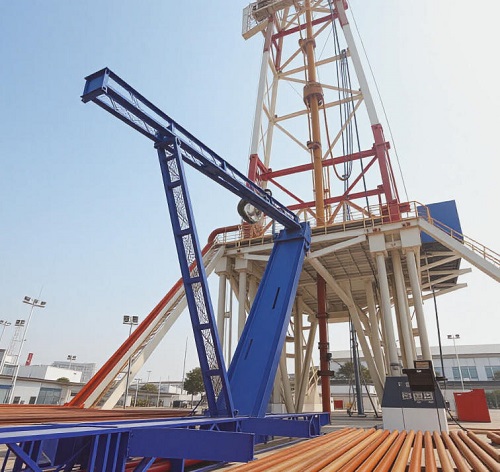
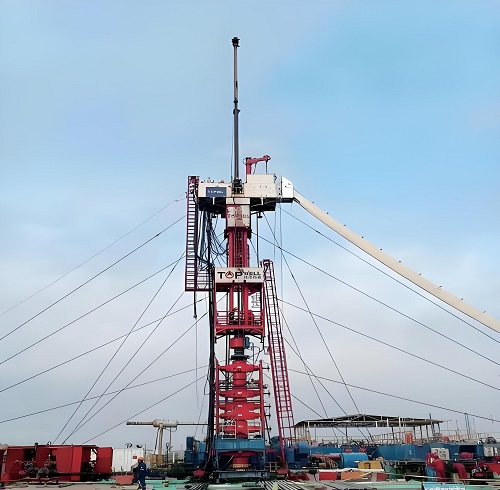
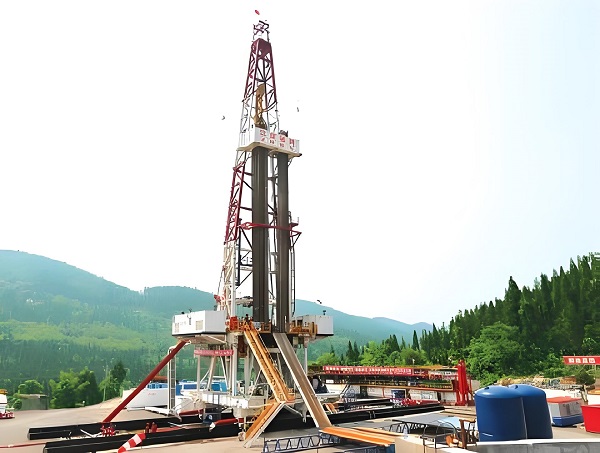
Innovation & Technology Advantages — What Sets SJ's Vertical Rig Structures Apart
1. API Spec 4F Certified — The Global Standard for Drilling Structures
This is not optional. If your mast or substructure isn’t API 4F certified, it shouldn't be on your rig. API Spec 4F covers the design, manufacture, and use of steel derricks, portable masts, crown block assemblies, and substructures suitable for drilling and well-servicing operations in the petroleum industry.
All SJ vertical rig structures are designed and manufactured in strict compliance with API Spec 4F (latest edition, PSL 1 or PSL 2 as required). Our API monogram license covers all relevant product categories. We follow SY/T 6680-2021 — China’s petroleum industry standard for drilling rig and workover rig factory acceptance testing — covering structural integrity, material quality, performance parameters, and safety verification.
2. ANSYS Finite Element Analysis — Verified Structural Integrity
We don't guess at load capacities. Every mast and substructure design is analyzed using ANSYS finite element analysis (FEA) to verify load distribution, stress concentrations, and structural performance under rated hook load conditions. This includes:
-
Static analysis under maximum hook load and rated wind conditions
-
Dynamic analysis for operating conditions (hoisting, setting back pipe, etc.)
-
Buckling analysis for mast sections under compression
-
Fatigue analysis for critical connection points
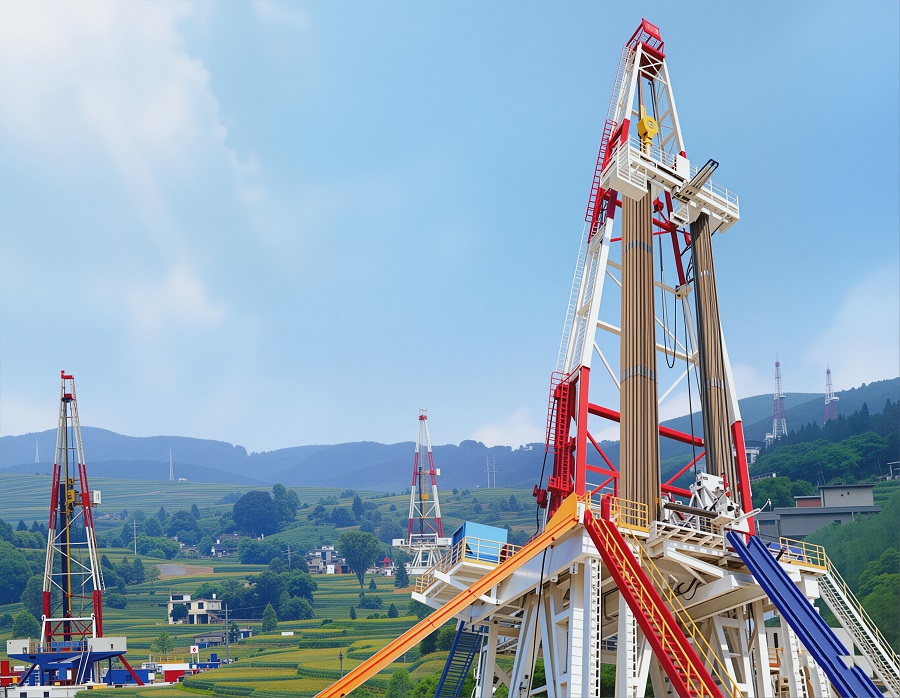
3. Two-Section Telescoping Design for Transport Efficiency
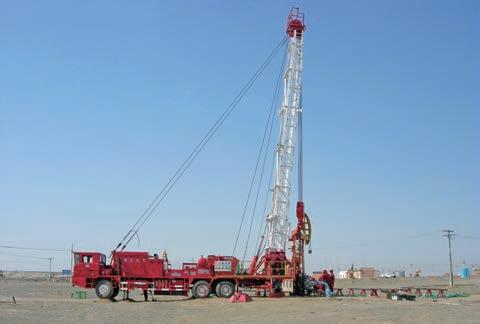
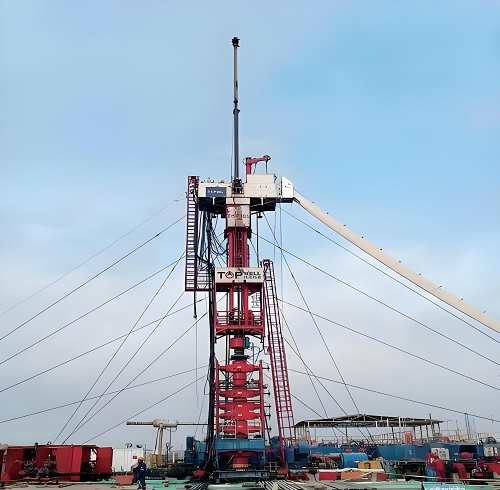
Most SJ masts for land rigs use a two-section telescoping K-type front-open design. The mast consists of:
-
Lower body — pinned or bolted to the substructure; contains the raising mechanism connection points
-
Upper body — extends and retracts vertically within the lower body using hydraulic telescoping cylinders
-
Crown block assembly — mounted at the top of the upper section
The raising mechanism uses double-acting variable-level raising cylinders mounted on the carrier or substructure, connected to the lower body of the mast. The telescoping function is achieved using two single-acting long telescopic cylinders, with a stabilizer mechanism arranged in the middle of the telescopic cylinder to ensure safety and stability when the mast is extended, retracted, and working.
This design achieves two critical objectives:
-
Lower transport height — the mast telescopes down for road transport, eliminating the need for special oversize permits
-
Faster rig-up — hydraulic telescoping requires minimal manual labor compared to pinning multiple sections
4. High-Quality Steel Construction — Including Low-Temperature Options
All SJ masts are welded using high-quality structural steel. For arctic and cold-climate operations, we offer low-temperature packages using low-alloy, high-strength, low-temperature impact-resistance material, welded according to low-temperature welding processes, certified for -45°C environments.
5. Comprehensive Substructure Integration
A vertical mast is only as reliable as the substructure beneath it. SJ designs and manufactures both mast and substructure as integrated systems, ensuring proper load transfer, alignment, and stability. Substructure types include:
-
Box-on-box — layered box structures for maximum rigidity;
-
Parallelogram folding type — folds flat for transport; hydraulically raised at wellsite
-
Rotary-raising type — substructure rises with the mast during erection, minimizing crane requirements
-
Skid-mounted modular type — each module installed on transport skids for fast rig-up
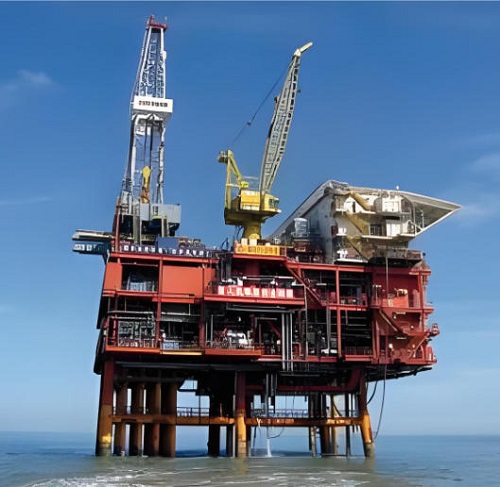
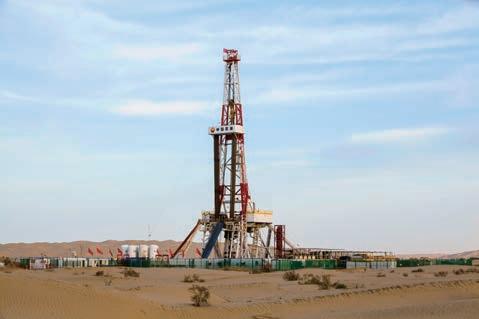
6. Designed for Extreme Environments — Desert, Arctic, Offshore
Whether you’re drilling in the Kuwaiti desert at 50°C or the Arctic at -45°C, your mast needs to perform. SJ designs for the environment:
-
Desert packages — windbreak and thermal insulation sheathing on substructure and monkey board; sand-resistant coatings
-
Arctic packages -45°C low-temperature steel and welding certification; heated operator access areas
-
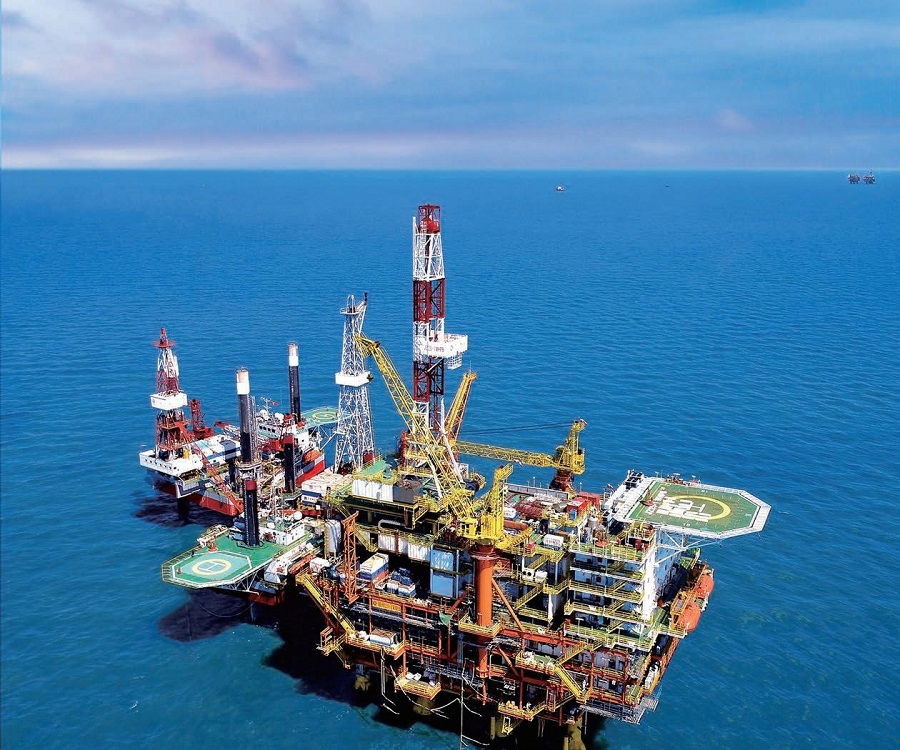
Offshore packages — corrosion-resistant materials and coatings; API 4F with marine classification society approval (ABS, DNV) as required
7. Built-In Safety Features
SJ vertical rig structures include multiple safety features designed into the structure, not added as afterthoughts:
-
Monkey board and escape device — installed on the mast with emergency descent capability
-
Crown block platform and racking board — with safety railings and fall protection points
-
Guyline assemblies for additional stability where required
-
Stabilizer mechanism on telescoping cylinders to prevent uncontrolled retraction
Technical Specifications — SJ Vertical Rig Structures
XJ Series Workover Rigs — Mast Specifications
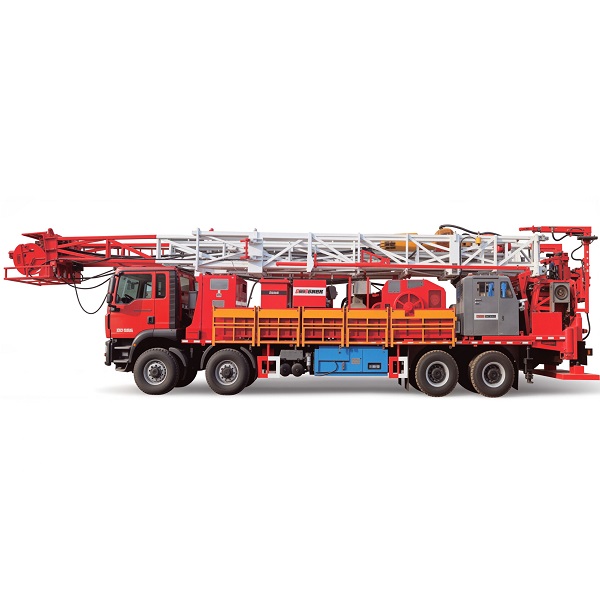
The following table provides mast height and clearance specifications for SJ's XJ series self-propelled workover rigs (mast models correspond to rig models):
| Model | Clearance Height, Mast (m) | Racking Board Height (to Rig Floor, m) | Substructure Floor Height (m) | Traveling System | Wireline Diameter (mm) |
|---|---|---|---|---|---|
| XJ150 | — | — | — | — | — |
| XJ250 | 21 | 7.7 | 2.2 | 3×4 | φ22 |
| XJ350 | 31.7 | 17.2 | 3.7 | 3×4 | φ26 |
| XJ450 | 34 | 17.2 | 3.7 | 4×5 | φ26 |
| XJ550 | 34 | 17.2 | 4.5 | 4×5 | φ26 |
| XJ650 | 35 | 17.2 | 4.5 | 4×5 | φ29 |
| XJ1000 | 38 | 17.2 | 6 | 5×6 | φ29 |
| XJ1200 | 39.3 | 17.2 | 6.7 | 5×6 | φ32 |
Technical data source: SJ Petroleum Machinery Series of Self-propelled Workover Rigs product catalog.
Rig Mast Models — Common Configurations
| Mast Model | Max Static Load (kN) | Mast Height (m) | Type | Certification |
|---|---|---|---|---|
| JJ158-35 | 1,580 (approx.) | 35 | K-type, 2-section telescoping | API 4F |
| JJ180-38 | 1,800 (approx.) | 38 | K-type, 2-section telescoping | API 4F |
| JJ225-38 | 2,250 (approx.) | 38 | K-type, 2-section telescoping | API 4F |
API 4F Mast Ratings — Typical Specifications
| Parameter | Value / Range |
|---|---|
| Design Standard | API Spec 4F (latest edition, PSL 1 or PSL 2) |
| Mast Type | K-type, front-open, two-section telescoping (standard) |
| Max Hook Load (Static) | 400 – 2,250 kN (up to ~500,000 lb) |
| Mast Clearance Height (Erected) | 21 – 48 m (69 – 157 ft) |
| Mast Height (Telescoped, Transport) | 12 – 19 m (dependent on model) |
| Number of Mast Sections | 2 – 3 (2 standard for land rigs) |
| Raising Mechanism | Double-acting variable-level hydraulic cylinders |
| Telescoping Mechanism | Two single-acting long telescopic cylinders with stabilizer |
| Crown Block Assembly | Integrated with fastline, deadline, and sand sheaves |
| Racking Board Height | 17.2 m (standard for larger XJ models); adjustable |
| Wind Velocity Rating (Operating) | 30 m/s (98 ft/s) with drill pipe standing |
| Wind Velocity Rating (Stored, No Pipe) | 47.8 m/s (156 ft/s) |
K-Type Vertical Mast — Detailed Features
| Feature | Specification |
|---|---|
| Cross-Section | П-shaped (front-open), space truss structure |
| Body Construction | Left and right side pieces welded into sections; back truss system |
| Section Connections | Pin connections between sections |
| Installation Method | Low-height installation; raised as a whole using winch power or hydraulic cylinder thrust |
| Key Advantage | 整体刚性好的优点 |
| Telescoping Option | Two-stage telescoping structure available |
| Applicable Rig Types | ZJ series drilling rigs, XJ series workover rigs, truck-mounted rigs |
Technical data source: Petroleum industry knowledge standard for K-type mast design.
A-Type Derrick (A-Shaped Mast) — Specifications
| Feature | Specification |
|---|---|
| Leg Cross-Section | Rectangular or triangular |
| Connection Method | Pin connections between sections |
| Installation | Low-height installation; raised as a whole using winch power via A-frame |
| Visibility | 井架前后敞开,司钻视野好,被称为"全视野井架” |
| Load Capacity | Good bearing capacity and overall stability |
| Typical Application | Offshore platforms, land rigs requiring maximum visibility |
Technical data source: Petroleum industry knowledge standard for A-type derrick design.
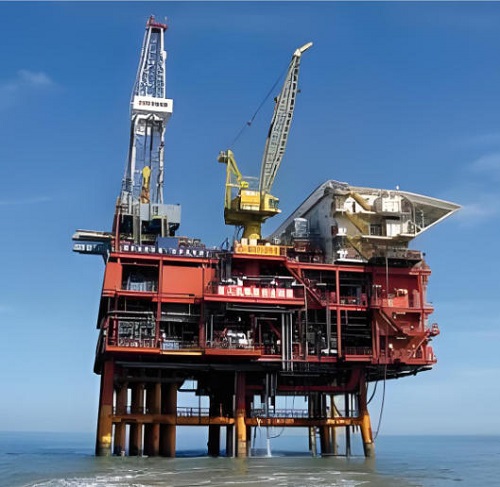
Tower Derrick — Offshore Specifications
| Feature | Specification |
|---|---|
| Shape | Four-edged truncated cone; square cross-section |
| Construction | Single rod assembly; bolted connections |
| Application | Primary structure for offshore drilling rigs — 塔型井架为海洋钻机井架的最主要的一种结构形式 |
| Advantages | 整体稳定性好,承载能力大 |
| Load Capacity | Up to 4,890 kN (500+ tons) |
| Environmental Rating | Designed for marine environment with corrosion protection |
Technical data source: Petroleum industry knowledge standard for tower derrick.
Telescoping Vertical Mast — Transport Specifications
| Feature | Specification |
|---|---|
| Installation Method | Vertical telescoping — 套装型井架是一种垂直安装的伸缩式井架,其特点是沿垂直方向将井架分成若干空间段 |
| Base Section | Serves as guide and support section |
| Raising Method | Using winch power or hydraulic power to vertically lift each section sequentially |
| Key Advantage | Saves installation land area |
| Typical Application | Mobile drilling rigs, workover units, space-constrained sites |
Technical data source: Petroleum industry knowledge standard for telescoping mast.
Substructure — Integrated Support Specifications
| Parameter | Specification |
|---|---|
| Primary Function | 安装钻井设备、摆放钻杆钻铤、安装井架,并提供井口装置的安装空间和钻井作业的操作平台。承受钻井工作载荷、井架起升载荷与设备自重载荷 |
| Substructure Types | Box-type (箱叠式, 箱块式), Rotary-raising (旋升式), Parallel folding (双升式), Telescoping (伸缩式). Of these, the latter three are self-elevating types |
| Drill Floor Height | 2.2 – 10.5 m (depending on rig class) |
| Substructure Area (ZJ70 Class) | 13 m × 14 m (example) |
| Integration | Pin or bolt connection to mast lower section |
Technical data source: Petroleum industry knowledge standard for drilling rig substructure.
Why Choose SJ for Your Vertical Rig Structure?
1. Sinopec-Grade Quality — Built by a National Oil Company
As a Sinopec subsidiary, SJ operates under the quality protocols that govern one of the world’s largest integrated energy companies. Our mast and substructure designs meet the exacting standards demanded by Saudi Aramco, Kuwait Oil Company (KOC), and ADNOC. Our parent company’s 80-rig MENA land fleet — most fitted with SJ masts — demonstrates consistent reliability in the world's most demanding operating conditions.
2. API 4F Certified and Third-Party Verified
All SJ vertical rig structures are designed and manufactured in compliance with API Spec 4F (latest edition), with full third-party inspection available through any accredited agency — DNV, ABS, Lloyd’s, or any other accredited inspector. Our manufacturing process is open to customer supervision, and we provide complete traceability documentation for every certified component.
3. ANSYS Finite Element Analysis — Verified, Not Guessed
Every mast and substructure design is analyzed using ANSYS FEA to verify load distribution and structural performance before prototype or production. When we give you a load rating, you can trust the engineering behind it.
4. Low-Temperature Capability — Tested to -45°C
For arctic and cold-climate operations, SJ offers low-temperature masts with materials certified for -45°C operation. This includes low-alloy, high-strength, low-temperature impact-resistance material, and specialized low-temperature welding processes.
5. Complete One-Stop Supplier for All Vertical Rig Structures
SJ designs, manufactures, tests, and integrates masts and substructures as complete systems. We also supply crown block assemblies, traveling blocks, swivels, and hooks (API Spec 8C certified), high-pressure fluid control products (API Spec 16C certified), and all related hoisting equipment. One supplier, one warranty, one team that knows the entire load path from crown block to substructure.
6. 70+ Years of Manufacturing Heritage
From our founding in 1941 to today, SJ has delivered more drilling rigs to more oilfields than any other Chinese manufacturer. Our intelligent manufacturing workshop integrates automated production lines and digital management systems. Our 50,000 m² assembly yard enables full load testing up to 750 tons before shipment.
7. Global After-Sales Support
SJ maintains regional support infrastructure across the Middle East and other key markets, with service teams and parts warehouses to support your vertical rig structure throughout its operational life. We provide on-site installation supervision, load testing verification, and preventive maintenance support.
Applications — Where SJ Vertical Rig Structures Deliver Value
| Application | Mast Type | Key Requirements |
|---|---|---|
| Land drilling rigs (3,000–9,000m) | K-type front-open, 2-section telescoping | API 4F; transport height <4.5m when telescoped; -45°C to 55°C operation |
| Land workover rigs (1,000–9,000m) | K-type or guyed mast, telescoping | Fast rig-up/down; built-in monkey board and escape device |
| Multi-well pad drilling | K-type with hydraulic walking system compatibility | Frequent telescoping cycles; durable stabilizer mechanism |
| Offshore platform drilling | Tower derrick or A-type derrick | Marine corrosion protection; ABS/DNV certification; wind load rating >55 m/s |
| Truck-mounted drilling rigs | Lightweight telescoping K-type mast | Road transport without disassembly; two-stage telescoping; fast hydraulic raising/lowering |
| Arctic / low-temperature drilling | Low-temperature steel mast (-45°C) | Low-temperature certified steel; specialized welding process; heated access areas |
| Desert / high-temperature drilling | K-type with windbreak and thermal insulation sheathing | 55°C rating; sand-resistant coatings; thermal protection for crew areas |
| Hydraulic workover units | Guyed telescoping mast | Lightweight design; simple raising mechanism |
Mast Height Selection Guide
| Rig Class (Nominal Drilling Depth) | Recommended Mast Height (Erected) | Typical Racking Board Height | Pipe Capacity |
|---|---|---|---|
| 1,000–3,000 m | 33–38 m | ~17 m | 3,000–5,000 m of 4½” DP |
| 3,000–5,000 m | 38–43 m | ~17 m | 5,000–7,000 m of 4½” DP |
| 5,000–7,000 m | 43–45 m | ~24 m | 7,000–10,000 m of 4½” DP |
| 7,000–9,000 m | 45–49 m | ~24 m | 10,000+ m of 4½” DP |
Frequently Asked Questions (FAQ)
Q1: What is the difference between a mast and a derrick?
In drilling terminology, a "mast” is a portable structure that is assembled in sections and raised as a unit (usually using winch power or hydraulic cylinders), while a "derrick” is a permanent structure assembled piece by piece from the ground up. In practice, the terms are often used interchangeably. The API Spec 4F covers both masts (portable) and derricks (non-portable) under the same structural design requirements. SJ manufactures both portable masts and permanent derricks, depending on customer application.
Q2: What is the most common mast type for land drilling rigs?
The K-type front-open mast is the most common configuration for modern land drilling rigs and workover rigs. It features a П-shaped cross-section, is raised as a whole using winch power or hydraulic cylinder thrust, and offers excellent rigidity and driller visibility. SJ’s standard K-type masts use two-section telescoping design for transport efficiency.
Q3: What API specifications cover masts and substructures?
API Spec 4F (Specification for Drilling and Well Servicing Structures) covers the design, manufacture, and use of steel derricks, portable masts, crown block assemblies, and substructures. It provides a uniform method of rating these structures and includes requirements for marking, inspection, and design loading. SJ masts and substructures are certified to API Spec 4F, PSL 1 or PSL 2 as required.
Q4: What is the maximum mast height SJ can manufacture?
SJ can manufacture masts with clearance heights up to 49 meters for ZJ90-class super deep well drilling rigs. For reference, SJ's XJ series workover rig mast heights range from 21 meters to 39.3 meters depending on model. Custom heights beyond 49 meters are available by special engineering.
Q5: Can SJ design masts for low-temperature / arctic environments?
Yes. SJ offers low-temperature masts using low-alloy, high-strength, low-temperature impact-resistance material, welded according to low-temperature welding processes, certified for operation down to -45°C. This includes special considerations for steel ductility, weld integrity, and component flexibility in extreme cold.
Q6: How does SJ verify mast load ratings?
Every SJ mast design is verified using ANSYS finite element analysis (FEA) to check load distribution, stress concentrations, and structural performance under rated hook load conditions. The entire mast assembly undergoes full load testing at our 50,000 m² assembly yard before shipment, with customer-witnessed testing available.
Q7: What substructure types does SJ offer?
SJ manufactures multiple substructure configurations: box-on-box (箱叠式、箱块式), rotary-raising (旋升式) which rises with the mast during erection, parallel folding (双升式) which folds flat for transport, and telescoping substructures (伸缩式) for low-height transport. Of these, the last three are self-elevating types that do not require crane assistance for raising.
Q8: What are the wind speed ratings for SJ masts?
SJ vertical rig structures are rated for:
-
Operating condition with drill pipe standing: 30 m/s (98 ft/s / 67 mph)
-
Operating condition with no drill pipe: 36 m/s
-
Non-operating (stored, no hook load, no pipe): 47.8 m/s (156 ft/s / 107 mph)
-
Mast raising/lowering operation: ≤ 8.3 m/s (18.6 mph)
Source: Petroleum industry standard for drilling rig mast wind ratings.
Q9: How long does it take to raise a SJ telescoping mast?
Raising time depends on mast size and hydraulic system capacity. For typical XJ or ZJ series masts, the complete raising and telescoping sequence takes approximately 20–45 minutes with a trained crew of 2–3 people. The double-acting variable-level raising cylinders provide controlled, smooth motion throughout the sequence.
Q10: Can a SJ mast be retrofitted to an existing non-SJ rig?
Yes. SJ offers mast retrofitting services for existing drilling rigs and workover units. Our engineering team will assess your existing substructure, carrier configuration, and operational requirements, then design a mast solution that integrates properly with your existing equipment. Mast retrofits require complete engineering verification of load paths and connection points.
Q11: What is the typical lead time for a mast and substructure?
Lead times vary based on mast type, height, load rating, and certification requirements. For standard K-type two-section telescoping masts for ZJ40–ZJ70 class rigs, typical lead time is 6–9 months from order confirmation to factory acceptance testing. Contact SJ's sales team for current delivery schedules.