Synchronous rig price
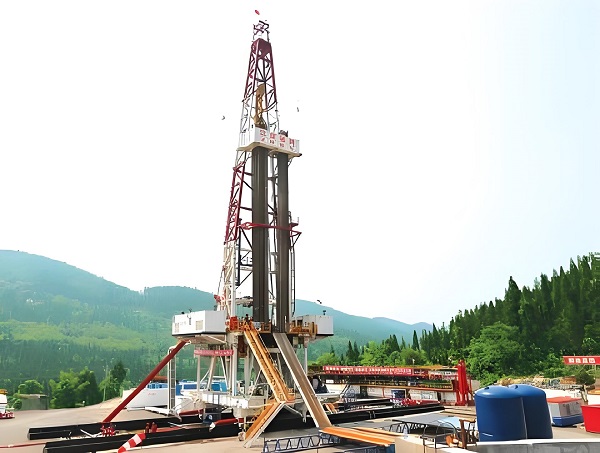
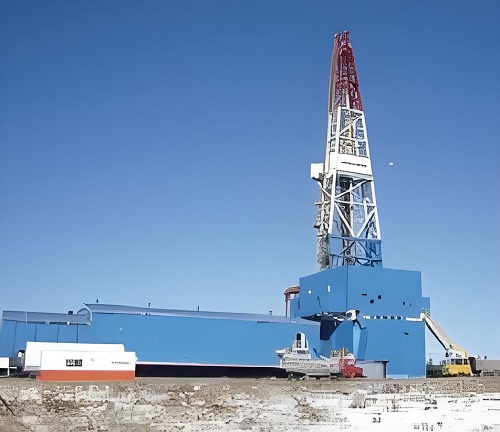
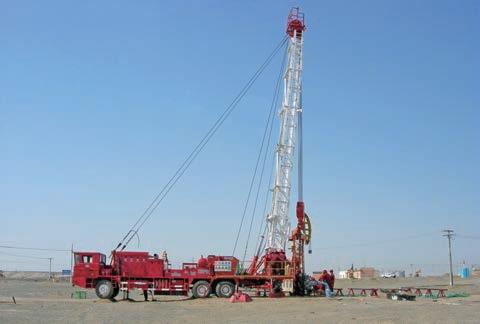
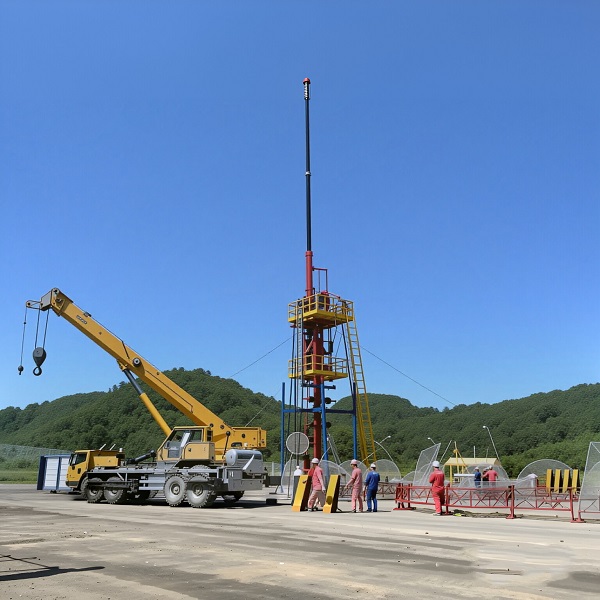
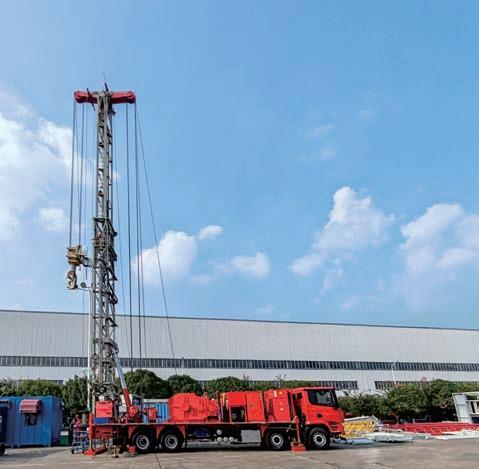
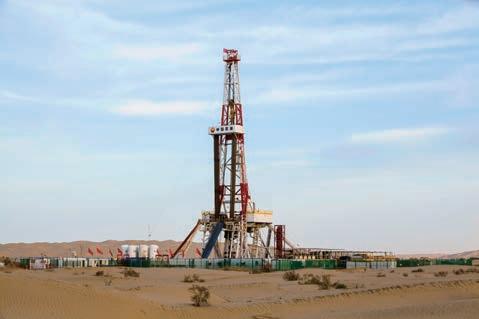
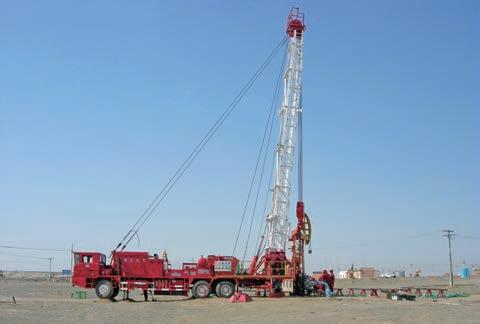
XJ Series Self-Propelled Workover Rigs — Dual-Engine Synchronous Configurations
| Model | Workover Depth (2-7/8″ DP, m) | Nominal Hook Load (kN) | Standard Power | Synchronous Option | Price Range (USD, estimate) |
|---|---|---|---|---|---|
| XJ250 | 2,000 | 400 (40-ton class) | Single-engine | Optional | 500,000–500,000–750,000 |
| XJ450 | 4,500 | 800 (80-ton class) | Single-engine | Optional | 550,000–550,000–650,000 |
| XJ550 | 5,800 | 1,000 (100-ton class) | Single-engine | Optional | 580,000–580,000–850,000 |
| XJ650 | 7,000 | 1,200 (120-ton class) | Single or dual-engine | Standard on some models | 750,000–750,000–1,200,000 |
| XJ1000 | 8,000 | 1,500 (150-ton class) | Dual-engine standard | Standard | 1,200,000–1,200,000–1,800,000 |
| XJ1200 | 9,000 | 1,800 (180-ton class) | Dual-engine standard | Standard | 1,800,000–1,800,000–2,500,000 |
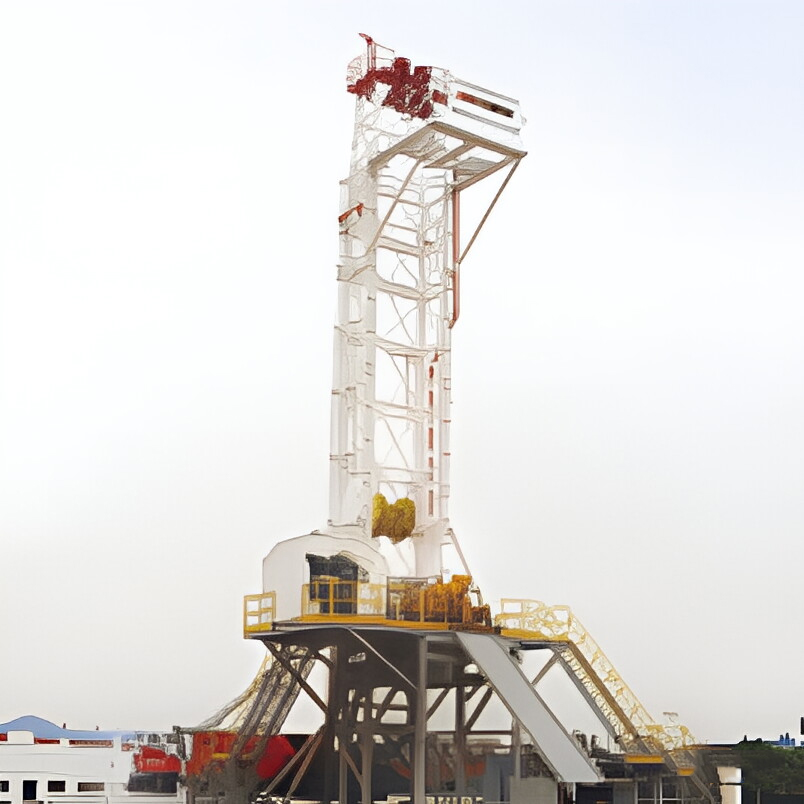
Industry Reference Price Data
-
XJ250 (40-ton) Workover Rig — A light-duty self-propelled rig used for shallow well workover, oil testing, fishing, and pump check operations. A used SJ XJ250 was listed at approximately **500,000USD∗∗[reference:9].Arecentprocurementfor40−tonclassrigsinChinahadabatchbudgetof8.28millionRMB(500,000USD∗∗[reference:9].Arecentprocurementfor40−tonclassrigsinChinahadabatchbudgetof8.28millionRMB(1.15 million USD) for multiple units.
-
XJ450 (80-ton) Workover Rig — A Chinese XJ450 (80-ton) workover rig ranges from 550,000to550,000to600,000 USD.
-
XJ550 (100-ton) Workover Rig — Prices range from 580,000to580,000to850,000 USD depending on configuration. Lower-end listings range from 75,000–75,000–165,000 for basic configurations.
For dual-engine synchronous configurations of these base models, add approximately 20–35% to the base price for the paralleling gearbox, dual controls, and emergency power switching systems.
ZJ Series Land Drilling Rigs — Synchronous Drive Configurations
| Model | Drilling Depth (4½″ DP, m) | Max Hook Load (kN) | Drive System | Synchronous Configuration | Price Range (USD, estimate) |
|---|---|---|---|---|---|
| ZJ30 | 3,000 | 1,700 | AC-VFD / AC-SCR-DC | Single motor | 2,000,000–2,000,000–3,500,000 |
| ZJ40 | 4,000 | 2,250 | AC-VFD / AC-SCR-DC | Dual-motor optional | 3,000,000–3,000,000–5,000,000 |
| ZJ50 | 5,000 | 3,150 | AC-VFD / AC-SCR-DC | Dual-motor standard | 4,000,000–4,000,000–7,000,000 |
| ZJ70 | 7,000 | 4,500 | AC-VFD with dual-motor drawworks | Dual/quad-motor standard | 6,000,000–6,000,000–10,000,000 |
| ZJ90 | 9,000 | 5,850 | AC-VFD with quad-motor drawworks | Quad-motor standard | 10,000,000–10,000,000–15,000,000 |
ZJ90DB — Deep Well Synchronous Rig Pricing Reference
The ZJ90DB is SJ's most advanced high efficiency synchronous rig, proven in ultra-deep well applications with documented drilling to 9,270m depth. Six of these rigs have been exported to Kuwait — the first large-scale batch export of Chinese super deep well drilling rigs to the Middle Eastern high-end market.
A used ZJ90DB (3000HP VFD onshore drilling rig) was listed with an asking price of $11,701,470 USD in an asset liquidation sale. This provides a reference point for the market value of these rigs — new-build pricing would be in the higher end of the ZJ90 range or above depending on specification.
In field operations, ZJ90DB rigs have demonstrated reliable performance, with two units in Xinjiang reaching drilling depths of 6,512m and 5,100m as of early 2024.
BigEasy Series — Trailer-Mounted Synchronous Rigs
| Model | Drilling Depth (m) | Max Hook Load (kN/lb) | Configuration | Price Range (USD, estimate) |
|---|---|---|---|---|
| BE550 (ZJ40D) | 4,000 / 13,200 ft | 2,450 / 550,000 | Trailer-mounted AC-VFD synchronous | 2,500,000–2,500,000–4,000,000 |
| BE770 (ZJ50D) | 5,000 / 16,400 ft | 3,430 / 770,000 | Trailer-mounted AC-VFD synchronous | 3,500,000–3,500,000–5,500,000 |
Price Comparison: Synchronous vs. Conventional Single-Engine Rigs
The real question isn't "What is the synchronous rig price premium?” The question is "What’s the total cost of ownership over the rig's life?”
Upfront Cost Difference
| Rig Class | Conventional Single-Engine | Dual-Engine Synchronous | Premium |
|---|---|---|---|
| Light workover (XJ250 class) | $500,000 | 650,000–650,000–850,000 | 30–70% |
| Medium workover (XJ450–XJ550) | 550,000–550,000–700,000 | 750,000–750,000–1,100,000 | 30–60% |
| Heavy workover (XJ1000–XJ1200) | Not applicable (dual-engine standard) | 1,200,000–1,200,000–2,500,000 | N/A |
| Land drilling (ZJ50–ZJ70) | 4,000,000–4,000,000–6,000,000 | 4,500,000–4,500,000–8,000,000 | 15–35% |
| Ultra-deep drilling (ZJ90) | 9,000,000–9,000,000–12,000,000 | 10,000,000–10,000,000–15,000,000 | 10–25% |
Where the Payback Comes From
1. Reduced Non-Productive Time (NPT)
In one recent project, a company’s non-productive time dropped from about 20% to 8% through improved equipment management, with a goal to further reduce to 3%. For a rig with a 100,000/dayoperatingcost(includingcrew,supportvessels,andoverhead),eachpercentagepointofNPTrepresentsapproximately100,000/dayoperatingcost(includingcrew,supportvessels,andoverhead),eachpercentagepointofNPTrepresentsapproximately36,500 per year in lost revenue. A synchronous rig that avoids just one major engine-failure downtime event per year — a week of downtime at $700,000 — pays for its price premium immediately.
2. No Rig Shutdown for Engine Maintenance
On a single-engine rig, routine engine maintenance requires rig downtime — you can't work on the engine while it’s powering the drawworks, rotary table, and mud pumps. On a dual-engine synchronous rig, you can shut down one engine for maintenance while the other keeps the rig operating at reduced capacity. Over the course of a year, that's multiple maintenance cycles without lost production.
3. Lower Fuel Costs with AC-VFD Drive
SJ’s synchronous rigs with AC-VFD electric drive reduce diesel consumption by more than 50% compared to conventional diesel-driven equipment. For an operator in a remote desert location where fuel logistics are expensive (fuel delivered by truck over 500+ km), this operating cost advantage alone can justify the equipment investment within 24 months.
Electric workover rigs show dramatically reduced energy consumption — a 60% reduction in energy use compared to traditional fuel-powered rigs. For example, the XJ900DB pure electric workover rig saves over 200,000 RMB annually in fuel costs per unit. Multiply that across a fleet of 10 rigs, and you're looking at over 2 million RMB in annual fuel savings.
4. Reduced Crew Costs with Automation
SJ’s high efficiency synchronous rigs can be equipped with automated pipe handling systems (auto catwalk, iron roughneck, pipe handler) that reduce the drill floor crew from five to two operators — a 60% reduction in floor personnel. At typical oilfield wages, the annual savings in crew costs alone can be substantial.
5. Extended Equipment Life
Load balancing between two engines reduces wear on each individual power unit. Engines on dual-engine synchronous rigs consistently achieve longer intervals between major overhauls compared to single-engine rigs running at full load continuously.
The Total Cost of Ownership (TCO) Advantage
| Cost Factor | Single-Engine Rig | Dual-Engine Synchronous Rig | Annual Difference |
|---|---|---|---|
| Engine maintenance downtime | 10–15 days/year | 2–5 days/year (rolling maintenance) | 500,000–500,000–1,500,000 |
| Major engine failure NPT | 500,000–500,000–2,000,000/incident | Near-zero (second engine keeps running) | 500,000–500,000–2,000,000 |
| Fuel consumption | Baseline | 15–25% lower (load balancing) | 50,000–50,000–200,000 |
| Crew costs | Baseline | 10–20% lower (automation options) | 100,000–100,000–300,000 |
Over a 5-year operational life, the synchronous rig price premium is typically recovered within 12–24 months, with the remaining 3–4 years representing pure cost savings and increased revenue from reduced downtime.
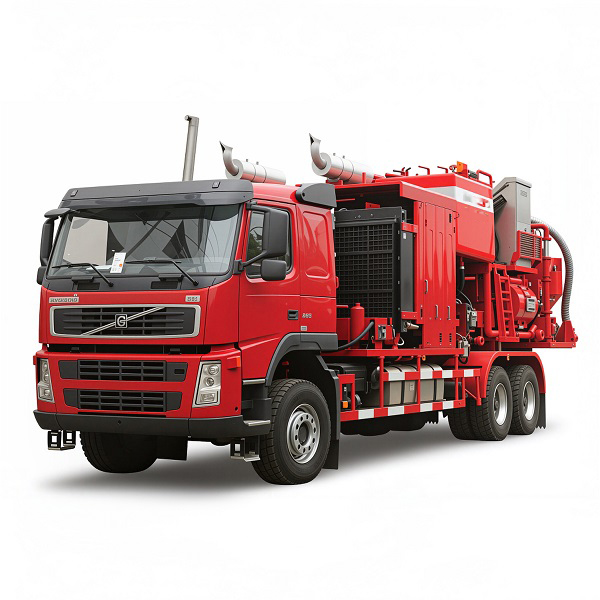
*[Product images: SJ's synchronous rig undergoing 750-ton load testing at the 50,000 m² assembly yard — full factory acceptance testing before shipment]*
Product Types — SJ Synchronous Rig Configurations
| Type | Configuration | Best For | Depth Range | Price Premium over Single-Engine |
|---|---|---|---|---|
| Type 1 | XJ Series Dual-Engine Workover Rig | Workover and well servicing requiring continuous uptime | 2,000–9,000m | +20–35% |
| Type 2 | BigEasy Trailer-Mounted Synchronous Rig | Remote operations, no crane available | 4,000–5,000m drilling | +15–25% (compared to conventional rig + crane) |
| Type 3 | ZJ Series AC-VFD Synchronous Drilling Rig | Land drilling with maximum uptime | 3,000–9,000m | +15–30% |
| Type 4 | ZJ90DB Quad-Motor Ultra-Deep Synchronous Rig | HPHT drilling, remote basins | 9,000m+ | +10–20% (incremental over base ZJ90) |
| Type 5 | Diesel-Electric Hybrid Synchronous Rig | Fuel flexibility, remote operations | Custom | +25–40% over diesel-mechanical |
Type 1: XJ Series Dual-Engine Workover Rig (Most Common for Workover)
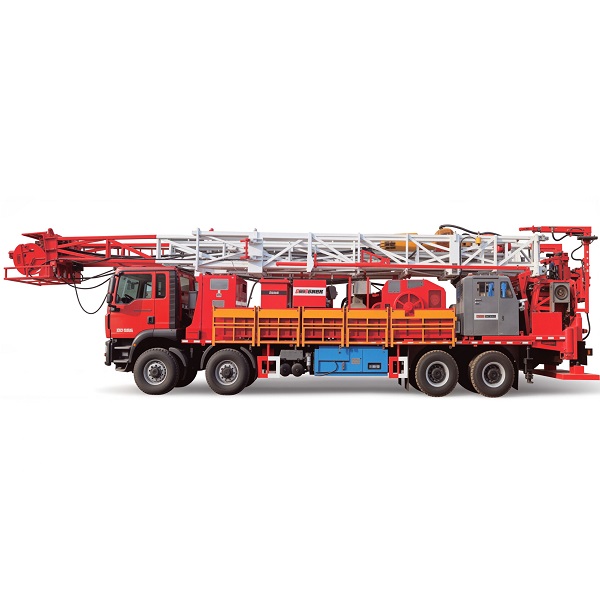
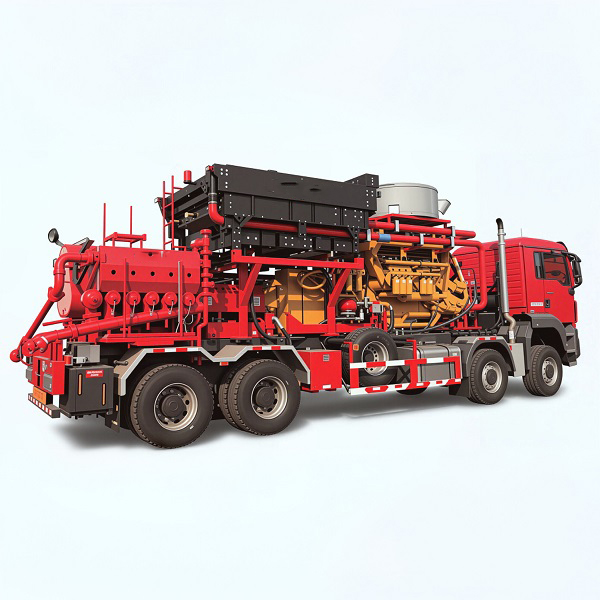
The most popular synchronous configuration for well servicing operations. Self-propelled, truck-mounted, with two diesel engines running through a paralleling gearbox. Available from XJ650 (optional) through XJ1200 (standard).
-
Typical price range: 750,000–750,000–2,500,000
-
Depth range: 7,000–9,000m workover depth
-
Key advantage: Continuous uptime — one engine fails, the other keeps running
Type 2: BigEasy Trailer-Mounted Synchronous Rig (Crane-Free)
New conceptual AC VFD drilling rigs jointly developed by SJ and LOADMASTER, featuring special module, trailer-mounted structure and fast transportation without a crane. The entire rig installs using only six trailers.
-
Typical price range: 2,500,000–2,500,000–5,500,000
-
Depth range: 4,000–5,000m drilling depth
-
Key advantage: No crane required for installation
Type 3: ZJ Series AC-VFD Synchronous Drilling Rig (Land Standard)
Full-scale land drilling rigs with AC-VFD drive and master-slave motor control. Available from ZJ30 through ZJ90 with dual or quad-motor drawworks configurations.
-
Typical price range: 2,000,000–2,000,000–15,000,000
-
Depth range: 3,000–9,000m drilling depth
-
Key advantage: Distributed load balancing across multiple motors
Type 4: ZJ90DB Ultra-Deep Synchronous Rig (Highest Capacity)
The flagship model with quad-motor drawworks and master-slave load balancing. Six rigs exported to Kuwait for Middle Eastern operations.
-
Typical price range: 10,000,000–10,000,000–15,000,000 (new); used units ~$11,700,000
-
Depth range: 9,000m (field-proven to 9,270m)
-
Key advantage: Continuous power at all depth ranges
Type 5: Diesel-Electric Hybrid Synchronous Rig
Combines diesel engine power generation with AC-VFD electric motors for drawworks and rotary table. Provides fuel flexibility and electric drive benefits while maintaining power independence.
-
Typical price range: 5,000,000–5,000,000–12,000,000 (customized)
-
Depth range: Customizable
-
Key advantage: Best of both worlds — independence + precision
Applications — Where SJ Synchronous Rigs Deliver Maximum Value
| Application | Why Synchronous Drive Matters | Recommended Configuration | Typical Price Impact |
|---|---|---|---|
| Remote basin drilling | Long supply lines for replacement engines — dual engines keep you drilling while waiting for repairs | Type 3 (ZJ series) or Type 4 (ZJ90DB) | Premium pays back in <12 months |
| Continuous workover campaigns | Production downtime is expensive — avoid single-point engine failure | Type 1 (XJ1000/XJ1200 dual-engine) | One avoided shutdown repays premium |
| Ultra-deep HPHT drilling | Extreme loads demand distributed power — multi-motor synchronous prevents overloading | Type 4 (ZJ90DB) | 10–20% premium for 3x reliability |
| Unconventional / pad drilling | Frequent moves and high power requirements demand both mobility and power flexibility | Type 2 (BigEasy) or Type 3 with fast-moving modules | Fast mobilization reduces total campaign cost |
| Remote workover operations | No local maintenance facilities — two engines mean one can fail without stopping the job | Type 1 (XJ series dual-engine) | Single-engine rigs are unacceptable risk |
| Desert drilling | Extreme heat kills engines faster — redundancy is non-negotiable | Type 4 with desert package (ZJ90DB) | Reliability proven in Kuwait operations |
| Arctic drilling | Cold-start reliability — two engines provide redundancy when starting is difficult | Type 1 or Type 3 with arctic package | Specialized configuration adds 15–25% |
Return on Investment (ROI) Analysis
Let's work through a real-world example. An operator with a dual-engine synchronous workover rig operating 250 days per year at a day rate of 80,000(rigpluscrew)earns80,000(rigpluscrew)earns20,000,000 in gross revenue annually. A single-engine rig with 8% NPT loses 1,600,000peryeartoidletime.AsynchronousrigreducingNPTto31,600,000peryeartoidletime.AsynchronousrigreducingNPTto3600,000 — a $1,000,000 annual improvement in revenue.
If the synchronous rig costs $400,000 more than a single-engine alternative (approximately the premium for an XJ550-class dual-engine upgrade), the payback period is less than 5 months. Every month after that is pure profit improvement.
[Product images: SJ's dual-engine control panel — load balancing and engine status monitoring for continuous uptime]
Why Choose SJ for Your Synchronous Rig Investment?
1. Sinopec-Grade Quality — Built to National Oil Company Standards
As a wholly-owned subsidiary of Sinopec Group, SJ operates under the quality protocols that govern one of the world’s largest integrated energy companies. Our dual-engine synchronous rigs meet the exacting standards demanded by Saudi Aramco, Kuwait Oil Company (KOC), and ADNOC. Our parent company's 80-rig MENA land fleet — most fitted with SJ equipment — demonstrates consistent reliability.
2. 70+ Years of Manufacturing Heritage
From our founding in Lanzhou, Gansu in 1941 to the present day, SJ has delivered more drilling rigs to more oilfields than any other Chinese manufacturer. Our Technical Center employs 314 engineers and researchers across three research institutes covering drilling and workover equipment, cementing and fracturing equipment, and material processing. We are authorized to operate a post-doctoral research station.
3. Complete One-Stop Synchronous Rig Supplier
SJ manufactures every component of the synchronous rig — both engines, the paralleling gearbox, the AC-VFD drives, the drawworks, the mast, the mud pumps, the solid control system — under one roof across our seven production lines and three assembly lines. One supplier, one warranty, one team that knows the entire system. No integration headaches from multiple vendors.
4. API-Certified and Third-Party Verified
All SJ synchronous rigs are designed and manufactured in compliance with API Spec Q1, 4F, 7K, 8C, 6A, and 16C. We follow SY/T 6680-2021 — China's petroleum industry standard for drilling rig and workover rig factory acceptance testing — covering structural integrity, material quality, performance parameters, and safety verification. Our manufacturing process can be supervised by customers and inspected by any third-party certification agency — DNV, ABS, Lloyd’s, or any other accredited inspector.
5. 50,000 m² Assembly Yard with Full Factory Acceptance Testing
Our rig assembly yard covers 50,000 square meters with 24 rigging-up positions and two offshore rig commissioning sites (four rig positions), where we can perform 750-ton load tests and assemble or commission 12 drilling or workover rigs simultaneously. Before any synchronous rig leaves our facility, it undergoes full factory acceptance testing (FAT) with customer-witnessed verification available.
6. Global After-Sales Support
SJ maintains regional support infrastructure across the Middle East and other key markets. For the six-rig ZJ90DB batch export to Kuwait, SJ provided comprehensive field support with service engineers stationed at the worksite. Our 24/7 remote support desk and field service teams are available for commissioning, operator training, preventive maintenance, and emergency service.
7. Competitive Pricing — The Chinese Manufacturing Advantage
SJ synchronous rigs are typically priced 30–50% below comparable Western brands (National Oilwell Varco, Schlumberger, Bentec) for equivalent API-certified specifications, due to our vertically integrated manufacturing, high-volume production lines, and lower labor costs. Lower price does not mean lower quality — we build to Sinopec-grade standards and API certifications, with full traceability documentation for every component.
8. Data-Driven Intelligent Control Systems
SJ has developed an intelligent data acquisition system for drilling equipment featuring low-cost automation (LCA) architecture with high-frequency data collection and hardware/software fault diagnostic functions, fully adaptable to field safety and efficiency requirements.
Frequently Asked Questions (FAQ)
Q1: What is the typical price range for a synchronous drilling rig?
Synchronous rig price varies widely based on depth capacity and configuration:
-
Light workover (XJ250 dual-engine): 650,000–650,000–850,000 USD
-
Medium workover (XJ450–XJ550 dual-engine): 750,000–750,000–1,100,000 USD
-
Heavy workover (XJ1000–XJ1200): 1,200,000–1,200,000–2,500,000 USD
-
Land drilling (ZJ50–ZJ70): 4,500,000–4,500,000–8,000,000 USD
-
Ultra-deep drilling (ZJ90): 10,000,000–10,000,000–15,000,000 USD
For an accurate quotation tailored to your specific operational requirements and depth needs, contact our sales team.
Q2: How much more does a dual-engine synchronous rig cost than a single-engine rig?
The premium for dual-engine synchronous configuration over a conventional single-engine base model typically ranges from 20–35% for workover rigs and 15–30% for drilling rigs. However, the ROI analysis shows the payback period is typically 12–24 months based on reduced downtime alone — not counting fuel savings, maintenance savings, and increased footage drilled. For an XJ550-class workover rig at 750,000–750,000–850,000, the premium over a single-engine 580,000baseisapproximately580,000baseisapproximately170,000–$270,000 — payback typically within 6–12 months of continuous operation.
Q3: What is the difference between dual-engine and dual-motor synchronous drive?
-
Dual-engine synchronous (diesel-mechanical): Two diesel engines running in parallel through a paralleling gearbox, powering the drawworks, rotary table, and mud pumps through a mechanical transmission. Common on XJ series self-propelled workover rigs.
-
Dual-motor synchronous (AC-VFD electric): Two AC electric motors driving the same drawworks drum through a gearbox, with master-slave control (one motor in speed mode, one in torque mode) ensuring balanced load sharing. Common on ZJ series electric drilling rigs.
Both provide power redundancy and load balancing. The choice depends on mobility requirements, available power infrastructure, and fuel vs. electricity costs at your operating location.
Q4: Can a dual-engine synchronous rig operate on one engine?
Yes — and that's the entire point of the technology. When one engine requires maintenance or fails, the paralleling system transfers load to the remaining engine automatically. The rig continues operating at reduced capacity (typically 50–60% of peak ratings) without shutting down. For workover operations, light to medium loads are often entirely within the single-engine capability. This is the feature that makes synchronous rig price worthwhile — you avoid the catastrophic NPT of a single-engine failure.
Q5: What is the lead time for an SJ synchronous rig?
Lead times vary based on depth rating, configuration, and current production queue:
-
XJ series dual-engine workover rigs: 6–9 months from order confirmation to FAT
-
BigEasy series (BE550/BE770): 8–10 months
-
ZJ series synchronous drilling rigs: 8–12 months
-
ZJ90DB ultra-deep synchronous rig: 10–14 months
Expedited delivery may be available for standard configurations. Contact our sales team for current delivery schedules.
Q6: What does the price include — and what’s additional?
Standard pricing includes: base equipment (drawworks, mast, dual engines with paralleling gearbox, power system, control system, all rig components), API certification documentation, factory acceptance testing (FAT), training for two operators at SJ's Jingzhou facility, and standard warranty. Additional costs include: shipping and logistics, customs duties, on-site commissioning and field training, extended warranty packages, third-party inspection services, and special certification requirements (ABS, DNV, CE marking, CU-TR).
Q7: How does SJ synchronous rig pricing compare to Western manufacturers?
SJ synchronous rigs are typically priced 30–50% lower than comparable Western brands (National Oilwell Varco, Schlumberger, Bentec) for equivalent API-certified specifications. This is due to our vertically integrated manufacturing, lower labor costs in China, and high-volume production across seven production lines. Quality is not compromised — we build to Sinopec-grade standards, and all equipment is API-certified with full traceability. We invite direct comparison with any major manufacturer's synchronous rig offerings.
Q8: What fuel savings can I expect from an AC-VFD synchronous rig?
SJ’s synchronous rigs with AC-VFD electric drive reduce diesel consumption by more than 50% compared to conventional diesel-driven equipment. For an XJ900DB pure electric workover rig, documented savings are over 200,000 RMB (approximately 28,000USD)annuallyperunitinfuelcostsalone[reference:20].Forlargerlanddrillingrigsoperating300+daysperyear,annualfuelsavingscanexceed28,000USD)annuallyperunitinfuelcostsalone[reference:20].Forlargerlanddrillingrigsoperating300+daysperyear,annualfuelsavingscanexceed200,000 USD. These savings directly reduce the effective total cost of ownership.
Q9: Does SJ provide financing or leasing options for synchronous rigs?
Yes. As a Sinopec subsidiary with AAA credit ratings from China's petrochemical industry and major banks, SJ can support direct purchase, lease-to-own, and operating lease arrangements for qualified customers. Discuss your procurement model with our international sales team.