
Elevator equipment
Technical Specifications – Elevator Equipment Models
The tables below present our standard elevator equipment range. All specifications comply with API Spec 8C.
Side Door Elevators (SX / SLX Series)
Designed for handling casing, tubing, and drill pipe where the pipe ends are not accessible. The hinged door allows the elevator to be placed anywhere along the pipe body.
| Model Series | Rated Capacity (Short Tons) | Size Range (inches) | Typical Application |
|---|---|---|---|
| SX‑350 | 350 | 7" – 20" | Large casing, surface pipe |
| SX‑500 | 500 | 9.5/8" – 14" | Heavy casing, intermediate strings |
| SLX‑65 | 65 | 3.1/2" – 14.1/4" | Production casing, light duty |
| SLX‑100 | 100 | 2.3/8" – 5.3/4" | Small casing, drill pipe (90° shoulder) |
| SLX‑150 | 150 | 5.1/2" – 13.5/8" | Medium casing, tubing |
| SLX‑250 | 250 | 5.1/2" – 30" | Large casing, conductor pipe |
| SLX‑350 | 350 | 4.1/2" – 30" | Heavy casing, offshore use |
Center Latch Elevators (TA / DD / DDZ Series)
The most common elevator type for drill pipe and tubing. The center latch provides a secure, balanced grip during hoisting.
| Model Series | Rated Capacity (Short Tons) | Size Range (inches) | Shoulder Type | Pipe Compatibility |
|---|---|---|---|---|
| TA‑35 | 35 | 1.05" – 2.7/8" | Square (90°) | Small tubing, drill collars |
| TA‑65 | 65 | 1.66" – 2.7/8" | Square (90°) | Tubing, light workover |
| TA‑100 | 100 | 1.900" – 5" | Square (90°) | Drill pipe, tubing |
| DD‑150 | 150 | 2.3/8" – 5.1/2" | Square (90°) | Drill collars, heavy tubing |
| DDZ‑100 | 100 | 2.3/8" – 5" | Taper (18°) | Drill pipe (taper shoulder) |
| DDZ‑150 | 150 | 2.3/8" – 5.1/2" | Taper (18°) | Drill pipe (taper shoulder) |
| DDZ‑250 | 250 | 2.3/8" – 5.1/2" | Taper (18°) | Heavy drill pipe, tools |
| DDZ‑350 | 350 | 3.1/2" – 5.7/8" | Taper (18°) | Large drill pipe (5" +) |
| DDZ‑500 | 500 | 3.1/2" – 6.5/8" | Taper (18°) | Heavy drill pipe, collars |
| DDZ‑750 | 750 | 4" – 6.5/8" | Taper (18°) | Ultra‑heavy drill pipe, top drive ready |
*TA and DD series use square shoulder (90°) for drill collars, casing, and tubing [11†L13-L16]. DDZ series uses 18° taper shoulder for drill pipe [12†L13-L16].*
Slip Type Elevators (Y Series)
Uses internal slips that automatically grip the pipe when weight is applied. No manual latching — faster tripping.
| Model Series | Rated Capacity (Short Tons) | Size Range (inches) | Application |
|---|---|---|---|
| LYT‑20 | 20 | 1.05" – 1.11/16" | Slim hole, small tubing |
| MYT‑40 | 40 | 1.315" – 2.7/8" | Light workover, small casing |
| YT‑75 | 75 | 1.315" – 3.1/2" | Production tubing, standard casing |
| HYT‑150 | 150 | 2.3/8" – 3.1/2" | Integrated tubing subs, ESP columns |
| YC‑75 | 75 | 3.1/2" – 7" | Casing, medium tubing |
| MYC‑125 | 125 | 3.1/2" – 7" | Heavy casing, offshore duty |
| HYC‑200 | 200 | 3.1/2" – 7.5/8" | Large casing, heavy wall tubing |
*Slip type elevators are especially suitable for hoisting integrated tubing subs, integral joint casing, and electric submersible pump columns [10†L4-L7].*
Single Joint Auxiliary Elevators (SJ / SP Series)
Light‑duty elevators for handling single casing or tubing joints during cementing and well servicing.
| Model Series | Rated Capacity (Short Tons) | Size Range (inches) | Application |
|---|---|---|---|
| SJ‑5 | 5 | 2.3/8" – 2.7/8" | Small tubing, light cementing |
| SP‑50 | 50 | 2.3/8" – 10.3/4" | Casing, tubing singles |
*All models have lifting capacity ratings verified by hydrostatic load test [7†L20-L25].*
Applications – Where Our Elevator Equipment Is Used
Our elevator equipment is deployed across the full spectrum of oil and gas operations:
-
Onshore drilling (conventional & shale) – Center latch elevators (TA/DD/DDZ) for drill pipe handling during tripping. Rated up to 750 tons for deep wells.
-
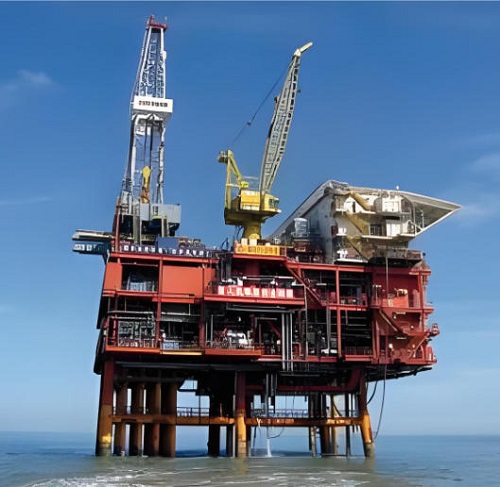
Offshore platform drilling – Side door elevators (SX/SLX) with marine‑grade coatings for large casing strings. Compact design for tight deck space.
-
Workover & well servicing – Slip type elevators (Y series) for fast tubing handling. Single joint auxiliary elevators for cementing operations.
-
Casing running – Heavy‑duty SX‑500 elevators for surface and intermediate casing (up to 20"). For deep casing strings, our SLX‑350 handles 30" conductor.
-
Cementing & well completion – SJ/SP series auxiliary elevators for single joint casing runs.
-
Arctic drilling – Low‑temperature impact‑tested alloy steel for operations down to -45°C. Heated storage boxes available.
-
Deepwater / HP/HT wells – 750 ton DDZ elevators for heavy drill pipe and large BHA components. Full NACE compliance for sour service.
Why Choose SJ Petro for Elevator Equipment?
-
Sinopec‑backed manufacturing – We are a direct subsidiary of China’s largest oilfield equipment group. Our 180,000+ m² factory employs 314 R&D engineers and runs 2,100+ advanced machines.
-
API 8C certified across the range – Full compliance. Third‑party inspection (ABS, DNV, BV, SGS) is welcome. API monogram available on request.
-
80+ years of oilfield engineering – We have been building hoisting equipment since the 1940s. Our elevator designs incorporate decades of field feedback.
-
Full material traceability – Every elevator is serialized. We maintain records of heat numbers, chemical analysis, and mechanical test results for each forging.
-
Interchangeable spare parts – Latches, hinge pins, and springs are standardized across size ranges. A single spare latch fits multiple elevators — reduces inventory.
-
Fast delivery – Standard elevators (150‑350 ton) in stock. Custom sizes (over 500 ton or special connections): 45‑60 days.
-
Global parts support – We keep seal kits, latch springs, and hinge pins in Dubai, Singapore, and Houston (agent). Airfreight to most drilling hubs within 48 hours.
-
Competitive pricing – As an OEM manufacturer, we are 20‑30% below Western brands for equivalent API‑certified quality.
-
Warranty – 24 months on elevator bodies; 12 months on latches and springs (consumables excepted).
Frequently Asked Questions (FAQ)
Q1: How do I choose between a side door elevator and a center latch elevator?
Use a side door elevator (SX/SLX) when the pipe ends are not accessible — for example, when lifting casing from the rack or picking up pipe from the middle of a stand. Use a center latch elevator (TA/DD/DDZ) when making or breaking connections, where the elevator must be latched around the pipe above the tool joint.
Q2: What is the difference between square shoulder (90°) and taper shoulder (18°) elevators?
Square shoulder elevators (TA/DD/SX/SLX) are designed for drill collars, casing, tubing, and drill pipe with 90° square shoulders. Taper shoulder elevators (DDZ) are designed for drill pipe with 18° taper shoulders, which is the standard taper for modern drill pipe tool joints [7†L5-L8]. Using the wrong shoulder angle will damage the elevator and the pipe shoulder. Check your pipe type before ordering.
Q3: What is the typical rated capacity range for your elevator equipment?
From 5 tons (SJ auxiliary elevator) up to 750 tons (DDZ‑750 for heavy drill pipe). Most common capacities for land drilling are 150, 250, 350, and 500 tons. Offshore and deepwater projects often require 500‑750 tons.
Q4: Do you offer ATEX certification for offshore use?
Yes — we can supply elevators with ATEX and IECEx certification for Zone 1/Zone 2 hazardous areas on offshore platforms [9†L16-L18]. The coating system is marine‑grade epoxy (2,000+ hour salt spray resistance). CE and GOST certificates are also available.
Q5: How do I know the size range I need?
Measure the outside diameter of the pipe, casing, or tubing you will be handling — not the connection size. Our elevators are sized by the pipe body O.D., not the tool joint O.D. For example, 5" drill pipe has a body O.D. of 5 inches and uses a 5" elevator. For casing, the elevator is sized to the casing O.D., typically 7", 9‑5/8", 13‑3/8", etc. Use the size range columns in our specification tables to match your pipe.
Q6: What testing do you perform on each elevator?
Every elevator undergoes: 100% magnetic particle inspection of the body; ultrasonic thickness check at critical sections; hydrostatic proof load test to 125% of rated capacity; dimensional inspection of all critical features (hinge bores, latch seats); and a functional latching test. A signed test report is provided [12†L19-L20][1†L33-L35].
Q7: How often should elevators be recertified?
API does not specify a fixed recertification interval. Industry practice is: every 12 months for heavy‑use elevators (daily tripping), every 24 months for moderate use, and after any overload event or visible damage. Many regulators require annual visual inspection and load test for rental fleets. We offer recertification services at our factory.
Q8: Can you provide elevators for non‑standard pipe sizes?
Yes — we offer custom size ranges for proprietary pipe dimensions, special clearance applications, or unusual wall thickness. Minimum order quantity applies. Provide the pipe O.D., shoulder angle (90° or 18°), and expected hook load.
Q9: What is the typical lead time for a custom elevator?
For non‑standard sizes or special connections: 45‑60 days from approval of final drawing. This includes forging, machining, heat treatment, NDE, proof load testing, and painting. Standard elevators are stocked and can ship within 7 days.
Q10: How do I get a quote for elevator equipment?
Email elevator@sjpetro.com with:
-
Desired type (side door, center latch, slip type, auxiliary)
-
Pipe size (O.D. in inches)
-
Pipe shoulder type (square 90° or taper 18°)
-
Required capacity (short tons)
-
Quantity
-
Special coating requirements (marine, ATEX, etc.)
We will respond within 24 hours with a specification sheet and price.







