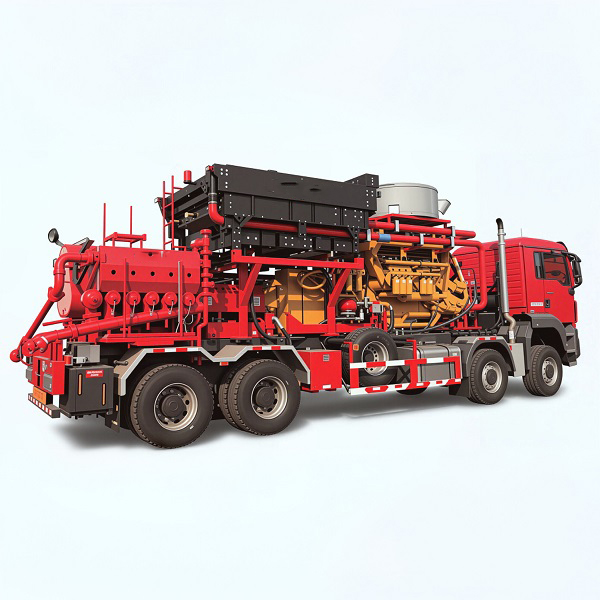
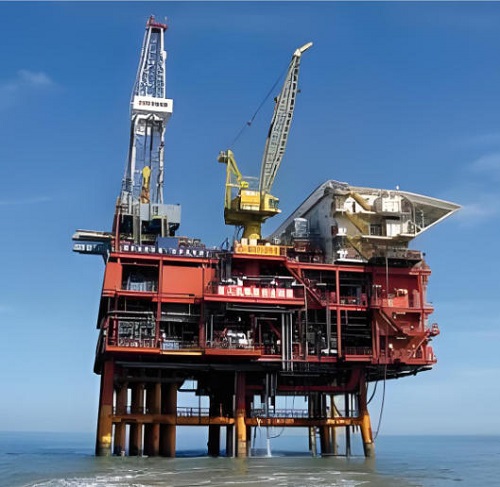
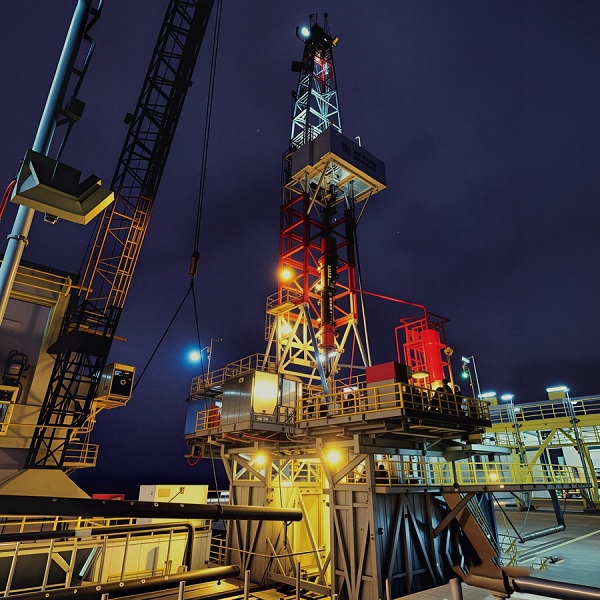
Dual well operation rig
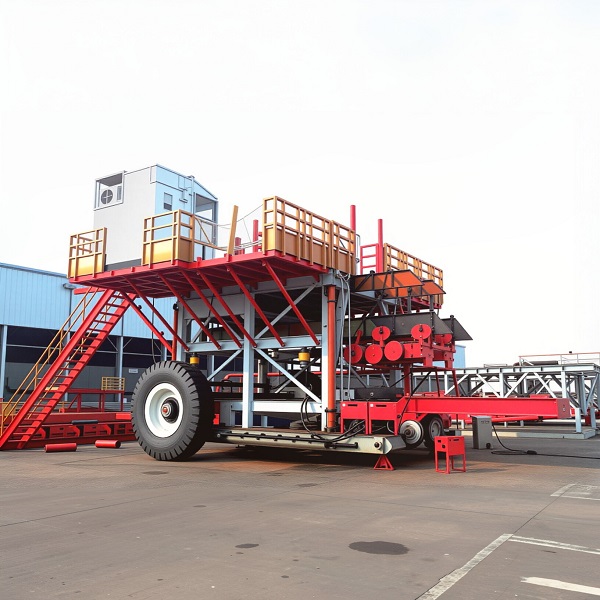
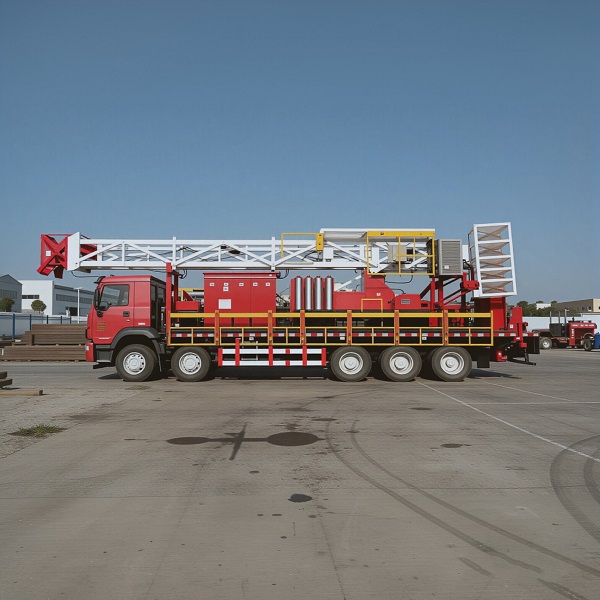
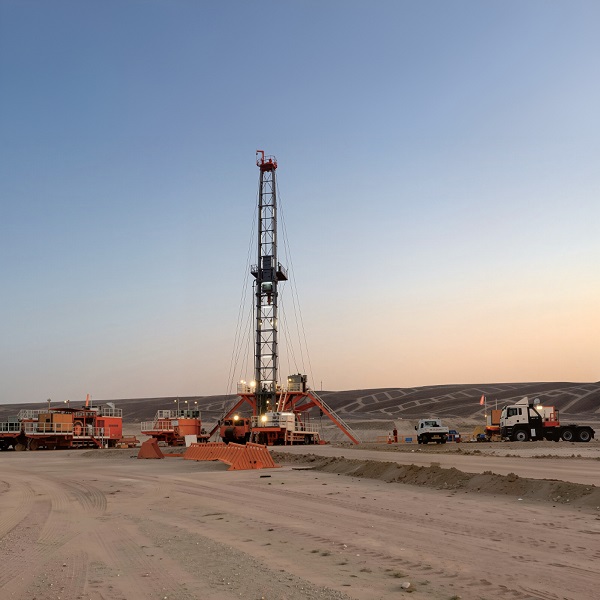
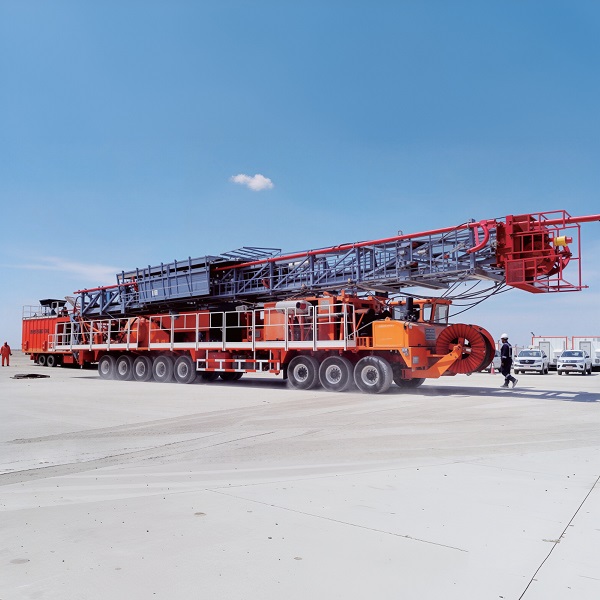
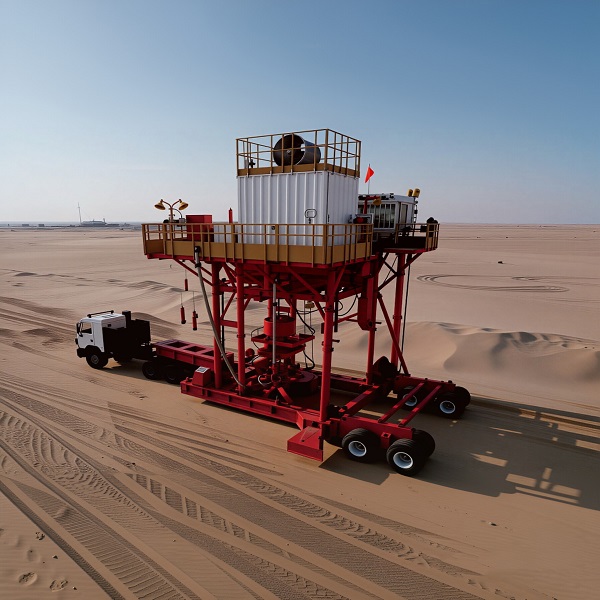
Technical Specifications – XJ and ZJ Series for Dual Well Operation
The tables below provide key specifications for SJ Petro dual well operation rigs. For complete data sheets, contact our technical sales team.
ZJ40 – Dual Well Heavy Duty Rig
| Parameter | Specification |
|---|---|
| Drilling depth (4-1/2″ DP) | 4,000 m (9,840 ft) |
| Workover depth (2-7/8″ DP) | 10,000 m (32,800 ft) |
| Max hook load | 2,250 kN (505,800 lbf) |
| Engine configuration | Dual Caterpillar C18 engines, each 630 HP |
| Transmission | Dual Allison M6620AR |
| Carrier drive | Self‑propelled 14×10 |
| Mast height | 24 m (79 ft) |
| Racking board capacity | 4,000 m (4-1/2″ DP) |
| Traveling system | 6×5 |
| Max travel speed | 45 km/h (28 mph) |
| Air assist brake system | KOBELT disc with matched caliper |
| Total weight | 76,000 kg (1,676,000 lbs) |
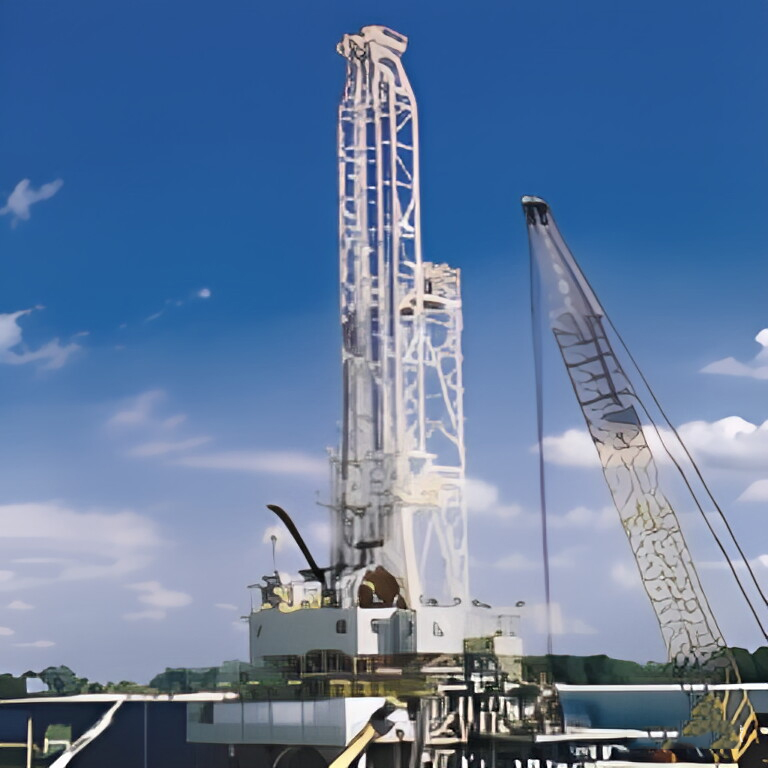
XJ650 – Best‑Selling Dual Well Workover Rig
| Parameter | Specification |
|---|---|
| Drilling depth (3-1/2″ DP) | 2,000 m (6,560 ft) |
| Workover depth (2-7/8″ DP) | 7,000 m (23,000 ft) |
| Servicing depth (2-7/8″ EUE tubing) | 8,500 m (27,900 ft) |
| Max static hook load | 1,580 kN (355,200 lbf) |
| Max hook load | 1,575 kN (354,000 lbf) |
| Engine | Caterpillar C18, 470 kW (630 HP) at 2,100 rpm |
| Carrier drive | Self‑propelled 12×8 |
| Racking board capacity | 2,000 m (4-1/2″ DP) |
| Mast clearance height | 35 m (115 ft) |
| Traveling system | 4×5 |
| Max travel speed | 45 km/h (28 mph) |
| Air assist brake system | KOBELT disc with matched caliper |
XJ550 – Medium Dual Well Configuration
| Parameter | Specification |
|---|---|
| Workover depth (2-7/8″ DP) | 5,800 m (19,000 ft) |
| Servicing depth (2-7/8″ EUE tubing) | 7,000 m (23,000 ft) |
| Max hook load | 1,350 kN (303,000 lbf) |
| Engine | Caterpillar C15, 354 kW (475 HP) |
| Transmission | Allison M5610AR |
| Mast height | 35 m (115 ft) |
| Racking board capacity | 2,000 m of 4-1/2″ DP |
| Traveling system | 4×5 |
| Max travel speed | 45 km/h (28 mph) |
| Carrier drive | Self‑propelled 10×8 |
XJ750 – Heavy Duty Dual Well Configuration
| Parameter | Specification |
|---|---|
| Drilling depth (4-1/2″ DP) | 3,000 m (9,840 ft) |
| Workover depth (2-7/8″ DP) | 8,000 m (26,200 ft) |
| Max hook load | 1,700 kN (382,000 lbf) |
| Engine configuration | Dual Caterpillar C15 engines, each 500 HP |
| Transmission | Dual Allison M5610HR |
| Carrier drive | Self‑propelled 14×8 |
| Mast clearance height | 38 m (125 ft) |
| Racking board capacity | 3,000 m (4-1/2″ DP) |
| Traveling system | 6×5 |
| Max travel speed | 45 km/h (28 mph) |
Applications – Where Our Dual Well Operation Rig Excels
-
Artificial island cluster drilling – extremely tight well spacing demands a rig that can walk sideways and rotate 360° in confined deck space. The technology reduces non‑productive time (NPT) per well by 1 to 4 days and lowers the risk of dropped‑object incidents associated with full demobilisation.
-
Onshore multi‑well pads – shale gas, tight gas and conventional fields with 10–30 wells per pad; walking and skidding systems enable continuous drilling without rig‑down. A standard inter‑well spacing on a six‑well pad typically requires 4 to 12 hours total walking time.
-
Long‑row cluster development – oilfields where wells are arranged in a single line; rail skidding system moves the rig along the row one well at a time.
-
Multi‑row cluster development – wells arranged in a grid pattern (e.g., 5 × 5); hydraulic walking system with 360° rotation moves the rig from any well to any other.
-
SIMOPS environments – deploy workover rig while a drilling rig is continuing infill drilling on the same pad, with wells spaced at 5 m. Project specific SIMOPS documents ensure safe simultaneous drilling, workover and production operations.
-
Offshore platforms – walking systems integrated into platform substructure for workover and well intervention.
-
Arctic cluster pads – short drilling windows demand rapid well‑to‑well moves; cold‑climate walking systems operate reliably at -45 °C.
-
Desert cluster pads – walking and skidding systems operate on sand with minimal ground preparation; sealed hydraulics resist sand ingress.
Product Types – Dual Well Operation Rig Configurations from SJ Petro
1. Hydraulic Walking Rig (Full‑Directional)
Best for multi‑row cluster wells, artificial islands, and irregular well spacing. Four independent walking units attached to the rig substructure, central hydraulic power unit (HPU), wireless remote control console. Total lifting capacity up to 1,200 t (300 t per unit). 360° rotation capability – move forward, backward, sideways and rotate around a point. Walking speed up to 46 ft/h (14 m/h). Ground‑bearing pressure ≤ 7,500 lbf/ft² – minimal pad preparation required. Hydraulic supply pressures typically operate in the 3,000 to 5,000 psi (207 to 345 bar) range, with dual redundant pump circuits for fail‑safe operation under API 4F fatigue load criteria.
2. Rail Skidding Rig (Long‑Row Development)
Best for large land rigs and long‑row cluster development (up to 20 wells in a row). Skidding beams (rails) laid across the pad length. Hydraulic cylinders mounted on the rig substructure push the rig along the rail. Available as single guide rail (straight‑line moves), double guide rail (increased stability), or leapfrog type (alternately lifting and moving support beams). Load capacity up to 1,500 t. Rig skidding systems enable multi‑well pad drilling and reduce the need for extensive site preparation, contributing to lower emissions and land disturbance.
3. Self‑Propelled Truck‑Mounted Dual Well Operation Rig
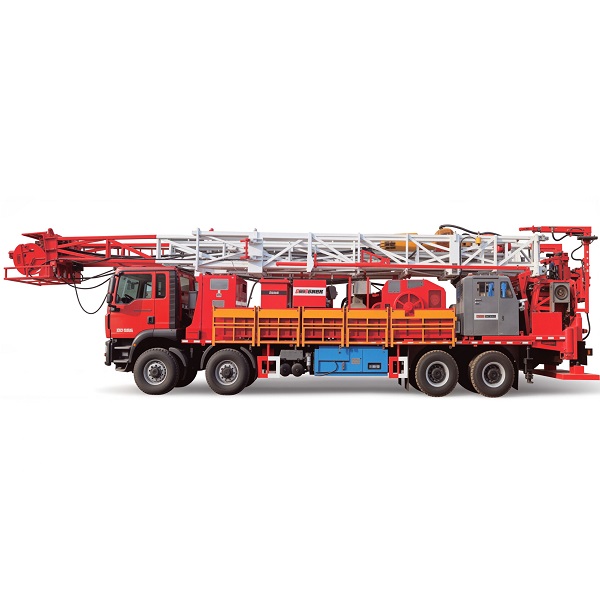
Best for cluster wells where the rig must move between pads as well as between wellheads on the same pad. XJ series self‑propelled carriers (10×8, 12×8, 14×8, 14×10) with dual Caterpillar engines and Allison transmissions. Max travel speed 45 km/h (28 mph). Hydraulic mast raising – one‑person operation. No lowboy trailer, no crane. A self‑propelled workover rig is mainly composed of self‑propelled chassis, power and driving systems, drawworks systems, mast, hydraulic/electric control system, rotary systems and substructure.
4. 2‑in‑1 Dual Well Workover + Drilling Rig
Best for cluster pads requiring both new well drilling and ongoing well servicing. XJ550, XJ650, XJ1000 and XJ1200 with rotary table and drilling line. The XJ650 can serve as a 2 in 1 rig to perform both workover and drilling operation. Drilling depth up to 2,000 m (3-1/2″ DP). Eliminates the need for a separate drilling spread on the pad. These rigs are suitable for workover operation for wells ranging from 1,000 m to 9,000 m, and for drilling operation for medium and shallow wells if equipped with a rotary table.
5. Arctic‑Rated Dual Well Operation Rig
Best for Siberia, Northern Canada, Alaska. Extended operating temperature range to -45 °C. Low‑temperature hydraulic fluids (pour point below -55 °C), engine block heaters, battery warmers, heated air intakes for pneumatic systems, insulated hydraulic lines, heated control cabins. Proven in Russia.
Why Choose SJ Petro for Your Dual Well Operation Rig?
Because a dual well operation rig is a major capital investment. You need a manufacturer who has proven its equipment in cluster drilling environments and can deliver the certification your project requires.
| Your Challenge | SJ Petro’s Answer |
|---|---|
| "I have 20 wells in a single row. How do I move the rig efficiently?” | Rail skidding system – move along the row one well at a time, up to 1,500 t load capacity. Skidding systems typically require 100–200 ft+ straight line movement. |
| "My wells are in a 5 × 5 grid. I need to move in multiple directions.” | Hydraulic walking system – 360° rotation; walk forward, backward, sideways; move from any well to any other. The Flex3 Walker is designed for multi‑row well pads, offering enhanced mobility to navigate around obstacles. |
| "I already own a rig. Can I add dual well operation capability without replacing it?” | Retrofit walking system – attaches to existing substructure; we provide installation supervision. Walking systems can be retrofitted to a wide range of rig designs. |
| *"I operate in -45 °C winters. Will the hydraulics freeze?”* | Arctic package – low‑temp fluids, heated HPU, insulated hoses, cold‑rated seals. Proven in Russia. |
| "My pad has limited space. The rig cannot turn around.” | Walking system with turntable – continuous 360° rotation; turn the rig without additional space. Crab‑walk or multi‑directional systems add a secondary axis of motion, allowing diagonal or lateral movement without realigning the entire rig. |
| "My tender requires API certification.” | Full API 4F, 7K, 8C compliance. API monogram available. Complete documentation package. Walking system design and load ratings follow API Specification 4F. |
More reasons to trust SJ Petro:
-
Sinopec Group heritage – founded in 1941, over 80 years of oilfield equipment engineering
-
In‑house manufacturing – annual production capacity of 100 workover rigs and 100 drilling rigs
-
API 4F, 7K, 8C certified – full international certification, walking systems follow API Specification 4F
-
Global track record – dual well operation rigs delivered to China, Middle East, Russia, Southeast Asia and Africa. XJ650 rig is renowned by users in South America, Western Africa and Middle East area.
-
Full documentation – material test reports, structural calculations, load test certificates, as‑built drawings, API data sheets
-
Flexible commercial terms – milestone payments (30/40/30), operating leases and direct financing available for qualified buyers
Frequently Asked Questions (FAQ) – Dual Well Operation Rig
Q1: What is a dual well operation rig?
A: A dual well operation rig is a highly mobile drilling or workover unit designed for multi‑well pads, artificial islands and cluster well developments. Unlike conventional rigs that require disassembly, crane lifts and transport trucks to move between wellheads, a dual well operation rig remains fully assembled. Using hydraulic walking systems, rail‑guided skidding or self‑propelled carriers, it moves laterally from one wellhead to the next in hours – not days. A walking system is a self‑propelled hydraulic mechanism that moves a land drilling rig short distances between wellheads on a multi‑well pad without rigging down the derrick or disconnecting surface equipment.
Q2: What is the difference between a walking system and a skidding system for a dual well operation rig?
A: A walking system uses four or eight independent lift‑and‑walk units that allow the rig to move in any direction – forward, backward, sideways – and rotate 360°. During a move, the control system simultaneously extends all legs downward to lift the rig clear of its pad footings by 50 to 150 mm (2 to 6 inches), shifts the entire rig body, then lowers it back to grade. This cycle repeats, with typical stroke lengths of 0.9 to 1.8 m (3 to 6 ft) per cycle. A skidding system moves the rig along fixed guide rails or beams in a straight line. Skidding systems are best for long‑row cluster development where wells are arranged in a single line.
Q3: What workover depths can your dual well operation rigs reach?
A: Our XJ series covers depths from 1,000 m to 9,000 m. ZJ40 reaches up to 4,000 m drilling depth (4-1/2″ DP) and 10,000 m workover depth. XJ650 reaches 7,000 m workover depth (2-7/8″ DP) and 2,000 m drilling depth (3-1/2″ DP). Maximum hook load ranges from 300 kN to 2,250 kN (67,440–505,800 lbs).
Q4: Are your dual well operation rigs API certified?
A: Yes. Our XJ and ZJ series are designed, manufactured and tested in accordance with API Spec Q1, 4F, 7K, 8C. Walking system design and load ratings follow API Specification 4F (Drilling and Well Servicing Structures) and OEM structural certification requirements. We are authorised to use API monogram on products under these specifications. For international tenders, we provide complete certification packages including material test reports, hydrostatic certificates, NDT reports, API data sheets and as‑built drawings.
Q5: How long does it take to move the rig between wells on a cluster pad?
A: A standard inter‑well spacing on a six‑well pad may require 15 to 30 walk cycles and takes 4 to 12 hours total, compared to 3 to 7 days for a conventional move. Some systems achieve walking speeds of 100 ft (30.5 m) per hour. The specific time depends on well spacing distance, walking system capacity, and pad terrain.
Q6: Can the dual well operation rig be used for SIMOPS with an active drilling rig on the same pad?
A: Yes. The Multi Rig SIMOPS Pilot Project has been executed successfully involving drilling, rig workover and production operations simultaneously on the same pad, deployed safely at designated wells with adjacent wells at 5 m spacing (total 95 m spacing and 9 wells between drilling and workover rig). Project specific SIMOPS documents ensure safe simultaneous operations to achieve production objectives. Physical compatibility assessment is carried out by multiple site visits to remove location surface constraints.
Q7: What is the warranty on a dual well operation rig?
A: 12 months after commissioning or 18 months after shipment – whichever occurs first. The warranty covers manufacturing defects on all components (carrier, engine, transmission, drawworks, mast, hydraulic system). Wear parts are not covered but are available as spares. Extended warranty (up to 5 years) is available.
Q8: Do you provide operator training for dual well operation rigs?
A: Yes. For every rig purchase, we include 1–2 weeks of on‑site training during commissioning, covering rig operation, maintenance, safety protocols, mast raising, walking system operation, SIMOPS procedures and emergency protocols. Digital manuals, video tutorials and remote support are also provided.
Q9: What is the lead time for a dual well operation rig?
A: Standard lead times from order confirmation: XJ250–XJ350 (standard configuration): 4–5 months; XJ450–XJ550: 5–6 months; XJ650–XJ1200: 6–8 months; Custom builds (arctic, desert, walking system, SIMOPS configuration): 8–10 months.