
Advantages of desert rigs
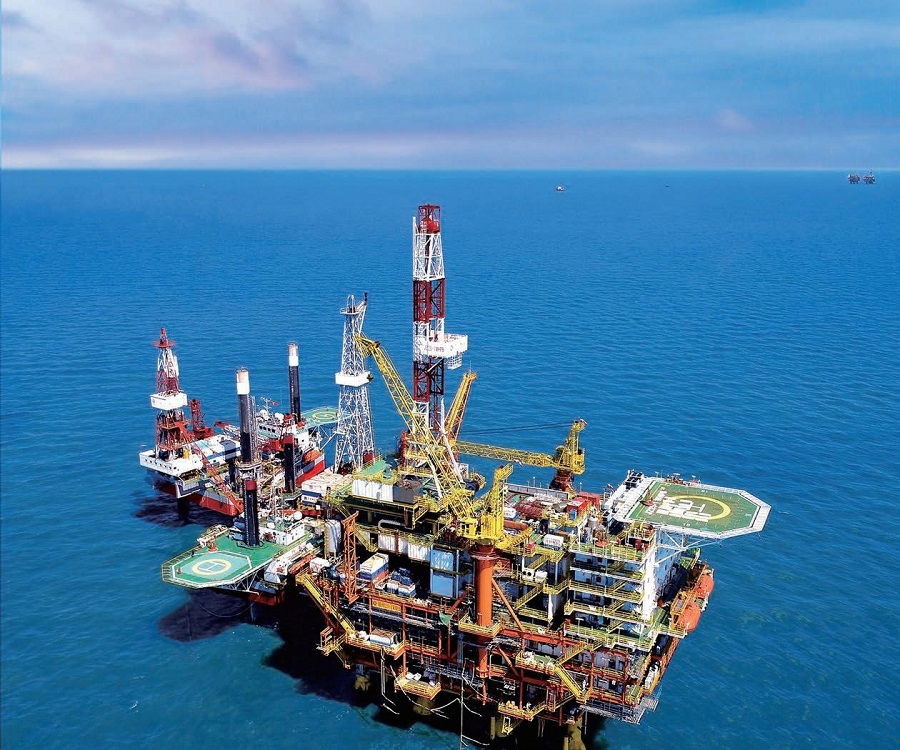
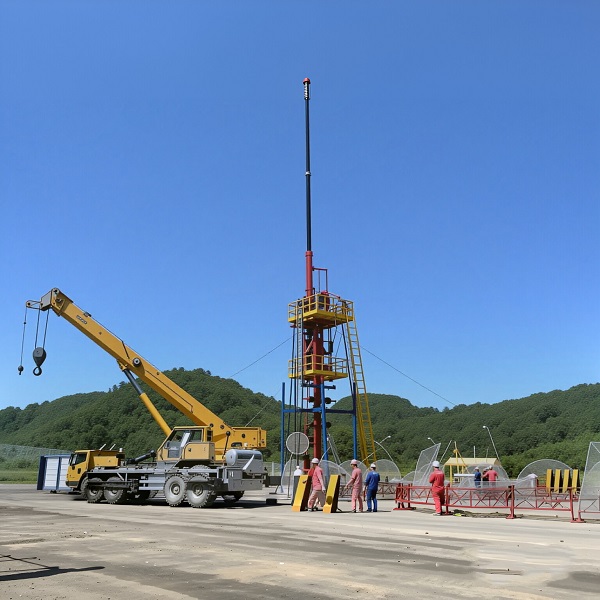
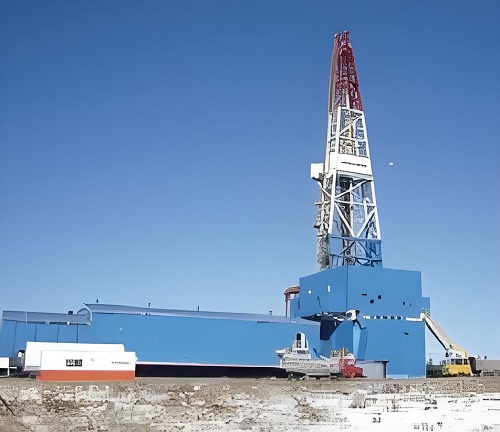
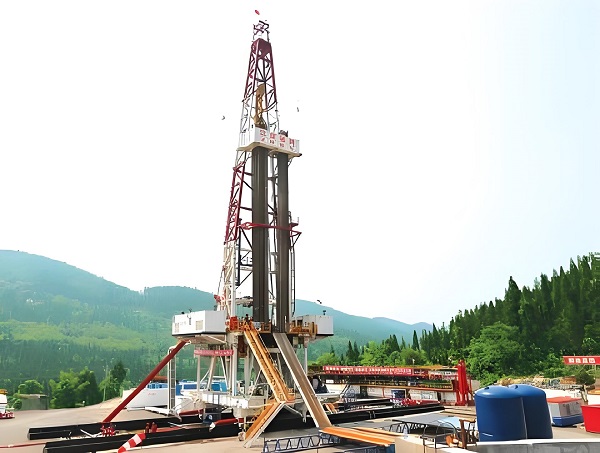
Technical Specifications – Desert Drilling Rig Parameters
The following table summarizes key specifications for typical desert drilling and workover rig configurations.
| Parameter | Desert Drilling Rig | Desert Workover Rig |
|---|---|---|
| Ambient operating temperature | -20°C to +55°C | -20°C to +55°C |
| Drilling depth capability | 3,000–9,000 m (depending on ZJ model) | Up to 7,000 m workover depth |
| Max hook load | 2,250–6,750 kN (ZJ40–ZJ90) | 1,600 kN typical (SXJ1600) |
| Drive configuration | 10×10 or 8×8 full drive off‑road chassis | 8×8 heavy‑duty petroleum chassis |
| Tires | 29.5R25 desert tires with low pressure | Large diameter, low pressure desert tires |
| Engine cooling | Circulating water‑cooled in‑line radiator | Forced water cooling or air cooling |
| Air filtration | Heavy‑duty air filter (multi‑stage) | Sand‑proof filter element + sand‑proof shed |
| Hydraulic oil cooling | Unique high‑temperature desert radiator | Integrated with engine cooling system |
| Mast design | Front‑opening, heavy‑duty anti‑wind design | Double‑section set mast, anti‑wind guyline |
| Power configuration | AC VFD electric drive or diesel‑electric | Diesel‑mechanical (truck‑mounted) |
| Transport configuration | Truck‑mounted / trailer‑mounted / modular | Self‑propelled with integral workover platform |
| API compliance | API Q1, 4F, 7K, 8C, RP500 | API Q1, 4F, 7K, 8C |
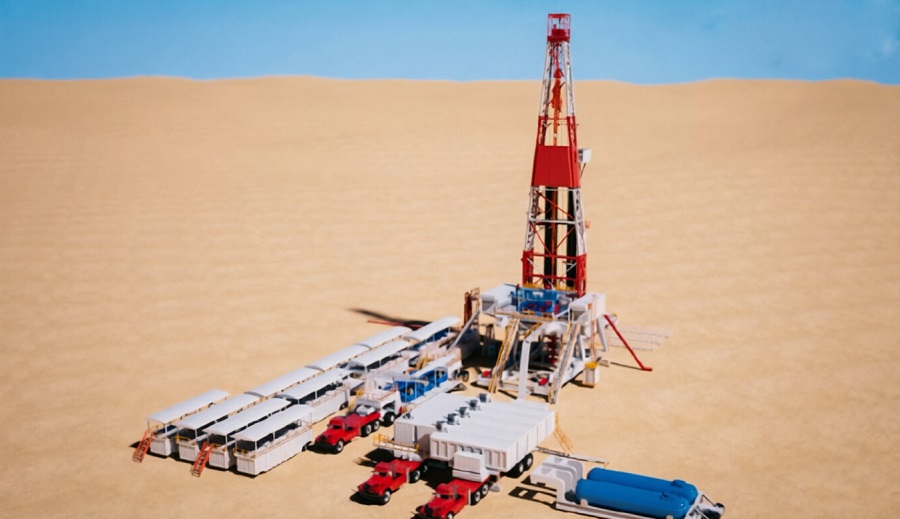
ZJ Series Desert Drilling Rig Specifications (Typical AC VFD Models)
| Model | Nominal Depth (4‑½″ DP) | Max Hook Load | Drawworks Power | Mast Height |
|---|---|---|---|---|
| ZJ40 Desert | 2,500–4,000 m (8,200–13,120 ft) | 2,250 kN (506,000 lbf) | 735 kW (1,000 HP) | 41.5–45 m |
| ZJ50 Desert | 3,500–5,000 m (11,480–16,400 ft) | 3,150 kN (708,000 lbf) | 1,100 kW (1,500 HP) | 43–45.5 m |
| ZJ70 Desert | 4,500–7,000 m (14,760–22,970 ft) | 4,500 kN (1,012,000 lbf) | 1,470 kW (2,000 HP) | 45–48 m |
| ZJ90 Desert | 6,000–9,000 m (19,680–29,530 ft) | 6,750 kN (1,517,000 lbf) | 2,210 kW (3,000 HP) | 48 m |
XJ Series Desert Workover Rig Specifications
| Model | Max Hook Load | Drawworks Power | Mast Height | Carrier Type |
|---|---|---|---|---|
| XJ550 Desert | 1,350 kN (303,000 lbf) | 540 HP | 33–36 m | 8×8 heavy‑duty chassis |
| XJ650 Desert | 1,600 kN (360,000 lbf) | 650 HP | 36 m | 8×8 heavy‑duty chassis |
| XJ750 Desert | 1,750 kN (393,500 lbf) | 750 HP | 36 m | 10×10 heavy‑duty chassis |
Product Types – Desert Drilling Solutions from SJ Petro
1. ZJ Series Desert Drilling Rigs (AC VFD Electric Drive)
Fully electric AC VFD drilling rigs rated for desert temperatures up to 55°C. Features include high‑efficiency cooling systems for all drive components, heavy‑duty air filtration for engine intakes, and reinforced chassis for off‑road desert mobility. Available in ZJ40 through ZJ90 depth capacities. Suitable for deep drilling programs in the Middle East, North Africa, and Central Asian desert regions.
2. XJ Series Desert Workover Rigs (Self‑Propelled)
Truck‑mounted workover rigs with 8×8 or 10×10 heavy‑duty off‑road chassis, low‑pressure desert tires, forced air or water‑cooled drawworks, and sand‑proof filtration for diesel engines. Ideal for well servicing and light drilling operations in remote desert oilfields. Maximum static load ranges from 300 to 2,250 kN, with installed power from 235 to 1,300 HP across XJ150 through XJ1200 models.
3. Modular Desert Rigs for Remote Logistics
When desert drilling sites are far from roads and infrastructure, modular rig design becomes essential. SOFE (Sinopec Oilfield Equipment) manufactures custom‑made, fully trailerized desert rigs, fast moving rigs, and helicopter rigs for remote areas. These rigs are engineered, fabricated, and marketed worldwide, with over 297 sets exported internationally. For helicopter‑transportable applications, modules can be broken down into lightweight components — some helicopter rigs feature 93% of modules weighing less than 2.5 tons for air transport to inaccessible desert locations.
4. Hybrid Power Desert Rigs
For operators seeking to reduce fuel consumption and emissions in remote desert locations, SJ Petro offers grid‑connected and hybrid power configurations. Options include battery energy storage systems (BESS) and grid power supply integration, reducing diesel consumption and lowering carbon footprint while maintaining drilling performance. These hybrid systems are particularly valuable in desert regions where diesel transport is expensive.
5. Automation‑Ready Desert Rigs
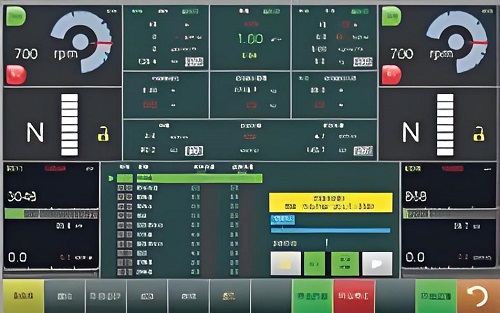
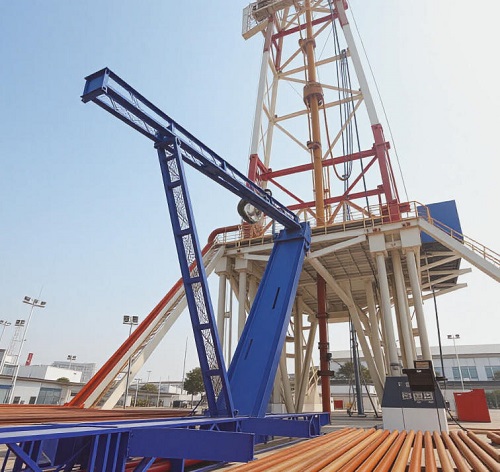
Modern desert drilling operations increasingly rely on reduced‑crew and remote monitoring technologies. SJ Petro desert rigs can be equipped with semi‑automated or fully automated pipe‑handling systems (iron roughnecks, power catwalks, automated elevators), remote monitoring and IoT systems, and digital twin monitoring platforms for predictive maintenance and operational analytics. One‑button automated operation supports automatic pipe handling, tripping‑in, tripping‑out, and preset‑depth operation, reducing repetitive manual work and improving accuracy and safety. These automation upgrades are particularly valuable for desert operations where high temperatures make manual work hazardous and where on‑site technical support may be limited.
Application Fields – Where Desert Drilling Rigs Excel
Sahara Desert (Libya, Algeria, Egypt, Niger)
The Sahara is the world's largest hot desert, with summer temperatures exceeding 55°C and sandstorms that can reduce visibility to zero. KERUI has delivered multiple desert drilling and workover rigs to Libya, with more than 10 sets of drilling and workover rigs actively operating in the vast Sahara region. The company has rooted itself in Algeria, Libya, Egypt and other major North African oil‑producing countries for many years.
Sahara‑rated rigs require the most extreme cooling systems, the most effective sand filtration, and the most reliable all‑terrain mobility. SJ Petro's Sahara‑rated configurations include forced‑cooled drawworks, heavy‑duty air filters, and 8×8 all‑wheel drive chassis with desert tires — proven to operate through the hottest summer months without overheating shutdowns.
Arabian Desert (Saudi Arabia, UAE, Kuwait, Oman, Qatar)
The Arabian Desert accounts for approximately 35% of global desert drilling rig demand. Drilling conditions include extreme heat (45–55°C summer daytime), high humidity in coastal areas (Arabian Gulf), and abrasive fine sand that infiltrates every opening.
SJ Petro's Arabian Desert rigs incorporate additional corrosion protection for coastal humidity environments where salt spray accelerates metal degradation. Equipment supplied to this region meets local HSE and quality standards, with API 7K, 4F, and 8C certification ensuring acceptance by major national oil companies.
Gobi Desert (Mongolia, Northern China)
The Gobi Desert presents a different set of challenges: extreme temperature fluctuations from summer highs above 40°C to winter lows below -30°C. Rigs must handle both heat and cold — an engineering challenge that standard desert rigs cannot meet.
SJ Petro offers dual‑climate desert configurations with wide‑temperature‑range hydraulic fluids, insulated control enclosures, and materials tested for both high‑temperature and low‑temperature performance. This dual‑climate capability is essential for operators working across Central Asian and Chinese desert basins.
Central Asian Deserts (Kazakhstan, Turkmenistan, Uzbekistan)
The Kyzylkum and Karakum deserts of Central Asia are major hydrocarbon provinces with growing drilling activity. Logistics can be challenging due to long distances between supply bases, requiring rugged, modular equipment that is easy to maintain with limited external support.
SJ Petro Central Asian desert rigs emphasize field‑serviceable design, with easily accessible maintenance points, generous parts inventory allowances, and local technical support networks. SJ Petro equipment is currently operating in Kazakhstan and other Central Asian markets.
Remote Desert Oilfields (Mali, Chad, Sudan, South Sudan)
Some of the world's most remote drilling operations are in the desert interiors of West and Central Africa. These locations have no paved roads, no local industrial infrastructure, and extreme seasonal temperatures. Operators in these regions require heliportable modular rigs that can be transported in lightweight modules by air, assembled on site, and operated with minimal crew.
For these applications, SJ Petro can supply helicopter‑transportable modular rigs with modules weighing under 2.5 tons for air lifting, meeting the requirements for extreme remote desert exploration. These rigs incorporate automated control systems to reduce on‑site personnel requirements and IoT connectivity for remote technical support.
Why Choose SJ Petro for Desert Drilling Solutions?
Backed by Sinopec – One of China's Top 500 Manufacturers
SJ PETROLEUM MACHINERY Co., Ltd. is a wholly‑owned subsidiary of Sinopec Oilfield Equipment Corporation, a China Critical Technological Equipment Nationalization Base and National Hi‑tech Enterprise. We rank No.2 among China Top 10 Petroleum Drilling and Production Equipment Manufacturers and are rated AAA by China Petrochemical Industry and Banks.
We manufacture over 200 product models across four major categories and 12 series. SOFE has built and exported approximately 297 drilling rigs worldwide, with installations in North and South America (113 sets), Russia (102 sets), the Middle East and North Africa (49 sets), and Southeast Asia (33 sets).
Full API Certification – Q1, 4F, 7K, 8C, 6A, 16C
All SJ Petro desert drilling rigs are designed, manufactured, and tested to API Spec Q1 (quality management), API 4F (structures), API 7K (drilling equipment), API 8C (hoisting equipment), API 6A (wellhead equipment), and API 16C (choke and kill systems). We are authorized to use API monograms across all applicable product lines.
Every rig includes complete certification documentation: material test reports (MTRs), dimensional inspection records, NDT reports, pressure test certificates, and factory acceptance test (FAT) records. Third‑party inspection by BV, SGS, DNV, or ABS is welcome at any stage of manufacturing.
Proven Desert Performance – Sahara, Arabian, Gobi, Central Asian Installations
SJ Petro and its Sinopec group resources have delivered rigs that have operated successfully across the world's most challenging desert environments:
-
North Africa – Rigs operating for major oil service companies in Libya, Algeria, and Egypt.
-
Middle East – Rigs supplied to national oil companies in Saudi Arabia, Kuwait, and other Arabian Gulf nations.
-
Central Asia – Rigs operating in Kazakhstan and other desert basins.
-
China – Rigs operating in Xinjiang's desert regions and the Gobi Desert.
Each desert installation has resulted in continuous feedback and engineering improvements, refining our desert‑rated designs with each successive delivery.
Global Support Network – Parts and Service Where You Need Them
Desert drilling sites are remote. Standard supply chains cannot deliver parts quickly. SJ Petro maintains service networks and spare parts inventories in key desert drilling regions, including:
-
Middle East – Regional support center for the Arabian Peninsula
-
North Africa – Local representatives and parts stocks in Libya, Algeria, Egypt
-
Central Asia – Service support for Kazakhstan and surrounding markets
For desert operations where on‑site technical support is limited, SJ Petro offers remote monitoring and IoT diagnostic services, allowing our engineers to monitor equipment health, predict maintenance needs, and guide local crews through repairs from a remote support center.
Frequently Asked Questions (FAQ)
Q1: What is the maximum operating temperature for SJ Petro desert drilling rigs?
A: Our desert drilling rigs are designed for continuous operation at ambient temperatures up to 55°C (131°F) . This has been field‑validated in Sahara desert operations in Libya and other North African countries. For operations in even more extreme environments (approaching 60°C), contact our engineering team for custom cooling system enhancements.
Q2: How do desert rigs protect against sand and dust damage?
A: Desert rigs incorporate multiple layers of sand protection: heavy‑duty multi‑stage air filters on engine intakes, sand‑proof filter elements and sand‑proof sheds on diesel engines, sealed electrical enclosures (IP56+), protected hydraulic system breathers and fill ports, and enclosed pipeline routing covered by drag chains. These measures keep sand out of engines, hydraulics, and electronics, extending component life dramatically.
Q3: Can desert drilling rigs operate on soft sand without getting stuck?
A: Yes. SJ Petro desert rigs are mounted on heavy‑duty all‑wheel drive chassis (8×8 or 10×10 configurations) equipped with large‑diameter, low‑pressure desert tires. The specialized off‑road chassis provides reasonable load distribution and super off‑road performance, allowing the rig to traverse soft sand dunes where standard chassis would sink and become stuck.
Q4: What cooling systems are used for engines and hydraulics in desert rigs?
A: Desert rigs use high‑efficiency cooling systems tailored for extreme ambient temperatures. KERUI's desert rigs feature a circulating water‑cooled in‑line radiator on the main engine to dissipate hydraulic oil heat. RG PETRO‑MACHINERY's desert workover rigs use forced water cooling or air cooling for the drawworks to maintain normal operation in high temperatures. Cooling systems are oversized compared to standard rigs to handle continuous operation at 55°C without overheating.
Q5: Are SJ Petro desert drilling rigs API certified?
A: Yes. All SJ Petro desert drilling rigs are designed and manufactured in accordance with API Q1, 4F, 7K, 8C, and RP500. We are authorized to apply API monograms and are subject to annual API audits. Complete certification documentation is included with every shipment.
Q6: What is the typical lead time for a desert drilling rig order?
A: Lead time depends on the rig type and customization level:
-
Standard ZJ series desert rig (truck‑mounted): 8–10 months from order confirmation
-
Standard XJ series desert workover rig: 6–8 months
-
Custom desert rig with specific cooling or chassis modifications: 10–12 months
-
Modular helicopter‑transportable desert rig: 12–14 months
We recommend engaging our engineering team 12–18 months before your planned spud date for large custom desert rig projects.
Q7: Can desert rigs be equipped with automation for reduced‑crew operation?
A: Yes. SJ Petro desert rigs can be equipped with semi‑automated or fully automated pipe‑handling systems (iron roughnecks, power catwalks, automated elevators), one‑button automated tripping, and digital twin monitoring systems. Automation reduces the crew required on the desert rig floor, improves safety in extreme heat conditions, and enables remote monitoring from a comfortable control room.
Q8: What is the typical lead time for spare parts delivery to desert drilling sites?
A: For standard wear parts (air filters, hydraulic filters, brake components, seals), SJ Petro maintains regional spare parts inventories in the Middle East, North Africa, and Central Asia. Typical delivery to key desert hubs: 2–7 days for stocked items. For emergency parts not held in regional inventory, expedited air freight can be arranged — contact our service team for specific requirements.







